Sabitlenmiş Tweet
Medve
2K posts

Medve
@linuxlovemin
주로 언어에 대한 잡생각을 끄적이는 직장인. (딴 얘기도 합니다.) 國漢文混用에 대한 내 생각: 識漢書韓. 언어 Language: 🇰🇷 🏴
韓國, 京畿 Katılım Ocak 2011
186 Takip Edilen230 Takipçiler
@Duelexe11 當然하지만 世宗에 對한 現在 韓國 內의 評價는 世宗이 15世紀 儒敎 專制君主制의 王이었음을 考慮해서 내리는 評價입니다 ^^
中文
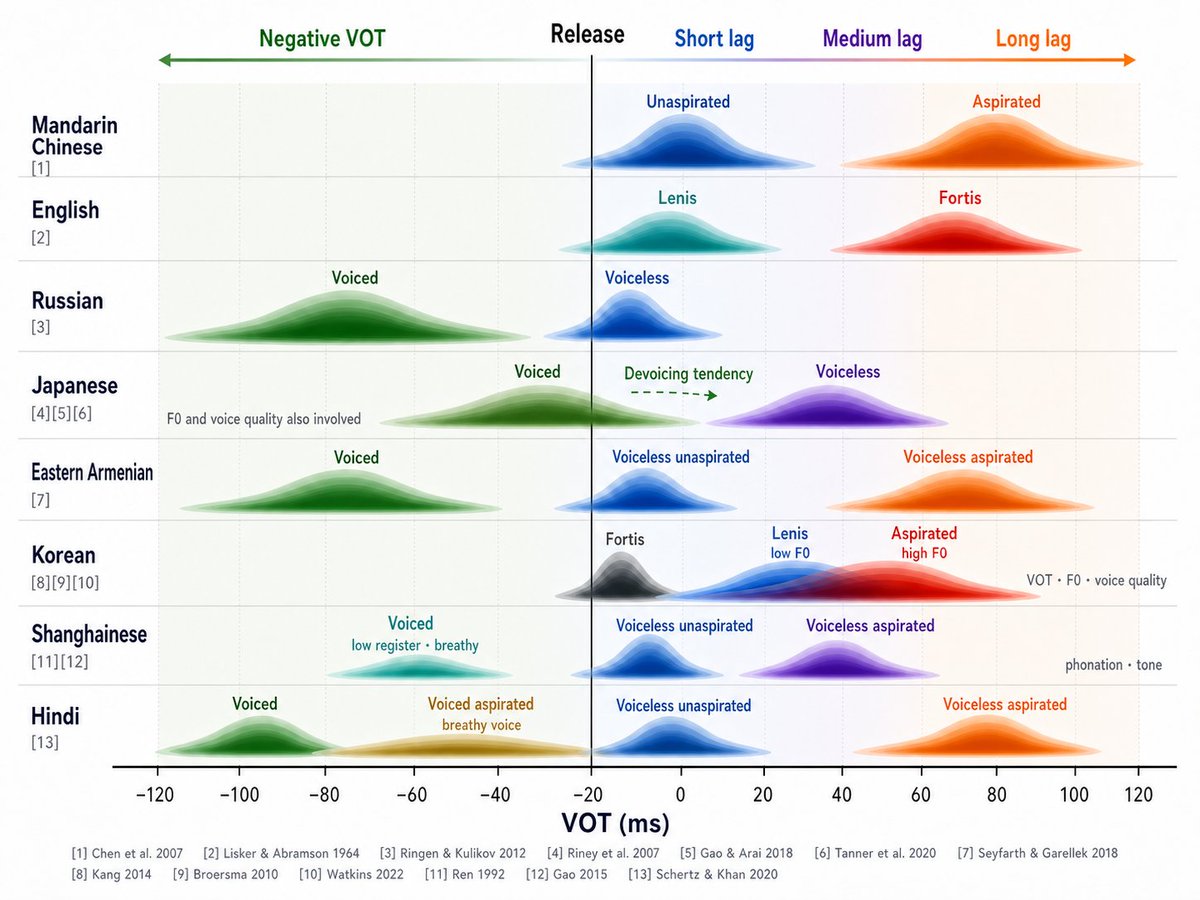
@Cayden_Cline As a native speaker who speaks some kind of Central Korean dialect, I feel like it’s [kʰ, tʰ, pʰ, tɕʰ] for ㄱ, ㄷ, ㅂ, ㅈ, [kʰʰ, tʰʰ, pʰʰ, tɕʰʰ] for ㅋ, ㅌ, ㅍ, ㅊ, and [ʔ͡k̬ˑ, ʔ͡t̬ˑ, ʔ͡p̬ˑ, ʔ͡tɕ̬ˑ] for ㄲ, ㄸ, ㅃ, ㅉ respectively at the initial position of words (ignoring pitch)
English

What I don’t understand about tense consonants in Korean is their articulation. Not geminated, not ejected, not imploded. I can’t articulate “tenseness” without some kind of mechanism to reference. “Increased pressure and stretched vocal chords” isn’t helping me phonate anything
English
@complingcowboy @Cayden_Cline You are mostly correct, but at the initial position of words, lenis ㄷ is usually pronounced as aspirated [tʰ] while ㄸ is always unaspirated. So it is quite complicated; while English 'dance' is usually converted as <댄스> with ㄷ, it is often pronounced as /땐쓰/ with ㄸ.
English

@Cayden_Cline not korean but i would assume it's usually perceived closer to ㄷ than ㄸ. korean stops aren’t really distinguished by voicing the same way so english /d/ tends to map to the lenis rather than the tense segment
English
Medve retweetledi

Medve retweetledi
![괴골 [개물]](https://pbs.twimg.com/profile_images/810793493517910016/CHvgUsjN.jpg)

Medve retweetledi


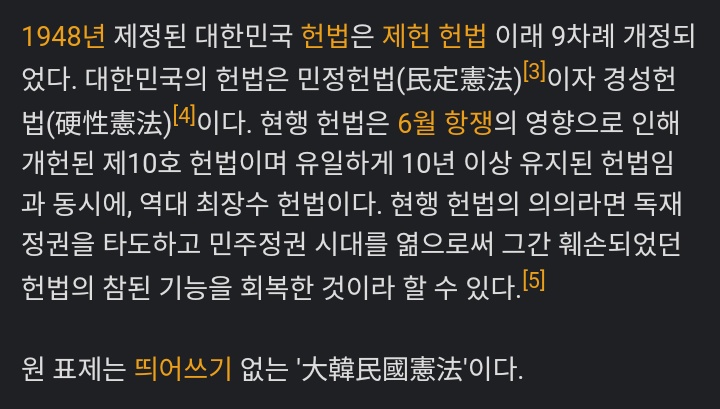
大韓民国憲法のナムウィキ
一番下のやつ日本にないような韓国独自の言葉の問題で面白い
「元の表記は分かち書きしない'大韓民國憲法'である。」
普通に何も考えず書くと대한민국 헌법になるだろうけど、元々は続け書きの대한민국헌법やでって感じかな
日本語
@hangugeo_jp '태어나다'는 '태어' + '나다'이고, '나다'쪽이 生/產이라는 뜻이니까 '나다'랑 '낳다'를 비교하면 둘이 관련이 있을 것 같아요...!
한국어

@ixj4y @Cartidise There is! Though they are written in neither Hangul '삼성' or Latin Alphabets 'Samsung', but in Hanja (Chinese Characters in Korean) '三星'
English



@VioletMelancho @maycontainnuts7 @NakoMoonVT What is 'Chinese Kanji'? The term Kanji should be exclusively for Chinese characters used in Japanese and not a general term for Chinese characters... just like Hanja for those in Korean and there's no such a thing called Chinese Hanja or Japanese Hanja...
English

@maycontainnuts7 @NakoMoonVT There are definitely Japanese Kanji. Borrowing Chinese Kanji for thousand years will of course lead to new invented characters, like 凪, which does not exist in the traditional Chinese dictionary. 海 is Chinese Kanji though.
English

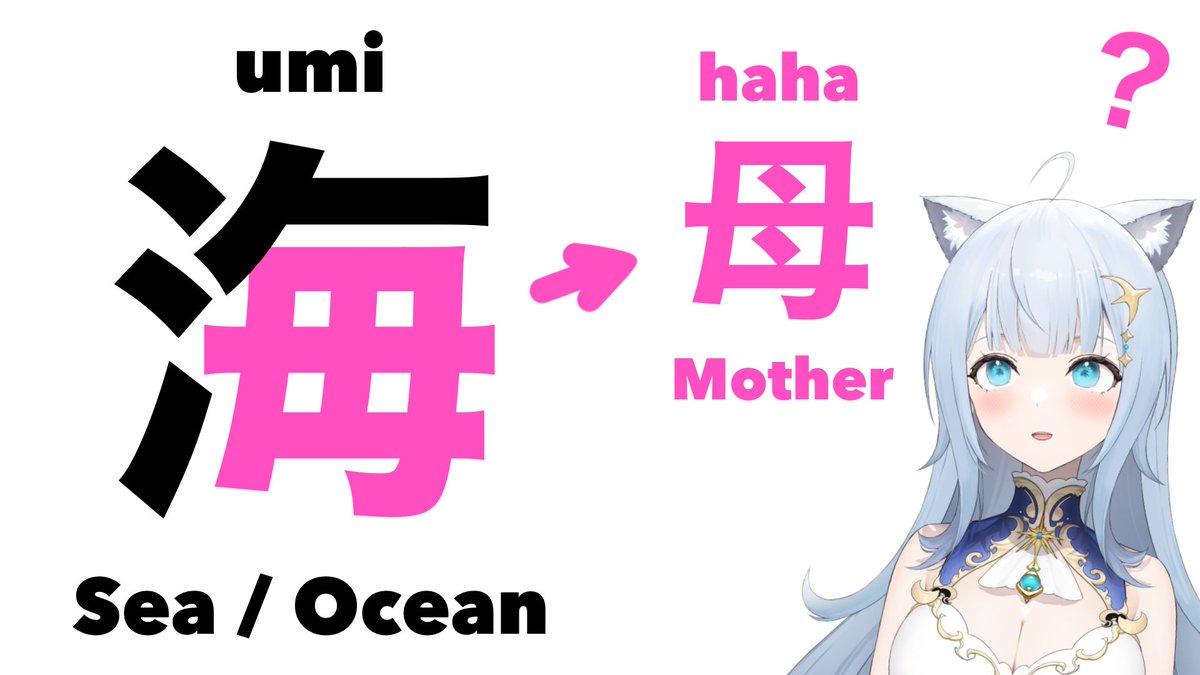
Why is "mother" (母) inside the Japanese kanji for "sea" (海)? 🌊🤱🇯🇵
I was curious about this too, so I looked it up!
海 is made of 氵 (water radical) and 毎 (every).
If you look closely, 毎 contains the character for mother (母)!
🔎 Here’s the origin:
In ancient times, 毎 depicted a mother wearing many hair ornaments.
Because these ornaments were layered together, the character came to mean "dense," "vast," or "so deep that it looks dark."
So, 海 represents water (氵) that is so deep and vast (毎) that you cannot see the bottom!
💡 Fun fact:
While many believe it’s because "the sea is the mother of life," the original etymological reason is to describe the sea's incredible depth and darkness. 🌸✨
arkitekd@agusAditya_
@NakoMoonVT Why there is 母 in 海
English


@kulinnit 서울 돌아다니다 본 건데 찾아 보니 구로구랑 남쿠칭이랑 자매도시 관계가 있나 보네요...!
seoulcity.co.kr/news/articleVi…
한국어


Medve retweetledi

ドイツ語は主に語順が英語に全然似ていないので、英語のSVOとかに嫌気が差してる新入生には結構おすすめです(SOV-V2の図)。

避暑子@FerrisForOthers
Sie ist Studentin. Ich habe eine Katze. Wir lernen Deutsch. みたいな例文を紹介して「ね?ドイツ語って英語とほとんど一緒で簡単でしょ?」って感じで履修させる詐欺が横行してるので気をつけてください。
日本語
Medve retweetledi

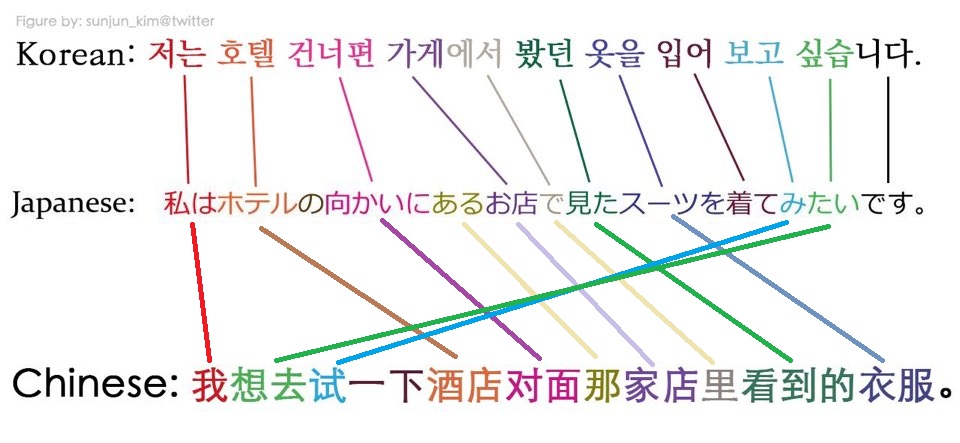
Medve retweetledi

@kimdukhoo 안녕하세요. 해당건물은 일본 효고현에 있는 사찰 불교지왕당(佛教之王堂)에 있는 오중탑입니다. 해당 사찰은 염불종(念佛宗)의 총본산으로 조영시 한중일 장인들의 작품을 사찰에 도입했습니다. 해서 건물은 일본식 목탑이나, 단청은 단청장 만봉스님과 홍창원 선생님 등이 직접 작업하셨습니다.
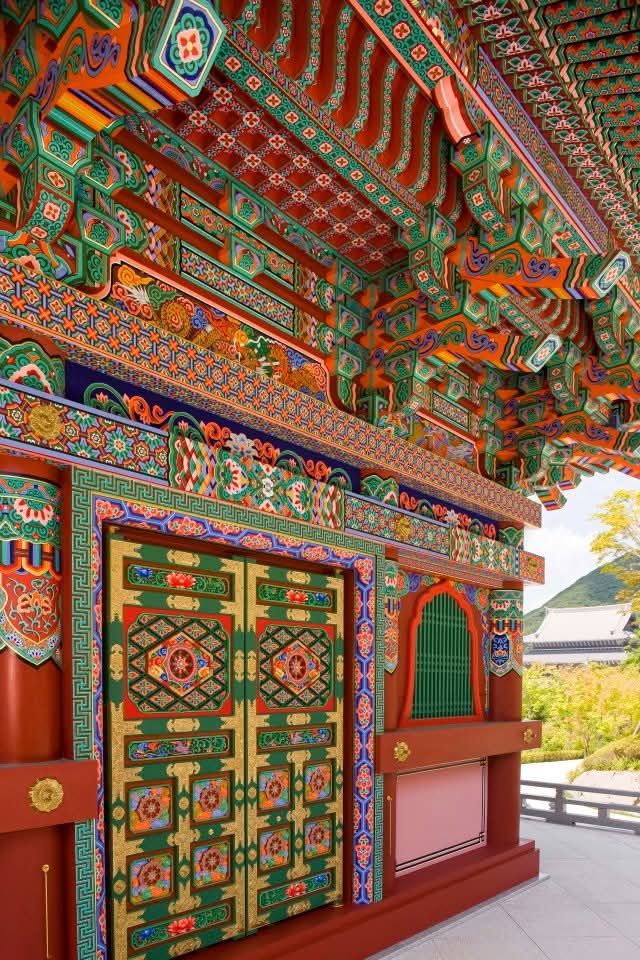

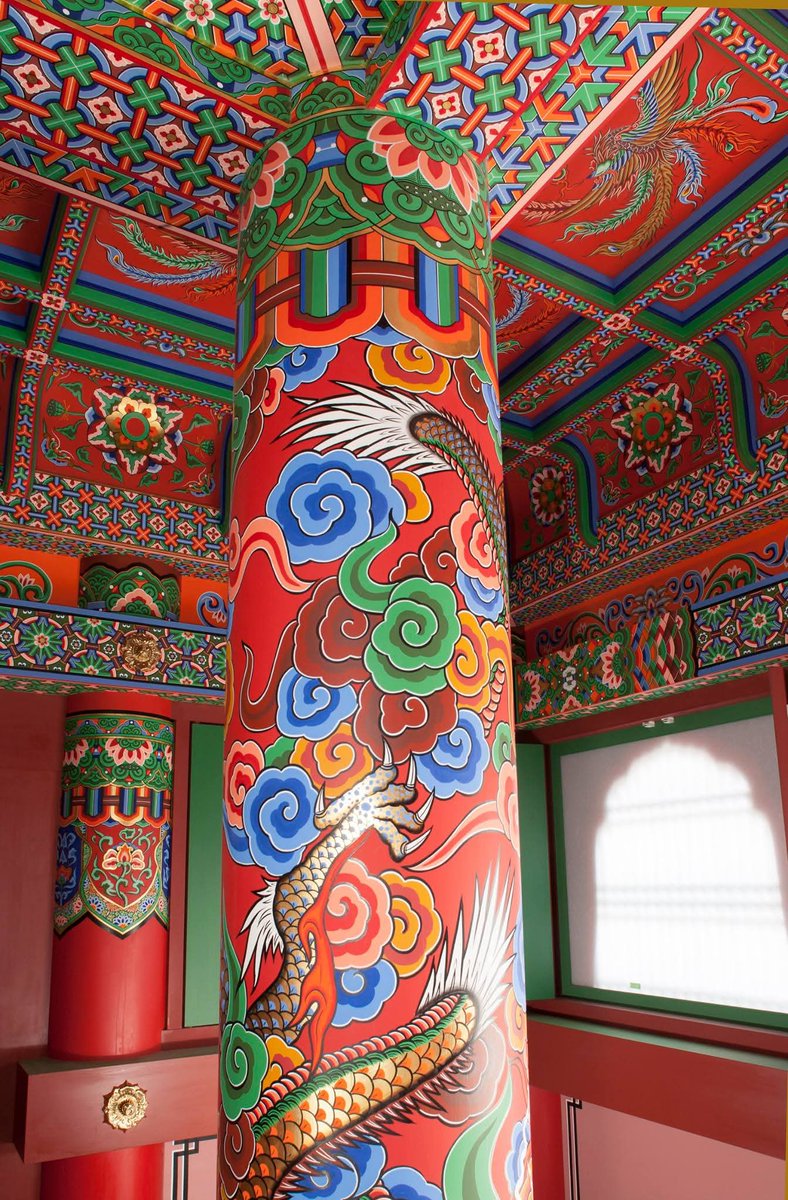
한국어
Medve retweetledi