Published a piece outlining our approaches at OpenADMET where we are trying to build the CASP for small molecule ADMET prediction w/ @fraser_lab @BioSteve @lnhandly @jchodera @Mark_Murcko @wpwalters nature.com/articles/s4146…
Naomi Handly
1.2K posts

@lnhandly
Biology. Dogs. Mama of 2. And commentary from my husband. she/her @OctantBio prev: UCSD UCLA BYU

Published a piece outlining our approaches at OpenADMET where we are trying to build the CASP for small molecule ADMET prediction w/ @fraser_lab @BioSteve @lnhandly @jchodera @Mark_Murcko @wpwalters nature.com/articles/s4146…


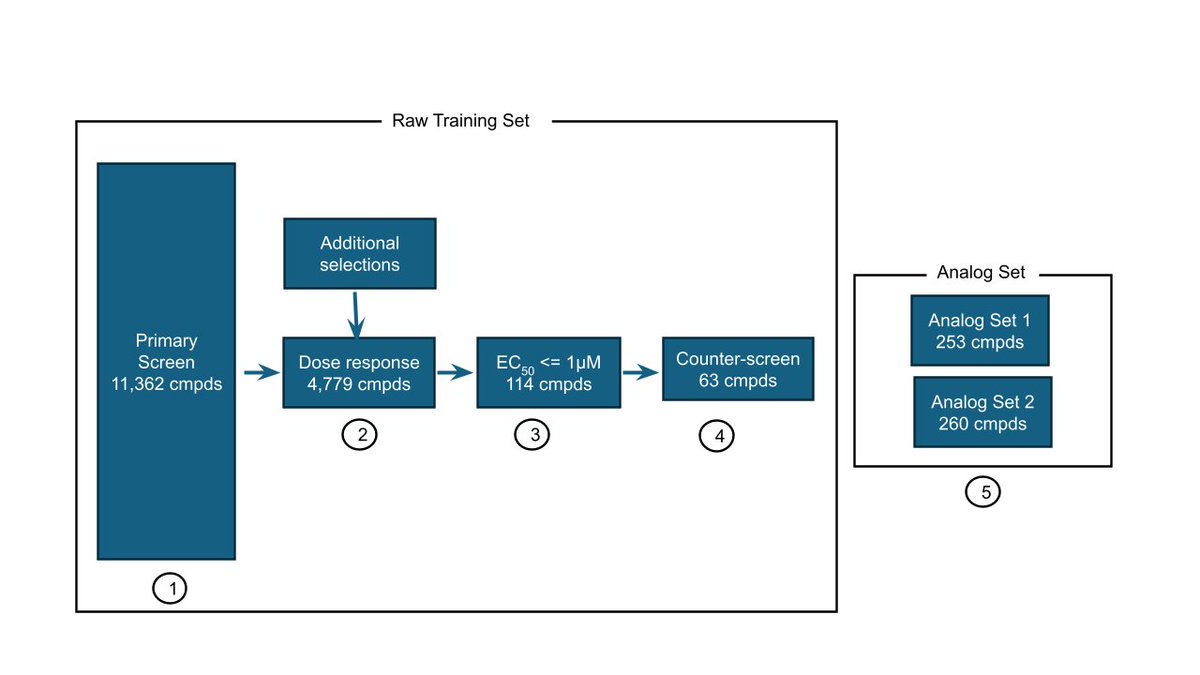
Calling all AI4Science Model builders! Announcing OpenADMET's 3rd Blind Challenge: Predicting PXR Induction We are releasing the largest self-consistent datasets on PXR induction and producing 110 new structures of PXR-ligand complexes. Details 👇 1/2

Calling all AI4Science Model builders! Announcing OpenADMET's 3rd Blind Challenge: Predicting PXR Induction We are releasing the largest self-consistent datasets on PXR induction and producing 110 new structures of PXR-ligand complexes. Details 👇 1/2

Big news! I’m joining @AsteraInstitute as CEO of Radial, their new life sciences division. How we fund, do, and build upon science has long needed an update. At Radial, we design, fund, and operate programs that tackle foundational scientific problems while simultaneously testing better ways to do science.


OK. Here it is. Over the last year, the @OctantBio and OpenADMET team have been hard at work developing scalable, quantitative, data-rich, and low-cost methods for assessing CYP reactivity and inhibition. The interplay between building a data engine and building predictive models is often the most subtle, difficult, and impactful work in small-molecule AI/ML. The blog post below is intended to highlight these issues and serve as a dialogue starter to help us, help you. In the post, we are: 1. Give some background on the types of assays we are building and the technologies we are developing to scale ADMET datasets. We also go deeper into the tradeoffs inherent in building assays and exposing some of our design decisions. 2. A data drop of some of the largest self-consistent datasets for CYP reactivity and inhibition (CYP3A4 & CYP2J2). Importantly, we are exposing the raw datasets and are urging the community to help us design better methodologies and analytical tools to best extract the most informative data. This is a teaser dataset for the competitions we are running on CYP reactivity/inhibition blind challenge later this year. 4. A call to the AI/ML and ADMET community to help us decide on the types of data we should be collecting and holding blind competitions for. Should we focus more on inhibition or reactivity? What about TDI, metID, microsomal, and other types of assays? What should our screening funnel look like? What summary statistics should we try to predict? How useful is the raw data and uncertainty? How important is true negative data, or is it more important to get more quantitative data? What compounds should we screen? Given a budget, what data should we collect (some assays are more expensive than others)? How should we split the data for the blind challenge?



In the Olympics of ADMET ... @inductive_bio has brought home the gold, again 🥇 To all the small molecule drug developers out there: try partnering with Inductive! A powerful AI med chemist might just become your team's MVP :) inductive.bio/indy Congrats to @joshhaimson @benbirnbaum and the entire team!


We are excited to announce we have won first place in the OpenADMET-ExpansionRx blind challenge - our second consecutive first-place finish in a major ADMET benchmark. This challenge had 370+ teams competing to predict 9 ADMET properties on over 2,250 unseen compounds from a real drug discovery campaign, rather than retrospective datasets. Beacon’s performance reflects how our virtual chemistry labs are used in practice: helping teams make earlier, higher-confidence decisions around safety, dose, and developability. Thanks to OpenADMET and Expansion Therapeutics for running a rigorous community benchmark, the Inductive team for all the work behind the results, and all our pre-competitive ADMET consortium members who made this possible.