@teortaxesTex Because his corporate job was in the Americas as a trader.
He was never an economist...
English
IgnorantLurker
1.5K posts

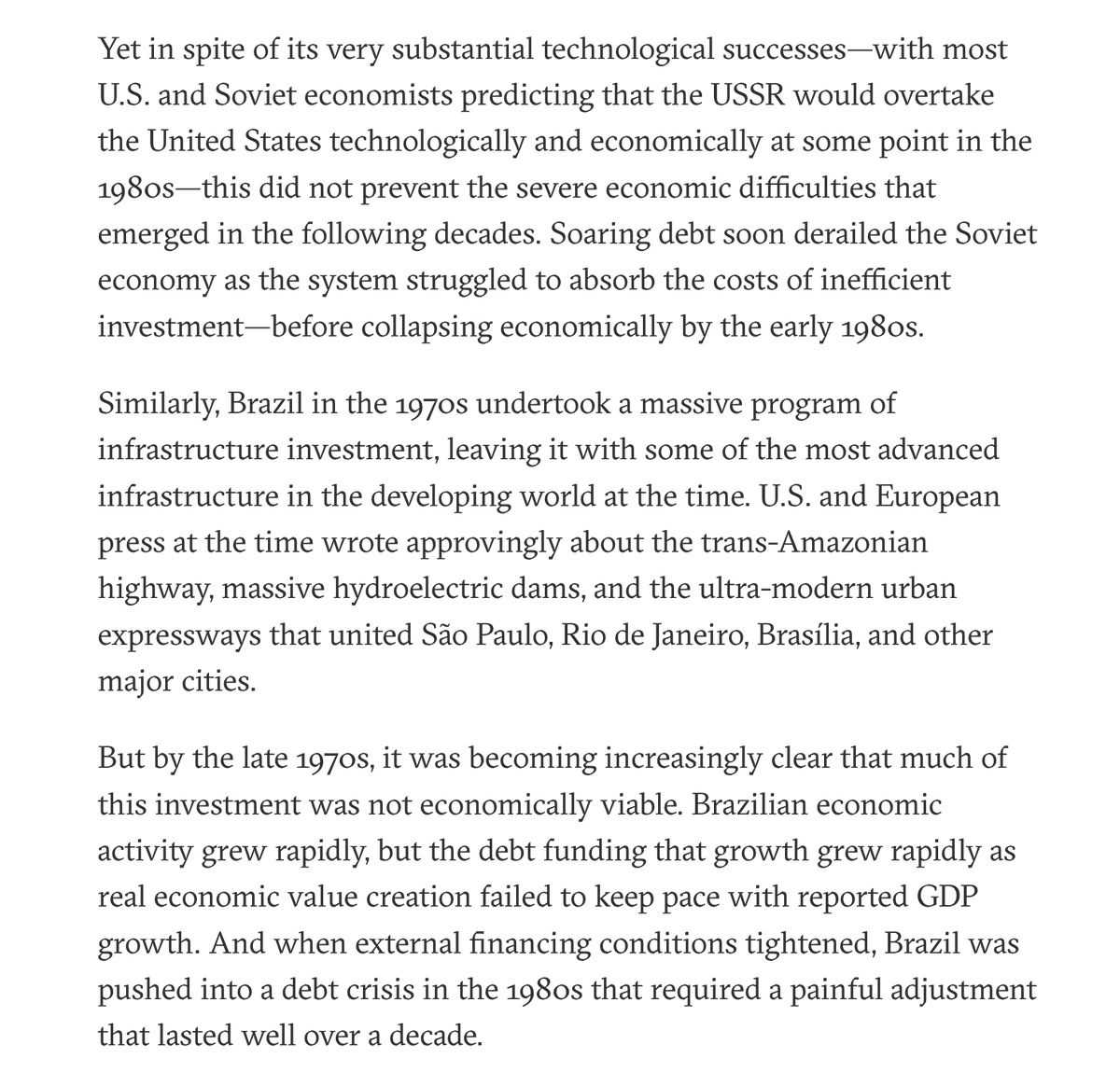
The Pettis–Tooze divergence may actually be quite straightforward. Pettis is looking at the financial economy: debt, bad investment, suppressed consumption, and losses waiting to be recognised. Tooze is looking at the real economy: factories, batteries, EVs, solar panels, supply chains, and industrial capacity. They are connected - loosely-coupled - but they are not the same thing. In a fiat world, that distinction matters more because the tie between financial claims and real output is looser, more political, and more discretionary than it was under gold. A bubble in finance does not automatically destroy productive capacity. And productive capacity does not automatically validate every financial claim written against it. That is why both Pettis and Tooze may be right at the same time. Pettis sees the distortion in the claims. Tooze sees the strength in the capacity. The real question is how the state manages the gap between the two. Under gold, that gap had a harder edge. Bad claims could persist for a while, but they eventually ran into the convertibility constraint. Under fiat, adjustment can be deferred, socialised, refinanced, inflated away, repressed, or pushed through the fiscal state. That is the post-1971 world: the financial economy can lie for longer, the real economy can endure beneath the lie, and the state decides how violently the two are made to meet - and who bears the loss. Pettis: carnegieendowment.org/china-financia… Tooze: adamtooze.substack.com/p/chartbook-44… #ElasticEconomics #FunctionalFinance #MalleableMonetarism

The US Army already ran a clinical trial with an Andes strain hantavirus DNA gene-therapy injection — the exact same strain behind the cruise ship outbreak. 98% of participants suffered adverse events. The DNA plasmid was created at the Fort Detrick BSL-4 army lab.


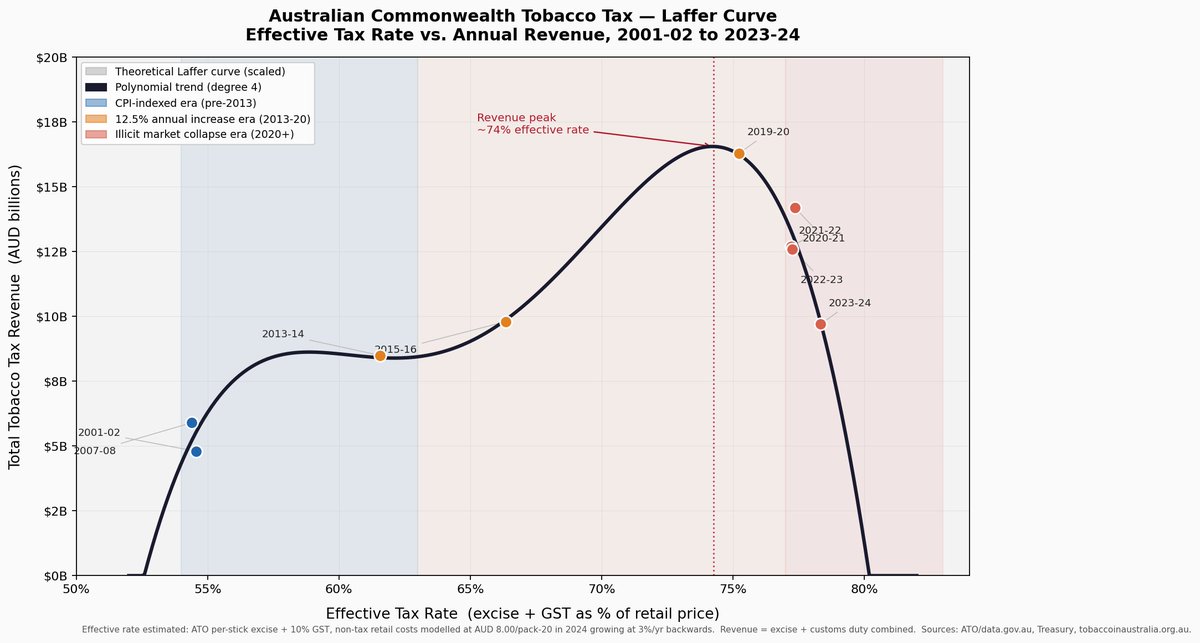



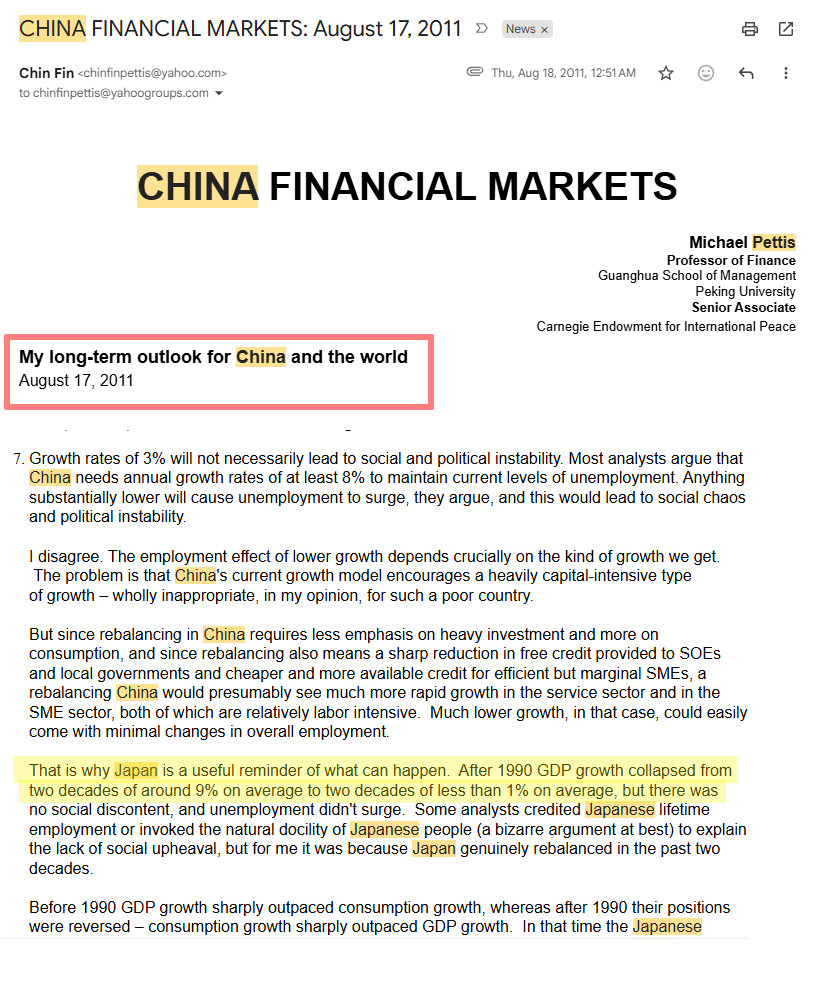
China has been “late 80s Japan” for 12 years in a row. Must be a record or something.

NYT reporting on classified U.S. intelligence assessments of Iranian missile capacity reiterates that they maintained 70% of their missiles and launchers but adds that 90% of their underground storage and launch facilities are also still active. Iran had designed is missile program with the acknowledgement of not being able to protect its airspace and relied on hardened underground "missile cities" to compensate. U.S. and Israeli attacks apparently disabled the entrances to some of these facilities and hit surface buildings. But as many observed at the time the attacks were failing to actually penetrate the underground facilities where the operations were carried out and missiles kept in storage. Most problematically for a renewed campaign the missile complexes near Hormuz are almost all still active according to the assessment. If the U.S. intel assessment is accurate it also explains why Iran was able to maintain a steady rate of missile fire until the end of the war, and also suggests that the U.S. and Israel simply wasted a lot of top-tier standoff munitions firing at rock complexes that it failed to penetrate.




You only need three 10-baggers in order to go from $1 million to $1 billion. $1m to $10m $10m to $100m $100m to $1bn If you’re starting with $10k, you only need five.


Possibility Of Operation To Retrieve Iran’s Enriched Uranium Appears To Rise As Negotiations Sputter Both Trump and Netanyahu made comments in the last 24 hours that point to a possible high-risk operation to snatch Iran's nuclear material. twz.com/news-features/…

Guys, do you think I can still get my hair back?