Wei Luo

388 posts

Wei Luo banner
Wei Luo

Wei Luo

@luoweicool

Assistant professor of Microbiology and Immunology @ Indiana University School of Medicine. B cell biologist trying to make better vaccines.

IUPUI Katılım Aralık 2009
755 Takip Edilen590 Takipçiler
Wei Luo retweetledi
Chris Robinson
Chris Robinson@TheRobinsonLab·
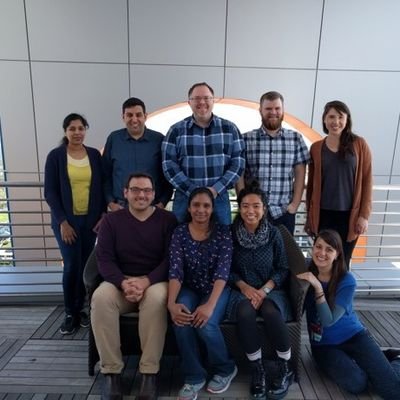
The IU crew at AAI. I feel grateful to be a part of such a wonderful group of scientists.
Chris Robinson tweet mediaChris Robinson tweet media
English
0
1
5
212
Wei Luo retweetledi
Paul Thompson
Paul Thompson@PTenigma·
Interesting to take part in today’s panel debate with @NIH Director, Dr Jay Bhattacharya @DrJBhattacharya , at a USC event hosted by Dean Carolyn Meltzer and Dr Neeraj Sood (USC School of Public Policy). Some takeaways: 💡The NIH budget will likely remain flat next year, but an increase in “forward funding” (now 37% of grants, up from 20%) will likely mean fewer grants awarded. Forward funding is intended to allow projects to spend much more in their first year than if the budget was constant in all years, and some investigators, e.g. a junior researcher, may need initially larger funding to set up their lab. 💡If a clinical trial is fully funded at the start, it avoids having nothing to show if each continuation year depends on annual funding appropriations (which are unstable). Forward-funding leads to a temporary very large drop in numbers of grants awarded but “at equilibrium” the same number of grants will be awarded. 💡Calls to increase the 500k/year budget for R01s (the standard type of NIH grant) have to be carefully balanced with the recognition that raising this would lead to fewer grants overall. 💡There is very high priority on reproducibility of research, as not prioritizing this has led to loss of public trust in science. Consortia can address this. Some audience members (incl Rob McConnell) noted it might make sense to expand reproducibility to include experimental work where multiple lines of converging evidence point to a conclusion, from multiple different approaches, rather than just repeating the experiment. But this can be expensive. 💡Paylines (where the top x% of grants are funded, and x is known) are being replaced by a system where NIH institute directors and POs have more discretion. This is because the top-N by score may not be necessarily more impactful than the best selection of grants that collectively as a portfolio could make the greatest impact. If there is redundancy, this can be traded off by funding a lower-scoring grant with higher risk/higher impact. 💡Foreign components on grants are welcome, but must use the new PF5 format with higher expectations of auditing and reporting for the foreign site, including making primary research records available to the funder via the prime site. Foreign subawards are no longer being used as they involve less oversight which can lead to loss of public trust. 💡Panelists noted the need to speed up reviews and the time-to-funding, which has greatly increased. Dr Bhattacharya noted that some ideas take time to incubate in the community before they can be reliably funded, whereas others (perhaps AI, clinical trials) can lose impact if delayed or review is too slow. 💡There is a proposal being entertained that K awards (for junior faculty) be given as an allocation to the institution to give out to people they vet, rather than directly awarded. 💡NIH wants to “spread out” funding to more institutions, across more of the country, to reduce the concentration of funding at some institutions. 💡Innovation is sometimes killed by reviewers who put too much emphasis on the certainty of the approach working. Often Aims 2 and 3 of a project depend on a high-risk, high-payoff Aim 1 working. Forward funding of 2-3 years can allow a checkpoint to be included on a high-risk Aim, before more funding. 💡Thank you to @KECKSchool_USC for hosting the event, and to Neeraj Sood for his "Open Dialogues" project.
Paul Thompson tweet media
English
9
26
84
18.1K
Wei Luo retweetledi
Prof. Nikolai Slavov
Prof. Nikolai Slavov@slavov_n·
A remarkable result supported by remarkably clean data. A recent study published in Cell tackles a difficult and important question: Can a routine vaccine influence dementia risk? Instead of relying on correlations, they use a quasi-experimental design built around age-based eligibility for the shingles vaccine. Individuals just above and below the cutoff are nearly identical, except for vaccination status. This creates a rare opportunity in human populations: something close to randomization at scale. The result: vaccinated individuals show a lower incidence of dementia over time. The separation is gradual, internally consistent across analyses, and robust to multiple checks. Even among people already diagnosed with dementia, vaccination is associated with slower progression and lower mortality. No mechanism is claimed. No overreach. Just a clear signal from a well-constructed natural experiment. The implication is hard to dismiss: a single, widely used vaccine — given for an unrelated reason — may meaningfully alter the trajectory of one of the most complex diseases in medicine.
Prof. Nikolai Slavov tweet media
English
9
59
203
20.2K
Wei Luo retweetledi
Ming "Tommy" Tang
Ming "Tommy" Tang@tangming2005·
5 websites to analyze GEO RNAseq data without a single line of code 👇 AI tools as a bonus in the end!
English
2
33
123
13.5K
Wei Luo
Wei Luo@luoweicool·
@FrankieDHeyward So sorry about it. I hope you will eventually get this award to support your cool research. Don't give up
English
1
0
1
406
Frankie D Heyward, Ph.D.
Frankie D Heyward, Ph.D.@FrankieDHeyward·
I just learned that my 2025 NIH DP2 grant score (24) was actually "competitive enough" and within the fundable range, but it was overlooked to support multiple applications of the same and worse score (I have no gripe with those applicants). While I feel a sense of accomplishment, I can't stop wondering why I shouldn't benefit from some of the career cachet associated with obtaining a prestigious DP2 award when my application met the mark. Regardless, this has been a watershed revelation for me. I now appreciate that I didn't come up short, and I don't have to question my potential as a future thought leader within my field. My ideas were creative and innovative enough. I wrote an excellent application that was likely in the top 4% of all applications. And I was acknowledged by scientific experts within and beyond my field that reviewed my grant. I was successful by all measures, I was ultimately just not selected by key NIH stakeholders for reasons I'll refrain from speculating on publicly.
Frankie D Heyward, Ph.D. tweet media
English
8
4
70
15K
Wei Luo
Wei Luo@luoweicool·
NIH grant application: me versus a big name PI.
English
0
0
6
413
Wei Luo retweetledi
NIH
NIH@NIH·
NEWS: Expanded umbilical cord blood transplant achieves 94% survival in severe aplastic anemia patients. Read more: bit.ly/48P0Isb
English
2
6
31
8.9K
Wei Luo
Wei Luo@luoweicool·
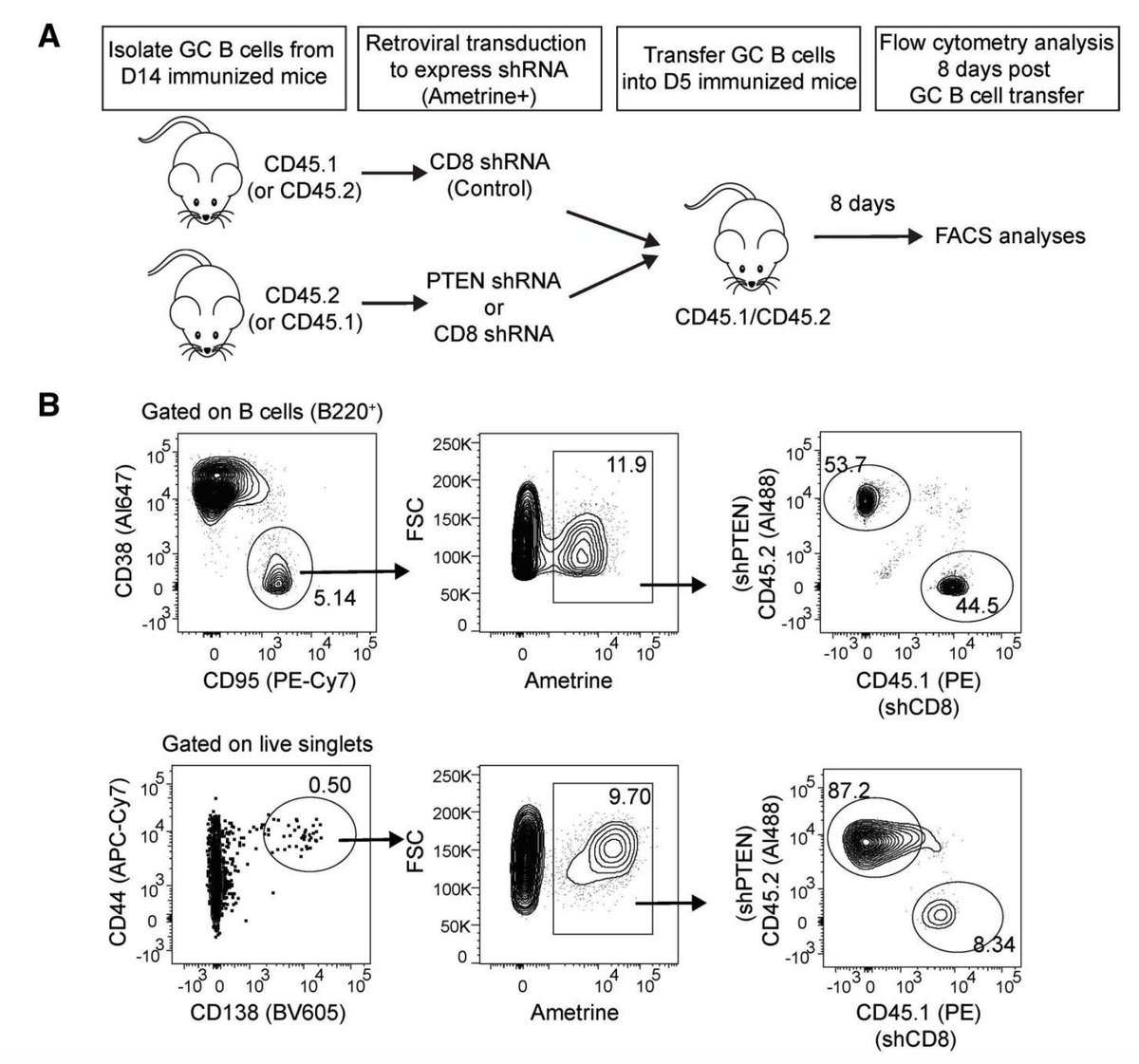
@J_Immunol @ShlomchikLab My personal favorite part is that when you knock down PTEN in GC B cells, you get 10 times more GC-derived plasma cells:
Wei Luo tweet media
English
0
0
1
38
Jason Shepherd
Jason Shepherd@JasonSynaptic·
This is simple: 1. Increase the budgets for NSF/NIH. 2. Stop meddling with funding for academic institutions. 3. Stop putting up barriers to recruit global talent. 4. Honor scientific peer review and 5. Remove political influences on funding decisions.
Director Michael Kratsios@mkratsios47

.@POTUS has set a clear priority for this Administration: to revitalize America's scientific enterprise and usher in a Golden Age of American Innovation. To advance that mission, @WHOSTP47 has published a Request for Information seeking policy proposals from the scientific community to strengthen our S&T ecosystem. The RFI is open until Dec. 26! federalregister.gov/documents/2025…

English
5
11
84
20.9K
Wei Luo retweetledi
Keith Siau
Keith Siau@drkeithsiau·
The scariest thing in academia 😅
Keith Siau tweet media
English
45
337
2.3K
124.2K
Wei Luo retweetledi
Jie Sun
Jie Sun@Jie_Immunology·
Current i.m. COVID and Flu vaccines induce good immunity in the blood, but not well in the mucosa. Our new study @ImmunologyTang @arka_sc uncovers how mucosal boosters drive powerful IgA responses, essential to block infection at the site of entry. biorxiv.org/content/10.110…
English
1
5
15
938
Wei Luo retweetledi
Oded Rechavi
Oded Rechavi@OdedRechavi·
Only single cell sequencing of the all these post docs will reveal why
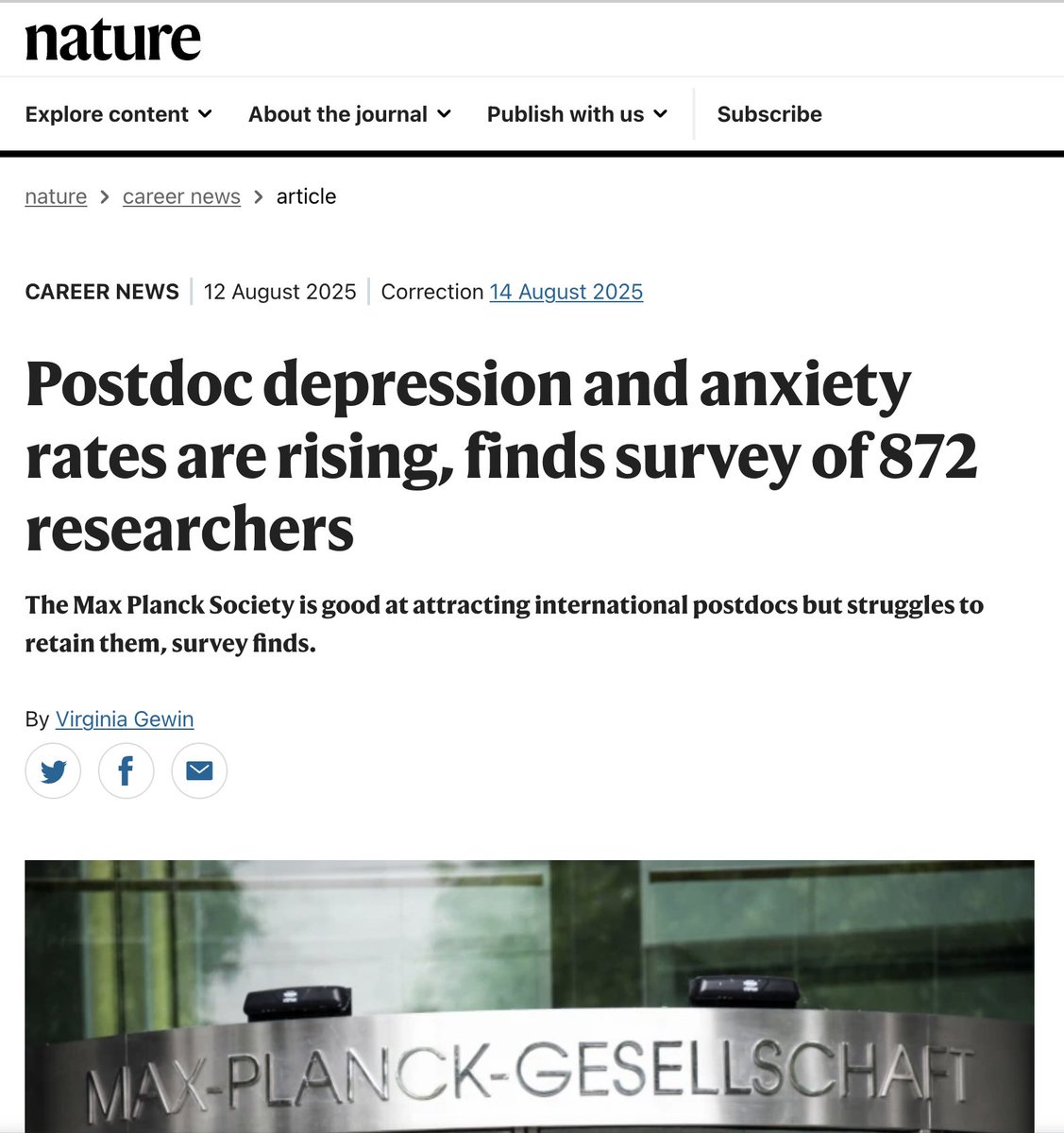
Oded Rechavi tweet media
English
40
188
1.6K
89.8K