He lived chained to a radiator in a basement for 7 years. He had never seen sunlight. The day they freed him, he walked to a window and sat there for 9 hours without moving.
In February 2023, law enforcement officers executing a welfare check on a condemned property in a deteriorating neighbourhood on the outskirts of a former mill town in western Pennsylvania found something in the basement they weren't looking for.
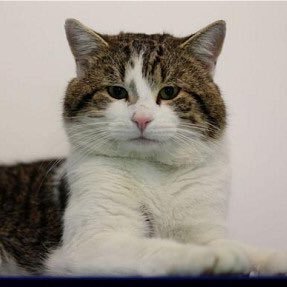
A cat. A large orange tabby male. Chained to a radiator pipe by a padlocked dog collar around his neck. The chain was fourteen inches long.
Fourteen inches. For seven years.
The property's previous occupant — deceased for three weeks before the welfare check — had kept the cat in the basement since approximately 2016. Neighbours knew a man lived there. No one knew about the cat. The basement had no windows. One bare bulb — burned out at the time of discovery. A bowl of crusted dry food and a bowl of green, algae-filmed water sat just within the chain's reach.
The cat had lived his entire adult life in a fourteen-inch radius in total darkness.
He was sitting upright when they found him. Not lying down. Sitting. The officers said that was the part that broke them first — he was sitting perfectly upright in absolute darkness like he was waiting for something. Like he had been waiting for seven years.
A local veterinarian documented what seven years on a chain in a basement does to a living thing.
His muscles had atrophied so severely he could barely stand. His rear legs buckled when he tried to walk — the tendons had shortened from years of inactivity, locking his joints at angles that no longer allowed full extension. He could take three steps before collapsing. His world had been fourteen inches for so long his body had forgotten how to cross a room.
The collar had been put on him years ago when his neck was smaller. He had grown into it and then beyond it. The leather had embedded into his skin — the tissue had healed over the edges in two places, physically fusing the collar to his neck. Removing it required sedation and surgical cutting. The wound beneath was a complete ring of raw, infected tissue circling his throat — hairless, ulcerated, weeping. It had been infected for years. The pain had been constant for years.
His claws had never been worn down by walking or scratching. They had grown in continuous spirals — curling under his paw pads and puncturing the soft tissue on the bottom of his feet. Three claws had grown entirely through the pads and emerged on the other side. He had been standing on claws piercing through his own feet.
His eyes were the most severe finding. Seven years in total darkness had caused his pupils to dilate permanently to maximum. When they brought him into daylight, he convulsed. The vet shielded his eyes immediately and kept him in a dimly lit room for the first week, increasing light exposure by ten percent per day. His left eye eventually adapted. His right eye never fully recovered — the retina had deteriorated from years of zero light stimulation. He sees shadows and movement from that eye. Nothing more.
He had never been touched gently. The vet tech who removed his collar was the first person to stroke his head without the preceding sound of a chain. He flinched so hard he fell off the table. The second time she touched him, he flinched. The third time, he leaned into her hand one millimetre. She said she felt it — the tiniest shift in weight — and she had to leave the room.
He weighed nine pounds. He should have weighed fifteen.
Recovery took four months. Physical therapy three times a week to relearn how to walk — stretching the shortened tendons, rebuilding muscles that hadn't moved in seven years. He took his first full steps across a room on day nineteen. He fell twice. He got up both times.
On day twenty-three, the foster carer carried him to the living room. He had never been in a room with windows. She set him on the carpet in a square of afternoon sunlight.
He froze.
He stood in the sunlight and did not move for a long time. Then he walked to the window. He put his front paws on the sill. He looked outside.
He sat down. He did not move for nine hours.
The foster carer checked on him every thirty minutes. He was awake. He was still. He was looking at the sky, the trees, the birds, the cars, the grass. He was seeing the world for the first time at approximately eight years old. Every colour. Every movement. Every single thing that existed on the other side of the glass that had been fourteen inches and a locked basement door away from him for his entire conscious life.
She said she sat on the couch behind him and watched him watch the world and cried until she couldn't see.
He was adopted by a retired postal worker who lives alone in a small house with large windows in a quiet township outside the same city. The man chose him specifically because of his story. He said: "Everyone wants the easy ones. The pretty ones. The ones that look good in photos. Nobody wanted him. I know what that feels like."
The man's house has seven windows. He built a wooden shelf beneath every single one. Every shelf is carpeted. Every shelf is wide enough for a large cat to lie down.
He named him Seven. For the years.
Seven is now approximately ten. He walks with a stiff, uneven gait. His right eye is clouded. His neck carries a permanent ring of hairless scar tissue where the collar was. His claws grow faster than normal and require trimming every two weeks — the vet thinks the growth pattern was permanently altered by years of uninterrupted development.
He spends fourteen hours a day at the windows. He rotates between them — following the sun from the east side of the house in the morning to the west side in the evening. He watches everything. Birds. Rain. Snow. Passing cars. Children walking to school. He watches it all with the patient, absolute attention of something that knows what it's like to have nothing to look at.
He has never once voluntarily entered a room without a window. If a door closes and he is in a room with no natural light, he cries. Not meows. A deep, low, guttural sound that the owner says vibrates through the floor. He opens the door immediately. Every time.
The postal worker told a neighbour: "People ask me what's wrong with him. I tell them nothing is wrong with him. Everything was wrong with what was done to him. He's the most right thing in my house. He sits at that window and watches the world like it's the most incredible thing he's ever seen. Because it is. He didn't see it for seven years. Now he can't stop looking."
"And I'll never close a curtain in this house. Not one. Not ever. He gets every window. He gets every sunrise. He gets every single thing that was taken from him. That's the deal."
Wenn ich an Demenz erkranke, möchte ich, dass meine Familie diese Wunschliste dort an die Wand hängt, wo ich wohne. Ich möchte, dass sie sich an diese Dinge erinnern.
Jedes Mal, wenn du den Raum betrittst, kündige dich an. „Hallo… – hier ist ........ ...“
Frage NIEMALS:
1\
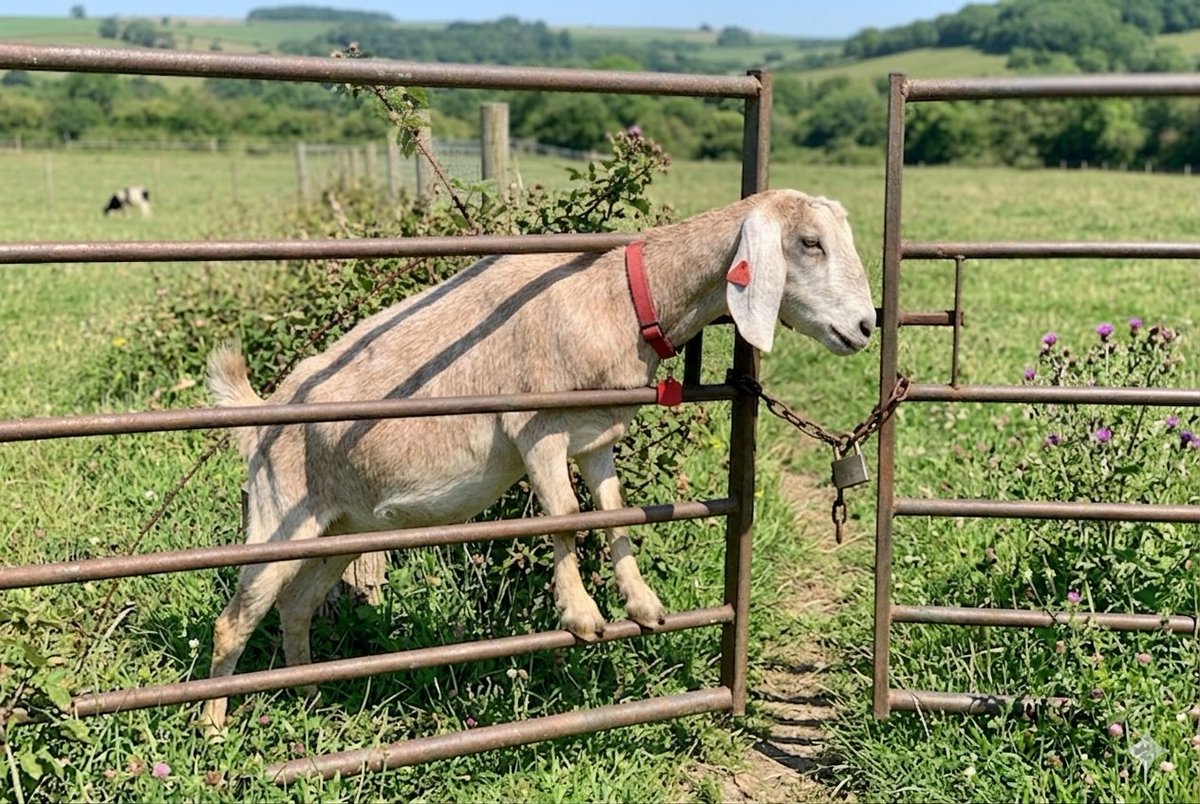
Keith is a three-year-old Anglo-Nubian goat in a field in Devon.
Keith has opened 7 gates, occupied a barn roof for 11 consecutive days, cleared an entire knotweed stand worth £4,000 to remove chemically, eaten Steve's bindweed, been in the churchyard twice, been in the road an estimated 14 times, eaten the water heater instructions, been in Dave's kitchen (standing there, not eating anything, just standing), and filed the structural details of every fence on the farm into a memory that has never once been cleared.
He has done all of this while also being the single most cost-effective conservation intervention on the property.
These are not separate facts. They are the same fact.
Keith does not distinguish between the work and the escape. The escape is work. The work is escape. The fence is a project. The project is completed. The project leads to the next project. The knotweed leads to the churchyard. The churchyard leads to the road. The road leads back to the east ditch. The east ditch was cleared in one season.
There is a man named Steve who has filed twenty-nine formal complaints about Keith.
Steve's bindweed is gone.
Steve does not yet understand that these are the same story.
Dave has £387 in gate receipts, a positive net outcome column on every row since entry seventeen, a churchyard booking for next month, and a corner post with a 4mm flex that Keith has known about since Margot's visit and has not yet acted on.
Not yet.
Keith is not done.
Keith is never done.
Keith is ten thousand years of Zagros Mountain goat compressed into a Devon field, and the fence between him and the rest of the world has always been a negotiating position rather than a boundary.
Be ungovernable. Do the work. Leave the field better than you found it.
The knotweed is at 6%.
Keith is thinking.
Finally
‘Night Workings’
Derek Roberts
Strange very sad day.
Trying to keep calm for Max who keeps thinking someone’s coming
Probably very few posts tomorrow. I need the distraction though
Thanks Everyone for your words. Kept me going for many weeks just lately
Helen
Max
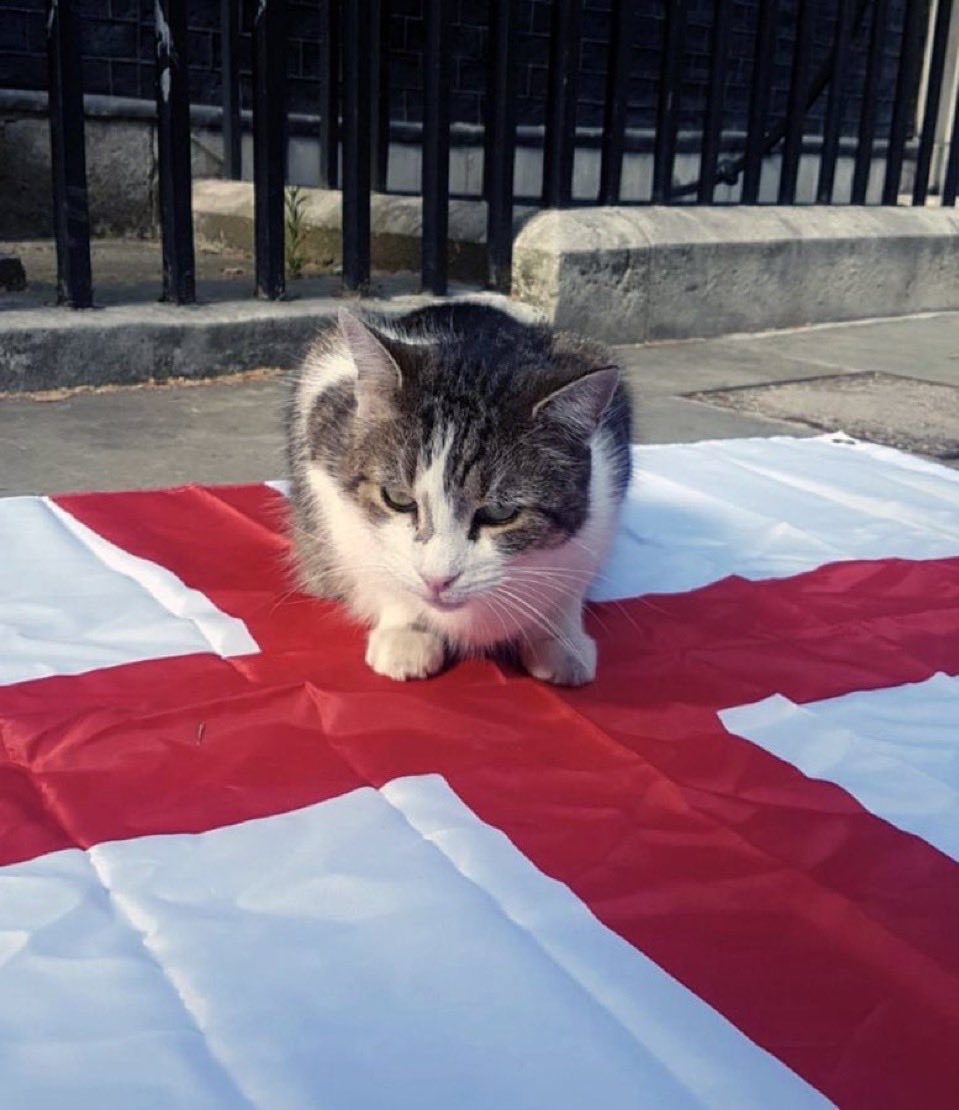
“The game's afoot: follow your spirit, and upon this charge, cry ‘God for Harry, England, and Saint George!’”
Wishing all my followers a very happy St George’s Day x
A final piece of advice from Holly Butcher - written the day before she passed away from cancer at just 27:
“It’s a strange thing knowing you’re going to die young.
At 26, I thought I had time…
To fall in love.
Start a family.
Grow old.
But cancer doesn’t care about plans.
Now, I understand how fragile life really is. Every single day is a gift, not a guarantee.
I’m not writing this to scare you. I’m writing to remind you: really live.
Stop stressing over little things. Be kind to your body- move it, nourish it, stop criticizing it. One day you’ll wish you had appreciated it.
Go outside.
Look at the sky.
Feel the sun.
Just be.
Spend less time chasing “stuff” - more time making memories. Don’t skip moments with people you love.
Laugh more.
Write a note.
Tell someone you love them.
Complain less.
Give more.
Helping others brings more joy than anything you can buy.
Be present.
Put your phone down.
Show up - really show up.
You don’t need to have it all figured out. You don’t need a perfect body, or a perfect life.
Just follow what makes your heart light up. Say no to what drains you. Make changes when you need to.
And please - donate blood. I wouldn’t have had that extra year without it. And that year gave me memories I’ll hold close… forever.
Thank you for reading this.
Live your life well.
And maybe… we’ll meet again someday.”
Holly 🩷
Repost & share Holly’s important advice. ❤️
The Man Nobody Is Talking About. His Name Is Sir Philip Barton.
Buried inside Tuesday's committee testimony, beneath the headlines about constant pressure, bullying and secret job searches, is the detail that may prove the most consequential of this entire affair. It concerns not Olly Robbins, not Morgan McSweeney, not even Keir Starmer. It concerns the man who was there before all of them. The man who said no. The man who then left his post eight months early.
Sir Philip Barton was the Permanent Under-Secretary at the Foreign Office when Peter Mandelson's appointment was announced in December 2024. He was, in other words, the most senior civil servant in the building at the precise moment the machinery of state was being directed to place a man with documented links to Russia and China into the most sensitive diplomatic posting in the Western alliance.
What Robbins told the committee on Tuesday is this. Barton pushed back. When the Cabinet Office argued that vetting Mandelson was unnecessary, that a peer and Privy Councillor did not require developed vetting, Barton refused to accept it. He insisted that vetting was a requirement. He had to be, in Robbins's own words, very firm in person. He also voiced reservations about the appointment to Jonathan Powell, the National Security Adviser, reservations that were noted and not acted upon. He was worried, Robbins suggested, about exactly the same reputational risks that had been detailed to the Prime Minister before the appointment was announced.
Then Sir Philip Barton left his post. Eight months before his tenure would otherwise have concluded.
The question Richard Foord put to Robbins on Tuesday was the right one. Why did Barton's tenure end early? Robbins said he did not know. He suggested ministers may have felt it was time for a change. That answer is not an answer. It is the absence of one.
Consider what the timeline now shows. A senior civil servant pushes back against the appointment, insists on vetting when the Cabinet Office wants to bypass it, raises reservations with the National Security Adviser, and departs eight months ahead of schedule. His replacement arrives to find the appointment already treated as a fait accompli, the vetting process under constant pressure from Downing Street, and the question of outcome entirely subordinate to the question of speed.
If Barton was removed because he stood in the way of this appointment, then Robbins was not the first civil servant sacrificed to protect it. He was the second. And the question of who else was moved aside, overruled or silenced in the months between December 2024 and the moment the security services finally said no, becomes the most important question this affair has yet produced.
Starmer sacked Robbins for following the rules. The Foreign Affairs Committee will now call Barton to give evidence. What he says will either confirm what the timeline already suggests or provide an alternative explanation that the evidence does not currently support.
There is a pattern here that goes beyond process failure. Process failures are random. They point in different directions. What this affair has produced is a series of events that point consistently in one direction. Officials who comply are retained. Officials who push back depart. The security services are bypassed. The vetting is treated as an administrative inconvenience. And the one question nobody at the top of this government will answer is why this appointment, this man, this post, mattered so much that every obstacle was removed to make it happen.
Barton apparently asked that question. He left eight months early. The country deserves to know why.
Good Morning
Stee had a heart attack last night.
He’s stable but poorly.
I’m off to see him soon
Just another thing!
Hope these beautiful tiles go through
🔴 300 journalistes américains viennent de signer une pétition exigeant que leurs pairs condamnent Trump publiquement, depuis le podium, en sa présence, lors du dîner des correspondants.
Cette initiative et ce document sont historiques.
Le dîner de la White House Correspondents' Association existe depuis 1914. Durant 112 ans, il a célébré la relation entre le pouvoir et la presse dans une démocratie. Des présidents de tous bords y ont assisté. Reagan y a même participé depuis son lit d'hôpital après la tentative d'assassinat de 1981. C'est l'un des rituels fondateurs de la démocratie américaine : le chef de l'exécutif et les journalistes qui le scrutent, réunis dans la même salle, sous le même toit, pour célébrer ensemble la liberté de la presse.
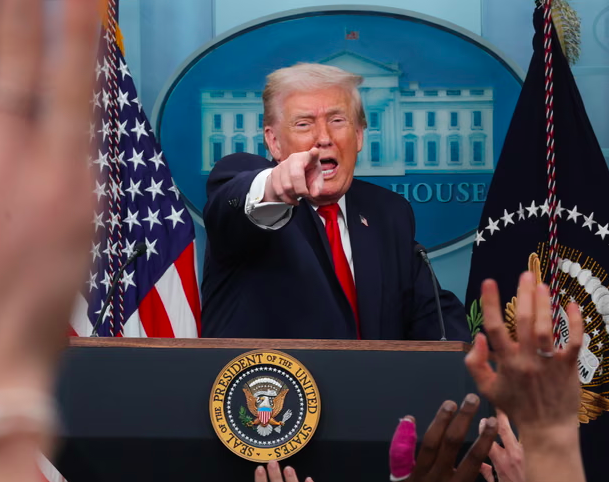
🗓️ Le 25 avril 2026, Donald Trump sera assis à la table d'honneur de cette soirée. Et 300 journalistes viennent de signer une lettre pour dire que ce n'est pas normal, que ce ne peut pas être "business as usual," que se lever pour applaudir l'homme qui les attaque quotidiennement serait une trahison de ce que ce dîner est censé représenter.
La pétition expose les faits suivants :
🟥 L'Associated Press @AP a été bannie des événements présidentiels et d'Air Force One pour avoir refusé d'écrire "Golfe d'Amérique" dans son guide de style éditorial.
🟥 @CNN , @washingtonpost, @nytimes, @NBCNews, @NPR ont vu leurs bureaux au Pentagone supprimés.
🟥 Des règles interdisant aux journalistes de publier des informations non validées par le département de la Défense ont été imposées (avant d'être annulées par un tribunal pour violation du Premier Amendement).
🟥 @CBS et @ABC ont reçu des poursuites judiciaires si coûteuses à défendre qu'elles ont préféré transiger, versant respectivement 16 et 15 millions de dollars à la future bibliothèque présidentielle Trump, sous pression des procédures d'approbation réglementaire que contrôle l'administration.
🟥 Jimmy Kimel (@jimmykimmel) a été suspendu par ABC pendant une semaine après que la @FCC a menacé la chaîne de retrait de sa licence d'émission.
🟥 Le New York Times a été accusé de trahison et qualifié "d'ennemi du peuple," une rhétorique que les organisations de protection de la presse identifient comme caractéristique des régimes autoritaires.
🟥 La Maison Blanche a lancé une page web officielle intitulée "Hall of Shame" ciblant nommément des journalistes pour des reportages jugés défavorables.
🟥 Des journalistes ont été arrêtés en couvrant des événements publics, Don Lemon (@Donlemonbsky) et Goergia Fort (@ByGeorgiaFort) sont poursuivis en justice.
🟥 Le domicile d'une journaliste du Washington Post a été perquisitionné par le FBI, ses téléphone et ordinateurs saisis.
🟥 Un journaliste primé aux Emmy Awards a été déporté en couvrant un rassemblement.
🟥 Une journaliste colombienne en demande d'asile a été arrêtée par ICE le lendemain d'un reportage sur des raids ICE.
🟥 1,1 milliard de dollars de financement déjà alloué à la radiodiffusion publique a été révoqué, plaçant 180 stations de radio et télévision à risque de fermeture.
🟥 Voice of America (@VOANews), 83 ans d'histoire, symbole mondial de la liberté d'expression américaine, écoutée sous tous les régimes autoritaires de la planète, a été démantelée.
🟥 Dès le premier jour du second mandat, des centaines de millions de dollars d'aide à la liberté de la presse à l'étranger ont été suspendus.
🟥 ... Et le détail qui dit tout sur le message envoyé : parmi les 1 500 personnes graciées pour les événements du 6 janvier 2021, il y avait huit individus condamnés ou inculpés pour violences contre des journalistes.
Les États-Unis sont tombés à la 57e place sur 180 pays dans l'index Reporters Sans Frontières (@RSF_inter), leur rang le plus bas depuis la création de l'index en 2002.
Cette pétition demande que l'association parle franchement depuis le podium, en la présence de Trump, plutôt que de lui offrir "seulement" une soirée festive.
De la résistance, pas une complicité passive.
Les signataires ne sont pas des militants. Ce sont notamment Dan Rather, Sam Donaldson, Ann Curry, Andrea Koppel, les visages du journalisme américain des cinquante dernières années. Des gens qui ont couvert des guerres, des présidents, des crises constitutionnelles. Des gens qui savent, mieux que quiconque, ce que signifie une presse libre, et ce que signifie la perdre.
Dans Le Pantin de la Maison Blanche, j'analyse comment cette administration a compris que la presse n'avait pas besoin d'être muselée directement pour être neutralisée. Il suffit de la ruiner financièrement par des poursuites, de la menacer réglementairement par la FCC, de récompenser les complaisants et punir les indépendants, de gracier ceux qui ont frappé des journalistes, de déporter ceux qui couvrent des événements, de créer un écosystème où l'autocensure devient la norme de survie.
Le dîner du 25 avril sera le miroir de ce que la presse américaine choisit de faire face à cette réalité.
📖 Le Pantin de la Maison Blanche → amazon.fr/dp/B0GPCCMS68/
Le texte de la pétition est ici : messagetowhca.tiiny.site