Fernando Rabanal

1.6K posts

Fernando Rabanal banner
Fernando Rabanal

Fernando Rabanal

@malacopa_genome

Postdoc in the Weigel lab at @MPI_Bio . Ribosome Heterogeneity | Genome Evolution | Repeats | Herbicide Resistance. Also as @GenomeEvolution.bsky.social

Katılım Kasım 2016
532 Takip Edilen761 Takipçiler
Fernando Rabanal retweetledi
Satoshi Kawato 川戸 智
Satoshi Kawato 川戸 智@KawatoSatoshi·
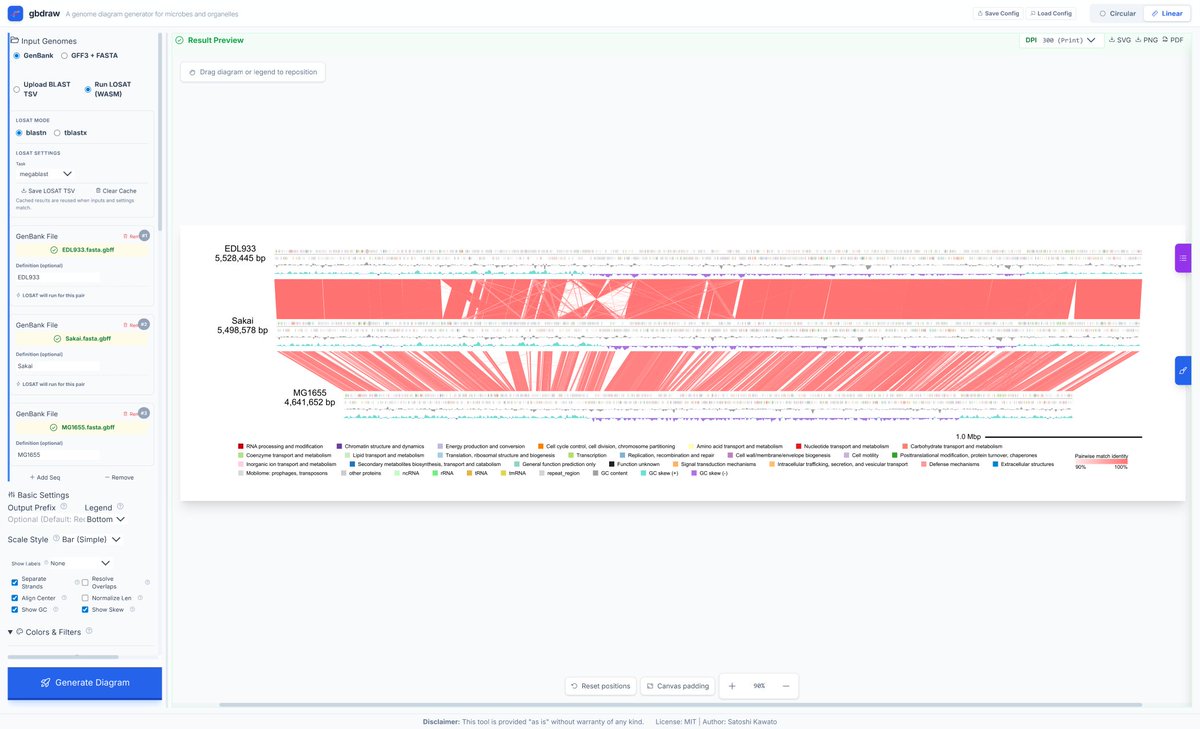
Visualizing pairwise genome comparisons? No need to run BLAST separately anymore! 🧬 ​#gbdraw has implemented #LOSAT, a WASM-powered Rust reimplementation of BLASTN/TBLASTX. ​✅ No local installation ✅ No data transfer (Serverless) ​Try it here: gbdraw.app
Satoshi Kawato 川戸 智 tweet mediaSatoshi Kawato 川戸 智 tweet media
English
1
84
280
17.1K
Fernando Rabanal retweetledi
David Honys
David Honys@DavidHonys·
📢 New paper from our lab! Ribo-BiFC enables direct visualisation of assembled 80S ribosomes in vivo in plants 🌱 — allowing observation of active translation across tissues. 🔗 link.springer.com/article/10.118… 👏 Big congratulations to the whole team! 1/2
David Honys tweet mediaDavid Honys tweet mediaDavid Honys tweet media
English
1
4
11
385
Fernando Rabanal retweetledi
Maya Voichek
Maya Voichek@MayaVoichek·
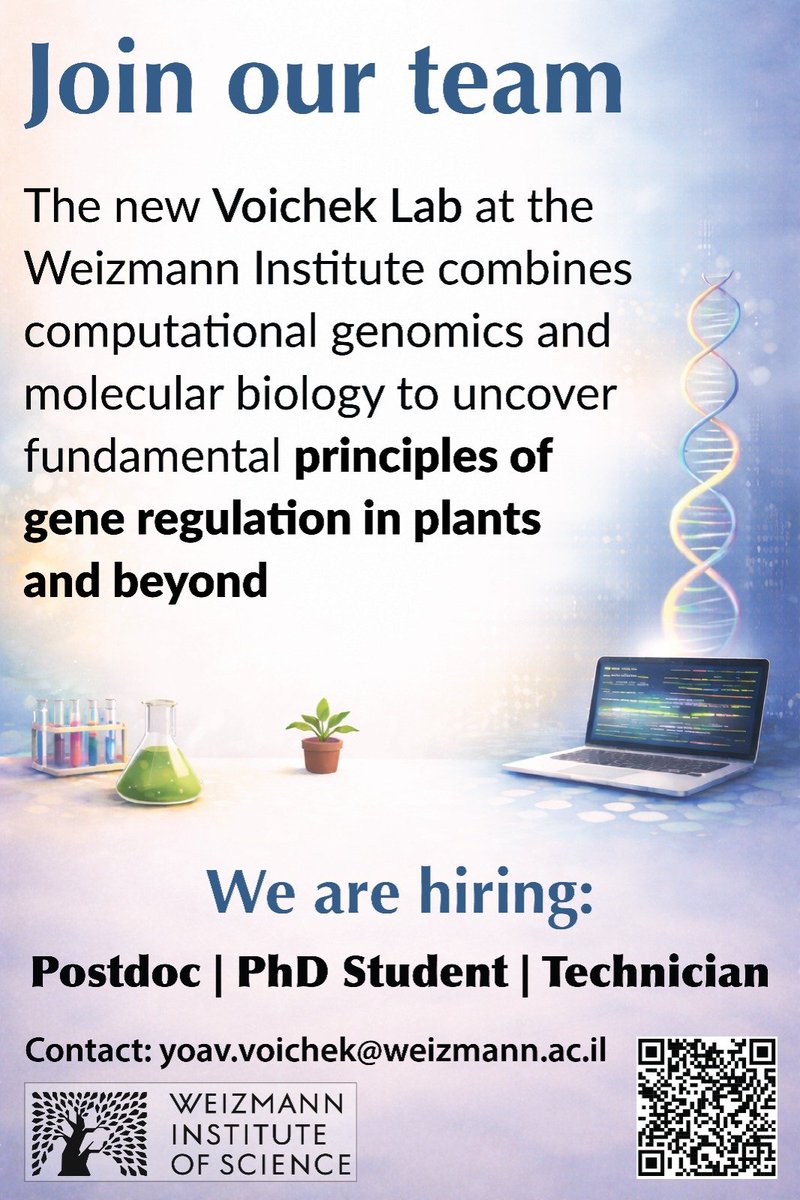
The (Yoav) Voichek lab has opened its gates at the Weizmann Institute, and is actively recruiting students and researchers at all levels - come explore gene regulation and computational genomics in a fun, friendly sprouting lab 🤗🥼⚗️🧪 weizmann.ac.il/plants/voichek/
Maya Voichek tweet media
English
1
4
6
644
Fernando Rabanal retweetledi
RaffaellaSantoroLab
RaffaellaSantoroLab@LabSantoro·
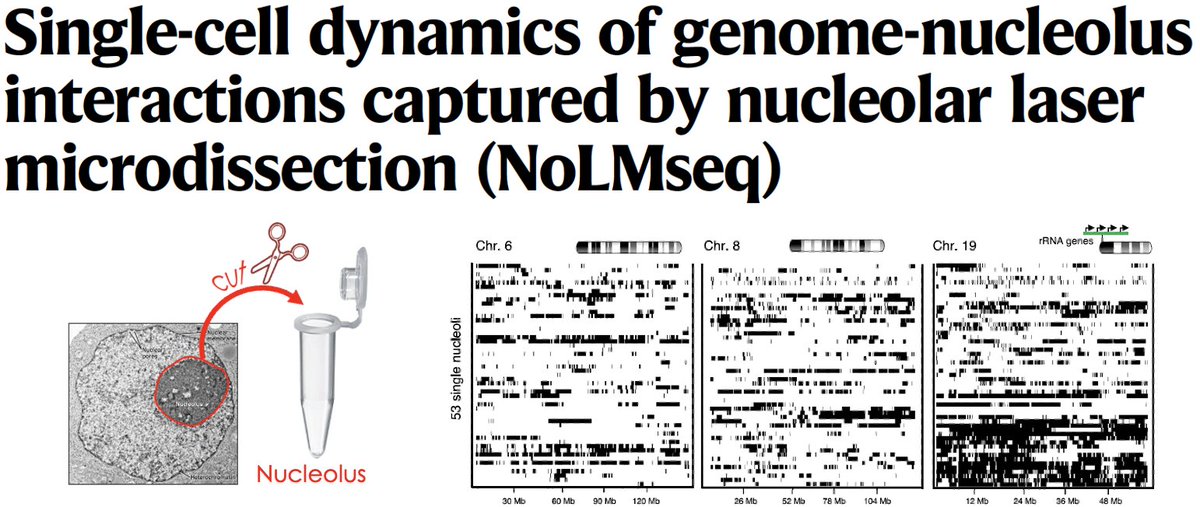
Finally out! We introduce NoLMseq, a #nucleolus laser microdissection method to capture single-cell genome-nucleolus interactions in normal and stressed nucleoli, revealing novel insights into genome organization & function. nature.com/articles/s4146…
RaffaellaSantoroLab tweet media
English
2
23
118
8.7K
Fernando Rabanal retweetledi
Niko McCarty.
Niko McCarty.@NikoMcCarty·
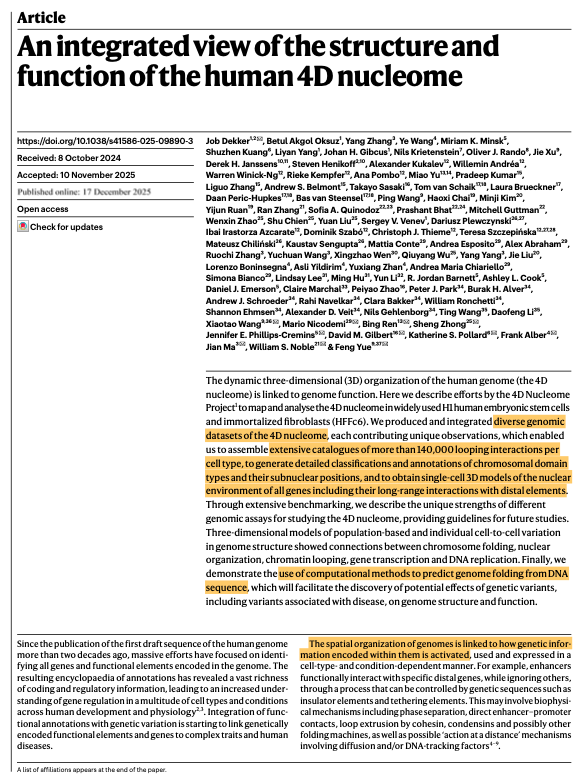
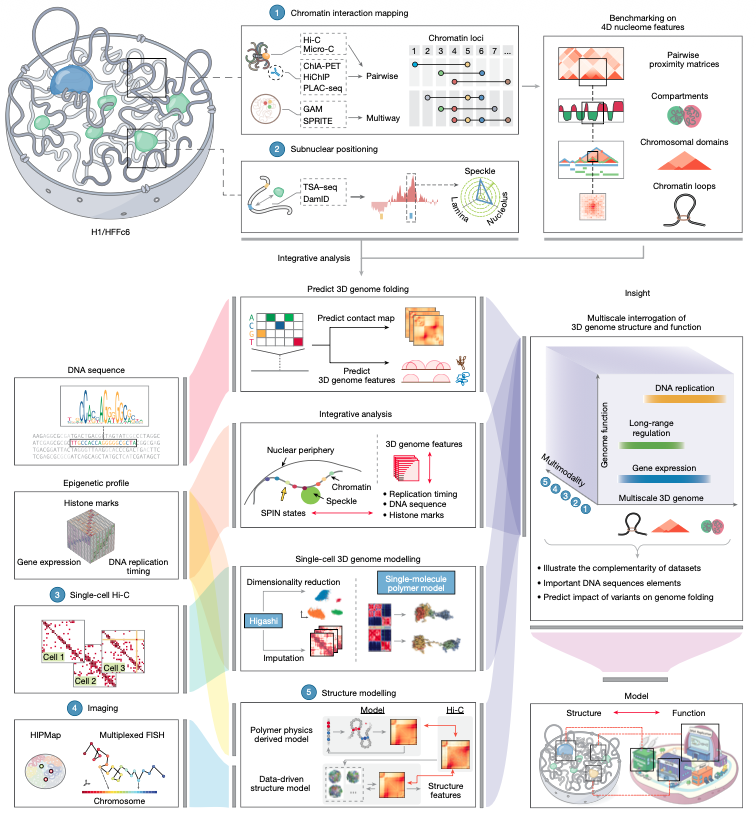
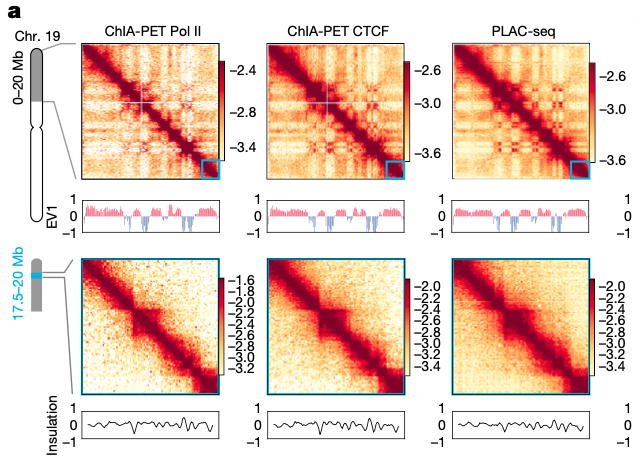
Many people think of the genome as a string of "letters." The human genome, say, has 3.2 billion base pairs of DNA organized across 23 pairs of chromosomes. But the genome is a 3D object. Genes located on entirely different chromosomes might be clustered together. Mutations in these "distant" genes can lead to disease in surprising ways. For a new paper in @Nature, researchers released several "maps" of human genomes from two types of cells: embryonic stem cells and fibroblasts. They compared methods to see which ones are least biased, and found many long-range interactions between genes. The article does a good job explaining how “the genome is organized at different scales”: > On a single chromosome, histones control which parts of the DNA sequence are accessible and expressed. > At the scale of hundreds of thousands of bases, “chromatin loops in a dynamic manner,” the authors write, bringing distant genes closer together. > Across chromosomes, sequences "cluster together in space to form subnuclear compartments." Examples abound. Enhancers, for example, are short DNA sequences that regulate the expression of far away genes. They do this by *physically* touching the genes they control; a protein called cohesin grabs the DNA and tugs it into big loops. Even promoters, which are thought of as being associated with one gene or operon, can cluster together across many genes! A protein, Ronin, grabs promoters and pulls them together. This is apparently done mostly for genes that tend to be "on," as it helps enzymes find genes faster/not have to diffuse far away to find targets. (This also happens with genes that tend to be "off;" so-called polycomb proteins grab onto promoters, cluster them up, and silence all of them at once. It's a way for the cell to conserve energy.) One consequence of this spooky "action-at-a-distance" is that diseases might arise from mutations in unexpected locations. Editing these regulatory sequences, in other words, might in turn affect a gene located on an entirely different chromosome that *is* associated with that disease. Genetic mutations linked to autism, for example, are known to disrupt the 3D organization of the genome. A single deletion at a gene, TAL1, also affects its ability to form long-range chromatin interactions with other genes, leading to leukemia. There are probably many other, as-yet-undiscovered, instances of this.
Niko McCarty. tweet mediaNiko McCarty. tweet mediaNiko McCarty. tweet media
English
23
204
932
108.3K
Fernando Rabanal retweetledi
Pratheek Pandesha
Pratheek Pandesha@HPratheek·
Excited to share our @NaturePlants News & Views article highlighting how two independent studies uncover transcription factor mediated recruitment of the key siRNA-producing protein, RNA polymerase IV to specific DNA sequences in plants. Full article: doi.org/10.1038/s41477… 1/3
English
1
9
16
968
Fernando Rabanal retweetledi
King L Hung
King L Hung@kinglhung·
Our paper is out in @Nature! Oncogenes are often copy-number amplified on extrachromosomal DNA (ecDNA) in cancer, but how is ecDNA inherited by dividing cells? Here we identified elements within ecDNA that promote its retention in dividing cells. 1/11 nature.com/articles/s4158…
English
5
58
257
26.9K
Fernando Rabanal retweetledi
Bob Schmitz
Bob Schmitz@Schmitz_Lab·
At last! This long-awaited effort fills a critical gap in plant science that has remained elusive for so long. Huge congratulations to this team for creatively uncovering CNSs across so many complex plant genomes.
Idan Efroni@efronilab

Plant developmental genes share functions & expression, but align orthologs' promoters and often… no conservation. Or is there? In our new preprint, we show that conservation exists and is ancient, but was just obscured by genome complexity. biorxiv.org/content/10.110…

English
1
6
26
3K
Fernando Rabanal retweetledi
Cheng-Ruei Lee
Cheng-Ruei Lee@ChengRuei_Lee·
Finally published~! science.org/doi/10.1126/sc… 1. Strong evidence of adzuki domestication in Japan 2. The Jomons are not merely hunter-gatherers 3. Tracing evolutionary changes in domestication traits difficult to observe from archaeological evidence
English
2
16
35
5.8K
Fernando Rabanal retweetledi
Schneeberger lab
Schneeberger lab@LabSchneeberger·
📢 Excited to share our work out now in @Nature! 📢 We present the phased pan-genome of the European tetraploid potato, based on 10 historical cultivars representing 85% of European potato diversity. Learn more below! 🔗 nature.com/articles/s4158… 1/7
English
2
27
59
4.5K
Fernando Rabanal retweetledi
Uriel Urquiza García
Uriel Urquiza García@uurquiza·
Abundant clock proteins point to missing molecular regulation in the plant circadian clock | Molecular Systems Biology embopress.org/doi/full/10.10… We predicted and measured the abundance of clock proteins in Arabidopsis thaliana.
English
0
1
3
179
Fernando Rabanal retweetledi
Alexandros Bousios
Alexandros Bousios@abousios·
Beautiful collaboration led by Tetsuji Kakutani and Sayuri Tsukahara on unravelling the fine changes that can make a centrophobic TE become centrophilic and vice versa! The devil is in the details for these TEs. nature.com/articles/s4158…
English
3
9
53
3.7K
Fernando Rabanal retweetledi
Hajk-Georg Drost
Hajk-Georg Drost@HajkDrost·
Does the aggregation of complex multicellularity follow a universal developmental pattern across the eukaryotic tree of life? Thrilled to announce that we found a convergently evolved transcriptomic hourglass pattern in brown algal development. @Nature 👉nature.com/articles/s4158…
Hajk-Georg Drost tweet media
English
3
43
105
19.5K
Fernando Rabanal retweetledi
Vikram Alva
Vikram Alva@Vikram_Alva·
Excited to share our team's discovery on tissue-like multicellularity in archaea under mechanical compression! Led by @theopi, Olivia Leland & @Archaeon_Alex, it rethinks the evolution of multicellularity beyond eukaryotes. @HFSP @MPI_Bio biorxiv.org/cgi/content/sh…
Alex Bisson@Archaeon_Alex

This story started 5y ago with my lab. Spearheaded by fearless 1st authors @theopi and Olivia Leland. Theopi is now a PhD student at @BrownUniversity. Olivia is a physics PhD student at @BrandeisU, a self-taught biologist, and made us love soft matter. A (very long) thread (1/24)

English
3
21
119
18.6K
Fernando Rabanal retweetledi
Michael Borg
Michael Borg@dr_borg·
Preprint alert 🚨 As we gear up to share out exploits in red algae, we took a detour down the green lineage to piece together the evolutionary dyanmics of epigenetic gene silencing in plants 🌱🤓 biorxiv.org/content/10.110…
English
2
31
76
9.6K