Struan Malcolm

511 posts

Struan Malcolm

Struan Malcolm

@malcylon

Partner & COO at Fundrella, TokeNordic, Wimt, RealVision, Former Multi-Asset PM, F1, MCFC

Stockholm Katılım Mayıs 2008
1.2K Takip Edilen274 Takipçiler
Rahul Bhushan
Rahul Bhushan@RahulBhushanARK·
What this equation is missing is the energy efficiency factor. Jensen’s chipsets are becoming vastly more energy efficient with every generation. Blackwell is reported to deliver several-fold gains in energy efficiency over Hopper in key AI workloads. Innovation in energy efficient chip design will far outpace the speed at which we can build new energy generation and modernise the US grid. For the rest, there is decentralised energy. AI needs, what, 70–80 GW by 2030? By any margin, that is tiny. I am not saying there is no trade or breakout potential in TAN. I am saying maybe we should be thinking about this upside down. (And yes, natural gas can and likely will deliver most of that 70–80 GW.)
English
7
2
24
4.9K
Raoul Pal
Raoul Pal@RaoulGMI·
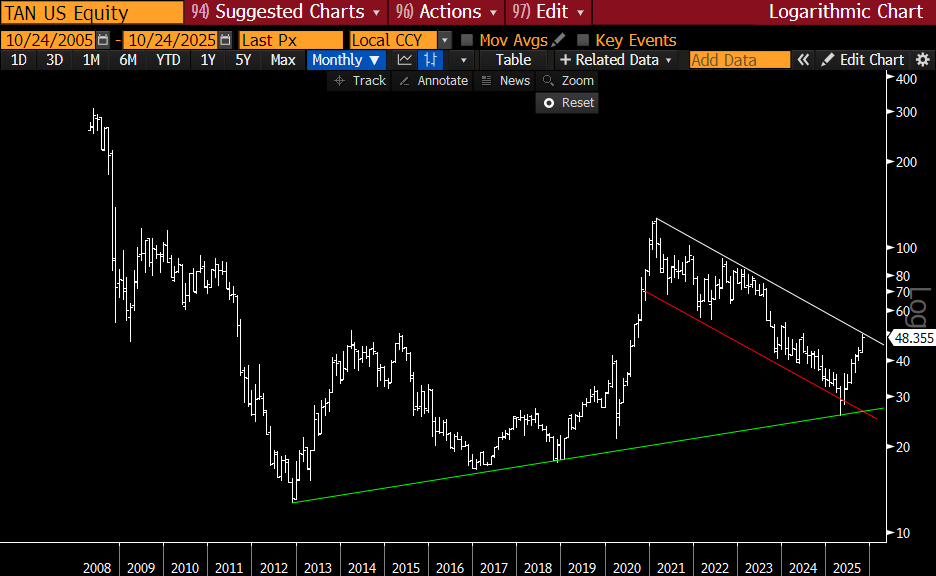
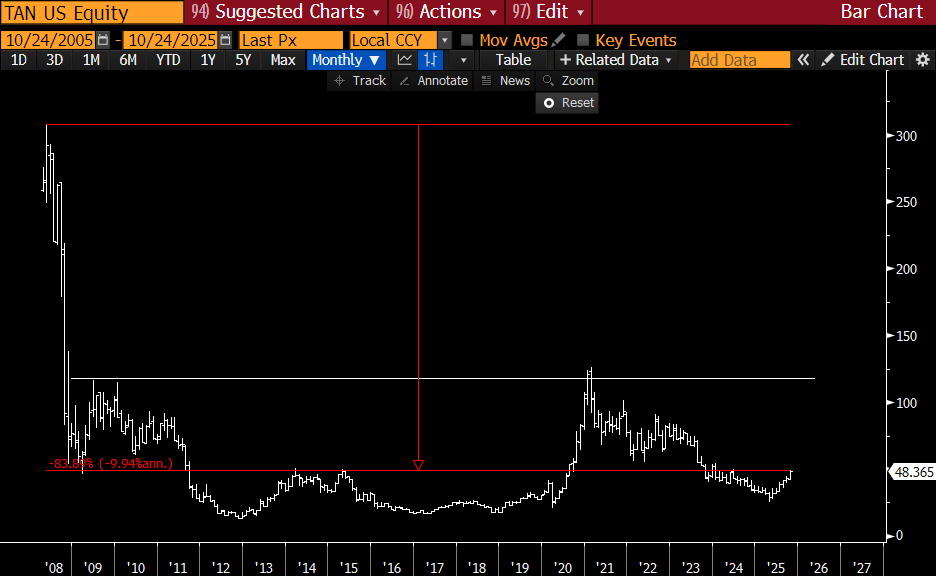
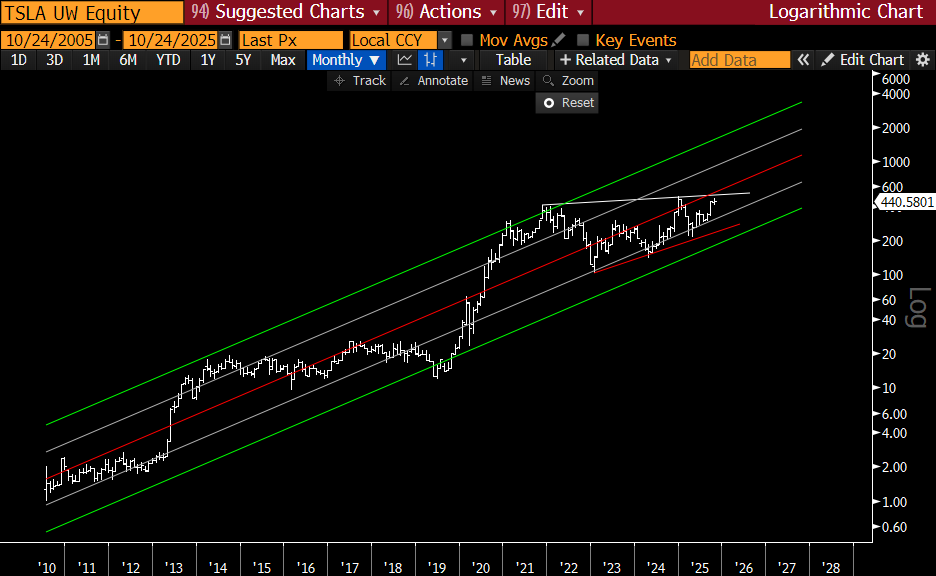
On Energy and AI: We are all aware of the urgent need for massive new energy infrastructure for data centres and other general needs. The grid is old and the supply is constrained. Investor capital is pouring into nuclear soluations, new gas plants and other opportunities and the bottleneck will be better solved in 5 years+ However, the need for the extra energy is URGENT and IMMEDIATE... The AI race is the most important technology race that will ever occur. It is not just about hyperscalers and their profits, but about the game of nations. There is only one energy solution that can hyperscale in 12 to 24 months and that is solar. China has shown this by adding more than the total amount of energy created by Solar elsewhere globally, in one year. The rise of solar in China is one of the great exponentials. China knows the game here. Everyone else has to play catch up. The Kardashev Scale is the correct way to think about this. The sun is 99.9% of the mass of the solar system and we are harnessing <1% of its energy that hits earth. 1 sq mile on the earths surface receives 2.5 gigawatts of solar energy. Yes, solar panel efficiency is low and usable daylight hours is restricted but the amount of solar panels required in relative terms of the surface size is small. Solar is not yet perfect as the supply of energy is intermittant (nights/bad weather etc) and efficiency is low (but rising as tech improves) but costs are collapsing exponentially, even taking into account panel replacements and no subsidies (it doesnt require them). Some of the issues are offset by batteries which currently solve for 4 hours of extra storage. Tesla's Megapacks are growing at 50% to 70% per year and other players are also scaling fast. Battery tech will only imporve from here too. Just the use of solar + batteries reduces demand on the exisiting grid by upto 65% (you only need to use the grid load for perdiods of time). This helps massively in this rapid scaling to avoid an overload of the grid. Solar + batteries also allows for localised, decentralised energy grids for specifc use - factories, datacenters, etc. The load on the grid will be reduced after 2 years or so when new localised gas plants are built to balance the loads. Gas plants are the cheapest, cleanest and fastest of the fossil fuel solutions but it takes longer to scale than solar and requires a lot of gas pipelines. Weirdly, solar seems to be politicised, but its going to become an economic imperative as nothing else can solve the needs of the massive data centers in the next 1 to 2 years, and no one can afford to be leftr behind in the race to AGI and beyond. AI is the most important technology humanity will ever develop as it replaces us as the apex intelligence on earth and is vastly more energy efficient than humans at compute/intellgence output. The core metric for the universe itself is: Intelligence per unit of energy For this to scale exponentially, AI will replace humans as the primary source of intelligence and the sun's energy is most of the energy on earth. Even oil is just biologically-stored sun energy with finite supply. In terms of investability, there are two opportunities that stand out as long-term plays: The Solar ETF TAN is down 84% from its high, has formed a perfect base on both the log chart and the regular chart. TSLA is the other obvious play as it dominates the large battery sector and batteries account for 10% of total revenues and are growing rapidly and will continue to do so. The Tesla chart is one of the best in the Exponential Age. Anyway, I know because solar is politicised that people will rush to fight in the comments but don't bother unless you can solve the urgent energy needs for AI in the next 1 to 2 years by any other method.... you can't. And yes, dear troll, we all understand that there are lithium, copper and other needs, and yes, there will be an investible bull market in those too (amongst other major commodities) as the business cycle and the Capex cycle heats up... and yes, there will be supply issues if you havent carefully planned/hedged. But you need to warm up to solar... its going to get hot. (Time horizon is now and for the next 5 years+).
Raoul Pal tweet mediaRaoul Pal tweet mediaRaoul Pal tweet media
English
189
283
1.7K
382.4K
Struan Malcolm
Struan Malcolm@malcylon·
@LizAnnSonders I’m not sure about this, on a % basis seems to have bottomed and now coming up. Thoughts?
Struan Malcolm tweet media
English
0
0
0
19
Liz Ann Sonders
Liz Ann Sonders@LizAnnSonders·
Temporary help services employment drawdown is worse than during tech bust recession (in early 2000s)
Liz Ann Sonders tweet media
English
27
103
440
66.8K
Penny
Penny@Money_Penny·
✨ Big thanks to everyone who came out to last night’s @RealVision meetup in Stockholm! I am reliably told the energy, ideas, and the good vibes made it a night to remember. Here are a couple of shots from the evening 📸. As always it’s amazing to see this community connecting in person and pushing the conversation forward. Special thanks to @malcylon for arranging the venue and @zippy1979 for being my proxy. Until next time… 🇸🇪🙌
Penny tweet mediaPenny tweet mediaPenny tweet mediaPenny tweet media
English
21
10
123
67.6K
Struan Malcolm retweetledi
bob coleman
bob coleman@profitsplusid·
They can, but would incur a tariff. Tariff is based on product of origin not the country it is coming from. A swiss bar coming from London is still a swiss bar from Customs point of view.
Don Durrett - goldstockdata.com@DonDurrett

@profitsplusid So, Swiss 1-kilo bars currently sitting in another country can't be imported to the COMEX?
English
16
27
203
42.2K
Struan Malcolm
Struan Malcolm@malcylon·
@LukeGromen Did you catch Trumps comments about rolling this years debt short for one year to see out Powell ?
English
0
0
0
371
Luke Gromen
Luke Gromen@LukeGromen·
Since the BOJ lifted its YCC ceiling in Jul-23, stronger USDJPY drove lower 10y JGB yields (left chart) while lower DXY drove lower 10y UST yields (right chart). Both correlations have diverged in past few months 👇 THIS is the unspoken WHY of the "TACO trade". #RuhRohRaggy
Luke Gromen tweet media
English
55
23
178
24.9K
Struan Malcolm
Struan Malcolm@malcylon·
@ttmygh The three year timeframe makes sense and I agreed with a great majority of other points. But I am left unsure of whether a world with massively increased automation and lots of old people who consume much less is ultimately inflationary?
English
0
0
0
12
Struan Malcolm
Struan Malcolm@malcylon·
@ttmygh Above 6% nominal gdp growth is difficult to achieve and only occurs with high inflation. But the other question I would have asked is about the huge potential deflationary impact of AI, blockchain tech and robotics.
English
1
0
0
29
Grant Williams
Grant Williams@ttmygh·
1/ The fifth episode of the Hundred Year Pivot podcast series with my good friend and co-host Demetri Kofinas (@kofinas) and our special guest Charles Calomiris is now available to all subscribers at grant-williams.com!
Grant Williams tweet media
English
7
2
25
7.2K
Michael A. Arouet
Michael A. Arouet@MichaelAArouet·
What happened in Poland is nothing short of an economic wonder, its standard of living will surpass Japan this year. Free market, hard work and entrepreneurial spirit are the only way to escape socialist misery and poverty. Congratulations Poland.
Michael A. Arouet tweet media
English
466
1.7K
13.9K
7M
Yasemin Türkoğlu
Yasemin Türkoğlu@yasemin_eth·
Heading to #TOKEN2049 Dubai 2025 Please feel free to reach me regarding possible partnerships you may seek with @CoinTRTurkiye Hola at me if you see me, see you in Dubai! (29th of April-3rd of May)
Yasemin Türkoğlu tweet mediaYasemin Türkoğlu tweet media
English
9
0
68
5.5K
David Edward Storey
David Edward Storey@DavidEStorey·
@RobbSmith Apart from your own writings, can you recommend any books or articles or sites to learn more about this deep historical systems perspective on political economy and macroeconomics?
English
2
0
2
140
Robb Smith
Robb Smith@RobbSmith·
Here’s what’s underway. The capitalist world-system has now broken in an historic way for the 4th time in 700 years. These “Terminal Crises” always represent the last gasp of the prevailing hegemon to maintain power over the current order in the face of the system demanding a reconfiguration. The system never loses. Hegemony always moves after a terminal crisis on to a new “systemic cycle of capital accumulation”: Genoese-Iberian financial empire in 1627. Dutch United Provinces in 1781. British Empire in 1931. And now the United States in 2025. We now enter a period of anarchy—global economic anarchy—defined by the system searching for the global capitalist reconfiguration that will meet the requirements of the 5th cycle of accumulation, which is always a novel configuration for capital to continue its growth: - greater geographic coverage, - more people under its scope, - greater differentiation of products and services, and - more complex institutional arrangement that solve for the contradictions and limitations of the prior cycle. There will be only one of two intermediate-term (10-20 years) tendential trajectories for this reconfiguration search: 1) competitive anarchy of blocs and bilateral relationships, or 2) emergence of a new world order. Either an anarchic pluralism or the emergence of a new integrative pluralism. Ultimately the latter is inevitable, the only question is whether it will happen relatively quickly from here, slowly, and under what terms and what level of conflict. As the 5th cycle of accumulation has already begun and it’s centered in the capital surplus of China, much will depend on which route they take in attempting to sponsor the integrative pluralism that is being sought. (Years ago, I tweeted that this was coming and that if the US was smart, it would lead exactly this reconfiguration itself; but it is not exceptional, and so it has chosen to resist system accommodation and instead seek to force the global system to submit, which will not work and only accelerate reconfiguration away from its power.) In each cycle, the new configuration internalizes some key aspect of political-economic function/costs that had previously been externalized. So the Dutch configuration internalized the Protection/Security costs that the Genoese had contracted for with the Spanish empire. The British Empire internalized the Production costs that for the Dutch was externalized throughout their mercantilist network. The United States internalized the Transaction costs (ie Markets) that for the British Empire was externalized throughout the global economy. And the new cycle will see that Reproduction costs—think social and ecological costs that are currently externalized—will become internalized; this will be forced in any case by climate change, as we’re seeing occur naturally throughout the US property insurance market, for example. This will continue. I could write more about what I think China can and might do from here depending on whether it wants to force system reconfiguration from here, but that’s another post. Suffice to say that the US has renounced its leadership status, and the board is set for China to decide the terms of what happens next, and how quickly.
English
3
7
33
3.7K
Struan Malcolm
Struan Malcolm@malcylon·
@OldManLefty1 The SWF value ticks over live in NOK on their website: nbim.no It’s about 10 and change to the $ - falling having topped out at an all time high 11.6.
English
0
0
0
11
Old Man Lefty
Old Man Lefty@OldManLefty1·
Norway is considering tapping into its $1.7 trillion sovereign wealth fund to support Ukraine. $1.7 trillion? They must tax the rich..
English
1.7K
2.9K
29.5K
1M
Struan Malcolm
Struan Malcolm@malcylon·
@MacroAlf How much of this is foreign investors repatriating I wonder ?
English
0
0
0
74
Alf
Alf@MacroAlf·
Things getting ugly for Trump. First time the market turns seriously against him on tariff announcements. Stocks down, bond yields down, not even the USD can rally - a clear statement that tariffs are bad for this US economy. He'd better listen here.
English
1.1K
665
7K
650.6K
Struan Malcolm
Struan Malcolm@malcylon·
@LukeGromen I’m a big fan & subr.But boiling last few weeks down to the NATO quote is to miss big chunks of LT strategic impact on U.S. & its allies re way this has been handled. Aligning on stop the war is distinct from waving a white flag & giving up yr strategic position in a heartbeat.
English
0
0
0
32
Luke Gromen
Luke Gromen@LukeGromen·
If one starts from a first principle of… “NATO & the US lost to Russia in Ukraine because Russian missile & ISR capabilities proved far better than we thought & because Russia outproduced NATO 4-to-1 👇, so we need to retrench” …the last few weeks’ events make much more sense
Luke Gromen tweet media
English
67
93
633
66.3K
Struan Malcolm
Struan Malcolm@malcylon·
@ttmygh @EpsilonTheory A timely episode, thanks both. I was moved by that.One point you made about sport Grant. For our generation yes. As a Man City ST holder I can attest to community vs success. Record attendances in our div 2 days, we’ll have a great laugh if we go down again!
English
0
0
1
44
Struan Malcolm
Struan Malcolm@malcylon·
Tax Transparent Fund users and investors take note…
Michael McNair@michaeljmcnair

A critical item in Friday's "America First Investment Policy" White House memo has gone completely unnoticed. The administration is considering terminating the 1984 US-China tax treaty. Currently, Chinese government entities (who hold almost $2 trillion in US assets) pay ZERO tax on portfolio income from US investments, while bond interest is exempt from withholding for all Chinese investors. Terminating the tax treaty would restore the statutory 30% withholding rate on Chinese investments - a dramatic shift that would fundamentally alter the economics of Chinese capital flows to the US. The memo's language is explicit: "That tax treaty...led to the deindustrialization of the United States and the technological modernization of the PRC military. We will seek to reverse both those trends." In our reports, "The Sovereign Wealth Effect" & “The Dollar’s Dilemma” we predicted this move writing, "until 1984, the U.S. maintained a 30% withholding tax on foreign interest income" and that reimposing this tax could be a key strategy for addressing trade imbalances. First, it reduces the attractiveness of US financial assets for Chinese investors, helping redirect capital flows toward trade rebalancing. Second, it potentially generates significant revenue: $360 billion annually from foreign holders of US securities (If done on a global basis). The US has already set a precedent of using withdrawal from a tax treaty as a policy lever when it withdrew from the US-Hungary treaty in response to Hungary’s posture in the OECD negotiations. This move, alongside the new US Sovereign Wealth Fund, confirms the administration is implementing a sophisticated strategy targeting capital flows rather than just using tariffs. It's precisely the dual approach we outlined in our report.

English
0
0
0
111