

Barge man
3.3K posts

@IsraelMFA That’s how idiots looking for trouble should be treated👏🏻👏🏻
English

We demand an explanation from the Spanish government regarding its treatment of the flotilla anarchists
English

@JamesHeartfield It would not have been difficult for the cops to handle this sensitively. Attract their attention and ask them to move over a bit. These people have literally just come from a traumatising experience with uniformed bullies. Cops escalated tensions, then drew truncheons.
English

This is the moment it kicked off in the Basque airport. You can see the flotilla activists made a line across the exit that blocked other passengers. The police tried to make a space for them to get through. The protester shoved the police and it started.
English

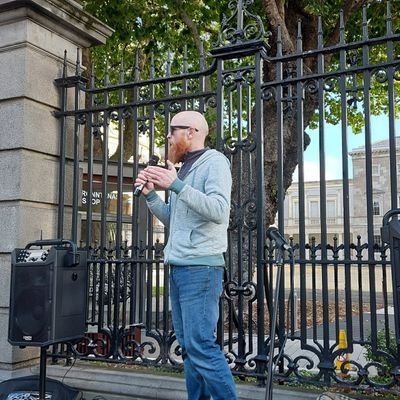
Dublin :
Africans are currently blocking access to Arnotts in Dublin while shouting "Arnotts killer" and "Justice for Yves" despite the fact the post mortem on Yves Zakila showed no injuries.
Facts don't matter to these people, they're on the streets of a foreign country publicly supporting a criminal and they think they have the moral high ground.
Every last one of them needs to be removed from Ireland.
We have become way too tolerant.
English
Barge man retweetledi
South Africas current crime stats:
Averaged
Murder: 60 every 24 hours
Rape: 4 every single hour
Hijackings: 50
Home invasions: 60 every 24 hours
We are at war. And the average citizen will tell you that everything is okay. Guns aren't the problem, bad guys are.
English


@nimrodstweets @benhabib6 @BackBrexitBen @RestoreBritain_ @reformparty_uk Reform are tories in disguise 🤬
English

Absolutely terrible take, and I’m someone who would vote restore but will never forgive them if Labour win. If restore/reform polls were reversed I’d be saying the same to reform supporters. A win for Burnham will be treated as a mandate for more insanity. It’s one seat - restore should give it up with conditions / a deal on another seat.
English
Everyone is panicking about @RestoreBritain_ splitting @reformparty_uk vote and allowing Burnham to win.
The panic is misplaced.
The worst political outcome would be Restore stepping aside to allow Reform a victory.
With its current direction of travel, Reform offers the country no redemption. By stepping aside, Restore would concrete in Reform’s hopelessness.
Restore must fight this election and do the best it can. If it were to gain 7% of the vote, as predicted, that would send an earth quake through Reform.
Reform might then correct its ways.
A Burnham victory makes not a blind bit of difference to the country. Labour has a 156 seat majority. Whether Burnham or some other idiot from Labour becomes PM makes no difference.
And for those worried about an early general election - turkeys do not vote for Christmas. It is not happening.
Restore and Rebecca Shepherd must fight this by election tooth and nail.
I know @_AdvanceUK supporters are already in Makerfield campaigning on their behalf. I will help where I can.
English



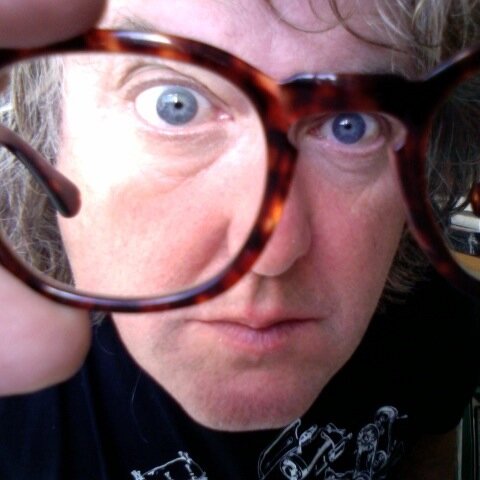
My mate Bouncer died yesterday. He’d lived with us for 13 years as a furry, purring, permanently migrating ornament.
I didn’t know I could feel such grief for a witless bag of bones who destroyed my favourite sofa and crapped in the shower tray.
Below is a picture taken on the day he selected me at the animal shelter.

English



@k9_reaper The one fella going to plant his tree got swirled up in the wrong group after leaving Home Depot
English
How can anyone defend a 50-60 vehicle motorcade? An abuse of power and a monetary one.
Aaron Rupar@atrupar
a look at Trump's motorcade
English
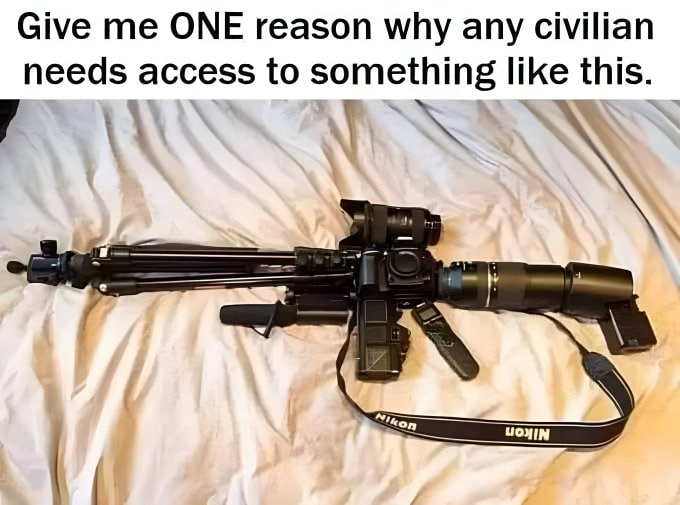
@Sofia50020Sofia To be fair I have no use for camera equipment , I’m useless at photography 🤦🏼🫣
English


He was supposed to be on vacation.
Spencer Stone, 23 years old, was half asleep in his seat as a high-speed train cut across the European countryside toward Paris. He was backpacking through Europe with his two closest friends — Alek Skarlatos and Anthony Sadler, both friends since childhood in Sacramento — three young men trying to see the world before adult life took over and made that kind of freedom harder to find.
It was August 21, 2015. The train was the Thalys 9364. It was carrying 554 passengers.
Then a man walked out of the bathroom carrying an AK-47.
Passengers screamed. People threw themselves under seats. A French-American professor named Mark Moogalian reacted instantly, lunging for the rifle in a desperate attempt to stop what was coming. The attacker shot him in the back.
The attacker had a pistol. A box cutter. Two hundred and seventy rounds of ammunition.
The train was sealed, moving at nearly 200 miles per hour, and help was nowhere near.
554 people had nowhere to go.
Spencer Stone had no weapon. No training designed for this moment. No plan.
He stood up anyway.
Without a word to his friends, without stopping to calculate odds or consider outcomes, he ran — full speed down the aisle — directly at an armed man who had already shot someone.
Alek Skarlatos moved right behind him. Anthony Sadler followed. A 62-year-old British businessman named Chris Norman, a complete stranger who owed these young Americans nothing, joined them too.
None of them had to. Every instinct the human body possesses in a moment of mortal danger screams at you to go the other direction. All four of them went toward it instead.
Stone reached the attacker first and drove him into a headlock, hauling him to the floor. What followed was 90 seconds of desperate, violent struggle. The attacker fought back with everything he had — pulling out a box cutter and slashing at Stone's face, neck, and hands. A deep gash opened across Stone's neck. His thumb was nearly severed. Blood soaked the floor of the aisle around them.
Stone didn't release his grip.
For a minute and a half, four ordinary people — three friends on vacation and a stranger who made a split-second decision — held down a man who had come prepared to commit mass murder. They finally got him unconscious and bound him with belts and a necktie before he could reach the hundreds of people who had nowhere to run.
Then Stone collapsed.
He was bleeding heavily from his neck wound, struggling to stay conscious, the floor around him dark with blood. A few feet away, Mark Moogalian — the man who had been shot trying to stop the attack before Stone even reached him — lay with his wife beside him, screaming.
Stone crawled to him.
With one hand pressed against his own neck wound and the other working to stabilize Moogalian, the young airman talked to him, kept him breathing, kept him conscious, kept him alive until the train made an emergency stop and paramedics finally came through the doors.
Surgeons who treated Stone afterward said the neck wound had come within millimeters of being fatal. He had lost a significant amount of blood. The margin between what happened and a very different outcome was almost too small to measure.
But he made it.
When he came around after surgery, his first question was not about himself. Not about his injuries, his thumb, his neck, what came next or what had happened to him.
He asked whether anyone else had been hurt.
They told him: no one else had been killed.
Because of what he and his friends had done in 90 seconds on a sealed train moving at 200 miles per hour through the French countryside, 554 people made it home to their families that evening.
French President François Hollande awarded Stone, Skarlatos, Sadler, and Norman the Légion d'honneur — France's highest honor — in a ceremony in Paris three days later. President Obama received them at the White House. The world, briefly and deservedly, stopped to pay attention.
Stone deflected every tribute with the same quiet consistency.
I just did what anyone would do.
But that's exactly what makes the story worth sitting with.
Most people wouldn't. The research on human behavior in moments of sudden violence is unambiguous — the overwhelming majority of people freeze, flee, or shelter in place. The instinct to run toward danger, unarmed, for the sake of strangers, is not what anyone would do. It is what almost no one does.
Spencer Stone did it without a weapon, without a plan, and without hesitation — and he kept doing it while bleeding on the floor, crawling toward a man who needed help when most people in his condition would have stopped moving entirely.
Three friends from Sacramento who had known each other since childhood, and a British stranger who heard screaming and made a choice — together they decided, in a single unplanned moment, that the lives of the people in those seats mattered more than their own safety.
That decision took 90 seconds.
Its consequences lasted a lifetime — for 554 people who never had to know what the alternative looked like.

English
