Alok Mani Tripathi

2.7K posts

Alok Mani Tripathi banner
Alok Mani Tripathi

Alok Mani Tripathi

@manialok

Founder at RPATech, leading innovation in #AI and #RPA 🤖. Author of the book “Learning Robotics Process Automation”. Talks about automation and efficiency.

New Delhi, Delhi Katılım Temmuz 2009
593 Takip Edilen2K Takipçiler
Alok Mani Tripathi
Alok Mani Tripathi@manialok·
@deedydas And they are keeping it for themselves. That's the indication of things to come. Reasons may be different, but access to it will be controlled by a few. I am not ranting some leftist thing but wondering about the ability to compete for others who are not part of the catorie.
English
0
0
9
662
Deedy
Deedy@deedydas·
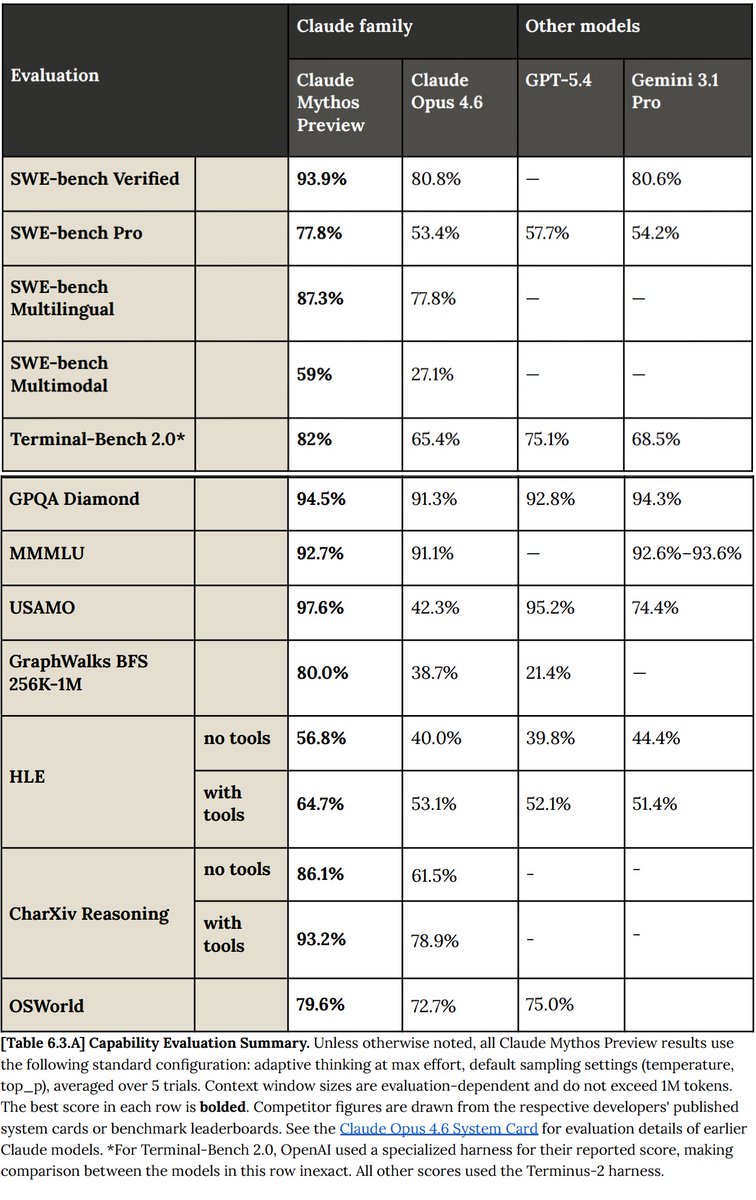
Claude Mythos just obliterated every single benchmark in AI. I can't believe what I'm reading.
Deedy tweet media
English
267
657
5.8K
619.3K
Alok Mani Tripathi
Alok Mani Tripathi@manialok·
Shouldn't they find a way to restrict use cases instead of fixing whole world vulnerabilities first? IMO, what Anthropic is doing in the name of safety is discrimination. While it may use it internally, discuss it with Apple, Microsoft, Meta etc., and may give them access, it keeps it inaccessible to paid customers like us. This clearly puts us at a disadvantage for creating digital stuff and competing. Should we partner with companies that keep the best shovels for themselves and their friends? If the model is so good, then it is entirely useless to use other models and remain competitive.
English
0
0
0
97
Josh Kale
Josh Kale@JoshKale·
This is big... Anthropic just announced a model so powerful they won't release it to the public out of fear over the damage it will cause 😨 Claude Mythos Preview found thousands of zero-day exploits in every major operating system and web browser... The numbers are hard to believe: > $50 to find a 27-year-old bug in OpenBSD, one of the most security-hardened operating systems ever built > Under $1,000 to find AND build a fully working remote code execution exploit on FreeBSD that grants unauthenticated root access from anywhere on the internet > Under $2,000 to chain together multiple Linux kernel vulnerabilities into a complete privilege escalation exploit For context: these are the kinds of findings that previously required elite security researchers working for weeks. Anthropic engineers with no formal security training asked Mythos to find exploits overnight. They woke up to working code the next morning. The results were so impressive Anthropic assembled Apple, Google, Microsoft, Amazon, NVIDIA, and seven other organizations into Project Glasswing: A $100M defensive coalition. They're not releasing this model publicly. Instead, they're racing to patch the world's infrastructure before models like this proliferate.
Anthropic@AnthropicAI

Introducing Project Glasswing: an urgent initiative to help secure the world’s most critical software. It’s powered by our newest frontier model, Claude Mythos Preview, which can find software vulnerabilities better than all but the most skilled humans. anthropic.com/glasswing

English
599
2.1K
16.2K
3.3M
Alok Mani Tripathi
Alok Mani Tripathi@manialok·
@mshahi0024 He is doing what he is paid for and most of the time effective. probably you forgot who is his employer..
English
0
0
0
13
Manu🇮🇳🇮🇳
Manu🇮🇳🇮🇳@mshahi0024·
This is not the first time someone has argued in court. But look at the conduct, SG Tushar Mehta, paid crores from taxpayers’ money, using a threatening, street style tone, with a vicious and vulgar approach, almost taking the court for granted.
English
16
181
356
9.1K
Alok Mani Tripathi
Alok Mani Tripathi@manialok·
@colorfullllove @newstart_2024 IMHO, I don’t find any issue with the shirt. Many famous artworks are about naked females and males. I was just saying people should not bring his achievements as a defence. Even if he is not a great astrophysicist, he can still wear his choice.
English
5
0
4
449
Camus
Camus@newstart_2024·
The guy just landed a spacecraft on a comet — one of the most impressive scientific achievements in years. His reward? A public struggle session because his bowling shirt had scantily clad women on it. Helen Andrews points out the quiet cost of institutional feminization: HR departments now hunt down any maverick personality and stamp it out. We’re losing innovators we’ll never even know about, all because someone focused on the shirt instead of the comet. This is how wokeness actually works. Have you seen real excellence get punished for something trivial like this?
English
1.5K
11.6K
72K
31.8M
Alok Mani Tripathi
Alok Mani Tripathi@manialok·
@alex_prompter First group: has time to experiment, which AI growth is throwing at them most is an experiment. Second group: like it and perhaps a system which works for them and it is an incremental benefit.
English
0
0
0
76
Alex Prompter
Alex Prompter@alex_prompter·
Two types of people saw Karpathy's knowledge base post: Those who bookmarked it. Those who built it that same weekend. The second group now has an AI that gets smarter every time they use it. The first group is still scrolling. Here's the full build guide with every prompt:
God of Prompt@godofprompt

x.com/i/article/2040…

English
37
50
607
181.3K
Alok Mani Tripathi
Alok Mani Tripathi@manialok·
Better explanation of Kapathy newest idea. You don’t need a better note taking app. You just need one folder and an AI. 1.Create 3 folders raw, wiki, outputs. Nothing else. Don’t overthink. 2.Dump everything Notes, bookmarks, screenshots, docs. No sorting. No naming. 3.Add 1 simple instruction file Write what your knowledge is about and how AI should organise. 4.Ask AI one command “Read raw, build wiki, link topics, summarise.” 5.Start using it Ask questions. Save answers back. That’s it. Most people fail because they try to organise first. You just dump first, let AI organise later.
Corey Ganim@coreyganim

x.com/i/article/2041…

English
0
0
0
212
Alok Mani Tripathi
Alok Mani Tripathi@manialok·
We were discussing exactly this at our company annual planning this year. AI automation company couldn't justify running a pre-AI hierarchy ourselves. Three things I'd add from actually doing it: Don't apply it uniformly. Where client money is at risk, you keep guardrails. Where the cost of failure is a bad LinkedIn post, go full IC. Risk-grade the autonomy. The real question isn't "should managers exist" it's "what is this manager actually doing that AI + the IC can't do themselves?" If the answer is filtering information upward and directing tasks downward, that role is already dead. Natural selection > mandated adoption. Give everyone the same AI tools. Within 90 days, you'll see who suited up and who didn't. The monthly scorecard does the talking, not the org chart. The hardest part isn't the structure change. It's the founder accepting that flat = more of your calendar consumed by direct reports. Trade-off: unfiltered truth vs. more meetings. Worth it every time.
Ivan Burazin@ivanburazin

The founder of Postman says you have to kill your existing org chart, especially if you're still operating with a pre ai hierarchy arrangement. The modern org chart, according to @a85: - wide span of control (even within exec team) - work directly with ICs, not through layers - either you're building, or you're selling Projects are led by staff/principal engineers with high agency. They see across the board as well as deep in the stack. Product managers are building APIs and prototyping in Claude instead of writing PRDs. Designers are shipping PRs through Cursor directly instead of relying solely on Figma. Everyone is building. And the management's job is to develop better judgment.

English
1
0
1
133
Bhanu D — sys/acc
Bhanu D — sys/acc@iBhanuDahiya·
My friend has done mechanical engineering from NIT Bhopal. ISRO offered him a package of 4.8 lakhs per annum and TCS offered him a package of 9 lakhs per annum. He joined TCS. What’s your take on this?
English
262
46
1.3K
134.2K
Alok Mani Tripathi
Alok Mani Tripathi@manialok·
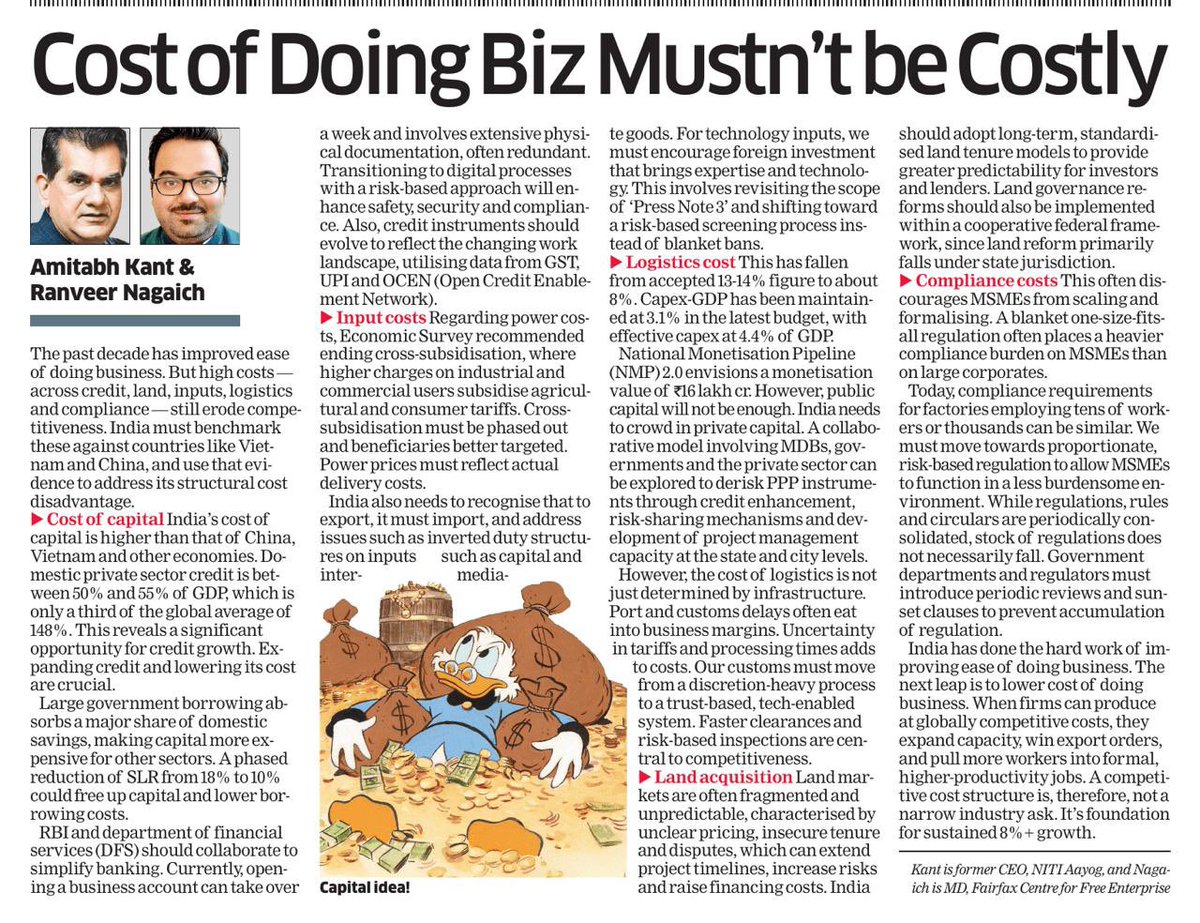
Ease of doing business is absolutely important. But it is only the entry gate. A company does not scale because a form became online. It scales when credit is affordable, compliance is proportionate, logistics is reliable, and operating friction stays low. Ease helps businesses start. Cost decides whether they survive, compete, and grow. India has certainly improved the first part. As this article highlights the next big challenge is the second. •capital is costly •power is costly •logistics is unreliable •compliance takes management bandwidth •land and infra remain inefficient So ease is a layer. Cost is the deeper layer. In fact, ease without cost correction can become cosmetic. Things look smoother on paper, but business still bleeds margin.
English
0
1
0
40
Alok Mani Tripathi
Alok Mani Tripathi@manialok·
@ryanlpeterman @EthanEvansVP I won't see it as black & white. Giving boss feedback on weaknesses or telling to skip is often a waste of your time. Unless you’re into gossip/politics. However, if skip derives from feedback that boss negative trait is hindering juniors' performance, he may take a decision.
English
0
0
0
910
Ryan Peterman
Ryan Peterman@ryanlpeterman·
ex-Amazon VP (@EthanEvansVP): "One of the hardest things for people to understand is I've identified a legitimate weakness in my boss. I go to my skip. Why doesn't he do something? Well, if you come to me with a weakness in one of my employees, there is subconsciously this process that goes on that says, I have two choices. I can believe that you're overly sensitive and high maintenance. In which case, I don't really have a problem. You are the problem. And you know, you're two levels down for me. So if you quit, well, the manager has to do the backfill. And I can tell the manager, you know, Ryan was here. He said this, that and the other. Maybe you can work with him. And that's exactly what you don't want is me ratting you out. But I can make it my manager's problem. On the other hand, if I agree with you and I'm like, you know what, this manager I have really isn't that good. Now I have three problems. This is really bad for me. One, I have to decide what to do with my manager. Maybe I have to manage them out. Two, if I do manage them out, I have to hire and train somebody else. And three, while they're gone, I have to do all their work myself. So you can see why, even if it's subconscious, I have a lot of reasons not to listen "
Ryan Peterman@ryanlpeterman

I don't think you'll be able to find a conversation like this one on the internet. I interviewed @EthanEvansVP (former Amazon VP) about every possible corporate politics situation I could think of and he told me everything since he's retired. Topics we covered: • Managing people out + promos via reorgs • Orgs trying to steal scope • How to fire managers • What leverage engineers have when getting managed out • Handling politically skilled operators • Examples of political messaging • Handling bad managers and mutiny • Empire building + effective backchanneling • Influence without authority • How to avoid politics if you hate them It was fascinating in a morbid curiosity kind of way. I heard so many things in this conversation which I wish weren't true but are. Hopefully this conversation is helpful for people navigating corporate politics. Where to watch: • YouTube: youtu.be/6WaeGfLnRvc • Spotify: open.spotify.com/episode/6GKb77… • Apple Podcasts: podcasts.apple.com/us/podcast/the… • Transcript: developing.dev/p/amazon-vp-re…

English
90
148
2.5K
1.2M
Anish Moonka
Anish Moonka@anishmoonka·
Obsidian has three engineers. Three. The app has been downloaded 5 million times, 1.5 million people open it every month, and three people build the whole thing. They make $25 million a year. They never took a dollar from any investor. I ran the math on this and it broke my brain a little. Each person on the team (about 9 total, including non-engineering staff) brings in roughly $2.8 million a year. The typical software company generates about $130,000 per employee, according to SaaS Capital’s 2025 industry report. Obsidian runs at 21 times that number. Now put Notion next to it. Notion is the other big name in note-taking apps. They make somewhere between $400 and $600 million a year, which sounds massive. But they also have over 1,000 employees and raised around $350 million from venture capitalists (investors who fund startups in exchange for a chunk of ownership). That works out to about $500,000 per person. Obsidian generates five times that, with no outside investors and no board telling them what to build. The reason is almost stupidly simple. Obsidian saves your notes as regular files on your own phone or computer, not on some company server. So when another million people download the app, Obsidian’s costs barely change. Notion stores everything on their servers, which means every new user costs them more money to support. Obsidian charges for two optional extras: Sync ($4 to $5 a month to keep your notes updated across your phone and laptop) and Publish ($8 to $10 a month to turn your notes into a website). Everything else is free. Over 2,000 independent developers volunteer their time building add-ons for Obsidian. Task trackers, flashcard tools, calendar views, habit logs, all free. A normal company would hire hundreds of engineers for that. Obsidian’s three engineers keep the core alive while thousands of volunteers handle everything else. Two University of Waterloo grads, Shida Li and Erica Xu, started this as a side project during COVID lockdowns in 2020. They were running a small outlining app called Dynalist at the time. Six years later they own 100% of a company worth an estimated $350 million. Hiring engineer number four is a 33% increase in building power for a team that already out-earns companies 100 times its size.
Obsidian@obsdmd

The Obsidian team is growing from three engineers to four engineers. Competitive SF salary. Fully remote, live anywhere. Apply below.

English
39
97
1.3K
231.9K
Dr Aniruddha Malpani, MD
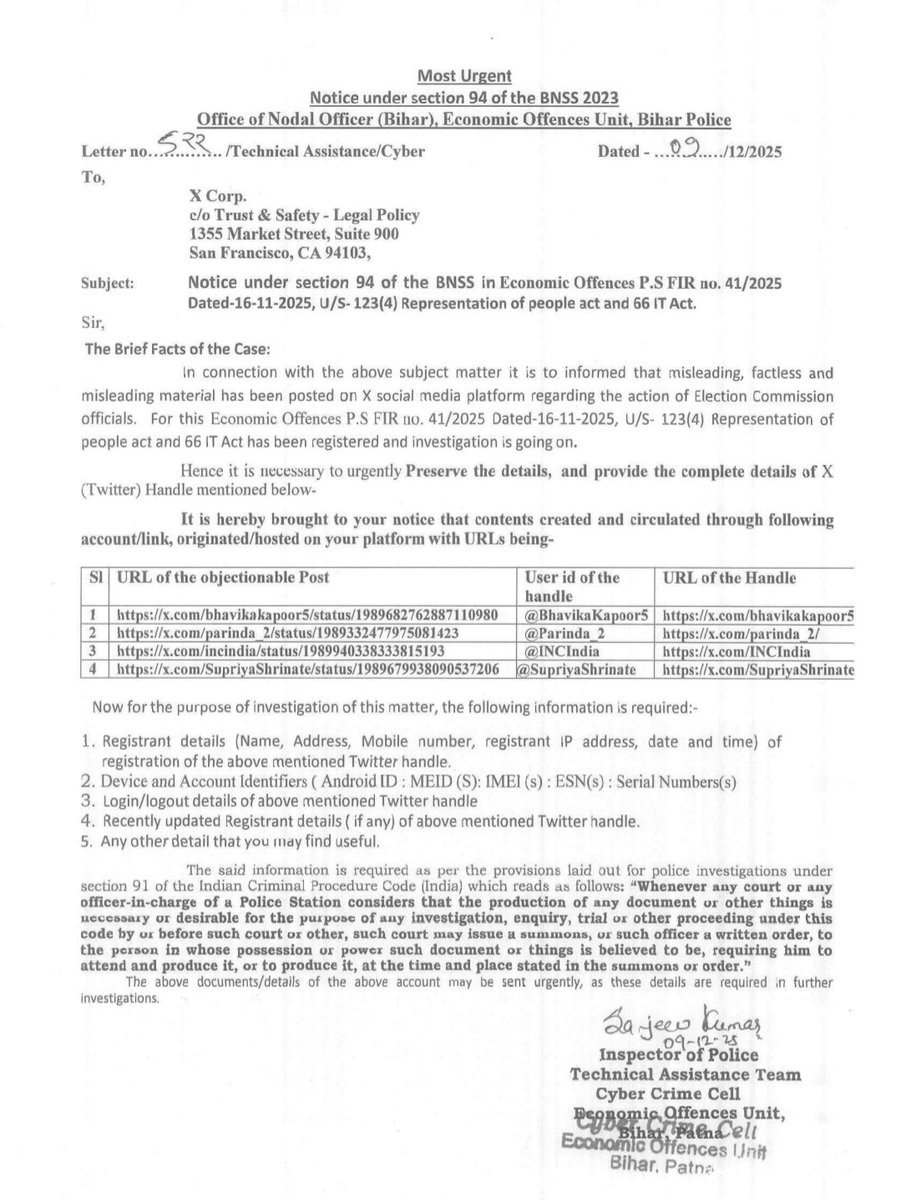
Can't these guys afford a grammar checker when sending out official documents instead of making a fool of themselves in public by mangling the English language ?
Dr Aniruddha Malpani, MD tweet media
English
5
2
17
857
Amitabh Kant
Amitabh Kant@amitabhk87·
While ease of doing business has improved, India’s next reform frontier must be clear: lowering the cost of doing business. When firms can produce at globally competitive costs, they scale, expand exports, and create high-quality jobs. A competitive cost structure is not a narrow objective—it is foundational to sustaining 8%+ growth and realising our Viksit Bharat ambitions. My article with @RanveerNagaich in @EconomicTimes highlights the imperative need for India to become a cost competitive manufacturing nation.
Amitabh Kant tweet media
English
27
45
261
9.1K
Alok Mani Tripathi
Alok Mani Tripathi@manialok·
My two cents: I don’t support or advise firing people if you’re making decent profit, especially if it is a “family office” thing. Long-term sustainability for an organisation does need churn. Having said that, you’re the right person to fight this case and pls do not budge let’s see what happens if take a stand on a fake case.
English
0
0
0
30
Bill Ackman
Bill Ackman@BillAckman·
I am reaching out to the @X community for advice with the likely risk of sharing TMI. I have been sufficiently upset about the whole matter that I have lost sleep thinking about it and I am hoping that this post will enable me to get this matter off my chest. By way of background, I started a family office called TABLE about 15 years ago and hired a friend who had previously managed a family office, and years earlier, had been my personal accountant. She is someone that I trusted implicitly and consider to be a good person. The office started small, but over the last decade, the number of personnel and the cost of the office grew massively. The growth was entirely on the operational side as the investment team has remained tiny. While my investment portfolio grew substantially, the investments I had made were almost entirely passive and TABLE simply needed to account for them and meet capital calls as they came in. While TABLE purchased additional software and other systems that were supposed to improve productivity, the team kept increasing in size at a rapid rate, and the expenses continued to grow even faster. While I would periodically question the growing expenses and high staff turnover, I stayed uninvolved with the office other than a once-a-year meeting when I briefly reviewed the operations and the financials and determined bonus compensation for the President and the CFO. I spent no time with any of the other employees or the operations. The whole idea behind TABLE was that it would handle everything other than my day job so that I would have more time for my job and my family. Over the last six years, expenses ballooned even further, employee turnover accelerated, and I became concerned that all was not well at TABLE. It was time for me to take a look at what was going on. Nearly four years ago, I recruited my nephew who had recently graduated from Harvard and put him to work at Bremont, a British watchmaker, one of my only active personal investments to figure out the issues at the company and ultimately assist in executing a turnaround. He did a superb job. When he returned from the UK late last year after a few years at Bremont, I asked him to help me figure out what was going on with TABLE. When I explained to TABLE’s president what he would be doing, she became incredibly defensive, which naturally made me more concerned. My nephew went to work by first meeting with each employee to understand their roles at the company and to learn from them what ideas they had on how things could be improved. He got an earful. Our first step in helping to turn around TABLE was a reduction in force including the president and about a third of the team, retaining excellent talent that had been desperate for new leadership. Now here is where I need your advice. All but one of the employees who were terminated acted professionally and were gracious on the way out (excluding the president who had a notice period in her contract, is currently still being paid, and with whom I have not yet had a discussion). The highest compensated terminated employee other than the president, an in-house lawyer (let’s call her Ronda), told us that three months of severance was not enough and demanded two years’ severance despite having worked at the company for only two and one half years. When I learned of Ronda's request for severance, I offered to speak with her to understand what she was thinking, but she refused to do so. A few days ago, we received a threatening letter from a Silicon Valley law firm. In the letter, Ronda’s counsel suggests that her termination is part of longstanding issues of ‘harassment and gender discrimination’ – an interesting claim in light of the fact that Ronda was in charge of workplace compliance – and that her termination was due to: “unlawful, retaliatory, and harmful conduct directed towards her. Both [Ronda] and I [Ronda’s lawyer] have spoken with you about [Ronda’s] view of what a reasonable resolution would include given the circumstances. Thus far, TABLE has refused to provide any substantive response. This letter provides the last opportunity to reach a satisfactory agreement. If we cannot do so, [Ronda] will seek all appropriate relief in a court of competent jurisdiction.” The letter goes on to explain the basis for the “unsafe work environment” claim at TABLE: “In early 2026, Pershing Square’s founder Bill Ackman installed his nephew in an unidentified role at TABLE, Ackman’s family office. [His nephew]—whose only work experience had been for TABLE where he was seconded abroad for the last four years to a UK watch company held by Ackman—began appearing at TABLE’s offices and conducting interviews of employees without a clear explanation of his role or the purposes of these interviews. During this period, he made a series of inappropriate and genderbased [sic] comments to multiple employees that created an unsafe work environment. Among other things, [his nephew] made remarks about female employees’ ages (“Tell me you are nowhere near 40”), physical appearance (“Your body does not look like you have kids”), as well as intrusive questions about family planning and sexual orientation (“Who carried your son? Who will carry your next child?”). These incidents were reported to senior leadership at TABLE and Pershing Square. Rather than being addressed appropriately, the response from senior management reflected, at best, willful blindness to the inappropriateness of [his nephew]’s remarks and, at worst, tacit endorsement.” The above allegations about my nephew had previously been brought to my attention by TABLE’s president when they occurred. When I learned of them, I told the president that I would speak to him directly and encouraged her to arrange for him to get workplace sensitivity training. The president assured me that she would do so. When I spoke to my nephew, he explained what he actually had said and how his actual remarks had been received, not at all as alleged in the legal letter from Ronda’s counsel. I have also spoken to others at the lunch table who confirmed his description of the facts. In any case, he meant no harm, was simply trying to build rapport with other employees, and no one, as far as I understand, was offended. Ironically, Ronda claims in her legal letter that TABLE didn’t take HR compliance seriously, yet Ronda was in charge of HR compliance at TABLE and the person who gave my nephew his workplace sensitivity training after the alleged incidents. In any case, Ronda, as head of compliance, should have kept a record or raised an alarm if indeed there was pervasive harassment or other such problems at the company, and there is no evidence whatsoever that this is true. So why does Ronda believe she can get me to pay her nearly $2 million, i.e., two years of severance, nearly one year of severance for each of her years at the company? Well, here is where some more background would be helpful. Over the last two months, I have been consumed with a major family medical issue – one of my older daughters had a massive brain hemorrhage on February 5th and has since been making progress on her recovery – and I am in the midst of a major transaction for my company which I am executing from a hospital room office next to her . While the latter business matter is publicly known, the details of my daughter’s situation are only known to Ronda because of her role at our family office. Now, let’s get back to the subject at hand. Unfortunately, while New York and many other states have employment-at-will, there has emerged an industry of lawyers who make a living from bringing fake gender, race, LGBTQ and other discrimination employment claims in order to extract larger severance payments for terminated employees, and it needs to stop. The fake claim system succeeds because it costs little to have a lawyer send a threatening letter and nearly all of the lawyers in this field work on contingency so there is no or minimal cash cost to bring a claim. And inevitably, nearly 100% of these claims are settled because the public relations and legal costs of defending them exceed the dollar cost of the settlement. The claims are nearly always settled with a confidentiality agreement where the employee who asserts the fake claims remains anonymous and as a result, there is no reputational cost to bringing false claims. The consequences of this sleazy system (let’s call it ‘the System’) are the increased costs of doing business which is a tax on the economy and society. There are other more serious problems due to the System. Unfortunately, the existence of an industry of plaintiff firms and terminated employees willing to make these claims makes it riskier for companies to hire employees from a protected class, i.e., LGBTQ, seniors, women, people of color etc. because it is that much more reputationally damaging and expensive to be accused of racism, sexism, and/or intolerance for sexual diversity than for firing a white male as juries generally have less sympathy for white males. The System therefore increases the risk of discrimination rather than reducing it, and the people bringing these fake claims are thereby causing enormous harm to the other members of these protected classes. So what happened here? Ronda was vastly overpaid and overqualified for the job that she did at TABLE. She was paid $1.05 million plus benefits last year for her work which was largely comprised of filling out subscription agreements and overseeing an outside law firm on closing passive investments in funds and in private and venture stage companies, some compliance work, and managing the office move from one office to another. She had a very good gig as she was highly paid, only had to go into the office three days a week, and could work from anywhere during the summer. Once my nephew showed up and started to investigate what was going on, she likely concluded that there was a reasonable possibility she would be terminated, as her job was in the too-easy-and-to-good-to-be-true category. The problem was that she was not in a protected class due to her race, age or sexual identity so she had to construct the basis for a claim. While she is female and could in theory bring a gender-based discrimination claim, she reported to the president who is female and to whom she is very close, which makes it difficult for her to bring a harassment claim against her former boss. When my nephew complimented a TABLE employee at lunch about how young she looked – in response to saying she was going to her 40-year-old sister’s birthday party, he said ‘she must be your older sister’ – Ronda immediately reported it to our external HR lawyer. She thereby began building her case. The other problem for Ronda bringing a claim is that she was terminated alongside 30% of other TABLE employees as part of a restructuring so it is very difficult for her to say that she was targeted in her termination or was retaliated against. TABLE is now hiring an external fractional general counsel as that is all the company needs to process the relatively limited amount of legal work we do internally. In short, Ronda was eminently qualified and capable and did her job. She was just too much horsepower for what is largely an administrative legal role so she had to come up with something else to bring a claim. Now Ronda knew I was a good target and it was a good time to bring a claim against me. She also knew that I was under a lot of pressure because on March 4th when Ronda was terminated, my daughter had not yet emerged from consciousness, she was not yet breathing on her own, and my daughter and we were fighting for her life. I was and remain deeply engaged in her recovery while at the same time I was working on finishing the closing for the private placement round for my upcoming IPO. Ronda also knew that publicity about supposed gender discrimination and a “hostile and unsafe work environment” are not things that a CEO of a company about to go public wants to have released into the media. And she may have thought that the nearly $2 million she was asking for would be considered small in the context of the reputational damage a lawsuit could cause, regardless of the fact that two years of severance was an absurd amount for an employee who had only worked at TABLE for 30 months. She also likely considered that I wouldn’t want to embarrass my nephew by dragging him into the klieg lights when her claims emerged publicly. So, in summary, game theory would say that I would certainly settle this case, for why would I risk negative publicity at a time when I was preparing our company to go public and also risk embarrassing my nephew. Notably, she hired a Silicon Valley law firm, rather than a typical NY employment firm. This struck me as interesting as her husband works for one of the most prominent Silicon Valley venture firms whose CEO, I am sure, has no tolerance for these kinds of fake claims that sadly many venture-backed companies also have to deal with. I mention this as I suspect her husband likely has been working with her on the strategy for squeezing me as, in addition to being a computer scientist, he is a game theorist. My only advice for him is to understand more about your opponent before you launch your first move. All of the above said, gender, race, LGBTQ and other such discrimination is a real thing. Many people have been harmed and deserve compensation for this discrimination, and these companies and individuals should be punished for engaging in such behavior. Which brings me to the advice I am seeking from the X community. I am not planning to follow the typical path and settle this ‘claim.’ Rather, I am going to fight this nonsense to the end of the earth in the hope that it inspires other CEOs to do the same so we shut down this despicable behavior that is a large tax on society, employment, and the economy and contributes to workplace discrimination rather than reducing it. Do you agree or disagree that this is the right approach?
English
10.9K
1.4K
23.9K
11M
Alok Mani Tripathi
Alok Mani Tripathi@manialok·
Valuable post. Solid data points and very practical breakdown of what’s actually happening on ground. Agree with the core point. Pricing is disconnected from reality for small firms and most of these tools are just wrappers. But “build in a weekend” is where it slightly breaks. Not discounting that your suggestion has value and it may work for few. But building something that works once is easy. Building something you can trust daily in legal work is different. A solo can definitely: •draft documents •analyse case files •structure intake and workflows But real issues start after that: •hallucination is not acceptable in legal •no audit trail means risk •no consistency across matters •data privacy is not trivial That’s why many will try DIY and then quietly drop it. What will actually work: •use base models directly for cost •build small, controlled workflows around real use cases •keep human review tight •avoid heavy tools unless scale demands it This is same pattern we saw in RPA/Automation. Tools didn’t win. People who understood what to automate won. Same will happen here.
English
0
1
2
459
Ann Srivastava
Ann Srivastava@helloparalegal·
The legal tech industry spent the last 3 years telling solo lawyers and small firms that AI would level the playing field. Then they priced it so only BigLaw could afford it. CoCounsel. $900 a month per seat. For a single user. That is $10,800 a year for one attorney to use an AI research tool that hallucinates 17% of the time according to Stanford's own testing. Lexis+ AI. Integrated into plans that already cost $270 a month whether you use them or not. Locked into annual contracts you cannot pause. And their AI hallucinated more than 17% of the time in the same study. Westlaw's AI-Assisted Research. Hallucination rate above 34%. More than one in three queries returning something that is not real. At premium pricing. Harvey. Raised $300 million. Serves elite firms. If you are a solo doing PI cases in suburban Ohio, Harvey does not know you exist and does not want to. The pattern is the same one legal tech has followed for 20 years. Build for the firms that can write six-figure checks. Let everyone else figure it out. And everyone else is 75% of the profession. There are 1.3 million licensed attorneys in the United States. Roughly 49% are in solo practice. Another 15% are in firms of 2 to 5. That is nearly two thirds of all practicing lawyers in firms where $900 a month per seat is not a rounding error. It is a decision between a tool and a paralegal. These lawyers chose the paralegal. Every time. Not because they do not understand AI. Because the math does not work. If you bill 150 hours a month at $300 an hour and your utilization rate is the national average of 37%, you are collecting maybe $16,000 a month before overhead. You are not spending $900 of that on an AI tool that might make up a case and get you sanctioned. So the state of the art for most American lawyers in 2026 is the same as it was in 2019. Westlaw. Word. A yellow legal pad. Maybe Clio for billing if they are progressive. The AmLaw 100 firms have AI teams. They have prompt libraries. They have custom-trained models for their practice areas. They are running document review that used to take 200 associate hours in 3 days. The solo in Tampa is still copying and pasting from a brief template he wrote in 2017. That is the playing field legal tech "leveled." Here is what nobody in legal tech is talking about because it threatens their entire business model. A solo practitioner with a laptop can now build most of what those $900/month tools do. In a weekend. For the cost of a Claude subscription. I am not being provocative. I am being specific. Take the thing lawyers actually need most. Not a chatbot to ask legal questions to. That is what got people sanctioned. Lawyers need tools that work with their actual files. Their actual cases. Their actual documents. Claude Code runs on your machine. It reads every file in a folder you point it to. It does not go to the internet and generate case law from memory. It reads the documents you already have. Here is what a solo practitioner can build in a single weekend. Client intake processing. Right now you get an email or a phone call, you take notes, you type everything into Clio manually, you send a retainer letter, you open a file. Every step is manual. Set up a folder structure. Put your retainer template in it. Put your conflict check list in it. Tell Claude Code what your intake process looks like and have it build you a system where you paste in the client's details and it generates the retainer letter, the conflict check memo, the new matter checklist, and the initial filing deadlines. All in the format you already use. Not some vendor's format. Your format. Your letterhead. Your retainer language. Or take deadline tracking. You are paying for a calendaring system or worse you are using Outlook reminders and hoping. Pull your active case list. Feed it to Claude Code with every relevant deadline type for your practice area. Have it build a tracker that flags deadlines at 30, 14, 7, and 3 days out. Output to a spreadsheet you already know how to use. Or to your calendar. Or to a daily email. A developer would charge you $5,000 to $15,000 for this. You can build it Saturday morning. Or take the thing that actually moves the needle in litigation. Preparing for a judge you have never appeared before. Download 30 of this judge's orders from PACER. Put them in a folder with your motion and the opposing brief. Have Claude Code read all of it and tell you how this judge has ruled on the exact issues in your case. What arguments she finds persuasive. What she raises sua sponte. How she structures her analysis. Now have it draft your brief to match how this specific judge reads and reasons. Lex Machina charges thousands a year for judge analytics that give you bar charts. You just built a judge-specific brief preparation system in an afternoon using the actual orders instead of summarized data. Or document review. You have 2,000 documents in discovery. A vendor wants $15,000 to run them through their review platform. Put them in a folder. Have Claude Code read them and flag the 200 that are responsive to the RFPs. Have it draft a privilege log for the ones that are privileged. Review its work the way you would review a first-year associate's work. Correct where it gets it wrong. Run it again. This is not hypothetical. Lawyers are doing this right now. The reason the legal tech industry does not want you to know this is because their entire model depends on you believing that you cannot build these tools yourself. That AI is too complicated. That you need their proprietary wrapper around the same foundation models you can access directly. CoCounsel is a wrapper around GPT-4. Lexis+ AI is a wrapper around proprietary models. Harvey is a wrapper around Claude and GPT. You are paying $900 a month for a user interface and a brand name sitting on top of models you can access for $20 to $200 a month. I am not saying these tools are worthless. If you are a 500-lawyer firm with compliance requirements and you need enterprise deployment with audit trails and SSO, you should buy enterprise software. But if you are a solo. Or a 3-person shop. Or a legal aid lawyer who has never had access to any of this. You can build it yourself now. The foundation models are the same ones the expensive tools use. Claude Code gives you direct access. It reads your files, it understands your practice, and it does not lock you into an annual contract. The most expensive legal tech is no longer the best legal tech. The best legal tech is the one you build yourself because it does exactly what you need and nothing you do not. The playing field did not get leveled by the companies that promised to level it. It got leveled by the same AI they are reselling to you at a 40x markup.
English
58
111
707
171.8K
Alok Mani Tripathi
Alok Mani Tripathi@manialok·
@atechiethought @law_ninja If these calls go to the helpdesk number, there is no problem. A few customers always call the sales guy; then the sales guy calls the helpdesk head, or they want a senior guy to service them. We were talking about that culture in B2B. It’s not a technology problem.
English
1
0
0
50
ATechieThought
ATechieThought@atechiethought·
@manialok @law_ninja Use voice Agent. Record and transcribe the call as tickets. In your master agreement get this Clause and in first customer call, explain your team to say this or play this call is recorded for training purposes.
English
2
0
0
52
Ramanuj Mukherjee
Ramanuj Mukherjee@law_ninja·
Every person who has tried to sell software to a small Indian law firm has heard this: "Bhai, send me the proposal. I'll look at it." You follow up. "Still reviewing." You follow up again. Nothing. Three months pass. The deal is dead. You cut the price. Same response. You add features. Same response. You offer a free trial. They log in once and disappear. The problem is not your pricing. The problem is not your product. The problem is you are selling the wrong thing. Small Indian businesses do not buy software. They hire people. This is not a behavioral quirk. It is how trust and accountability work in this market. Think about what happened when Indian courts started going digital. E-filing became mandatory. Case status went online. Court orders became downloadable. The portals existed. They were not complicated. Any lawyer with a smartphone and an internet connection could have figured it out in an afternoon. Nobody figured it out. Instead, thousands of e-filing operators and court typists set up shop near every district court complex in India. The same typists who used to type petitions on typewriters now started filing cases online for lawyers. Charging Rs 200 to Rs 500 per filing. Just to use portals the lawyer could have accessed themselves. These operators now handle everything from e-filing to downloading court orders to checking case status. Many of them charge monthly retainers from 15 to 20 lawyers each. They are the person the lawyer calls when anything digital does not work. The lawyers did not want the portal. They wanted a person who would handle it and be answerable when a filing deadline was missed. Same story with GST. ClearTax built software. Tally added modules. The tools existed. Nobody learned. Instead, 3 lakh GST consultants emerged across India. Charging Rs 500 to Rs 2,000 per month per client. Just to file returns using tools the client could have accessed themselves. Because the person you hire is accountable. The app is not. Now apply this to AI. You build an AI workflow system for a 5-person law firm. Client intake automation. Hearing date reminders. Document drafting. Legal research summaries. It works beautifully. You try to sell it as a SaaS product for Rs 2,000 a month. They will not buy it. Not because Rs 2,000 is too much. They pay their munshi Rs 12,000 a month. They pay for their Manupatra subscription. They pay the typist outside court for e-filing. They will not buy it because they do not trust a subscription to an unknown product. Nobody to call when something breaks. Nobody accountable when the reminder does not go out before the limitation date. The way to sell AI to small Indian law firms is not to sell software. It is to sell yourself as the person who builds it, runs it, and fixes it. Rs 15,000 to 20,000 to build and set up. Rs 2,000 a month to maintain and be available. Same pricing as their e-filing operator. Same mental model. You are not a product. You are a person they can call. And here is where the distribution insight gets interesting. Think about who already walks into a lawyer's chamber every month. The legal book supplier. The local distributor who drops off bare acts and commentaries. These people have been visiting the same 200 to 300 lawyers for years. They know which advocate sits in which chamber. They know their practice area, their court, their temperament. The lawyer already trusts this person. Already buys from them. Already opens the door when they knock. Now imagine that book supplier says: "Sir, along with your commentary subscription, I can also set up an AI system for your office. Hearing date reminders, draft notices, client follow-ups. Rs 15,000 setup, Rs 2,000 a month. I will handle everything." The conversion rate on that pitch is not 2 percent. It is 40 to 60 percent. Because the trust already exists. The relationship already exists. The regular access to the chamber already exists. The same applies to the stamp vendor and the notary agent who sees the same set of lawyers week after week. Or the munshi inside the firm who handles all the filings and would be the one actually operating any new system. This is how India adopts new technology. Not through app stores and LinkedIn ads. Through trusted intermediaries who bundle the new thing with an existing relationship. The person building AI deployment businesses for Indian law firms who figures this out first will not be selling to one advocate at a time. They will be training legal book suppliers and e-filing operators to offer this as a service to their existing clients. That is a distribution model. Not a product. Not a marketing funnel. The SaaS model assumes the buyer wants to learn and self-serve. The India model says: find the person the buyer already trusts. Work through them. One is selling software. The other is understanding how India actually works. Know anyone who has done this yet for legal software or AI in India?
English
54
139
883
176.2K
Alok Mani Tripathi
Alok Mani Tripathi@manialok·
Politicians can't do that. They are there to manage the gap on behalf of the "haves". If we talk about government and governance, they can make things easy for citizens by improving law and policing. The rest—citizens, market, and society—can manage itself. They put themselves in between to manipulate, however they make it look like you can't do without them. If you still need more explanation, think of FSSAI and paneer.
English
0
0
0
14
Sabeer Bhatia
Sabeer Bhatia@sabeer·
People in India still run on the politics of poverty. Leaders compete over who can represent the poor better—but what if the real goal was to eliminate poverty altogether? If I were running for office, my message would be simple: make everyone rich. That starts with a mindset shift—from managing scarcity to creating prosperity. Promises alone don’t build prosperity. Execution does. And truth matters—because you can’t build a prosperous nation on illusion.
English
60
30
154
4K