
Ryan Peterman

3.3K posts

Ryan Peterman banner
Ryan Peterman

Ryan Peterman

@ryanlpeterman

Building the podcast & ergonomic keyboard I wish existed • ex-software engineer @instagram, @meta • See what I'm building here ↓

nyc / sf Katılım Şubat 2017
414 Takip Edilen26.6K Takipçiler
Sabitlenmiş Tweet
Ryan Peterman
Ryan Peterman@ryanlpeterman·
I quit the best job I ever had to try and build what I wish existed in the world. Two projects I'm working on now: 1. The Peterman Pod - When I first started at Meta, the career stories of incredible engineers always inspired me. I aim to share transparent career stories that I wish I had more of back in the day. There are still many engineers who are heros to me that I'd love to bring on the show one day! 2. Compose - I could never really find what I wanted so I'm building the ergonomic keyboard I wish existed. Pictures of our prototype here: read.compose.llc/p/our-keyboard… I've earmarked ~6 months of living expenses to fund this new career direction. I'm going to give it my all to see if it's sustainable. Thank you for your support, working on my passion projects is something I’m only lucky enough to consider because of you all 🙏 More detail here: x.com/ryanlpeterman/…
English
32
9
253
40.3K
Ryan Peterman
Ryan Peterman@ryanlpeterman·
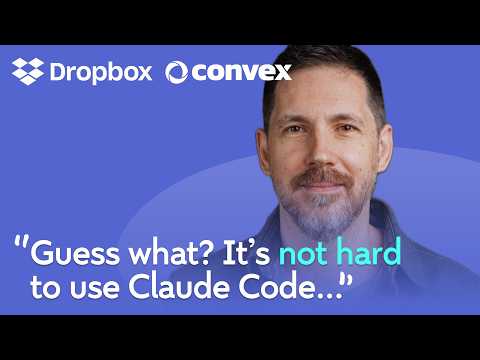
James Cowling (@jamesacowling) was the most senior engineer at Dropbox (Senior Principal) before he left to start his own company, @convex. I interviewed him about: • Career navigation in the "AI era" • Why simplicity >> complexity • Promo incentives tied to complexity • Technical details of his major projects and PhD • His top career regrets • Thoughts on the permanent underclass Where to watch: • YouTube: youtu.be/3XkmNSuHFmY • Spotify: open.spotify.com/episode/1Xt2Sf… • Apple Podcasts: podcasts.apple.com/us/podcast/the… • Transcript: developing.dev/p/dropboxs-for… Thank you to this episode's sponsor for supporting my work: • WorkOS: makes your app Enterprise Ready with easy to use APIs to add SSO, SCIM, RBAC, and more in just a few lines of code, check them out at workos.com Timestamps: 0:00 - Intro 0:53 - Systems work during his PhD 13:05 - Dropbox technical deep dive 21:57 - Why Dropbox migrated from AWS 36:40 - How to do massive migrations 44:31 - Simplicity vs complexity in promos 49:23 - What technical teams should be focused on 1:00:25 - Doing the right thing vs promo hypothetical 1:08:13 - Why he dipped into management sometimes 1:11:36 - Why you shouldn't lead by example 1:23:23 - How to mentor Senior Staff+ engineers 1:27:30 - Career advice for the AI era 1:37:21 - Why he started his own company 1:46:05 - The most technically challenging work of his career 1:48:10 - How he got involved in Silicon Valley 1:52:16 - Career regrets 1:55:54 - Top technical book recommendation 1:56:36 - Younger self & permanent underclass advice
YouTube video
YouTube
English
0
11
80
7.6K
vijn
vijn@vijn_crypto·
@Atenov_D Who is this guys on the video?
English
1
0
0
97
Atenov int.
Atenov int.@Atenov_D·
Citadel quants earn $500K+/year and get paid to do nothing for 2 years when they quit. This Stanford PhD walked away anyway Nimit Sohoni got his PhD at Stanford, cracked Citadel Securities, then left before ChatGPT launched because he saw what was coming in AI - he now builds next-generation voice AI at Cartesia, competing directly against ElevenLabs on latency > you will watch 57 minutes of the most honest comparison of quant finance vs AI research: garden leave contracts, extreme secrecy culture, U-shaped job security, and why work-life balance is actually better at a hedge fund than an AI lab in 2026 Bookmark & watch - then ask yourself if $500K and 2 years of paid vacation is worth giving up the thing you actually want to build.
Atenov int.@Atenov_D

Spottr just published research that breaks every 0-block execution claim in Polymarket copy trading. If you're into copy trading, YOU NEED TO FACE THE TRUTH Most copy bots are competing on detection speed while missing the actual problem. Polymarket matches trades offchain on their own servers. Polygon settlement comes later. By the time your bot sees anything in the mempool - the leader's trade is already done. Same block means same settlement. > The real latency numbers @spottr_trade measured on their own infrastructure: - Own Polygon node + mempool: 320ms - Third-party RPC + mempool: 1,120ms - Waiting for confirmed block: 2,450ms 3.5x difference between best and worst setup. That gap is either your edge or your loss. The part that kills most bots isn't latency. It's uptime. September 2025 - Polygon finality incident hit 780 seconds. Every bot without redundancy missed the entire window. Perfect latency means nothing when your infrastructure is down during the one move that matters. The architecture that actually survives: own Polygon nodes, direct mempool reads, colocation, parallel instances, human alerting. Full technical breakdown in the article

English
23
46
395
124.5K
Ryan Peterman
Ryan Peterman@ryanlpeterman·
"C makes it easy to shoot yourself in the foot. C++ makes it harder, but when you do it, it blows your whole leg off." Bjarne (Creator of C++): "It's a good quote and it's correct. Arnold Penzias, who's got a Nobel Prize in physics, was once trying to explain to a large group of Bell Labs managers about C++, and he says you can't have a power tool without knowing how to use it. What is behind that is if you get a power tool and you misuse it, you will get more problems. Get a car that accelerates faster and it can wrap you around a tree in a way old fashioned, slow accelerating car can't. It's fundamental to having power tools."
Ryan Peterman@ryanlpeterman

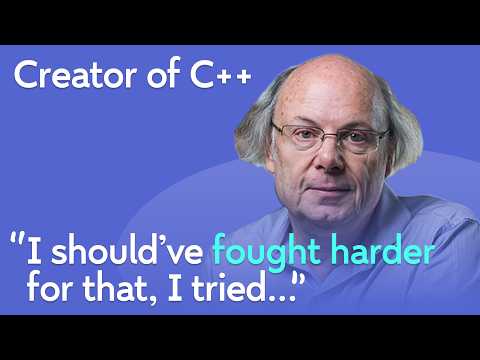
Bjarne Stroustrup is the creator of C++ and a former researcher at Bell Labs at its peak. I interviewed him about: • What made Bell Labs different • Programming language design: types, memory safety, bootstrapping • When abstraction improves performance • Anecdotes from building C++ • Thoughts on AI writing C++ • Mistakes he'd change while building C++ Where to watch: • YouTube: youtu.be/U46fJ2bJ-co • Spotify: open.spotify.com/episode/52pEgo… • Apple Podcasts: podcasts.apple.com/us/podcast/the… • Transcript: developing.dev/p/creator-of-c… Thank you to this episode's sponsors for supporting my work: • Cursor 3: a unified workspace for building software with agents, check it out at cursor.com • WorkOS: makes your app Enterprise Ready with easy to use APIs to add SSO, SCIM, RBAC, and more in just a few lines of code, check them out at workos.com Timestamps: 0:00 - Intro 0:50 - The origin of C++ 8:46 - What Bell Labs was like 17:24 - Dennis Ritchie 24:00 - When to build a programming language 31:59 - Bootstrapping a language 33:58 - C++ is not object-oriented 37:32 - Discussing type systems 46:20 - Memory safety 49:26 - Standards committee anecdotes 1:09:40 - Adding automatic garbage collection to C++ 1:18:25 - Template instantiation is Turing complete 1:21:57 - Abstraction and performance 1:28:51 - AI writing code 1:35:54 - His motivation 1:39:18 - Famous quotes 1:46:48 - Reflecting on building C++ 1:49:12 - Top C++ book recommendation 1:50:59 - Advice for his younger self 1:58:06 - Outro

English
7
71
529
96.3K
Eleftheria Batsou
Eleftheria Batsou@BatsouElef·
What’s your favorite programming-related YouTube channel? 📽️
English
43
0
62
5.4K
Ryan Peterman
Ryan Peterman@ryanlpeterman·
Top 3 takeaways I had from my conversation with Bjarne Stroustrup (Creator of C++): 1) How Bell Labs did research - When I asked Bjarne about how project selection went, he talked about two ways of doing research. In one way, you have a well-designed project that is carefully chosen by management. Then the project is staffed with many researchers. This was not the Bell Labs way. The other way was to hire the best people on the planet and don’t tell them what to do. Each year, the researchers would be asked to explain what they did in 9pt font or larger on a single page. If you can’t explain what you’re doing concisely, it probably isn’t that interesting. If the work was interesting enough, then you could continue to work on it. Even though this was unusual, the results speak for themselves as much of the technology we take for granted today was invented at Bell Labs. 2) Negative overhead abstraction - Coming into the conversation, I assumed that more abstraction meant you’d lose performance but Bjarne corrected my naive assumption. A simple example is to look at C vs C++. Because C++ encodes more information in the language itself, the compiler has more it can use to optimize the final result. Therefore, the abstractions in C++ can be used to get better performance actually. 3) There was a garbage collection API in C++ - I had always assumed that where there was C++, there was manual memory management. I was wrong. In 1995, Bjarne introduced a standard interface for garbage collection due to user requests. However, C++ developers tended to prefer manual resource management so the garbage collection API never got much use. Later, this garbage collection interface was removed from the standard. This is probably why you don’t hear too much about this. Full conversation below:
Ryan Peterman@ryanlpeterman

Bjarne Stroustrup is the creator of C++ and a former researcher at Bell Labs at its peak. I interviewed him about: • What made Bell Labs different • Programming language design: types, memory safety, bootstrapping • When abstraction improves performance • Anecdotes from building C++ • Thoughts on AI writing C++ • Mistakes he'd change while building C++ Where to watch: • YouTube: youtu.be/U46fJ2bJ-co • Spotify: open.spotify.com/episode/52pEgo… • Apple Podcasts: podcasts.apple.com/us/podcast/the… • Transcript: developing.dev/p/creator-of-c… Thank you to this episode's sponsors for supporting my work: • Cursor 3: a unified workspace for building software with agents, check it out at cursor.com • WorkOS: makes your app Enterprise Ready with easy to use APIs to add SSO, SCIM, RBAC, and more in just a few lines of code, check them out at workos.com Timestamps: 0:00 - Intro 0:50 - The origin of C++ 8:46 - What Bell Labs was like 17:24 - Dennis Ritchie 24:00 - When to build a programming language 31:59 - Bootstrapping a language 33:58 - C++ is not object-oriented 37:32 - Discussing type systems 46:20 - Memory safety 49:26 - Standards committee anecdotes 1:09:40 - Adding automatic garbage collection to C++ 1:18:25 - Template instantiation is Turing complete 1:21:57 - Abstraction and performance 1:28:51 - AI writing code 1:35:54 - His motivation 1:39:18 - Famous quotes 1:46:48 - Reflecting on building C++ 1:49:12 - Top C++ book recommendation 1:50:59 - Advice for his younger self 1:58:06 - Outro

English
4
18
157
12.6K
Ryan Peterman
Ryan Peterman@ryanlpeterman·
@haider1 Out of curiosity, why wait a day until you credit the source content? You draw some negative attention when it isn't credited from what I can tell in the comments
English
0
0
4
248
Haider.
Haider.@haider1·
Creator of C++, Bjarne Stroustrup: AI-generated code isn't ready — it generates more bugs, more bloat, more security holes, and is nearly impossible to validate "senior developers are already retiring rather than deal with it" The problem is that even a small prompt change can shift the entire codebase in unpredictable ways
English
623
2K
10.6K
1.7M
Ryan Peterman
Ryan Peterman@ryanlpeterman·
Bjarne Stroustrup (Creator of C++) on the costs of abstraction: "It's compiled away. This is why I talk about zero overhead abstraction. And people are beginning to take me to task for that because that's underestimating the ability of the C++ compiler. We can do negative overhead abstraction." Ryan: "What if you're really good at writing assembly and had all the time in the world to write it?" Bjarne: "If you are very smart and you have infinite time, you can do better. By and large, we are not as smart as the optimizers anymore, and we don't have infinite time."
Ryan Peterman@ryanlpeterman

Bjarne Stroustrup is the creator of C++ and a former researcher at Bell Labs at its peak. I interviewed him about: • What made Bell Labs different • Programming language design: types, memory safety, bootstrapping • When abstraction improves performance • Anecdotes from building C++ • Thoughts on AI writing C++ • Mistakes he'd change while building C++ Where to watch: • YouTube: youtu.be/U46fJ2bJ-co • Spotify: open.spotify.com/episode/52pEgo… • Apple Podcasts: podcasts.apple.com/us/podcast/the… • Transcript: developing.dev/p/creator-of-c… Thank you to this episode's sponsors for supporting my work: • Cursor 3: a unified workspace for building software with agents, check it out at cursor.com • WorkOS: makes your app Enterprise Ready with easy to use APIs to add SSO, SCIM, RBAC, and more in just a few lines of code, check them out at workos.com Timestamps: 0:00 - Intro 0:50 - The origin of C++ 8:46 - What Bell Labs was like 17:24 - Dennis Ritchie 24:00 - When to build a programming language 31:59 - Bootstrapping a language 33:58 - C++ is not object-oriented 37:32 - Discussing type systems 46:20 - Memory safety 49:26 - Standards committee anecdotes 1:09:40 - Adding automatic garbage collection to C++ 1:18:25 - Template instantiation is Turing complete 1:21:57 - Abstraction and performance 1:28:51 - AI writing code 1:35:54 - His motivation 1:39:18 - Famous quotes 1:46:48 - Reflecting on building C++ 1:49:12 - Top C++ book recommendation 1:50:59 - Advice for his younger self 1:58:06 - Outro

English
18
110
830
144.2K
Sav Tripodi
Sav Tripodi@savtrip_dev·
@ryanlpeterman @haider1 Of course ryan, I stumbled upon your podcast on youtube with David J Malan, then I checked out your other videos, you are getting some kick ass guests. I saw this video not attributed to you and was disgusted, we need more creators like you, so support, not steal from ryan!!!!
English
1
0
2
40
Sav Tripodi
Sav Tripodi@savtrip_dev·
@haider1 This is not cool to post this clip with zero attribution to the original author @ryanlpeterman from his podcast interview. The guy is working hard to build a fantastic podcast, the least you can do is support him.
English
1
0
36
2.7K
Ryan Peterman
Ryan Peterman@ryanlpeterman·
Bjarne Stroustrup is the creator of C++ and a former researcher at Bell Labs at its peak. I interviewed him about: • What made Bell Labs different • Programming language design: types, memory safety, bootstrapping • When abstraction improves performance • Anecdotes from building C++ • Thoughts on AI writing C++ • Mistakes he'd change while building C++ Where to watch: • YouTube: youtu.be/U46fJ2bJ-co • Spotify: open.spotify.com/episode/52pEgo… • Apple Podcasts: podcasts.apple.com/us/podcast/the… • Transcript: developing.dev/p/creator-of-c… Thank you to this episode's sponsors for supporting my work: • Cursor 3: a unified workspace for building software with agents, check it out at cursor.com • WorkOS: makes your app Enterprise Ready with easy to use APIs to add SSO, SCIM, RBAC, and more in just a few lines of code, check them out at workos.com Timestamps: 0:00 - Intro 0:50 - The origin of C++ 8:46 - What Bell Labs was like 17:24 - Dennis Ritchie 24:00 - When to build a programming language 31:59 - Bootstrapping a language 33:58 - C++ is not object-oriented 37:32 - Discussing type systems 46:20 - Memory safety 49:26 - Standards committee anecdotes 1:09:40 - Adding automatic garbage collection to C++ 1:18:25 - Template instantiation is Turing complete 1:21:57 - Abstraction and performance 1:28:51 - AI writing code 1:35:54 - His motivation 1:39:18 - Famous quotes 1:46:48 - Reflecting on building C++ 1:49:12 - Top C++ book recommendation 1:50:59 - Advice for his younger self 1:58:06 - Outro
YouTube video
YouTube
English
23
209
1.1K
317.7K
Ryan Peterman
Ryan Peterman@ryanlpeterman·
@xuancanh_dev I'd love to have him on, I have tried actually but I imagine he's enjoying the retired life
English
0
0
2
1K
Canh Nguyen
Canh Nguyen@xuancanh_dev·
@ryanlpeterman Thank you for the interview. It would be great if you could also bring Al Vermeulen out of retirement. I’m a big fan of his work within Amazon and hope it becomes more widely recognized across the industry.
English
1
0
5
1.2K
Ryan Peterman
Ryan Peterman@ryanlpeterman·
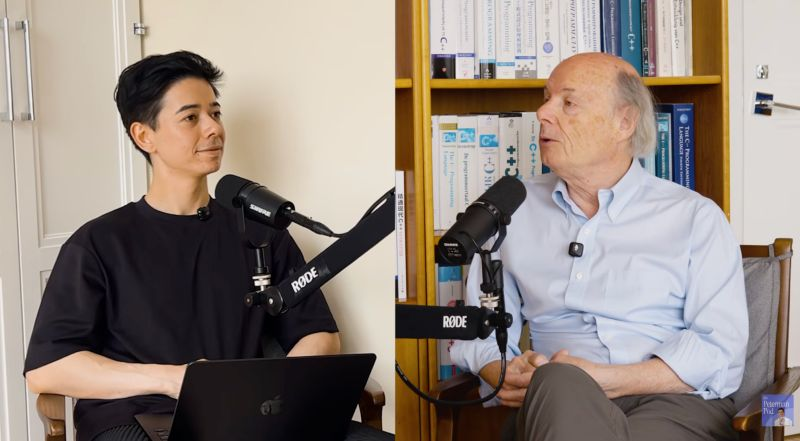
Episode with Bjarne Stroustrup (Creator of C++) dropping Monday morning, excited to share it with you all! Some of the topics we went over: • What made Bell Labs different • Programming language design: types, memory safety, bootstrapping • When abstraction improves performance • Things he'd change in building C++ knowing what he knows today He shared a bunch of interesting stories that came from building C++, really enjoyed those and hope you do too As usual will be available on YouTube/Spotify/Apple Podcasts and I'll post about it here when it drops on Monday
Ryan Peterman tweet media
English
5
46
622
29.4K
Ryan Peterman
Ryan Peterman@ryanlpeterman·
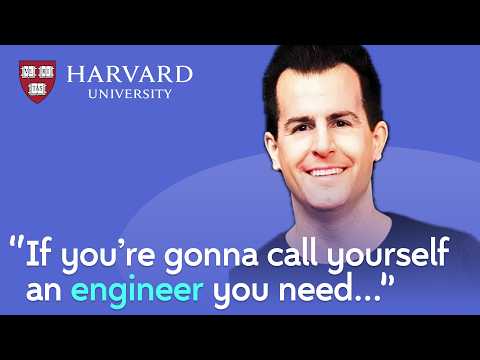
Top 3 takeaways from my conversation with Harvard professor, @davidjmalan (CS50): 1) How he lectures well - I was most curious about this since most professors don’t teach in a way that gets students excited like David does. He attributes his success to two main factors. First, he makes sure to design a “memorable moment” in each lecture. This is usually some fun, visual exercise that gives students a unique moment to anchor their memory to. His classic example is ripping a phone book in half to demonstrate binary search. People often say to him years later that they still remember those moments and the concept he was teaching. Second, he brings as much energy as possible for the audience's sake. He said that one of his worst fears is being in front of a bored audience. He also feels he owes it to the students to represent the subject in a way that makes them want to learn. 2) AI’s downstream impact on enrollments and cheating - Less students are enrolling in computer science. Part of it is fear, but a stronger motive is that companies just don’t come to hire from Harvard like they used to. David said they just don’t seem to be hiring as many junior engineers as before. The more interesting part to me though was how AI is impacting cheating. He said although cheating has stayed consistent at 5-10% of the student body each semester, what has changed is how hard it is to prosecute cheaters. When people cheat now using AI, they get answers that are difficult to attribute to a source. That makes it harder to hand a smoking gun to the adminstrative board. 3) Why learn C in 2026 and the most challenging concept to learn - C is such an old language at this point so some people critique why you’d need to learn that today. His argument was that C is low-level so you can learn how the computer works without being too low-level like assembly code. Also, since it is such a small language it forces students to reimplement basic data structures which is a great learning exercise. He taught so many years of the same introductory courses so I asked him what concept gave people the most trouble. He answered immediately that it was pointers. If you understand pointers well you should feel proud!
Ryan Peterman@ryanlpeterman

David Malan (@davidjmalan) is a professor at Harvard famous for transforming CS50 into a freely-available, world-class online course. I interviewed him about: • How he went from student -> teacher of CS50 • The knowledge that matters most in the future (not just programming) • How to be engaging in long-form lectures • How AI has impacted CS education including cheating / academic dishonesty • Advice for his younger self Where to watch: • YouTube: youtu.be/bB2o81DnKHk • Spotify: open.spotify.com/episode/0ApdN6… • Apple Podcasts: podcasts.apple.com/us/podcast/the… • Transcript: developing.dev/p/harvard-prof… Thank you to this episode's sponsors for supporting my work: • Cursor 3: a unified workspace for building software with agents, check it out at cursor.com • WorkOS: makes your app Enterprise Ready with easy to use APIs to add SSO, SCIM, RBAC, and more in just a few lines of code, check them out at workos.com Timestamps: 0:00 - Intro 1:09 - Getting into computer science 3:27 - Becoming the professor of CS50 11:19 - How to lecture well 14:25 - Depth vs engagement in education 18:11 - Why don't we consolidate educational resources 23:20 - Why start with C 31:51 - The ideal use of AI in education 34:54 - Cheating and AI 38:21 - Should we really learn CS still? 45:24 - College vs online education 47:06 - The most difficult concept to learn 51:00 - Growth vs fixed mindset 52:35 - The future of CS50 55:56 - Biggest career regret 1:00:29 - Top book recommendations 1:02:36 - Advice for his younger self 1:03:35 - Outro

English
0
7
54
4.5K
Ryan Peterman
Ryan Peterman@ryanlpeterman·
David J Malan (Harvard Professor, CS50) on why you should learn C in 2026: "It is a wonderful foundation on which to build your understanding of how a computer works and how software is built. It's about as close as you can get to the hardware before things devolve at least aesthetically into assembly code which is much scarier looking code. C kind of strikes pedagogically this really nice balance of having English like syntax and abstractions on top of lower level primitives that allow you to explore procedural programming. It's got everything but it's also a pretty small language so most anything you want you need to build yourself. And so we leverage this significantly in CS50. So much so that by mid semester in week five of the class students are building their own hash tables. And what I think is especially meaningful about C is that you can't just instantiate one of those data structures if you want one like you can in Java if you want it, you're going to have to build it yourself." @davidjmalan
English
4
14
123
6.2K
Ryan Peterman
Ryan Peterman@ryanlpeterman·
David Malan (@davidjmalan) is a professor at Harvard famous for transforming CS50 into a freely-available, world-class online course. I interviewed him about: • How he went from student -> teacher of CS50 • The knowledge that matters most in the future (not just programming) • How to be engaging in long-form lectures • How AI has impacted CS education including cheating / academic dishonesty • Advice for his younger self Where to watch: • YouTube: youtu.be/bB2o81DnKHk • Spotify: open.spotify.com/episode/0ApdN6… • Apple Podcasts: podcasts.apple.com/us/podcast/the… • Transcript: developing.dev/p/harvard-prof… Thank you to this episode's sponsors for supporting my work: • Cursor 3: a unified workspace for building software with agents, check it out at cursor.com • WorkOS: makes your app Enterprise Ready with easy to use APIs to add SSO, SCIM, RBAC, and more in just a few lines of code, check them out at workos.com Timestamps: 0:00 - Intro 1:09 - Getting into computer science 3:27 - Becoming the professor of CS50 11:19 - How to lecture well 14:25 - Depth vs engagement in education 18:11 - Why don't we consolidate educational resources 23:20 - Why start with C 31:51 - The ideal use of AI in education 34:54 - Cheating and AI 38:21 - Should we really learn CS still? 45:24 - College vs online education 47:06 - The most difficult concept to learn 51:00 - Growth vs fixed mindset 52:35 - The future of CS50 55:56 - Biggest career regret 1:00:29 - Top book recommendations 1:02:36 - Advice for his younger self 1:03:35 - Outro
YouTube video
YouTube
English
4
40
389
22.5K
Ryan Peterman
Ryan Peterman@ryanlpeterman·
Episode dropping tomorrow with @davidjmalan : • The story behind CS50 • The knowledge that matters most in the future (not just programming) • How to be engaging in long-form lectures • How AI has impacted CS education including cheating / academic dishonesty Excited for this one, the production is especially nice because of the CS50 team's expertise
Ryan Peterman tweet mediaRyan Peterman tweet media
English
2
5
47
4.5K