mark.heidel

749 posts

mark.heidel

mark.heidel

@markheidel2

Oro Valley, AZ Katılım Aralık 2022
236 Takip Edilen102 Takipçiler
mark.heidel retweetledi

wretchardthecat
wretchardthecat@wretchardthecat·
This is why I don't agree with Will Durant's assertion that: "Nature and history do not agree with our conceptions of good and bad; they define good as that which survives, and bad as that which goes under; and the universe has no prejudice in favor of Christ as against Genghis Khan." Von Neumann machines give us a way of testing whether being good or bad matters. Prepare two sets of Von Neumann machines. One aligned with Jesus Christ and the other aligned with Genghis Khan and turn them loose. My intuition, which can be experimentally tested, is that the two machines will perform differently in what they replicate; in how they learn and to what subtle ends they put their work. I think the former will work better than the latter, but we can actually run the experiment and see.
English
7
3
24
1.5K
mark.heidel retweetledi
Mark Penn
Mark Penn@Mark_Penn·
War Resolve In the past, casualties were the important and real limiting factor in any war. Today, people are worked up over a transitory increase in the price of gasoline and the most evil regime on earth is banking its survival on the West being more concerned about money than lives. Consequently they even execute teenagers without fair trials to create fear among the population to prevent an uprising. And the global anger is over gas prices not the executions. It will take resolve to see it through. The Iranians appear to have enough command and control left to launch desperate attacks on the region and suppress people at home. The aims of the operation have not been met until that chain is broken and the regime can no longer inflict terror on the world. And that may well take another month or so to accomplish and so the world will have to decide if it can withstand a temporary bump in gas prices to rid us of one of its most evil actors whose despicable actions are even more evident each passing day. Hopefully we can find that resolve because the good of ridding the world of this regime, ending its terror network and ending its threats against the West far outweigh a spike at the pump that will quickly be forgotten once this is finished.
English
275
1K
3.5K
237.6K
mark.heidel retweetledi
Metabolic Uncle
Metabolic Uncle@MetabolicUncle·
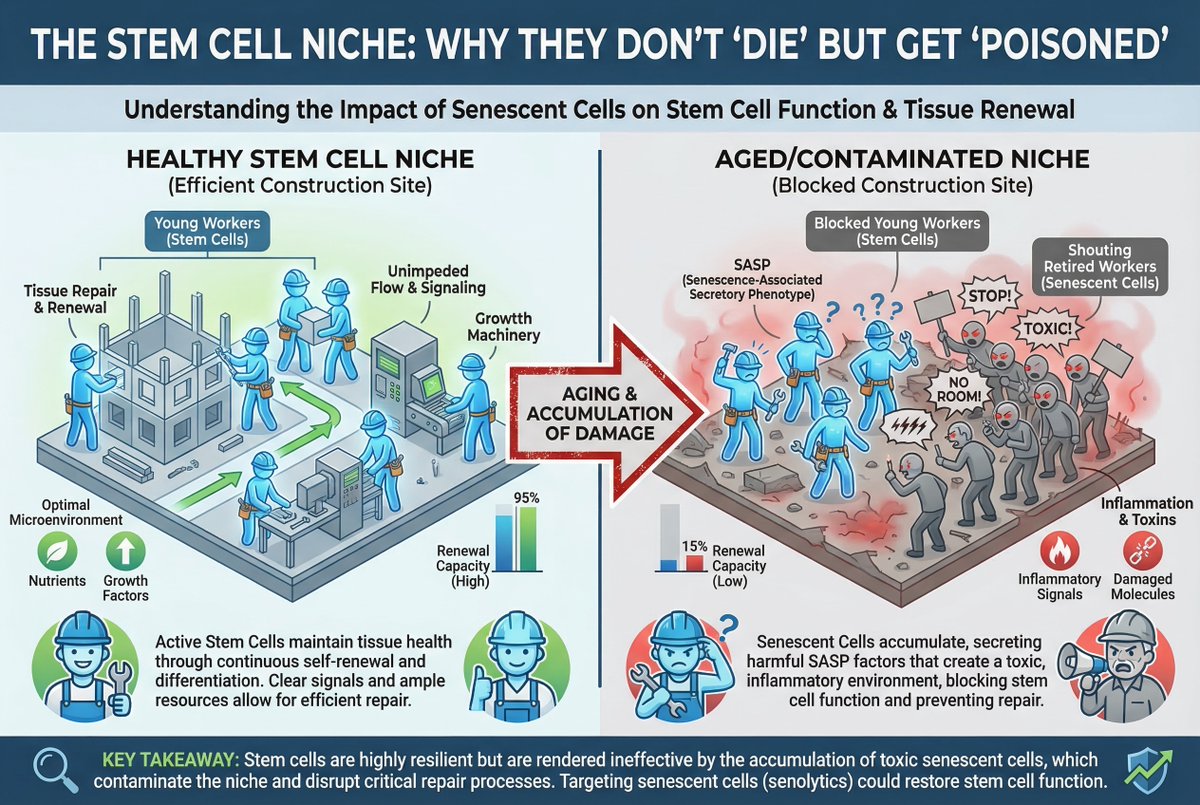
WHY SOME PEOPLE AGE A LOT FASTER THAN OTHERS Your stem cells didn't vanish at 65. They're still there. Same number you had at 25, mostly. The problem is they stopped working, and the reason has nothing to do with cellular depletion. Your body created a toxic environment that shut them down. Think about what stem cells actually do. Muscle fiber tears during exercise. Satellite cells wake up, divide, repair the damage. Blood cells wear out. Hematopoietic stem cells in your bone marrow produce replacements. Gut lining needs renewal. Intestinal stem cells handle it. This runs continuously, invisibly, throughout your life. Between 60 and 75 (for some people much earlier!), it slows in ways that cascade. Wounds that closed in days take weeks. A respiratory infection that knocked you out for two days at 40 now takes 10. Muscle mass erodes despite unchanged habits. Bone density drops. Immune response to vaccines weakens. These aren't random. They're downstream effects of stem cell dysfunction. The research from the last five years got specific enough that we can talk about mechanisms in detail. Five of them. Understanding all five matters because each one points toward a different intervention. They don't operate in isolation. They interact. When you understand the interaction, the remedies make sense. The first mechanism involves senescent cells. Picture a renovation factory. Your stem cells are young workers, trained, ready, waiting to be deployed. But the factory floor is crowded with retired workers who refuse to leave. Worse, they're not just standing around. They're shouting constantly. Issuing contradictory orders, creating noise and confusion that prevents the active workers from doing their jobs. Senescent cells are cells that accumulated enough DNA damage or oxidative stress that they should have undergone apoptosis, programmed cell death. Instead they get stuck. They stop dividing but don't die. In that stuck state, they begin secreting a cocktail of inflammatory signals called the SASP, the senescence associated secretory phenotype. IL-6, TNF-alpha, IL-1-beta, matrix metalloproteinases. These signals were originally designed to call the immune system to clear damaged tissue. But when the cells secreting them accumulate faster than the immune system can clear them, which is exactly what happens as we age, those signals become chronic. They poison the local environment that stem cells live in. The technical term for that environment is the stem cell niche. The critical insight from the last decade of research is that stem cell function is not just about the stem cells themselves. It's about the neighborhood they live in. A healthy stem cell placed in a toxic niche will underperform. A struggling stem cell placed in a healthy niche can recover. This changes the entire framework for intervention. In 2019, a team at the Mayo Clinic published the first human clinical trial demonstrating that senescent cells could actually be reduced in living people. The study involved nine older adults with diabetic kidney disease. They received a short course of dasatinib combined with quercetin, two compounds with senolytic properties, meaning they selectively eliminate senescent cells. After just 3 days of treatment, with evaluation at 11 days, the results were measurable. Significant reductions in senescent cells in adipose tissue. Reductions in inflammatory markers. An 8% increase in the density of adipocyte progenitor cells, essentially more stem cell precursors available for tissue repair within 14 days. That study had nine participants, no control group, a specific patient population with diabetic kidney disease. Dasatinib is an oncology drug requiring prescription and medical supervision. It's not something you should seek out on your own! What it is, scientifically, is a proof of concept. It demonstrated for the first time in humans that the senescent cell burden, the toxic load that blocks stem cell function, is not fixed. It is reducible. The second mechanism was revealed by a 2025 paper from the Icahn School of Medicine at Mount Sinai. The study focused on hematopoietic stem cells, the stem cells in your bone marrow responsible for producing every blood and immune cell in your body. Aged stem cells had accumulated a specific kind of internal dysfunction. Their lysosomes, the cellular recycling centers, had become hyperactivated and dysfunctional. Every cell has an internal waste management system. The lysosomes are the recycling plant. They break down damaged proteins, worn out organelles, cellular debris so the raw materials can be reused. In young cells, this system runs efficiently. In aged stem cells, something goes wrong. The recycling plant gets overwhelmed. Instead of processing waste, it starts accumulating it. Damaged mitochondria, misfolded proteins, fragments of cellular machinery pile up inside the lysosome, triggering inflammatory signals through a pathway called CJS sting. The cell becomes increasingly toxic to itself. The Mount Sinai team treated aged stem cells outside the body with a lysosomal inhibitor to correct this dysfunction. The results were striking. The treated aged stem cells recovered what researchers describe as juvenile metabolism, improved mitochondrial function, a rejuvenated epigenome, reduced inflammatory signaling. Their hematopoietic capacity, their ability to produce blood and immune cells, increased more than eightfold. This was a mouse model. The lysosomal inhibitors used are not approved for anti-aging in humans. What it means mechanistically is that the internal recycling machinery of your stem cells is a legitimate target. There are lifestyle interventions, specifically around autophagy, the cellular self-cleaning process, that influence this system. The third mechanism explains something anyone over 60 has probably noticed and attributed to just getting older. Muscle injuries that used to resolve in a few days now linger for weeks. Recovery after hard physical work takes longer. The explanation lives in a protein called Cyclin D1. Your muscle stem cells, satellite cells, normally spend most of their time in a state called quiescence. A kind of standby mode. They're not actively dividing, but they're ready to respond when there's a signal of damage or stress. Cyclin D1 is the protein that allows them to exit quiescence and begin dividing. Think of it as the alarm clock. Young muscle stem cells have robust Cyclin D1 expression. The alarm is sensitive. They wake up fast. In aged muscle stem cells, Cyclin D1 expression declines. The alarm gets quieter. The cells fall into what researchers describe as a deeper quiescence, a sleep so deep that even strong signals of injury don't reliably wake them. This is one of the primary drivers of age-related muscle loss, what clinicians call sarcopenia. It also contributes to extended recovery time from any physical stress. The important finding, published in Nature Metabolism in 2020, is that this is not irreversible. The study used mice aged 20 months, which corresponds roughly to 60 to 70 years in humans. One group engaged in voluntary aerobic exercise for three weeks. The result: restoration of Cyclin D1 expression in muscle stem cells to levels comparable to young animals. The aged muscle stem cells woke back up. They responded to injury signals at near youthful speed. There was a particularly elegant part of that experiment. Researchers took blood from the exercised old mice and injected it into sedentary old mice, animals that hadn't exercised themselves. Those sedentary mice showed the same benefit, which tells you something important. The effect of exercise on muscle stem cells is not only local. Exercise releases circulating factors into the bloodstream that act as systemic signals improving stem cell function across the body. Your bloodstream, when you exercise, becomes a pro-regenerative environment. When you don't, it becomes the opposite. The fourth mechanism involves your blood and immune stem cells in a different way. As we age, hematopoietic stem cells undergo what researchers call myeloid bias. Think of your immune system as an army with three divisions. The first division is infantry, fast-responding, general-purpose fighters. In biological terms, these are myeloid cells, neutrophils, monocytes, cells that produce acute inflammatory responses. The second division is special forces, the adaptive immune cells, T lymphocytes and B lymphocytes, that learn to recognize specific threats and generate long-term immunity. The third division is the military academy, the stem cells themselves, constantly training and producing recruits for both divisions. In younger adults, the academy produces a balanced output. In older adults, something changes in the command structure. Elevated levels of IGF-1 and a signaling protein called PKA act like a standing order of high alert. Under chronic high alert, the academy overproduces infantry, myeloid cells, at the expense of special forces. You get more systemic inflammation and weaker adaptive immunity simultaneously. This is why older adults respond less robustly to vaccines, have higher susceptibility to infections, face elevated risk of certain blood cancers. The stem cells themselves are being steered toward a dysfunctional output by hormonal signals they are receiving from the aging body. Research from USC, published in Cell Stem Cell in 2014, demonstrated that prolonged fasting, in the range of 48 to 120 hours, reduced IGF-1 and PKA signaling, creating conditions where hematopoietic stem cells could, in a sense, reset. The army stood down from high alert long enough for the academy to rebalance its output. Fasting of that duration is not appropriate or safe for most people over 65 without medical supervision. To be honest, I would never do that myself, although my biological age is certainly much younger than the age on my ID card (which is 60). There are other ways to get to similar effects. Prolonged fasting is something that can only be recommended, for example, when you have enough body fat and you compensate for the micronutrients that you are missing. Generally speaking, independent from all the studies that we see that measure mechanistic effects, I would not recommend it. It is not something that I do, because I know there are other ways to achieve these goals. But this finding is the mechanistic basis for why more moderate intermittent fasting protocols have biological logic behind them. The fifth mechanism ties the others together. Inflammaging, a portmanteau of inflammation and aging, refers to the chronic, low-grade elevation of pro-inflammatory cytokines that characterizes the aging body. IL-6, TNF-alpha, IL-1-beta, the same molecules secreted by senescent cells, accumulating in the bloodstream and tissues of older adults, independent of any specific infection or injury. They're just there, chronically elevated, creating what researchers describe as a systemically toxic microenvironment for stem cells. The 2023 Stanford study, published in Cell Stem Cell, made a finding that is underappreciated. Using systematic multi-compartment analysis, they demonstrated that exercise doesn't just help muscle stem cells. It reprograms the inflammatory landscape across multiple stem cell compartments simultaneously. Bone marrow, muscle, brain. The effect is systemic, and the primary mechanism is anti-inflammatory. Exercise, done consistently, reduces the very cytokines that poison the stem cell niche. This is why the neighborhood analogy matters so much. You could, theoretically, have perfectly healthy stem cells. But if the neighborhood they live in is chronically inflamed, they won't perform well. The interventions that clean up the neighborhood, that reduce the ambient inflammatory burden, may be as important as anything that acts on the stem cells directly. So those are the five mechanisms. Senescent cells poisoning the niche. Lysosomal dysfunction accumulating internal cellular waste. Loss of Cyclin D1 trapping muscle stem cells in deep quiescence. Myeloid bias from elevated IGF-1 and PKA pushing immune stem cells toward chronic inflammation. Systemic inflammation contaminating the entire stem cell environment. Each one of these is a documented biological process. Each one is modifiable. Part 2 covers the specific interventions that address these mechanisms, organized by strength of evidence and practical implementation.
Metabolic Uncle tweet mediaMetabolic Uncle tweet media
English
15
104
424
26.9K
mark.heidel retweetledi
Bjorn Lomborg
Bjorn Lomborg@BjornLomborg·
The cheap green lie You are told that solar and wind are cheap But you need near-100% backup when no sun or wind, paying for two systems Data for 2024 shows that cramming in more solar and wind makes electricity overall more and more costly iea.org/data-and-stati… Threads&refs: x.com/BjornLomborg/s…
Bjorn Lomborg tweet media
English
74
317
831
45.1K
mark.heidel retweetledi
Peter Clack
Peter Clack@PeterDClack·
When the Nature papers on ice age cooling refers to 'small nudges' driving the oceans, they are describing the precision of the Milankovitch Cycles. These aren't massive shifts in heat but subtle changes in distribution. They come from slight shifts in Earth's tilt (obliquity) or the shape of its orbit (eccentricity). They change where sunlight hits. A slightly cooler summer in the Northern Hemisphere means the winter snow doesn't fully melt. Leftover snow then reflects more sunlight back into space. This is a nudge in reflectivity (albedo) that starves the system of energy. As the surface cools, the deep ocean 'flywheel' begins to shift. Cold, dense water sinks more aggressively, altering the global conveyor belt (Thermohaline Circulation). Only after the ocean has cooled by that 2C to 2.5C (as seen in the Allan Hills noble gases) does it begin to re-absorb CO2 from the atmosphere. The atmosphere isn't the driver; it’s a passenger in the process. The code red narrative treats the passenger as the driver, while ignoring the 1,000-year momentum of the ocean beneath them.
Peter Clack tweet media
Bega, New South Wales 🇦🇺 English
30
251
660
7.5K
mark.heidel retweetledi
Jim Chimirie 🇬🇧
Jim Chimirie 🇬🇧@JChimirie66677·
On other European leaders saying no: that is precisely the argument. The fact that multiple European governments have refused simultaneously is not a defence of Starmer. It's the evidence for the thesis. They are all making the same calculation for the same demographic reasons. The uniformity of the refusal is the story, not the excuse. On illegal war: Britain was not asked to fight. It was asked to allow refuelling at a base it already owns and to send minesweepers to protect a shipping lane its own economy depends on. Blair said so explicitly. That's not sending people to fight an illegal war. That's basic allied support for an operation that every European government privately agreed was necessary. On Churchill not having to cope with Trump: Churchill had to cope with Roosevelt, who was deeply reluctant to enter the war, publicly hostile to British imperialism and drove extraordinarily hard bargains over Lend-Lease. Managing a difficult and transactional American president is not a new problem. It's a permanent feature of the special relationship. Churchill understood that you maintain the alliance by showing up even when the relationship is uncomfortable. On Trump not following constitutional rules and not consulting allies: these are legitimate criticisms and ones I've made myself. But they do not change the energy arithmetic, the nuclear threat Iran posed or the strategic consequences of European paralysis. The question of whether Trump followed the correct constitutional process is separate from the question of whether the strategic objective was right. On the objective, the evidence of forty-seven years of Iranian aggression, proxy terror, assassination plots and nuclear ambition makes the case unanswerable. On the process, reasonable people can disagree. But Europe's response would have been the same regardless of process. That is the point that cannot be deflected.
English
13
20
99
3.7K
mark.heidel retweetledi
Alex Epstein
Alex Epstein@AlexEpstein·
Elon claims that energy abundance can be achieved with only solar plus battery storage. This is just not true, not today and not for the forseeable future. Even just supplying global electricity demand (around 20% of energy) with solar and storage would cost more than world GDP, because the amount of storage required to compensate for solar's intermittency is gargantuan. And some totally critical non-electricity energy has no near-term electric replacements (e.g., aviation, ocean shipping, industrial heat for cement and steelmaking, and more).
Tesla Owners Silicon Valley@teslaownersSV

Elon Musk: The vast majority of intelligent people still miss this — sustainable abundance for humanity is completely achievable on Earth. “There is a straightforward roadmap to a fully sustainable energy future for our planet. It doesn’t mean wrecking natural habitats. It doesn’t mean embracing austerity, shutting off the lights, or freezing in the dark. In fact, we could sustainably support a civilization far larger than today’s — well beyond 8 billion people. I’m continually surprised that so few recognize this obvious path. Most of the sharpest minds I talk to still don’t see it. They assume a sustainable energy future either doesn’t exist, can’t handle our current population, or demands drastic sacrifices. None of that is accurate.”

English
164
93
440
30.3K
mark.heidel retweetledi
wretchardthecat
wretchardthecat@wretchardthecat·
Israel said it had killed Iranian security chief Ali Larijani, a central figure in Tehran’s aggressive military response to U.S.-Israeli airstrikes, as well as the commander of Iran’s Basij paramilitary force. My comment: Larijani as head of the Basij militia supervised the ground level control system of the Islamic Republic. Primarily tasked with internal security, the Basij functions as a "moral police" and anti-riot force to suppress protests. Some pundits will argue his death won't matter, but it comes as part of a rising frequency in strikes against the control structure of the regime. It won't matter only if the opposition to the Islamic Republic is inconsequential. wsj.com/livecoverage/i…
English
7
27
107
8.6K
mark.heidel retweetledi
DataRepublican (small r)
DataRepublican (small r)@DataRepublican·
🛰️ Update Article: Iran War, Day 17 OSINT Synthesis SPOILER ALERT: Your NATO allies are not coming. And it's not because they disagree with the war; it's because most of them can't fight it. I just published a Day 17 update to my Iran conflict analysis. Same Substack, same pipeline, substantially expanded; the update added ~30% more material including new research phases on military degradation, allied naval capability, and the narrative landscape across eight competing frameworks. The new section that surprised me most in my own research: the gap between European stated capability and actual Hormuz-deployable capability is enormous. Germany has NATO Europe's largest minehunting fleet and explicitly routed its newest, largest warship around Africa last October rather than transit the Red Sea ... against Houthi drones, not the IRGC (pointed out by @johnkonrad ). The pipeline for this update pulled from: 🔹 CEPA, USNI News, The War Zone — naval capability 🔹 ISW, Critical Threats — daily strike and battlefield tracking 🔹 IEA, Reuters, CNBC — energy and economic data 🔹 IAEA public reporting — nuclear timeline 🔹 CENTCOM and IDF briefings, open-source satellite imagery Same methodology as before: [CONFIRMED] tags for sourced claims, [ASSESSED] where I'm going beyond what sources explicitly state, with reasoning shown. Same caveats as before: I'm a civilian data analyst running an OSINT synthesis pipeline, not an intelligence professional. The goal is structured signal-from-noise. Same invitation: if you have domain expertise in allied naval doctrine, MCM operations, European defense policy, or energy markets and I got something wrong.... I want to know. Link in next post 👇
English
224
2K
8.5K
237.9K
mark.heidel retweetledi
Big Brain Philosophy
Big Brain Philosophy@BigBrainPhiloso·
Martha Nussbaum on why Aristotle believed you are not made of matter. In a 1987 interview on the Great Philosophers, philosopher Martha Nussbaum lays out Aristotle's three-part case against material reductionism, the idea that what you fundamentally are is just the stuff you're made of. His argument is more intuitive than it might sound. First: your matter is always changing. "Matter is always going in and out; it's always changing and of course you do change your material constituents very, very often without ceasing to be yourself." Your cells replace themselves. Your body is not the same collection of atoms it was years ago. And yet you are still you. If your identity were your matter, it would vanish and return constantly. But it doesn't. Something persists that isn't the material. Second: what makes a thing that thing is its function, not its parts. Aristotle uses the example of a ship. Replace some of its planks so long as "its functional structure remains the same, we could always replace bits of the matter without having a different thing in our hands." It's still the same ship. The same logic applies to you. Swap out the components, preserve the structure and function and the identity remains intact. This suggests identity lives in the organisation, not the raw material. Third: matter alone is too vague to define anything. This is perhaps his sharpest point. "Matter is just a lump or heap of stuff and so we couldn't say you are some stuff or other; it's only when we've identified the structure that the stuff constitutes that we can even go on to say something intelligent about the stuff itself." In other words: matter, by itself, tells you nothing. It's formless. You need structure form, function, organisation before you can even begin to describe what a thing is. The deeper implication Aristotle is reaching toward: what makes you you isn't a quantity of carbon and water. It's a pattern. A functional whole. A form that persists through constant material flux. Which raises the question if identity isn't located in matter, where exactly does it live?
English
86
208
791
68.4K
mark.heidel retweetledi
DataRepublican (small r)
DataRepublican (small r)@DataRepublican·
Please read this article. It’s not vanity. Mr. Konrad cleared a lot of questions up not just about Ryan Evans and WOTR’s behavior, but also about a lot of struggles I’ve been having about myself. It’s genuinely one of the most thought-provoking articles I’ve had the honor to preview.
John Ʌ Konrad V@johnkonrad

x.com/i/article/2033…

English
366
2.6K
9.8K
341.1K
mark.heidel retweetledi
SIZWE-BANSI
SIZWE-BANSI@SizweBansii·
🇮🇱 🇮🇷:Mossad just saved a million of Iranian women with a few keystrokes In a massive cyber operation..Mossad has wiped the Iranian morality police's entire surveillance database. The regime used a vast camera network to track Iranian women, identifying those who didn’t wear hi
English
688
7.8K
28.2K
784.7K
mark.heidel retweetledi
Chris Martz
Chris Martz@ChrisMartzWX·
@TonyClimate I would agree with holding them accountable, but I don’t think it’s causing any of this. Persistent La Niña and a warm North Atlantic Ocean led to the 1930s drought. Similar pattern here the last few years. We are headed into El Niño, so this situation should start to improve.
English
4
8
103
3.8K
mark.heidel retweetledi
kathy nich
kathy nich@kathnich169·
I'm shaking as I type this. I've barely been back on U.S. soil for 24 hours, and already my next-door neighbor has said something utterly disgusting and horrifyingly antisemitic. It's vulgar, deeply disturbing, and completely messed up. Just 23 days ago, I traveled to Israel—something I've dreamed of my entire life—to volunteer by cooking and helping feed IDF soldiers. I never imagined a war would break out while I was there, forcing me to stay much longer than planned. Despite everything, it turned out to be the most incredible, meaningful experience of my life. El Al was amazing and managed to get me on a flight home safely.But not even a full day after returning, my neighbor said, "Why the f*** would you go to that Jew country? Hitler should have been given more years to kill them all." He said it without even flinching. As a Christian Zionist, I am utterly disgusted by what I've just experienced. I can't even begin to imagine the hatred and prejudice that my Jewish brothers and sisters face on a daily basis.But hear me clearly: I will always stand with you. I will be a voice for you. I will do everything—and anything—in my power to call out antisemitism and hate wherever I see it. This is not okay. What happened has only strengthened my resolve. I will NEVER be silent, and I will always fight for you all. #ENDJEWHATRED @LeoTerrellDOJ @TheLeoTerrell @ADL @FoxNews
kathy nich tweet media
English
8.6K
2.5K
15.2K
601.3K
mark.heidel retweetledi
Javier Vinós
Javier Vinós@JVinos_Climate·
We invented carbon credits, so now we're going to dump tons of chemicals into the sea to remove an absurd amount of CO₂ from the atmosphere to pay for them. Have we gone nuts? cleantechnica.com/2026/03/10/geo…
English
23
79
185
7.1K
mark.heidel retweetledi
Tech Layoff Tracker
Tech Layoff Tracker@TechLayoffLover·
🚨 BREAKING: 🚨 President Trump is "strongly considering" APPOINTING Alex Karp as Special Czar for Artificial Intelligence Systems to lead the charge in modernizing and securing U.S. intelligence operations against emerging threats. Elon Musk, a close ally and tech visionary, is reportedly pushing this move behind the scenes to integrate cutting-edge AI tools into national security. Karp, the innovative CEO of Palantir Technologies, has long championed AI-driven data analysis to expose corruption and crush enemy forces. This bold step would harness Palantir's proven tech to dismantle oppressive regimes like Iran and North Korea, while cementing America’s intel edge over China in an AI-dominated world. Massive win for transparency and innovation.
English
82
248
2.3K
160.8K
mark.heidel retweetledi
Bjorn Lomborg
Bjorn Lomborg@BjornLomborg·
The “Green China” narrative is misleading. Beijing’s real strategy: expand energy fast, rely heavily on fossil fuels today — and invest heavily in nuclear for the future. The West should learn from China’s realism, not the hype. My brand new op-ed: nypost.com/2026/03/11/opi…
Bjorn Lomborg tweet media
English
57
360
1K
34.5K
mark.heidel
mark.heidel@markheidel2·
Arizona is working on covering its network of canals with solar panels. At a first level analysis this seems like a plausible solution of locating the panels onto available space and it could have the ancillary benefit of reducing the problem of evaporation during the hot months. Does anyone have additional information on this cost vs. utility aspect?
English
1
0
4
96
Chris Martz
Chris Martz@ChrisMartzWX·
I am not entirely against solar power. It can be useful, but it only makes sense to install it on roofs in sunnier climates or to shade parking lots. There is absolutely zero reason to knock down tens of thousands of acres of trees to put up a solar farm that would produce only a fraction of the energy that an existing natural gas or new nuclear power plant could occupying only a few hundred acres.
English
641
1.1K
8.3K
99.3K
mark.heidel retweetledi
Metabolic Uncle
Metabolic Uncle@MetabolicUncle·
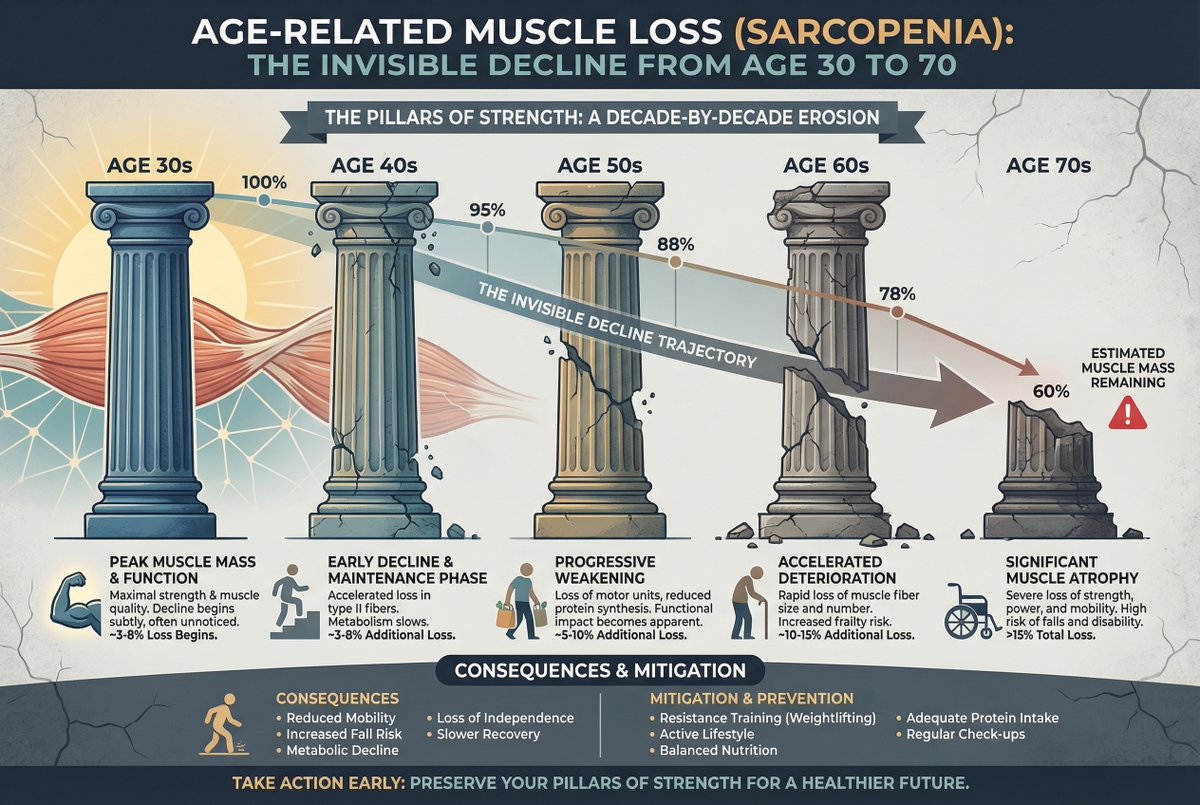
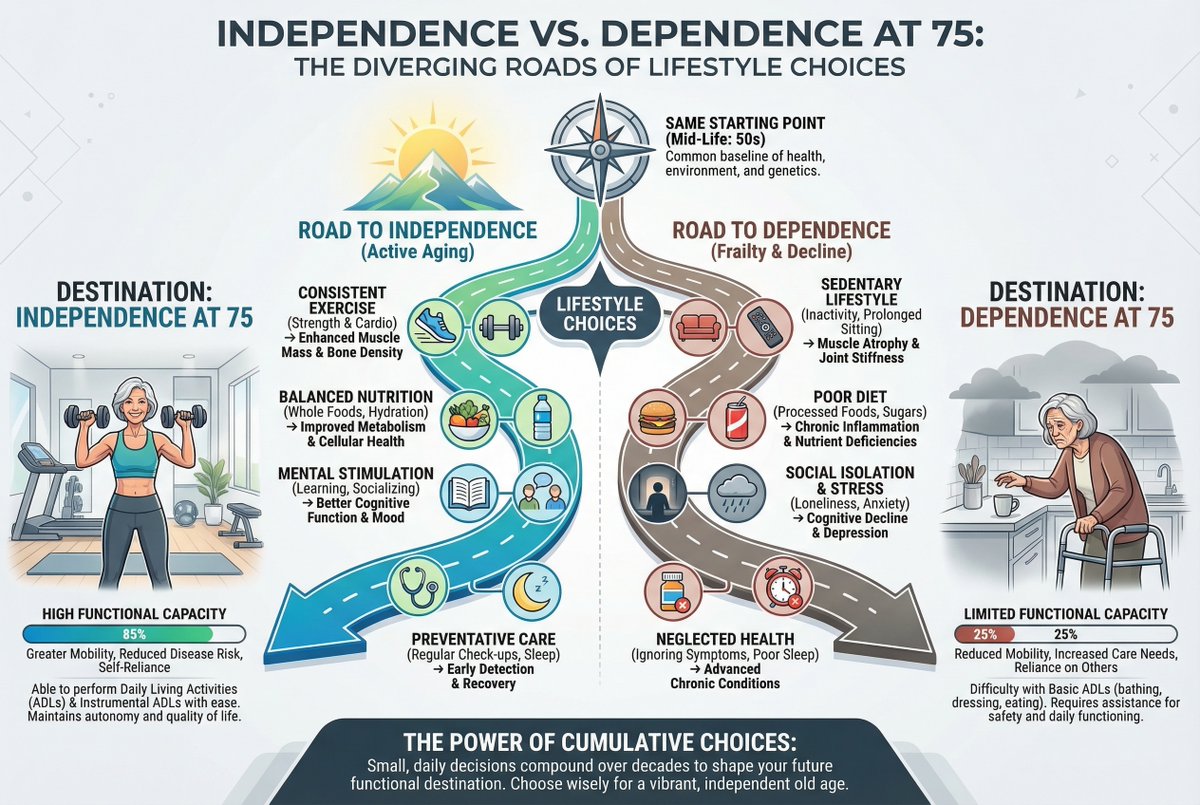
MUSCLE LOSS ISN'T COMING... IT'S ALREADY HERE You've been losing muscle for years. Not because you got injured or sick. Because you hit 30 and biology started dismantling your type 2 fibers while you weren't paying attention. Most people notice around 60 when stairs get harder or standing from a chair requires hand leverage. That's 30 years of silent decline. The research from Journal of Applied Physiology documents 3-8% loss per decade in sedentary people starting around age 30. Accelerates to 8-15% per decade after 60. A person with 60kg muscle mass at 30 drops to 56kg by 50 if they do nothing. The trajectory steepens from there. Type 2 fibers go first. Fast-twitch, power-generating muscle that prevents falls and generates force quickly. Biopsies show type 2 cross-sectional area shrinks faster than type 1 endurance fibers. Motor neurons innervating these fibers die and don't regenerate. You keep reasonable stamina but lose explosive strength and rapid reactions. Walking stays manageable while your ability to catch yourself mid-stumble disappears. Grip strength drops 1-2% yearly after 50. Walking speed declines measurably in the sixth decade. Both predict mortality more reliably than blood pressure or diabetes according to JAMA studies. Yet nobody measures muscle mass in clinical practice. The thresholds matter. Men below 7.0kg/m² appendicular lean mass face sharply elevated disability and death risk. Women's threshold sits at 5.5kg/m². Below these numbers, falls multiply, fractures happen, independence vanishes. Studies show low muscle mass predicts mortality better than traditional risk factors. Still gets ignored in routine checkups. THE MECHANISMS AREN'T MYSTERIOUS Four drivers, all modifiable. Physical inactivity kills muscle through disuse. Muscle operates on strict use-it-or-lose-it terms. Heavy loading signals maintenance and growth. No challenge means protein synthesis drops, breakdown increases, mass declines. Walking helps your heart but provides zero muscle stimulus because the load is trivial. Without regular heavy resistance or physical labor, muscle vanishes regardless of daily step counts. Anabolic resistance develops with age. Young adults spike muscle protein synthesis for hours after consuming 20-30g quality protein. Older adults get smaller, shorter responses from the same dose. Same pattern with training... identical stimulus produces less adaptation in older muscle. Research in American Journal of Clinical Nutrition shows older adults need 35-40g protein per meal and more aggressive training stimulus to match younger responses. The standard RDA of 0.8g/kg causes progressive muscle loss. Maintaining or gaining requires 1.2-1.6g/kg combined with resistance work. Chronic inflammation accelerates breakdown. Inflammaging... persistent low-grade inflammatory state driven by visceral fat, insulin resistance, and sedentary behavior... elevates IL-6 and TNF-alpha. These cytokines promote protein breakdown and inhibit synthesis, creating a catabolic environment. Inflammation also damages satellite cells, the muscle stem cells responsible for repair and growth. When satellite function fails, regeneration after damage becomes inefficient. Studies in Aging Cell link inflammatory markers directly to sarcopenia progression rates. Hormones decline predictably. Testosterone drops 1-2% yearly after 30 in men. Low testosterone correlates with reduced muscle mass and strength. Estrogen's sharp postmenopausal decline in women triggers accelerated muscle loss and fat gain. Estrogen protects muscle through multiple pathways including inflammation reduction and satellite cell support. Journal of Clinical Endocrinology and Metabolism data shows hormone replacement can slow muscle loss in postmenopausal women, though the decision requires weighing risks beyond muscle alone. The trajectory isn't fixed. That 8% per decade figure comes from observational studies of typical aging... progressive inactivity plus inadequate protein. Intervention studies where older adults do regular resistance training and eat sufficient protein show muscle maintenance or significant gains well into the 70s and 80s. The loss rate is determined by behavior, not age. WHAT ACTUALLY WORKS Progressive resistance training. Not walking or yoga or light calisthenics. Exercises loading muscles with weight heavy enough that 6-12 repetitions causes muscular failure. Squats, deadlifts, leg presses, chest presses, rows, overhead presses. Medicine and Science in Sports and Exercise research shows older adults training 2-3 times weekly gain muscle mass and strength even starting in their 70s or 80s. Gains are substantial... often 10-30% strength increases within 12 weeks with corresponding improvements in walking speed, balance, and daily function. Progressive overload is mandatory. Gradually increasing weight as strength improves. Training frequency of at least twice weekly per major muscle group. The advice to use light weights and high reps for safety is counterproductive. Heavier loads are necessary to stimulate protein synthesis and motor unit recruitment. Safety comes from proper form and appropriate progression, not from weights too light to challenge muscle. Journal of the American Geriatric Society data shows supervised resistance programs in older adults have very low injury rates and produce far greater functional benefits than unsupervised or light programs. Adequate protein distributed properly. Because of anabolic resistance, older adults need 30-40g high-quality protein at each of three daily meals—total 1.2-1.6g/kg body weight. High-quality means complete proteins with all essential amino acids, particularly leucine, the primary muscle protein synthesis trigger. Animal sources provide the most concentrated leucine. Plant proteins work but require larger servings for equivalent leucine content. Journal of Nutrition studies show older adults consuming these levels while resistance training gain muscle. Those consuming lower amounts maintain or lose muscle even when training. Protein timing matters. Consuming protein within two hours post-training maximizes synthesis response. Many older adults need intentional planning to hit 1.2-1.6g/kg because appetite declines with age and habitual intake concentrates at dinner rather than distributing across meals. Healthy body composition with minimal visceral fat. Belly fat produces inflammatory cytokines that accelerate muscle loss. Insulin resistance impairs protein synthesis and reduces anabolic response to feeding and exercise. Weight loss in overweight older adults, combined with resistance training and adequate protein to prevent muscle loss during deficit, improves body composition by reducing fat while preserving or increasing muscle. Obesity studies show this approach improves function more than weight loss alone or exercise alone and reduces inflammatory markers contributing to sarcopenia. Adequate vitamin D status. Vitamin D receptors exist in muscle tissue. Deficiency associates with weakness, increased fall risk, and accelerated loss. THE EMERGENCY DEPARTMENT ENDPOINT Hip fractures from falls that happened because muscle weakness and poor balance made catching yourself impossible. Functional dependence because rising from a chair, climbing stairs, or performing basic self-care without assistance became impossible. Repeated falls leading to traumatic brain injuries, fractures, and fear of falling that further reduces activity and accelerates decline. These acute presentations represent the endpoint of years or decades of progressive muscle loss occurring silently while the person attributed increased weakness and declining function to normal aging that couldn't be prevented. Patients maintaining physical independence into their 70s, 80s, and beyond are overwhelmingly those who engaged in regular resistance training, consumed adequate protein, and maintained healthy body composition throughout middle age and beyond. Not exceptional genetics. People who understood muscle mass must be actively defended against age-related loss through specific interventions. Resistance training and adequate protein can maintain or increase muscle mass at any age. The critical factor is whether intervention starts before muscle loss progresses to the point where functional limitations prevent effective training. THE TAKEAWAY Sarcopenia isn't inevitable. The 3-8% per decade loss characterizing typical aging reflects typical behavior patterns... progressive inactivity and inadequate protein intake, not unavoidable biology. Older adults doing resistance training 2-3 times weekly and consuming 1.2-1.6g protein per kilogram don't lose muscle at these rates. Many gain muscle even in their 70s and 80s. The difference between maintaining physical independence and requiring assistance with daily activities in later life is determined largely by muscle mass and strength, which are determined by resistance training and protein intake sustained over years and decades. Muscle loss begins in your 30s, not your 60s or 70s. By the time you notice functional limitations from weakness, you've typically lost 20-30% of peak muscle mass. The trajectory accelerates with each passing decade unless actively countered through resistance training and adequate protein. You can't prevent sarcopenia through walking, yoga, or staying generally active. These activities benefit overall health but don't provide sufficient mechanical stimulus for muscle maintenance. You need progressive resistance training with loads heavy enough to challenge muscles significantly, performed at least twice weekly for all major muscle groups. You need 30-40g high-quality protein at each of three daily meals, totaling 1.2-1.6g/kg body weight. These interventions aren't optional lifestyle preferences for healthy aging. They're biological necessities for muscle preservation that determine whether you maintain the strength required for independent living throughout your later decades. The return on this investment is measured in years or decades of preserved physical capacity, independence, and quality of life that would otherwise be lost to progressive weakness and disability.
Metabolic Uncle tweet mediaMetabolic Uncle tweet media
English
7
31
127
6K