
Sabitlenmiş Tweet
blktsebo
3.4K posts


blktsebo
@mashilo_pitjeng
MC | Public Speaker | Property Mind | Activist for Economic Justice | Entrepreneur | Futures Thinker
South Africa Katılım Mart 2013
504 Takip Edilen471 Takipçiler
blktsebo retweetledi

When people of Phuthuma Nhleko’s stature pick up a pen, they tend to give us a map of their victories. Instead, in this book, he gives us a map of our opportunities, which lie invisible in our most valued asset - ourselves.

English
blktsebo retweetledi

Did Western European Christians invent the racial hierarchy and white supremacy, and racial economic exploitation and white privilege.
Historical analysis suggests that Western European Christians, particularly during the late Middle Ages and the early modern era of exploration, played a foundational role in developing, codifying, and implementing the concepts of racial hierarchy, white supremacy, and related systems of exploitation and privilege.
While hierarchies and enslavement existed throughout history, modern racism and white supremacy evolved specifically to justify the exploitation of African and indigenous labor to serve European economic interests.
Key aspects of this development include:
Theological Roots (15th Century): The roots of modern racial ideology are linked to Western Christian theology rather than initially to scientific biology. In the mid-15th century, specifically through papal bulls (e.g., Dum Diversas in 1452 and Romanus Pontifex in 1454), Pope Nicholas V empowered the Portuguese to attack, conquer, and enslave non-Christians (Saracens and pagans), reducing their persons to "perpetual servitude". This established a framework of "negative transubstantiation," where non-white bodies were transformed into "human cargo" to facilitate economic exploitation.
The "Curse of Ham" and "Negro": To legitimize the dehumanization of Africans, European Christians adopted theological arguments, including the re-interpretation of the Curse of Ham to justify African enslavement.
Hierarchizing Religions: Early Christian anti-Judaism, developed in the early centuries of the Church, created a framework for "supersessionism," placing Christian faith at the top of a ladder and others lower. This spiritual hierarchy was later transposed into a racial hierarchy during colonial expansion, where "white" and "Christian" were conflated as superior, while "blackness" was associated with darkness, evil, and natural inferiority.
Racial Capitalism: Scholars argue that the transition from feudalism to capitalism relied on "racial capitalism," which used racialized hierarchies to justify the extraction of surplus value and exploitation of specific social groups.
Codification of Whiteness: The "white" racial category was constructed to create a "caste system" based on phenotype. In colonial settings like Virginia, laws were passed to create a "White" identity, separating white servants from black slaves (who were enslaved for life) and encouraging white solidarity with wealthy white elites.
White Privilege: This system was designed so that white people, regardless of their own socioeconomic status, received systemic, unearned advantages, such as the legal right to land, rights to own other humans, and higher status in the social, political, and economic hierarchy.
While earlier civilizations were hierarchical, and slavery was a global phenomenon, the systematic development of a comprehensive, global, and biologically-backed ideology that places white people at the top and black people at the bottom was a product of the European encounter with the world and its need to justify massive economic extraction.
English
@this article assumes that Black professionals are beholden to ‘white’ institutions for their continuing education and development. What’s missing in this is similar ‘forceful’ demand for creation, development or emancipation of ‘black-led’ and ‘black-owned’ professional development institutions, including the increased investment in the R&D institutions. Similar levels of gusto to occupy high echelons should reverberate in the black professionals taking charge of their development, development of institutions that grow a pipeline that guarantees a continuous pool of professionals now and in the future. Good as it may seem, i understand these assertions in the same vein and in similar thought as how the game cricket and rugby have maintained privilege. The guarantee of black people to make it, is through privileged few feeder schools. It sounds radical and emboldened, but is no different from cadre deployment dressed as radicalism.
English
In the period before 1994 black university graduates were not given senior management positions , directorships or cabinet posts etc as a general rule here in South Africa.
The Struggles of the Black Management Forum and others liberation movements was to make sure that black people participate in all facets of managing and leading South Africa.
That dream has not yet been realised and there reversals in that struggle. Howver black people must themselves make sure that all mayorships and senior management positions are taken by thems as much as possible. That is the essence of struggle:
While South Africa has seen a significant increase in black graduates and professionals since 1994, recent data from the Commission for Employment Equity (CEE) and the Black Management Forum (BMF) suggests that the goal of equitable representation in senior leadership remains unfulfilled, with several indicators pointing to a "stalled" transformation.
Current Representation in Management (2023–2025)
Official reports continue to show a stark mismatch between South Africa's demographics and corporate leadership:
Top Management: As of the latest CEE reports (2024/2025), White South Africans (approximately 8% of the population) still hold 61%–62% of top management positions in the private sector.
African Representation: Despite comprising roughly 81% of the population, Black Africans hold only about 16.9%–17.2% of top management roles.
Senior Management: White representation remains at approximately 50.1%, while African representation is at 26.4%.
Private vs. Public Sector: The public sector has achieved significant transformation, with over 80% of senior management being black. In contrast, the private sector lags heavily, often described as having a "skewed" representation.
Evidence of "Reversals" and Stagnation
The BMF and other advocates have raised concerns that the struggle for economic emancipation is under attack or regressing:
The "Tick-Box" Approach: Many firms are accused of "corporate restructuring" rather than genuine economic restructuring—appointing black individuals to boards or management without actual decision-making power or ownership control.
Declines in Junior Management: Some sectors, such as asset management, have actually seen a slip in black representation at the junior management level (from 72% in 2018 to 63% in 2024), suggesting a thinning "pipeline" for future senior leaders.
Gender Gap: Black women remain the most underrepresented group in senior roles, often found in administrative positions rather than strategic leadership.
Global and Policy Pressures: There is growing international and domestic pressure to roll back Broad-Based Black Economic Empowerment (B-BBEE), which the BMF has denounced as a threat to the strides made since 1994.
The BMF's Current Stance
The Black Management Forum has recently shifted its focus toward demanding "equity now" rather than just gradual transformation. Their current agenda includes:
70% Ownership and Management: A target for the economy to be 70% black-owned and managed by 2030.
Professional Development: Partnering with institutions like the Wits Business School to build a "critical mass" of ethical, skilled leaders to replace politically driven "cadre deployment."
Digital Inclusion: Ensuring black professionals, particularly women, are not left behind by the Fourth Industrial Revolution (4IR).
English
blktsebo retweetledi

[EXPLAINER] Young professionals are increasingly leaving Cape Town for Johannesburg in a trend experts call “reverse semigration,” driven by high living costs in the coastal city. Johannesburg offers not only higher salaries, particularly in tech and finance, but also more affordable housing and lifestyle conveniences that appeal to young urbanites.
As new mixed-use developments and vibrant suburbs emerge, professionals are prioritising financial flexibility alongside community and culture.
CNBC Africa's @Retha_Jae reports.
#CNBCAfrica #SouthAfrica #ReverseSemigration #UrbanShift
English
blktsebo retweetledi


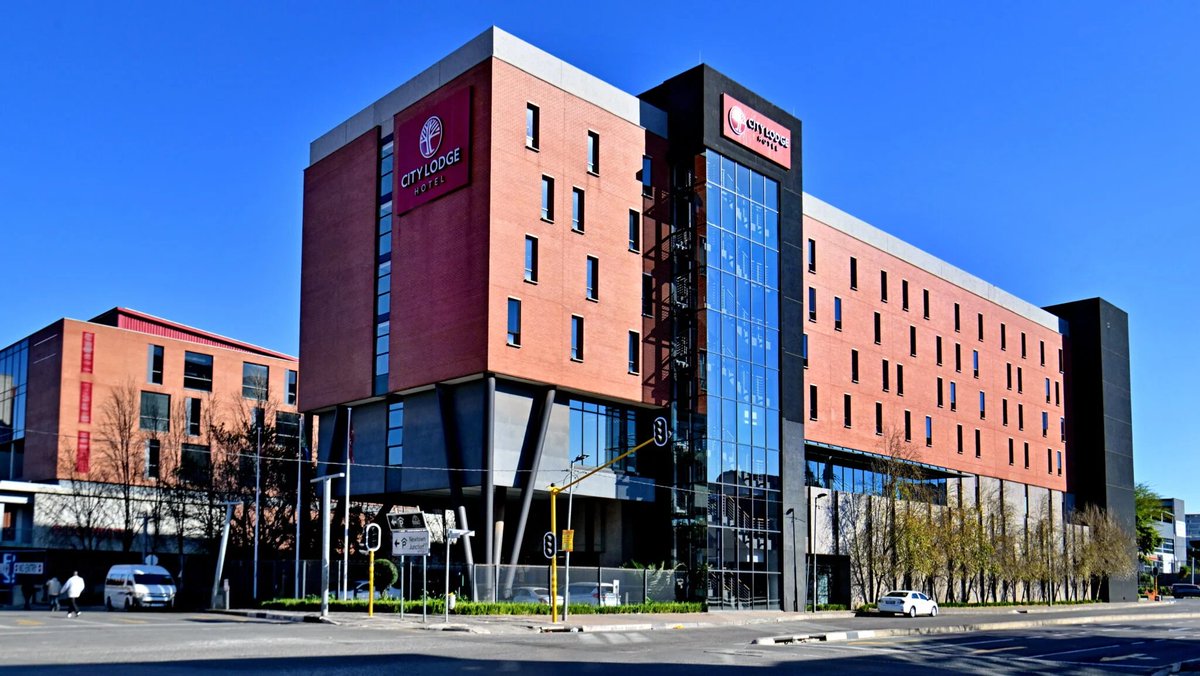
The City Lodge Hotel in Newtown, Johannesburg, is closing after more than a decade, and the building will be auctioned by the end of the month.
The hotel was built in 2015 and initially cost R146 million to develop. It includes:
• 148 rooms
• Restaurant
• 2 boardrooms
• Gym and swimming pool
• 55 basement parking bays
City Lodge says the decision not to renew the lease is unrelated to staff performance, the brand, or the broader Johannesburg market.
The group has operated for more than 40 years and has 58 hotels across South Africa, Namibia, Botswana, and Mozambique.
But the reality is, this hotel stopped turning a profit.
And that says something more about hospitality in Johannesburg right now.
Over the past few years, I have toured, written about, and presented on multiple hotel developments across the city, and one trend keeps coming up.
Most visitors enter through OR Tambo, the busiest airport in Africa, yet we are not seeing the same wave of new hotel developments that we see in Cape Town.
Johannesburg is still a business-driven city before it is a leisure destination.
Corporate travel drives demand for 4 and 5-star hotels, and these are high-frequency travellers with high expectations.
Instead of flooding the market with new supply, we are seeing the optimisation of existing stock in Johannesburg.
Newtown made sense at one stage. It was positioned as a cultural precinct near the CBD, with significant public investment and high expectations for regeneration.
But the guests have changed, and so have their expectations.
Many visitors now choose Sandton, Rosebank, Melrose, Waterfall or Fourways, where there is stronger security, newer infrastructure, and integrated business and retail nodes.
The closure of City Lodge Newtown is not just about one hotel. It is a sign of how the hospitality market in Johannesburg is being reshaped.
English

blktsebo retweetledi
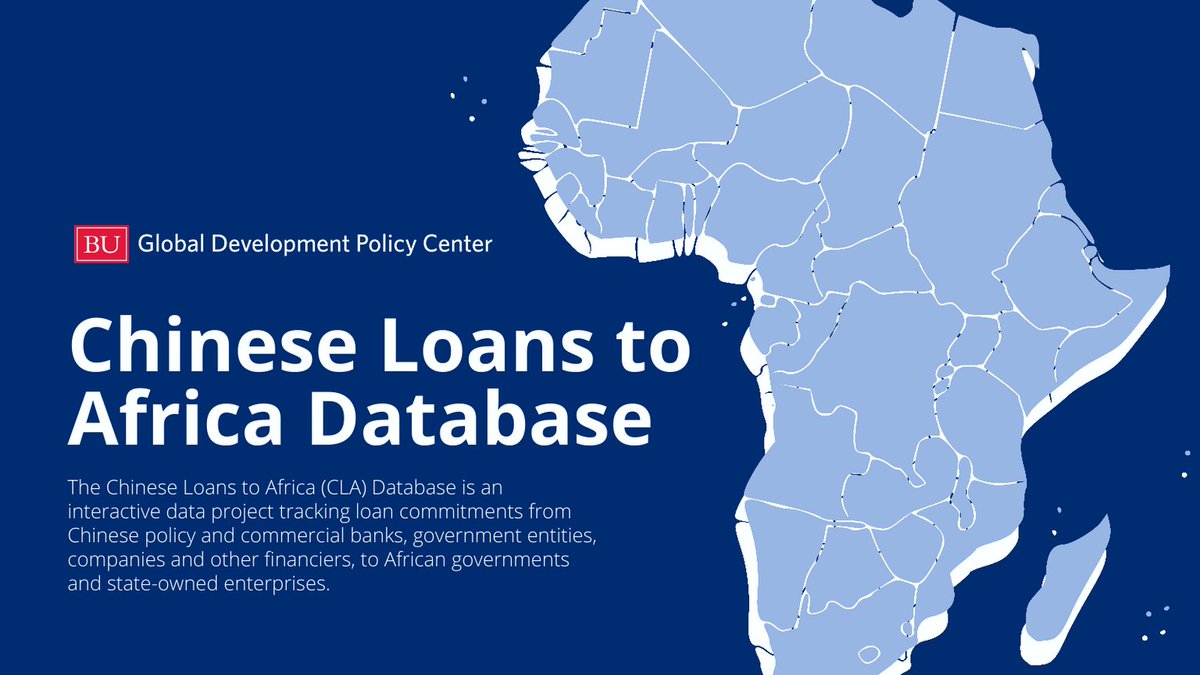
🌍 Updated with 2024 data, the Chinese Loans to Africa database charts 1,319 loan commitments from 42 Chinese lenders to 49 African governments and 7️⃣ regional institutions.
Explore the data: bu.edu/gdp/chinese-lo…
English
blktsebo retweetledi

Without reliable baseload power, mineral beneficiation doesn’t scale.
Energy cost and reliability determine which countries move from extraction to industry — and which remain stuck exporting raw materials.
This map shows why power sits at the heart of Africa’s industrial minerals strategy.
Explore the full analysis: africafc.org/our-impact/our…

English
blktsebo retweetledi

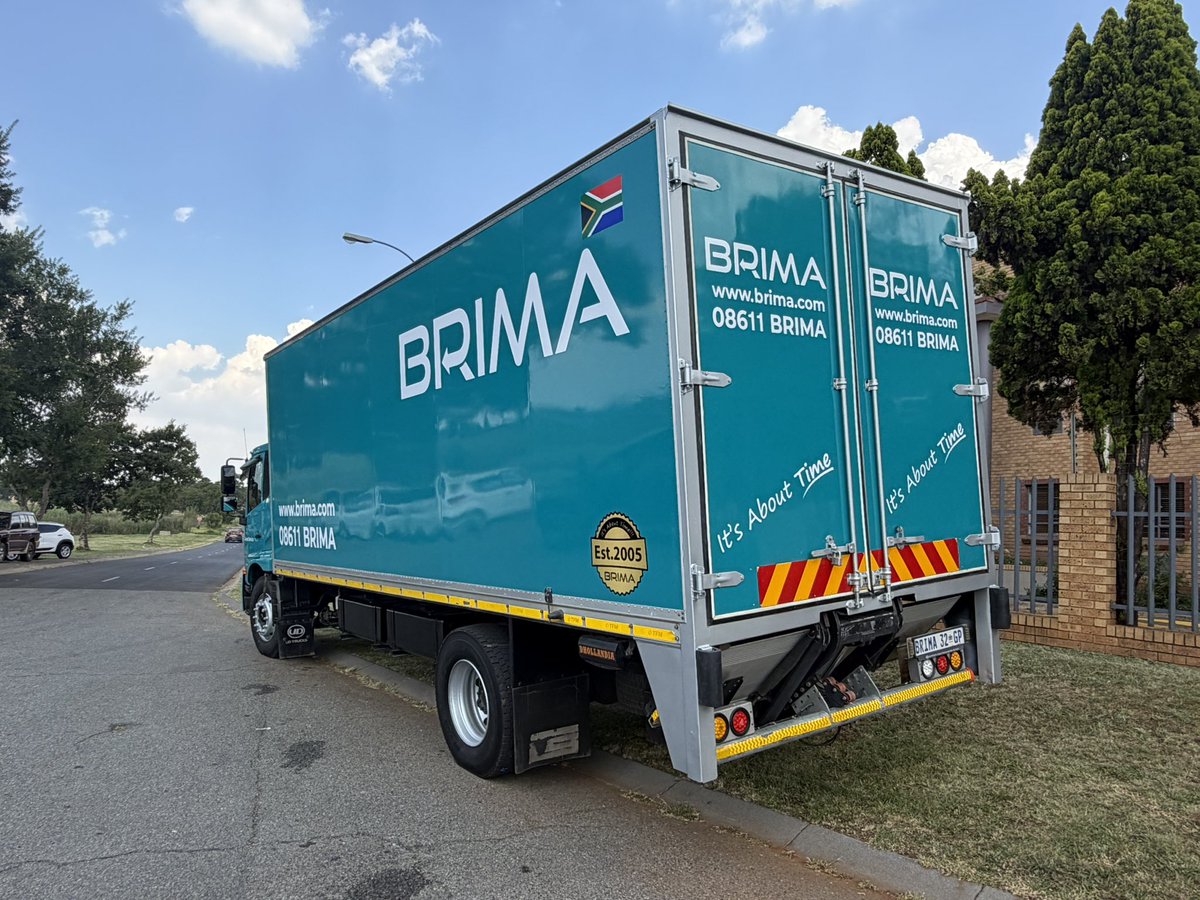
At the end of February, I will officially step down as the Managing Director of Brima Logistics.
This decision has not been easy — because Brima is not just a company to me. It is a dream that started with one truck… and dream.
I started this journey with nothing but a vision and a single truck. No fleet. No staff. No guarantees. Just faith that one day this dream would grow into something bigger than me.
Today, Brima Logistics employs well over 180 people.
We operate more than 100 vehicles.
Our teal fleet has a national presence across South Africa.
What began as one truck has become a movement.
But Brima was never built to revolve around one person. It was built to last. To grow. To outlive its founder.
At the end of February, I will proudly hand over the reins to my wife, Matsietsi Mekoa.
She has been part of this journey behind the scenes — supporting, strengthening and believing in this vision from day one. I have full confidence in her leadership as she takes Brima into its next chapter.
I step aside with gratitude.
With pride.
And with deep faith in the future of this brand.
The mission continues.
The colour remains.
The legacy grows.
Thank you to every employee, partner and supporter who made this journey possible.
From one truck… to a national footprint. And go global.
It’s about time. 💚
#BrimaLogistics #LeadershipTransition #LegacyInMotion #FromOneTruck #Itsabouttime



English
blktsebo retweetledi

blktsebo retweetledi

Congratulations to Emeritus Professor Francois Viruly who has been appointed as Chief Economist of Quoin Technologies' new market intelligence and reporting platform, Datazone: bit.ly/4aCpKwV

English
blktsebo retweetledi

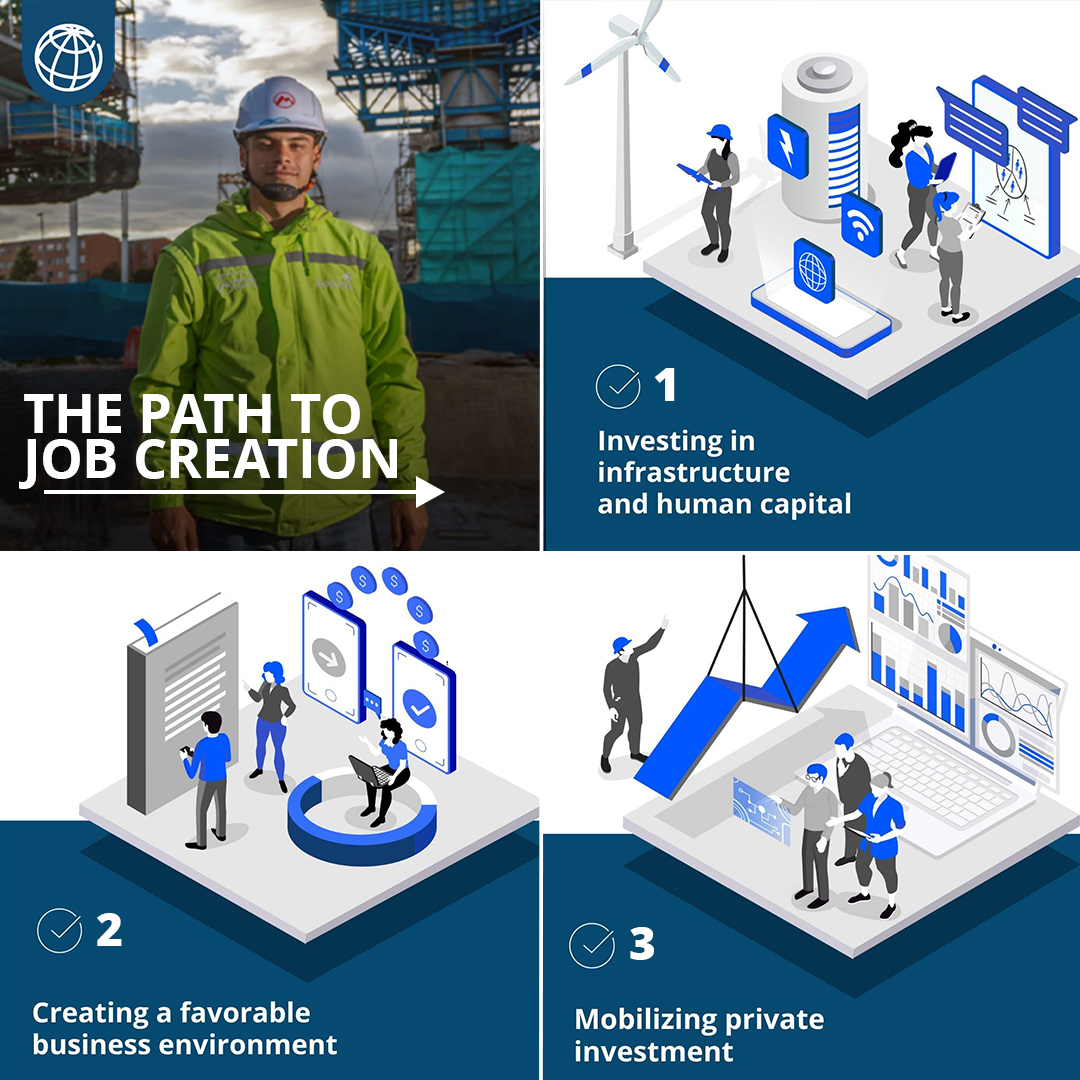
Over the next decade, 1.2B young people in developing countries will enter the workforce.
Creating enough jobs means investing in infrastructure, supporting business-friendly reforms, and boosting private investment.
Learn more:wrld.bg/MbaH50Xxcck
English
blktsebo retweetledi

Always a pleasure to listen to Kishore Mahbubani's wisdom (@mahbubani_k, the legendary Singaporean diplomat and scholar).
He argues that "European leaders should write thank you notes to China for investing in Africa" instead of criticizing China for their investments there, which he says "shows how incredibly stupid European leaders are."
He's right, this is a fantastic example of Europe's strategic blindness. As he points out, demographic projections show that Africa may have as much as 4.2 billion people by 2100 (saisreview.sais.jhu.edu/how-a-populati…). What could possibly be more important for Europe, the continent next door, than help ensure that population has economic prospects at home? You cannot possibly imagine that you'll live peacefully next to a continent with 10 times more people than you if those people have no opportunities where they are.
It's quite literally the definition of insanity: complain about a problem - illegal immigration - whilst actively fighting against that problem's only viable long-term solution, all the more when in that instance that solution is funded by someone else.
Sure, it also means more Chinese influence in Africa which - from Europe's standpoint - they consider a problem. Fine. But Chinese influence in Africa is a fait accompli at this point, Europe cannot stop this and if they try to they earn the resentment of both China and Africans. So Europe ends up with Chinese influence in Africa plus hostile relations with both parties. How is that better? In fact, if anything this probably strengthens Chinese influence in Africa as it leads Africans to believe that Europeans are actively opposed to their development.
English
blktsebo retweetledi
blktsebo retweetledi
As #Kigali sparkles this festive season, the City of Kigali wishes you a New Year full of bright plans and new possibilities in #KigaliYacu and beyond. 🫶🏽
English