Matt Hinds

43 posts

Matt Hinds banner
Matt Hinds

Matt Hinds

@matthinds_

CEO/Founder @ Sauce - AI Customer Intelligence for Product Teams. Trusted by Atlassian, Whatnot, Linktree and Zip

San Francisco Katılım Kasım 2022
24 Takip Edilen114 Takipçiler
Matt Hinds
Matt Hinds@matthinds_·
I remember when James Gabb and I first landed in San Francisco in Nov 2023, we knew nobody so we tried to hit a bunch of product people up. Super grateful a few amazing people made warm intros so we ended up having to run b/w meetings and some we couldn't make it to the office, so we had to do a few demos on top of the bin in Starbucks... these are the fun days of building something meaningful at Sauce

Matt Hinds tweet media
English
0
0
0
70
Matt Hinds
Matt Hinds@matthinds_·
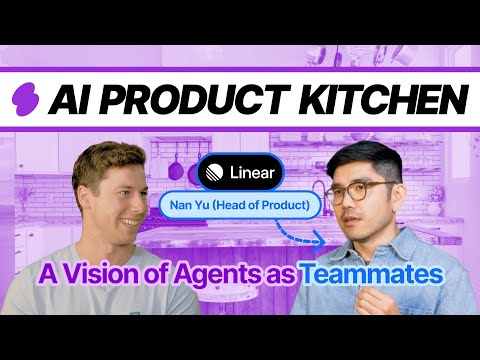
Most AI agents don’t fail because of models. They fail because of bad UX. Most AI tools still feel like a magic text box: “Ask me anything…” But a blank box without guidance doesn’t help us actually use AI to its potential. Instead… @thenanyu (Head of Product at @linear) says we need to design AI like an actual teammate that can: - interface with the same tools we do - commit code directly, open PRs - do everything an independent human would That’s what will unlock AI owning a double-digit % of real workflows. Full episode in comments 👇
English
1
0
0
102
Matt Hinds
Matt Hinds@matthinds_·
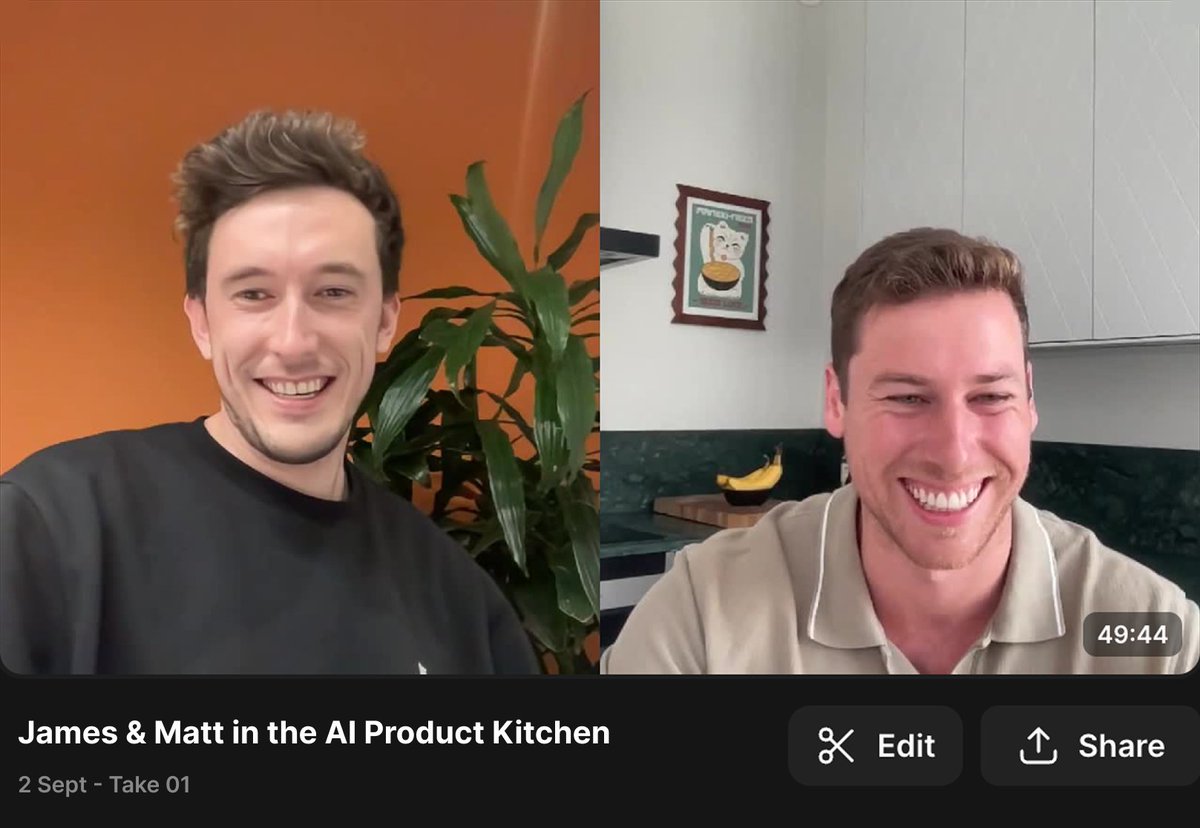
1. If your product helps someone look good or get promoted, you’ll probably win 2. Usage dashboards lie early on - a customer sharing your product or begging for 3 more seats tells you way more 3. The bottleneck in AI isn’t code anymore, it’s clarity of thought 4. Personalization at scale is table stakes for customer acquisition - creativity and relationships are the only way to break through 5. There’s no “closed lost,” only “closed later.” Every customer interaction is a learning and a relationship 6. Most “insights” aren’t really actionable - the art is surfacing what matters to you today 7. Features can be copied. Customer relationships can’t 8. Focus isn’t always saying no. It’s knowing which distractions are ‘distractions’ and which are actually ‘door-openers’ 9. Rigid taxonomies are like leftovers in the fridge - stale by the time anyone else tries to use them 10. If the system isn’t dynamic, you’re already living in the past 11. Every product rule is broken at some point. Even “don’t build for one customer?” Sometimes one logo can unlock a whole market ^ spicy product takes from James Gabb and I in Sauce's AI Product Kitchen this week. What did we miss?
Matt Hinds tweet media
English
0
0
0
39
Matt Hinds
Matt Hinds@matthinds_·
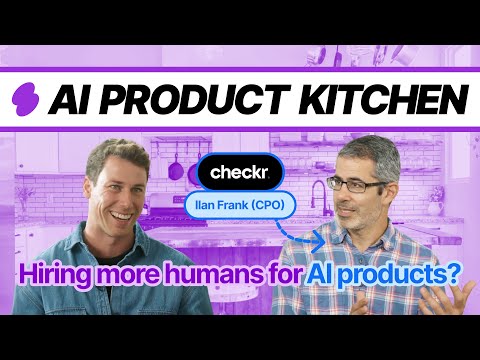
Most AI features feel like a summary no one reads. At @checkr, if you get AI wrong - is can cost someone a job. This is Ilan Frank, Chief Product Officer at @checkr. in our latest AI Product Kitchen - live now!! Ilan was VP Product at @SlackHQ (he launched Slack Connect - we're power users) + Head of Product at @airtable. We recorded this in our San Francisco product kitchen and when deep on how to build AI products when trust and regulation are non-negotiable. -- Here's 6 of my fave takeaways -- 1. Not every product needs AI “You should only use AI if it makes your product 10x faster, 10x cheaper, or 10x more trustworthy.” He breaks down a 3-part filter to know when AI is worth it - and when it’s just hype. 2. You’re not building AI features - you’re changing behavior “You’re changing the interaction model… you’re asking a human to do something they’re not used to doing.” The best AI products rethink how humans engage - not just what the model does. 3. Speed is a product strategy “Speed is not just an engineering principle. It’s a product principle.” From Slack to Checkr, Inc. Ilan shows how to bake speed into your product DNA - especially when working in high-stakes domains. 4. Bias is everywhere - not just in your AI models “Bias is inherent in every product decision - not just in the model.” Great PMs don’t just think about what’s fair in the data. They think about what’s fair in the entire experience. 5. AI doesn't always reduce headcount “Because of AI, we at Checkr, Inc. have hired more people than brought efficiency - because we’re in a regulated area and need to double-check the AI.” Surprising - and very real. In complex spaces, humans still matter more than ever. 6. Productizing trust is the next moat It’s not just what your AI can do. It’s how clearly and confidently it communicates what it’s doing - and why. Watch the ep below - we'd love your feedback 💜
English
1
0
0
87
Matt Hinds retweetledi
Max Marchione
Max Marchione@maxmarchione·
IT'S TIME – announcing our most important launch yet. Superpower is now only $199. Almost every American spends a few hundred $ per year on things like: – Netflix – Spotify – Amazon Prime – Dating or meditation apps – Annual credit card fees Today, that's true for the most important thing of all. Your health.
English
132
85
781
959.6K
Matt Hinds
Matt Hinds@matthinds_·
The latest AI Product Kitchen is live - with @thenanyu, Head of Product at @linear!! @linear just closed their Series C ($134M total), are taking on Jira, and power the world's fastest-growing tech teams: @cursor_ai, @OpenAI, @vercel, @NotionHQ, and @Replit. We cover: - Why Linear is building AI agents as teammates - Why backlogs should be deleted - How Linear wins with fewer features -- Here's 6 of my fave spicy takeaways -- 1. Linear wins by doing less, better They don’t try to match Jira. They do the opposite - focused, opinionated, solving the right problems, beautifully. Less surface area = more velocity 2. Every product org is a series of bets You’re not shipping a roadmap - you’re placing wagers. Linear treats every decision as a hypothesis: test quickly and adjust fast. Speed > perfection 3. Backlogs are where good ideas go to die Most teams hoard tickets “just in case.” Linear isn’t afraid to delete them. If it’s not clear and actionable, it doesn’t stay in the system. Clarity > clutter 4. If your system doesn’t help future-you, it’s useless Linear designs for retrieval, not perfection. They ask: "Will future me understand this?" If not, it gets rewritten or tossed. Build for context that’s long gone 5. Good PMs ship features. Great PMs ship clarity Anyone can ship a feature. The real value is aligning people, defining the “why,” and reducing ambiguity. Clarity scales. Confusion compounds 6. Define ownership before outcomes Linear bakes ownership into the system. Without clear responsibility, even great strategies fall apart. Every initiative starts with “Who owns this?” If you care about speed, clarity and building impactful product orgs - this ep's for you. See the full ep: "Agents as Teammates: Linear's AI Vision" on YouTube or links in comments below
English
0
0
1
3.3K
Matt Hinds
Matt Hinds@matthinds_·
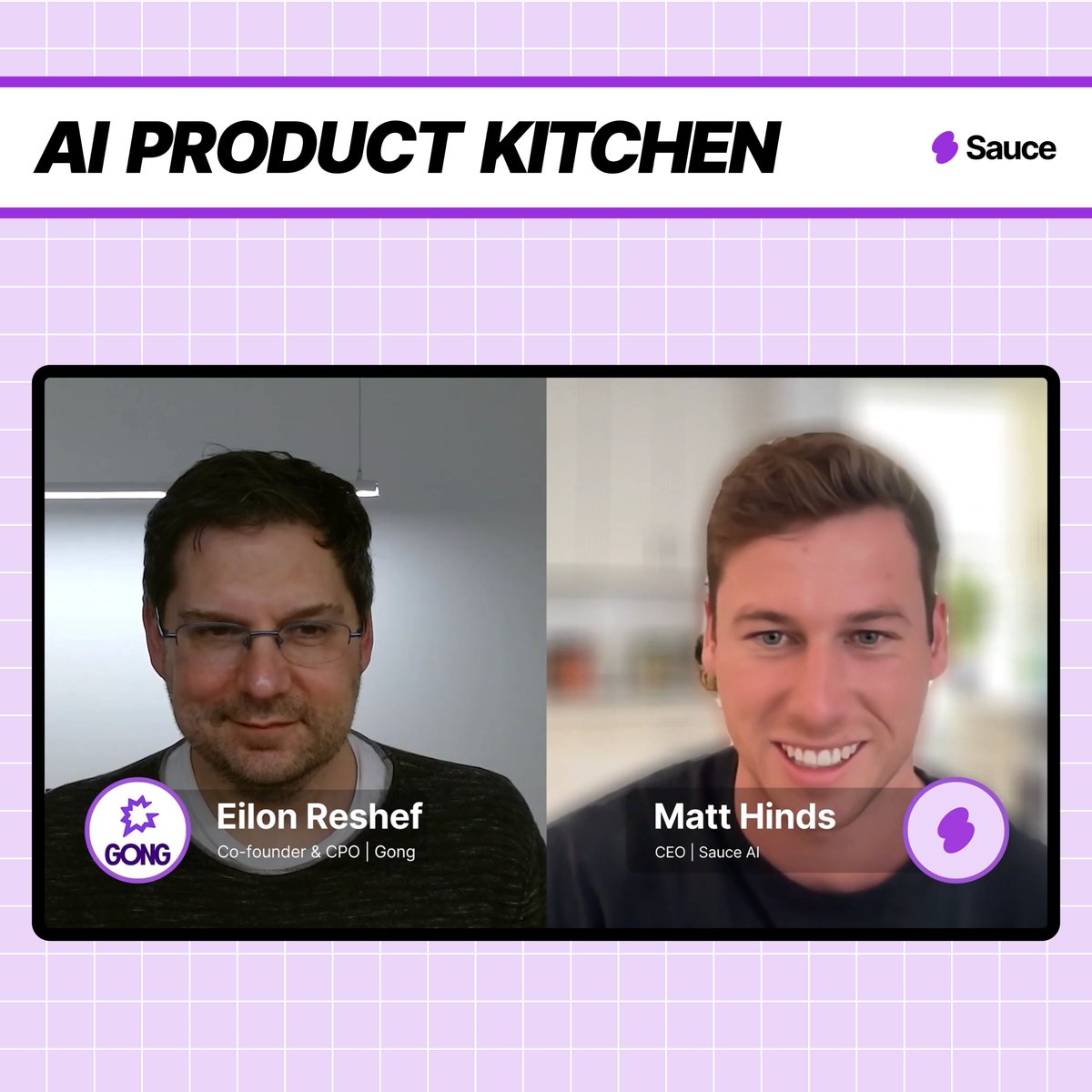
Our next AI Product Kitchen ep with Eilon Reshef, CPO & Co-founder at @Gong_io is dropping in 5 hours!! Sooooo many spicy gems... can't wait 🌶️
Matt Hinds tweet media
English
0
0
0
51
Matt Hinds
Matt Hinds@matthinds_·
The new advantage of a PM is seeing around corners. You can now spin up a feature in hours, maybe mins with AI... But shipping the right thing, before others see it? That's the edge. The PMs who win next are the ones who: → See where the market’s going → See what’s breaking in the journey before users hit it → See the problems customers feel but can’t yet articulate One question I love asking: “How could we be disrupted?” That's where we can take action and disrupt (reinvent) ourselves. Let's go 💜🥳
English
0
0
0
39
Matt Hinds
Matt Hinds@matthinds_·
We're so excited our latest AI Product Kitchen is live with @artshali, Chief Product Officer at @cartainc! Carta powers >50% of all VC-backed companies and manages $2.5 trillion in equity. Vrushali is leading Carta's product org as they build and scale the ERP for Private Capital. Here's a taste of what we cooked up in the AI Product Kitchen: 1. Data as a gift to your market “We've made almost an explicit choice not to build data products. Most of the data that we have now amassed we are giving back to the market as like a gift back to the ecosystem… we're building for this ecosystem of startups and founders and funders and capital allocators - the best thing we can do is like give back to the ecosystem that helped us become who we are.” 2. Build with AI as a synthesis engine “AI is not about correctness - it's about synthesis. Where AI is best used is not to get to the right answer, but to get to the synthesis of data into insights” 3. Minimise repeated data entry in your product “Never Enter Data Twice - this is one of my building heuristics for my team, which is once the ERP knows something, it's the only time it needs to find that. Everywhere that needs to know that piece of information knows about it.” And sooo many more gems. Links to the ep below 👇 We'd love your feedback as we make every episode spicier and more actionable for you and your product teams!!
English
1
2
3
904
Matt Hinds
Matt Hinds@matthinds_·
So excited to launch our latest AI Product Kitchen with @jeffseibert, CEO/Founder at @digits! Jeff was a former Head of Product at @X /Twitter, built and sold 2 startups in 16 months, and raised $100M to reinvent accounting with AI. And to make this even more timely - @digits just launched! Here’s a taste of what we cooked up: 1. Why 5 Years in Stealth? "Nobody’s going to use a half-baked accounting platform. You don’t ‘sort of’ do someone’s books. We stayed quiet until we could replace the whole ledger." 2. What’s Their AI Moat? "GPT gets 65% accuracy. We’re at 93% — thanks to 18 custom models we trained in-house. Real moats are built by going deeper than anyone else." 3. Why They Blow Up the Org Every 4 Weeks? "We don’t build teams around managers. We build them around priorities. Every 4 weeks, we reset the org around what matters most - and it keeps us fast." ... and a dozen more spicy gems on AI, product org design, shipping velocity, and building durable product advantage. Full episodes: YT: lnkd.in/gPPY6SAz Spotify: lnkd.in/gFwqZeC3 Apple: lnkd.in/gDnZfurB We'd love your feedback as we make every episode spicier and more actionable for you and your product teams!
English
0
0
2
464
Max Marchione
Max Marchione@maxmarchione·
It’s official – I'm excited to announce Superpower's $30 million series A from Forerunner and Day One, alongside celebrities Steve Aoki, actress Vanessa Hudgens, NBA star Giannis Antetokounmpo, and existing investors Cyan Bannister, Shaan Puri, Balaji, Arielle Zuckerberg and many more. This funding accelerates our vision for what health can look like in the AI era. Proactive, preventative, performance enhancing. In the world's first health super app. Giving you the power of all your data and the world's health information, so you can control your health, for life.
English
180
117
1.7K
1.4M
Matt Hinds
Matt Hinds@matthinds_·
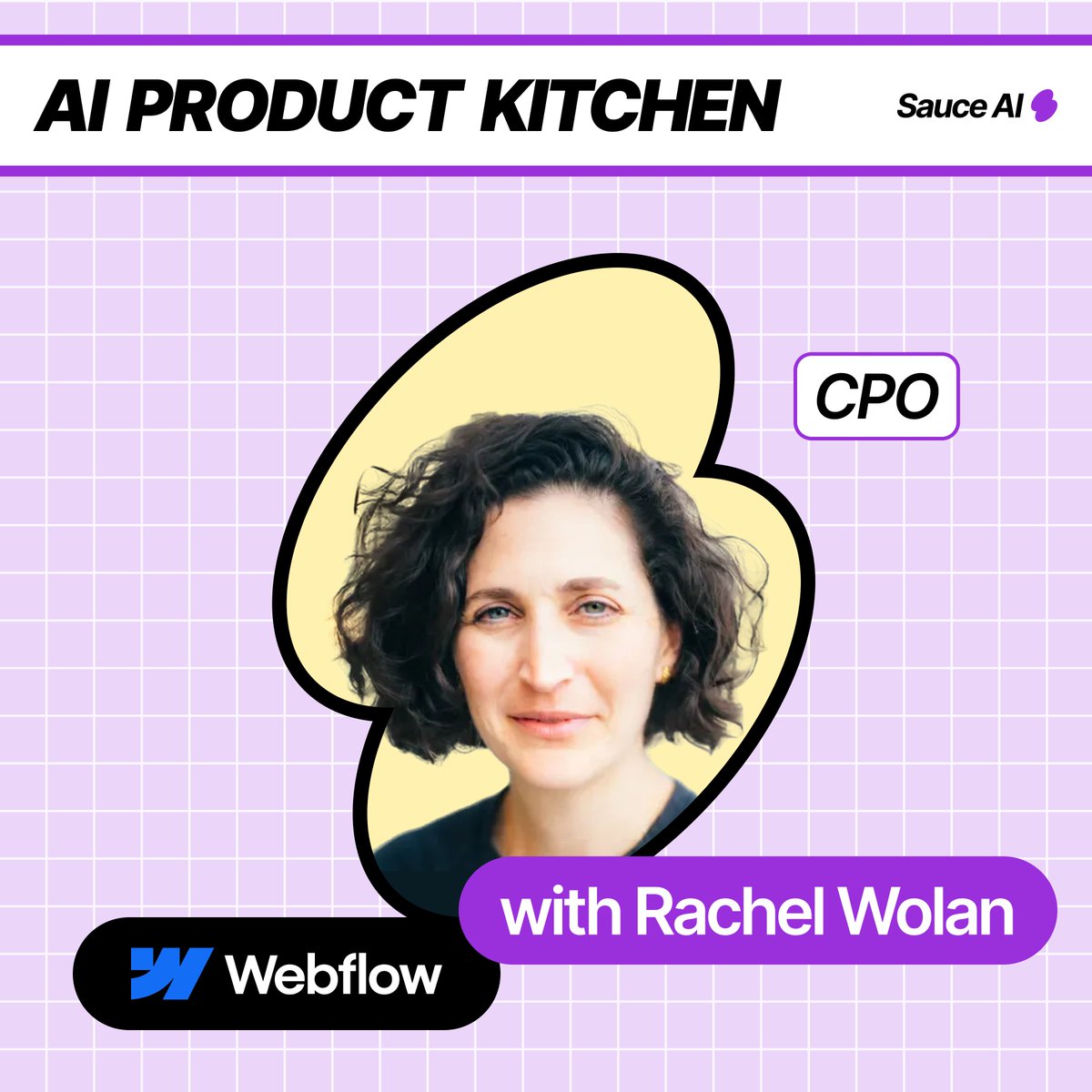
24 hours until our first AI Product Kitchen goes live with @rachelwolan, Chief Product Officer at @webflow! Soo many spicy recipes... here's a sneak peak into how Rachel is leading Webflow's product org into the AI powerhouse of web experience. 1. AI is your product org's multiplier “I've spent time with some of the most innovative CPOs and CIOs. This isn't incremental - it’s exponential. You might be 1.5x faster today… but tomorrow? 10x. 100x. And PMs are still at the center - shaping problems, directing the solution, just with entirely new tools.” 2. Your product org structure is not built for this pace “We don’t exactly know what the new product lifecycle looks like. But we’re already seeing things run in parallel. We can run alpha tests way faster. I don’t expect full prototypes from design teams yet - but I know we’re getting closer.” 3. Webflow didn’t just add AI. They rethought the product category “We could’ve bought a traditional optimization product. But instead we asked - what does this look like in a world with AI? And that’s how we ended up acquiring Intellimize. It’s not about adding AI. It’s about building AI-native products that unlock entirely new value.” Get readddyyy for tomorrow - we can’t wait 🌶️
Matt Hinds tweet media
English
0
0
4
97
Matt Hinds
Matt Hinds@matthinds_·
Most AI features don't fail because of bad models. They fail because of bad UX. Your AI model can get users 80% of the way to the "right" answer (which is subjective for them in that specific moment). But unless the UX helps you bridge the final 20%, the result can feel inaccurate. Why? Because users often don't care how good your model is. They care if the result meets their exact need in the moment to take the next action - for Sauce that's prioritizing a feature, writing a spec, or communicating with a customer. @midjourney is one of the first AI tools I saw to crack this. It generates an AI image which gets you 80% of the way there. But what if you had to regenerate it every time you wanted a small tweak? Painful... So they introduced UX controls that allow you to zoom in/out, change colours, adjust the background - you can refine the image without starting over. This gets you the last 20% which is the difference between "meh" and "exactly what I need" to take the next action (for Midjourney = sharing image with someone or posting on socials). At Sauce, we've taken a similar approach. Say you're a PM trying to figure out why your high-value customers in a region are churning. Search Sauce: Top trending problems for churn-risk enterprises in the US. Our AI engine instantly clusters all your feedback (sales calls, support tickets, churn reasons, etc) into top trending requests and issues - surfacing the root causes for why these customers are churning. And then you can fine-tune the result for your product needs: - Zoom in/out on granularity (broad vs. specific) - Adjust keyword matching (by % similarity vs. exact match) - Tell it to find "more feedback like this" or "less like this" So the result is hyper-specific and actionable for you in that moment - to write a product spec and ship a fix. We're always experimenting with the best AI UX, and I talk with CPOs and product teams every day about how they're approaching this. Insane how fast this space is moving! How are you approaching UX of your AI features? I'd love to hear what's working (or not) for you.
English
0
0
8
113
Matt Hinds
Matt Hinds@matthinds_·
When I was in GTM at @awscloud, I learned that asking the right questions can 10x your product’s revenue and retention. The fastest growing product teams I worked with didn't just ship faster - they asked better Qs at every stage of the funnel to drive prioritization. When I went back into PM these questions helped me so much. Here are the top 3 we asked at each stage of the customer journey: → Marketing See what's resonating with customers. Goal is to increase MQLs (for sales-led), PQLs (for product-led) and reduce CaC. • How can we better position ourselves in the market? • What messaging is or isn't landing? • Which segments have high vs. low CAC? → Sales Sales conversations uncover product blockers. Goal is to shorten sales cycles, grow ACV and increase close rate. • What are customers objecting to? • Where are customers getting confused? • Why are we losing deals (or stalling)? → Customer success Success sees product gaps first-hand. Goal is to increase expansion and renewals / reduce churn. • What’s blocking customers from expanding? • Why are customers churning? • Why are customers contracting? → Support Support tickets show where customers are complaining. Goal is to increase adoption, CSAT and reduce support costs. • What are customers complaining about most? • Where do users keep getting stuck? • What’s slowing down ticket-resolution times? Now with Sauce we're building a way for product teams to answer these revenue questions 100x faster. What questions have you found most valuable for driving product growth? Maybe I'll add some to the list.
English
0
0
6
159
Matt Hinds
Matt Hinds@matthinds_·
Next incredible guest on AI Product Kitchen is @jeffseibert, CEO/Founder at @digits and former Head of Product at X/Twitter! This ep will be a special one. After leading product teams at @X, and building and selling 2 startups in 16 months, Jeff raised $100M to build Digits and reinvent accounting. And after 5 years in stealth, Digits finally launched this week! Throughout this episode, we'll go deep on how Jeff and his teams build AI products, and how Digits runs their product and eng orgs a little differently from most companies - with no managers at all. They regularly "blow up" the eng teams every few weeks to refocus on the highest impact problems. And when it comes to AI, Jeff has so many incredible insights on product building - they even run 18 proprietary AI models to get the best accuracy for their customers. Excited to chat product and break some bread (congrats on the launch!) with Jeff. Stay tuned for more details!
Matt Hinds tweet media
English
0
1
6
406
Matt Hinds
Matt Hinds@matthinds_·
Stoked to start rolling out the lineup for our newest show, AI Product Kitchen! Say hello to our first incredible guest: @rachelwolan, CPO of @webflow. I honestly can't think of a better person to jam with on AI and Product. Aside from being a genuinely lovely human, Rachel's list of accomplishments and adventures is amazing: • Experienced the tech world as a CPO, GM, and Founder at enterprises, scaleups, and startups • Led AI investments and products at Webflow, @Dropbox, and @Talkdesk (long before AI was hot) • Launched 3+ new AI products at Webflow and currently scaling their product org with 3.5M+ teams using the platform The episode is coming soon. Stay tuned for spicy insights and learnings! 🌶️
Matt Hinds tweet media
English
0
0
9
98
Matt Hinds
Matt Hinds@matthinds_·
AI won't replace PMs. It'll create more. I'll admit at first, I questioned it too...if AI enables anyone to build anything instantly, do we still need PMs? But then I realized it's actually the opposite... If AI is best at building things, then the most valuable skill set becomes: - Finding and prioritizing opportunities - Figuring out strategy and differentiated value - Rallying teams (+ agents) to ship customer impact And who's best positioned to do this? The PM. So I think AI is actually going to make everyone more product-minded. Every team can now: 1. Instantly understand their customer 2. Act and ship faster, learn, and iterate Velocity of impact multiplies. How is AI changing the role of your PMs?
English
2
0
7
117