maxim legg

767 posts

maxim legg

maxim legg

@maximlegg

Katılım Haziran 2009
1.8K Takip Edilen718 Takipçiler
maxim legg
maxim legg@maximlegg·
@karpathy Nice, similarly I use LLMs in obsidian as my Zettelkasten for creating atomic ideas and references
English
0
0
0
57
Andrej Karpathy
Andrej Karpathy@karpathy·
LLM Knowledge Bases Something I'm finding very useful recently: using LLMs to build personal knowledge bases for various topics of research interest. In this way, a large fraction of my recent token throughput is going less into manipulating code, and more into manipulating knowledge (stored as markdown and images). The latest LLMs are quite good at it. So: Data ingest: I index source documents (articles, papers, repos, datasets, images, etc.) into a raw/ directory, then I use an LLM to incrementally "compile" a wiki, which is just a collection of .md files in a directory structure. The wiki includes summaries of all the data in raw/, backlinks, and then it categorizes data into concepts, writes articles for them, and links them all. To convert web articles into .md files I like to use the Obsidian Web Clipper extension, and then I also use a hotkey to download all the related images to local so that my LLM can easily reference them. IDE: I use Obsidian as the IDE "frontend" where I can view the raw data, the the compiled wiki, and the derived visualizations. Important to note that the LLM writes and maintains all of the data of the wiki, I rarely touch it directly. I've played with a few Obsidian plugins to render and view data in other ways (e.g. Marp for slides). Q&A: Where things get interesting is that once your wiki is big enough (e.g. mine on some recent research is ~100 articles and ~400K words), you can ask your LLM agent all kinds of complex questions against the wiki, and it will go off, research the answers, etc. I thought I had to reach for fancy RAG, but the LLM has been pretty good about auto-maintaining index files and brief summaries of all the documents and it reads all the important related data fairly easily at this ~small scale. Output: Instead of getting answers in text/terminal, I like to have it render markdown files for me, or slide shows (Marp format), or matplotlib images, all of which I then view again in Obsidian. You can imagine many other visual output formats depending on the query. Often, I end up "filing" the outputs back into the wiki to enhance it for further queries. So my own explorations and queries always "add up" in the knowledge base. Linting: I've run some LLM "health checks" over the wiki to e.g. find inconsistent data, impute missing data (with web searchers), find interesting connections for new article candidates, etc., to incrementally clean up the wiki and enhance its overall data integrity. The LLMs are quite good at suggesting further questions to ask and look into. Extra tools: I find myself developing additional tools to process the data, e.g. I vibe coded a small and naive search engine over the wiki, which I both use directly (in a web ui), but more often I want to hand it off to an LLM via CLI as a tool for larger queries. Further explorations: As the repo grows, the natural desire is to also think about synthetic data generation + finetuning to have your LLM "know" the data in its weights instead of just context windows. TLDR: raw data from a given number of sources is collected, then compiled by an LLM into a .md wiki, then operated on by various CLIs by the LLM to do Q&A and to incrementally enhance the wiki, and all of it viewable in Obsidian. You rarely ever write or edit the wiki manually, it's the domain of the LLM. I think there is room here for an incredible new product instead of a hacky collection of scripts.
English
2.8K
7K
58.3K
20.9M
Andrej Karpathy
Andrej Karpathy@karpathy·
A few random notes from claude coding quite a bit last few weeks. Coding workflow. Given the latest lift in LLM coding capability, like many others I rapidly went from about 80% manual+autocomplete coding and 20% agents in November to 80% agent coding and 20% edits+touchups in December. i.e. I really am mostly programming in English now, a bit sheepishly telling the LLM what code to write... in words. It hurts the ego a bit but the power to operate over software in large "code actions" is just too net useful, especially once you adapt to it, configure it, learn to use it, and wrap your head around what it can and cannot do. This is easily the biggest change to my basic coding workflow in ~2 decades of programming and it happened over the course of a few weeks. I'd expect something similar to be happening to well into double digit percent of engineers out there, while the awareness of it in the general population feels well into low single digit percent. IDEs/agent swarms/fallability. Both the "no need for IDE anymore" hype and the "agent swarm" hype is imo too much for right now. The models definitely still make mistakes and if you have any code you actually care about I would watch them like a hawk, in a nice large IDE on the side. The mistakes have changed a lot - they are not simple syntax errors anymore, they are subtle conceptual errors that a slightly sloppy, hasty junior dev might do. The most common category is that the models make wrong assumptions on your behalf and just run along with them without checking. They also don't manage their confusion, they don't seek clarifications, they don't surface inconsistencies, they don't present tradeoffs, they don't push back when they should, and they are still a little too sycophantic. Things get better in plan mode, but there is some need for a lightweight inline plan mode. They also really like to overcomplicate code and APIs, they bloat abstractions, they don't clean up dead code after themselves, etc. They will implement an inefficient, bloated, brittle construction over 1000 lines of code and it's up to you to be like "umm couldn't you just do this instead?" and they will be like "of course!" and immediately cut it down to 100 lines. They still sometimes change/remove comments and code they don't like or don't sufficiently understand as side effects, even if it is orthogonal to the task at hand. All of this happens despite a few simple attempts to fix it via instructions in CLAUDE . md. Despite all these issues, it is still a net huge improvement and it's very difficult to imagine going back to manual coding. TLDR everyone has their developing flow, my current is a small few CC sessions on the left in ghostty windows/tabs and an IDE on the right for viewing the code + manual edits. Tenacity. It's so interesting to watch an agent relentlessly work at something. They never get tired, they never get demoralized, they just keep going and trying things where a person would have given up long ago to fight another day. It's a "feel the AGI" moment to watch it struggle with something for a long time just to come out victorious 30 minutes later. You realize that stamina is a core bottleneck to work and that with LLMs in hand it has been dramatically increased. Speedups. It's not clear how to measure the "speedup" of LLM assistance. Certainly I feel net way faster at what I was going to do, but the main effect is that I do a lot more than I was going to do because 1) I can code up all kinds of things that just wouldn't have been worth coding before and 2) I can approach code that I couldn't work on before because of knowledge/skill issue. So certainly it's speedup, but it's possibly a lot more an expansion. Leverage. LLMs are exceptionally good at looping until they meet specific goals and this is where most of the "feel the AGI" magic is to be found. Don't tell it what to do, give it success criteria and watch it go. Get it to write tests first and then pass them. Put it in the loop with a browser MCP. Write the naive algorithm that is very likely correct first, then ask it to optimize it while preserving correctness. Change your approach from imperative to declarative to get the agents looping longer and gain leverage. Fun. I didn't anticipate that with agents programming feels *more* fun because a lot of the fill in the blanks drudgery is removed and what remains is the creative part. I also feel less blocked/stuck (which is not fun) and I experience a lot more courage because there's almost always a way to work hand in hand with it to make some positive progress. I have seen the opposite sentiment from other people too; LLM coding will split up engineers based on those who primarily liked coding and those who primarily liked building. Atrophy. I've already noticed that I am slowly starting to atrophy my ability to write code manually. Generation (writing code) and discrimination (reading code) are different capabilities in the brain. Largely due to all the little mostly syntactic details involved in programming, you can review code just fine even if you struggle to write it. Slopacolypse. I am bracing for 2026 as the year of the slopacolypse across all of github, substack, arxiv, X/instagram, and generally all digital media. We're also going to see a lot more AI hype productivity theater (is that even possible?), on the side of actual, real improvements. Questions. A few of the questions on my mind: - What happens to the "10X engineer" - the ratio of productivity between the mean and the max engineer? It's quite possible that this grows *a lot*. - Armed with LLMs, do generalists increasingly outperform specialists? LLMs are a lot better at fill in the blanks (the micro) than grand strategy (the macro). - What does LLM coding feel like in the future? Is it like playing StarCraft? Playing Factorio? Playing music? - How much of society is bottlenecked by digital knowledge work? TLDR Where does this leave us? LLM agent capabilities (Claude & Codex especially) have crossed some kind of threshold of coherence around December 2025 and caused a phase shift in software engineering and closely related. The intelligence part suddenly feels quite a bit ahead of all the rest of it - integrations (tools, knowledge), the necessity for new organizational workflows, processes, diffusion more generally. 2026 is going to be a high energy year as the industry metabolizes the new capability.
English
1.6K
5.5K
40.1K
7.7M
vitalik.eth
vitalik.eth@VitalikButerin·
2026 is the year we take back lost ground in computing self-sovereignty. But this applies far beyond the blockchain world. In 2025, I made two major changes to the software I use: * Switched almost fully to fileverse.io (open source encrypted decentralized docs) * Switched decisively to Signal as primary messenger (away from Telegram). Also installed Simplex and Session. This year changes I've made are: * Google Maps -> OpenStreetMap openstreetmap.org, OrganicMaps organicmaps.app is the best mobile app I've seen for it. Not just open source but also privacy-preserving because local, which is important because it's good to reduce the number of apps/places/people who know anything about your physical location * Gmail -> Protonmail (though ultimately, the best thing is to use proper encrypted messengers outright) * Prioritizing decentralized social media (see my previous post) Also continuing to explore local LLM setups. This is one area that still needs a lot of work in "the last mile": lots of amazing local models, including CPU and even phone-friendly ones, exist, but they're not well-integrated, eg. there isn't a good "google translate equivalent" UI that plugs into local LLMs, transcription / audio input, search over personal docs, comfyui is great but we need photoshop-style UX (I'm sure for each of those items people will link me to various github repos in the replies, but *the whole problem* is that it's "various github repos" and not one-stop-shop). Also I don't want to keep ollama always running because that makes my laptop consume 35 W. So still a way to go, but it's made huge progress - a year ago even most of the local models did not yet exist! Ideally we push as far as we can with local LLMs, using specialized fine-tuned models to make up for small param count where possible, and then for the heavy-usage stuff we can stack (i) per-query zkp payment, (ii) TEEs, (iii) local query filtering (eg. have a small model automatically remove sensitive details from docs before you push them up to big models), basically combine all the imperfect things to do a best-effort, though ultimately ideally we figure out ultra-efficient FHE. Sending all your data to third party centralized services is unnecessary. We have the tools to do much less of that. We should continue to build and improve, and much more actively use them. (btw I really think @SimpleXChat should lowercase the X in their name. An N-dimensional triangle is a much cooler thing to be named after than "simple twitter")
English
630
531
3.6K
376.9K
Massimo
Massimo@Rainmaker1973·
This speed reading training starts at 300 words per minute and end at 900 wpm. Can you read them all? x.com/fluxfolio_/sta…
English
228
609
3.7K
404.4K
maxim legg
maxim legg@maximlegg·
@claudeai The next version of claude code will replace claude code
English
0
0
0
23
Claude
Claude@claudeai·
Introducing Cowork: Claude Code for the rest of your work. Cowork lets you complete non-technical tasks much like how developers use Claude Code.
English
2.5K
8.4K
86.9K
49.7M
maxim legg retweetledi
Pangea
Pangea@in_pangea·
Full historical state for every @Uniswap V3 pool. A symphony of liquidity. SOUND ON! 🎵
English
7
5
33
3.2K
maxim legg
maxim legg@maximlegg·
2026 crypto bros now connecting on WhatsApp and linked in, scoff scoff... AI
English
0
0
5
58
maxim legg
maxim legg@maximlegg·
Christmas Day Vibes
maxim legg tweet media
English
0
0
5
78
maxim legg retweetledi
Pangea
Pangea@in_pangea·
Today we're releasing our token price data available via x402. Pay in @circle USDC on @base.
Pangea tweet media
English
3
5
26
1.9K
maxim legg retweetledi
Pangea
Pangea@in_pangea·
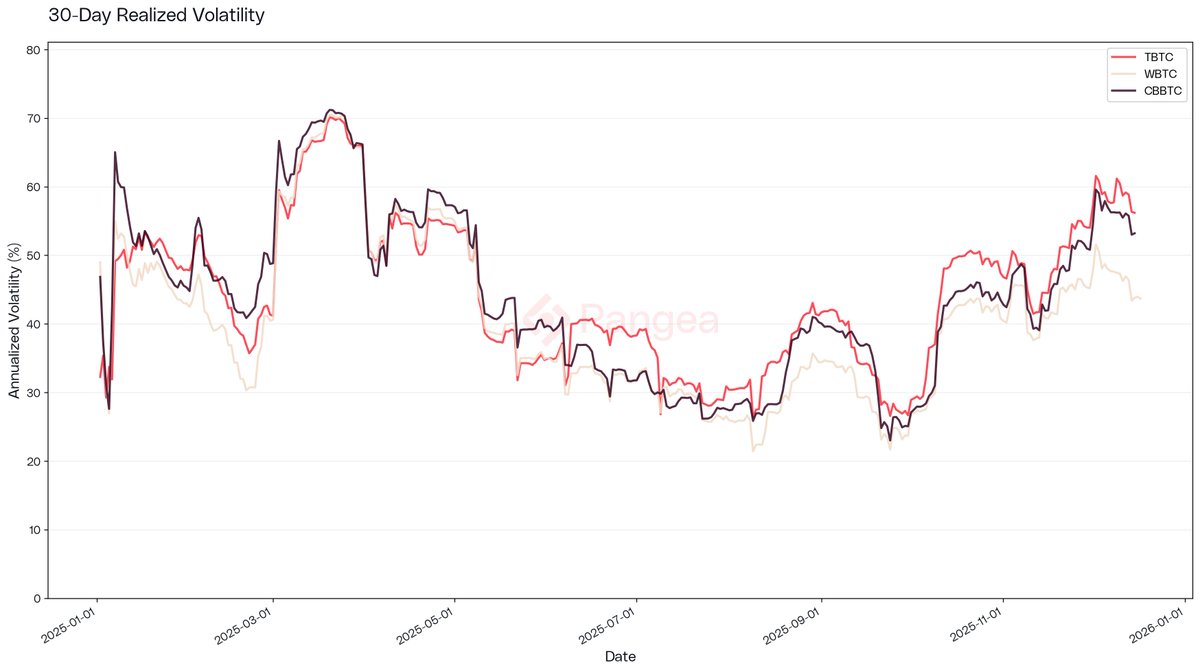
The chart @yieldbasis depositors care about. Price may be down, but volatility is reaching yearly highs.
Pangea tweet media
English
2
8
33
2.2K
maxim legg
maxim legg@maximlegg·
@alliekmiller I use google recorder on android and copy to an llm > should definiteley automate with whisper / ollama to keep it off cloud
English
0
0
0
35
Allie K. Miller
Allie K. Miller@alliekmiller·
Voice AI is going to explode in 2026. Here’s what I’m seeing: 1. Dictation has completely changed how I work I go on walks where I dictate to Otter for 40min. I built an app this weekend while lifting weights. The productivity gain is real. 2. Phone booths everywhere I visited the offices of two large AI companies last week. They have phone booths everywhere. I watched someone walk into one, dictate, then walk right back out. That’s it. 3. Microphones at every desk I visited Wispr Flow’s headquarters in October (see pic). Every single employee had a $60 microphone on their desk and can whisper tasks all day long to AI. You cannot hear them even if you’re at the neighboring table. 4. OpenAI says typing is the bottleneck Alexander Embiricos, head of product for Codex, just went on the @lennysan podcast that the “current underappreciated limiting factor” to AGI-level productivity isn’t model capability, it’s human typing speed. We are literally being held back by our fingers.
Allie K. Miller tweet media
English
313
211
2K
263.7K
Sanat
Sanat@kapursanat·
it has never been easier to be a server masquerading as a blockchain
English
35
3
82
3.6K