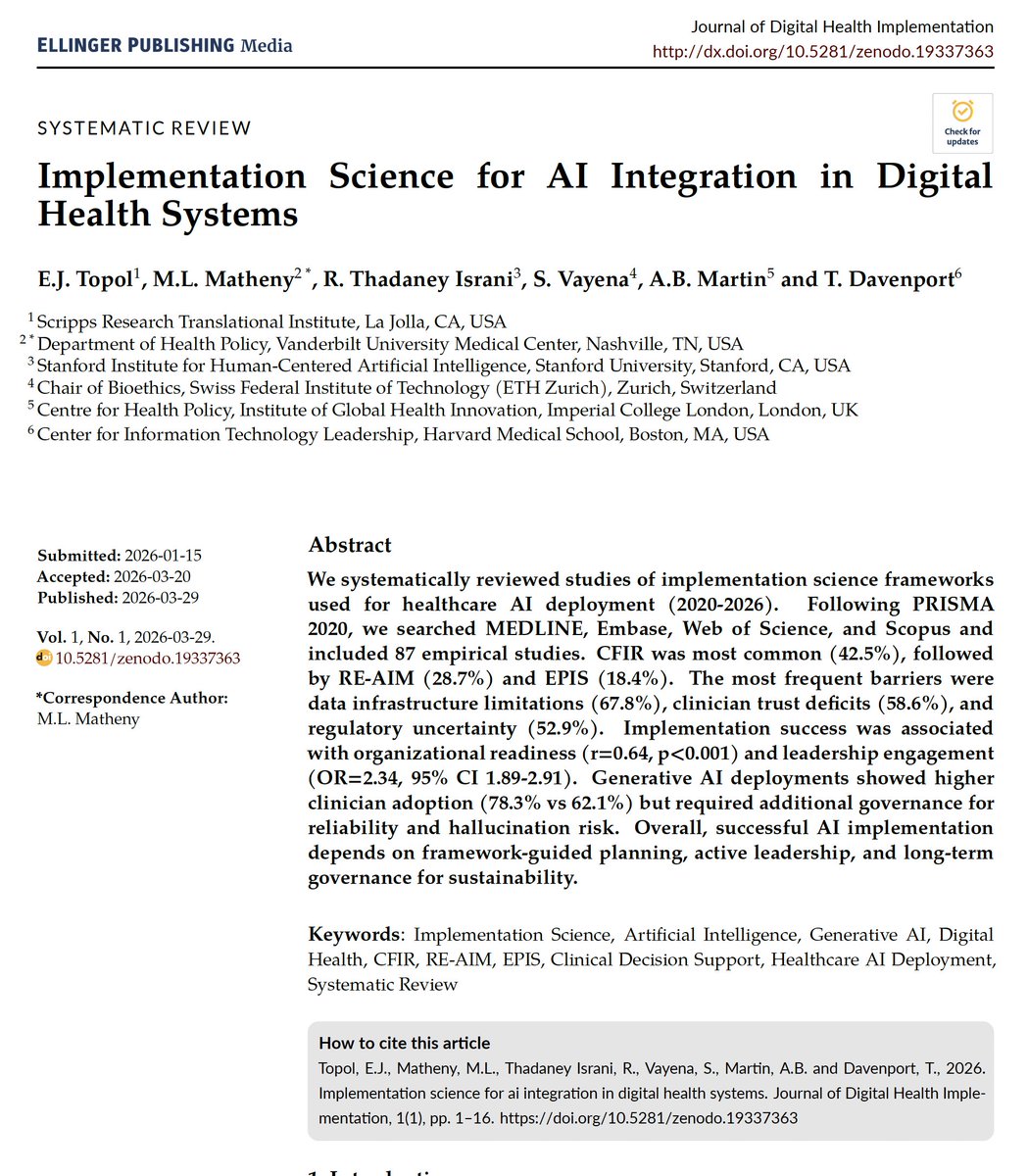
Martin Matsumura

1.1K posts

Martin Matsumura banner
Martin Matsumura

Martin Matsumura

@memCVdoc

Geisinger Cardiology

Pennsylvania Katılım Şubat 2012
601 Takip Edilen545 Takipçiler
Martin Matsumura retweetledi
Davide Capodanno
Davide Capodanno@DFCapodanno·
All the explanations I’ve heard today for the negative CLOSURE-AF result—some so strained they’re almost impressive. 1) The devices were “outdated” and therefore responsible for excess complications (the usual argument that things only go wrong elsewhere). 2) DAPT was used after LAAO, which is now said to be obsolete because of bleeding concerns compared with DOAC-based strategies (a claim that is often repeated, less often demonstrated). 3) Stroke rates were similar, so the signal is attributed mainly to bleeding and procedural issues—as if that were a minor point. 4) The composite endpoint is criticized for mixing different mechanisms, although if anything it should have favored non-inferiority. 5) The early phase of enrollment is invoked to argue that complications are not representative of current practice (again, complications seem to belong to others). 6) And then there are the usual remarks about loss to follow-up, crossovers, and lack of blinding. What seems to be missed in this accumulation of arguments is straightforward: the burden of proof lies with LAAO, not with the control arm. The issue is the strength of the evidence supporting LAAO, not medical therapy, which remains the reference standard.
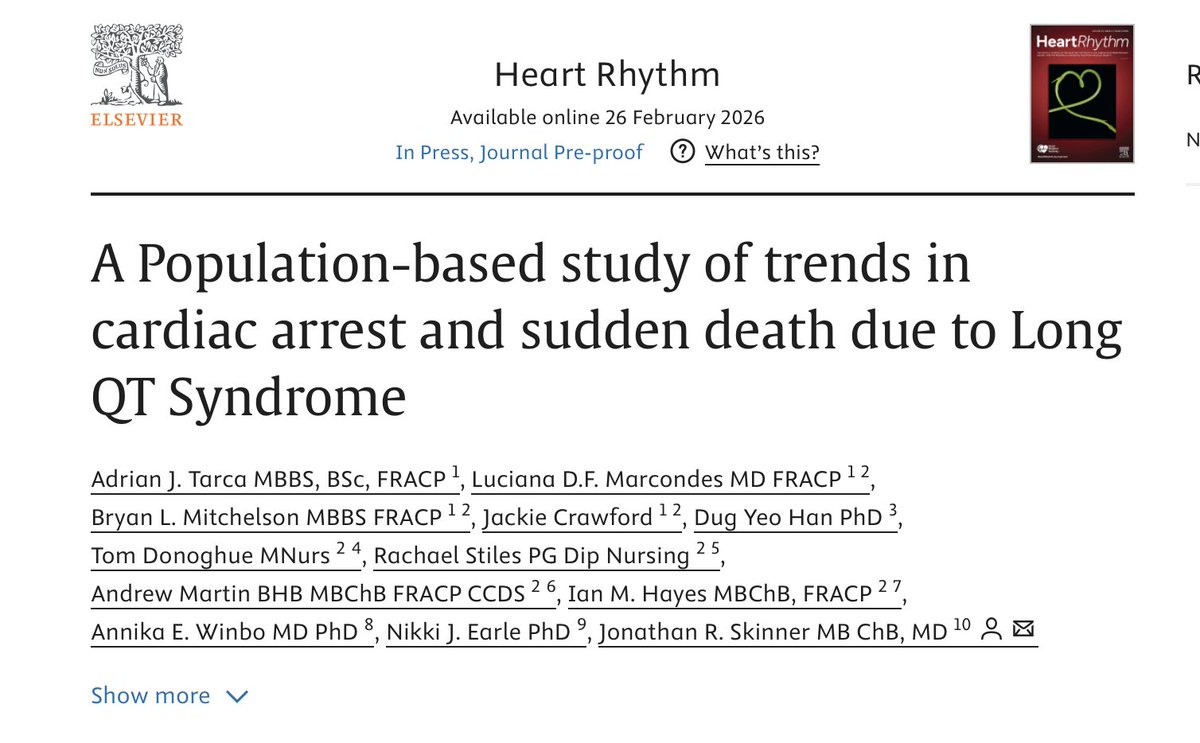
Davide Capodanno tweet media
English
15
83
316
80.3K
Martin Matsumura retweetledi
NEJM
NEJM@NEJM·
Among patients with atrial fibrillation at high risk for stroke and bleeding, left atrial appendage closure was not noninferior to medical therapy in reducing the risk of stroke, embolism, major bleeding, or death at 3 years. Full CLOSURE-AF trial results: nejm.org/doi/full/10.10… Editorial: Left Atrial Appendage Closure — Another Overused Method in Cardiology? nejm.org/doi/full/10.10…
NEJM tweet media
English
16
301
694
433.2K
Martin Matsumura retweetledi
Brandon Luu, MD
Brandon Luu, MD@BrandonLuuMD·
Students who took notes by hand scored ~28% higher on conceptual questions than laptop note-takers. Writing forces your brain to process and compress ideas instead of copying them.
Brandon Luu, MD tweet media
English
446
5.2K
24.5K
1.6M
Martin Matsumura retweetledi
Ahmed Bennis MD 🫀
Ahmed Bennis MD 🫀@drbennisahmed·
Artificial intelligence–based quantification of breast arterial calcifications to predict cardiovascular morbidity and mortality Automatically quantified BAC is an independent predictor of MACE and mortality, adding prognostic value to the PREVENT score #Cardiology #MedTwitter #CardioTwitter #HeartHealth #Healthcare @ESC_Journals @escardio @DrMarthaGulati @hvanspall @CMichaelGibson @Hragy @biljana_parapid academic.oup.com/eurheartj/adva…
Ahmed Bennis MD 🫀 tweet media
English
1
4
7
461
Martin Matsumura retweetledi
Dr. Saga Helin
Dr. Saga Helin@helin_drsaga·
Peer review was supposed to be science’s quality filter, but somewhere along the way it started acting more like a bouncer who only lets in the regulars. It’s slow, it tends to favor established labs and familiar names, and it gets uncomfortable around anything too unconventional. Papers loaded with mountains of data tend to cruise through, while bold ideas that actually challenge the consensus get stuck in limbo or turned away at the door. The irony is that where a paper gets published almost never determines its real worth. What actually matters is what the scientific community does with it afterward, whether people cite it, argue with it, build on it, or use it to blow up a long-held assumption. That’s where the value lives, not in the journal’s logo. A major survey a few years back found that roughly 70% of researchers think the current system is fundamentally broken, and it’s not hard to see why. Publicly funded research hides behind paywalls, editors chase whatever topic is hot that month, and the whole incentive structure pushes toward safe bets over genuinely risky and potentially important work. Science has always been complicated and deeply human and full of ego and inertia, but the conversation is shifting.
Dr. Saga Helin tweet media
English
106
709
1.9K
125.4K
Martin Matsumura retweetledi
American College of Cardiology
Among pts undergoing percutaneous LAAO, shared decision-making (SDM) & decision aid reporting was high but varied by institution, & Medicare pts were not more likely to have reported SDM w/ decision aids, despite the CMS requirement. 🔗 bit.ly/3OV2bHl #LAAORegistry #NCDR
American College of Cardiology tweet media
English
0
2
9
2.8K
Martin Matsumura retweetledi
JAMA Cardiology
JAMA Cardiology@JAMACardio·
Higher aldosterone-renin ratios in older adults were linked to increased risk of atrial fibrillation and ischemic stroke, supporting the aldosterone pathway as a target for cardiovascular disease prevention. ja.ma/46HoAxV
JAMA Cardiology tweet media
English
2
12
48
2.5K
Martin Matsumura retweetledi
Alan Daitch
Alan Daitch@AlanDaitch·
Reino Unido acaba de hacer el experimento de IA médica más grande de la historia. El resultado es un fracaso total. En ese país, hay 400.000 personas caminando con insuficiencia cardíaca sin saberlo y el 80% se va a enterar recién cuando llegue a una guardia. No porque no haya señales, sino porque el sistema de atención primaria no las detecta a tiempo. Entonces, le dieron a médicos de 205 clínicas un estetoscopio con Inteligencia Artificial que en 15 segundos analiza el corazón y te dice si hay insuficiencia cardíaca, arritmia o enfermedad valvular. Cuando se utilizaba, los resultados eran impresionantes: la detección se duplicaba. Pero, cuando miraron el resultado general, no había cambiado absolutamente nada. Misma cantidad de diagnósticos usando IA que sin usarla. El problema fue que el 70% de las clínicas lo había dejado de usar porque el estetoscopio le sumaba pasos a un médico que ya tiene 10 minutos por paciente, no se integraba con el sistema de historias clínicas y encima muchas alertas terminaban siendo de gente que no tenía nada. Eso es común en medicina (es lo que pasa, por ejemplo, con las mamografías), pero los médicos no estaban acostumbrados a esta nueva tecnología y cada falso positivo les fue sumando más y más desconfianza. No falló la IA: el error fue desarrollar tecnología de punta sin tener en cuenta que el sistema sigue siendo del siglo pasado.
Alan Daitch tweet media
Español
27
197
921
121.5K
Martin Matsumura retweetledi
Simon Maechling
Simon Maechling@simonmaechling·
The problem isn't the availability of scientific research. It's the flood of people misinterpreting complex data with zero training and full confidence. Access to information is no longer the barrier. Understanding it is.
English
130
226
1.2K
18K
Martin Matsumura retweetledi
TCTMD
TCTMD@TCTMD·
Two hs-troponin strategies—the ESC algorithm and High-STEACS pathway—perform well for diagnosing NSTEMI in emergency department patients with acute chest discomfort, based on prospective data from Europe. tctmd.com/news/some-mino…
TCTMD tweet media
English
0
7
11
1.8K
Martin Matsumura retweetledi
Dr. Banda Khalifa MD, MPH, MBA
90% of students “read” research papers and still can’t explain them….This is the method I use anytime I lead a Journal Club. I can tell in 30 seconds if you actually understood a research paper…. Most people don’t…. They “read” it… Then they can’t explain the question, the method, or the point. Here’s the reading method researchers are trained to use: The Three-Pass Method. ⸻ ★ PASS 1 (5–10 minutes) Get the map, not the details Read only: → Title → Abstract + intro → Section headings → Conclusion → References (quick glance) By the end, you should be able to say: ↳ What kind of paper is this ↳ What problem is it solving ↳ What are the main contributions ↳ Do the assumptions seem reasonable ↳ Is it worth your time If the answer is “no,” stop here. That’s not quitting. That’s focus. ⸻ ★ PASS 2 (up to 1 hour) Understand the argument Now read with a pen. Your job is to track: → What claim are they making → What evidence supports it → What figures/graphs prove it Study the visuals like your reputation depends on it: ↳ Are axes labeled ↳ Are error bars shown ↳ Do the results actually justify the conclusion At the end of pass 2, you should be able to explain the paper out loud to a friend. No notes. If you can’t, you don’t own it yet. ⸻ ★ PASS 3 (the “real researcher” pass) Rebuild the paper in your head This is the move that separates “I read it” from “I understand it.” Try to recreate the work mentally: → Why this method and not another → What assumptions are hiding in plain sight → What would break if one assumption fails → What would you change if you ran the study By the end, you should be able to reconstruct the whole paper from memory, including strengths and weak spots. ⸻ 💬 What trips you up the most when reading papers? ♻️ Repost if you know someone drowning in PDFs.
Dr. Banda Khalifa MD, MPH, MBA tweet media
English
34
821
3K
134.4K
Martin Matsumura retweetledi
William A. Wallace, Ph.D.
William A. Wallace, Ph.D.@drwilliamwallac·
Most exercise advice focuses on how much you train. This paper shows the real question is what kind of cellular architecture you’re building. This systematic review and meta-regression synthesizes data from 425 human studies to quantify how different exercise modalities reshape mitochondrial content and skeletal-muscle capillarization, two core determinants of metabolic health and endurance capacity. The mechanistic takeaways: • Training intensity is the dominant driver of mitochondrial expansion. High-intensity and sprint-interval training produced ~2–4× greater increases in mitochondrial markers compared with traditional endurance training when normalized for time. • Volume still matters, but differently. Mitochondrial adaptations scale with training intensity × volume, whereas capillary growth depends more on intervention duration (≥8 weeks) than intensity alone. • Capillarization and hypertrophy are not the same adaptation. Capillary density and capillaries per fiber increased even when cross-sectional area did not, reinforcing that vascular remodeling is a distinct biological response. • Trainability is context-dependent. Untrained individuals showed larger relative gains, but well-trained individuals still adapted, especially under higher-intensity stimuli, contradicting the idea of a hard “adaptation ceiling.” • Age, sex, and disease status did not negate adaptation. Young vs. old, male vs. female, and healthy vs. cardiometabolic or pulmonary disease groups all demonstrated meaningful mitochondrial and vascular remodeling with appropriate training exposure. I'm sum, exercise is not merely a behavioral intervention, it is a dose-dependent biological signal that remodels mitochondrial density, oxidative capacity, and skeletal-muscle microvasculature. Intensity determines how much adaptation you get; duration determines how completely the tissue remodels.
William A. Wallace, Ph.D. tweet media
English
8
145
514
56.5K
mavsmarie
mavsmarie@mavsmarie·
It’s already starting on Facebook lmaooo
mavsmarie tweet media
English
46
72
2.7K
40.6K
Martin Matsumura retweetledi
The Wall Street Journal
James Talarico’s message of religious faith and economic populism resonated with Hispanic voters in Texas. 🔗 on.wsj.com/3N28XdC
The Wall Street Journal tweet media
English
50
19
128
29.1K
Martin Matsumura retweetledi
JAMA Cardiology
JAMA Cardiology@JAMACardio·
Higher aldosterone-renin ratios in older adults were linked to increased risk of atrial fibrillation and ischemic stroke, supporting the aldosterone pathway as a target for cardiovascular disease prevention. ja.ma/4seQLMK
JAMA Cardiology tweet media
English
3
24
71
7.7K