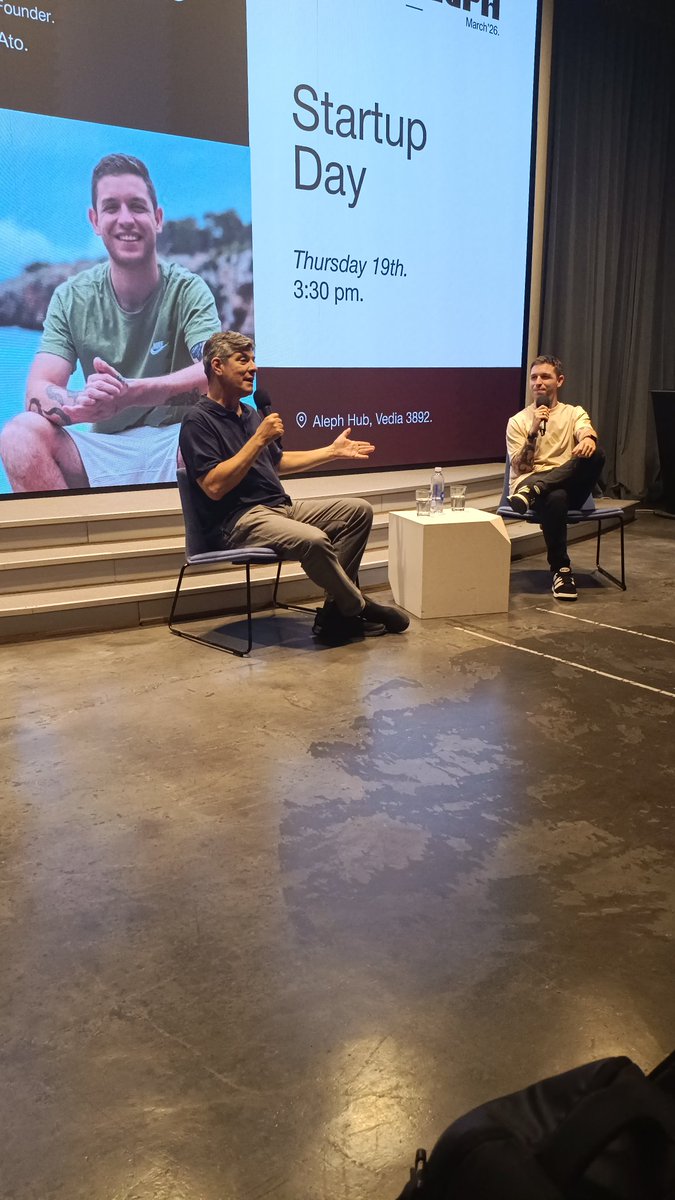
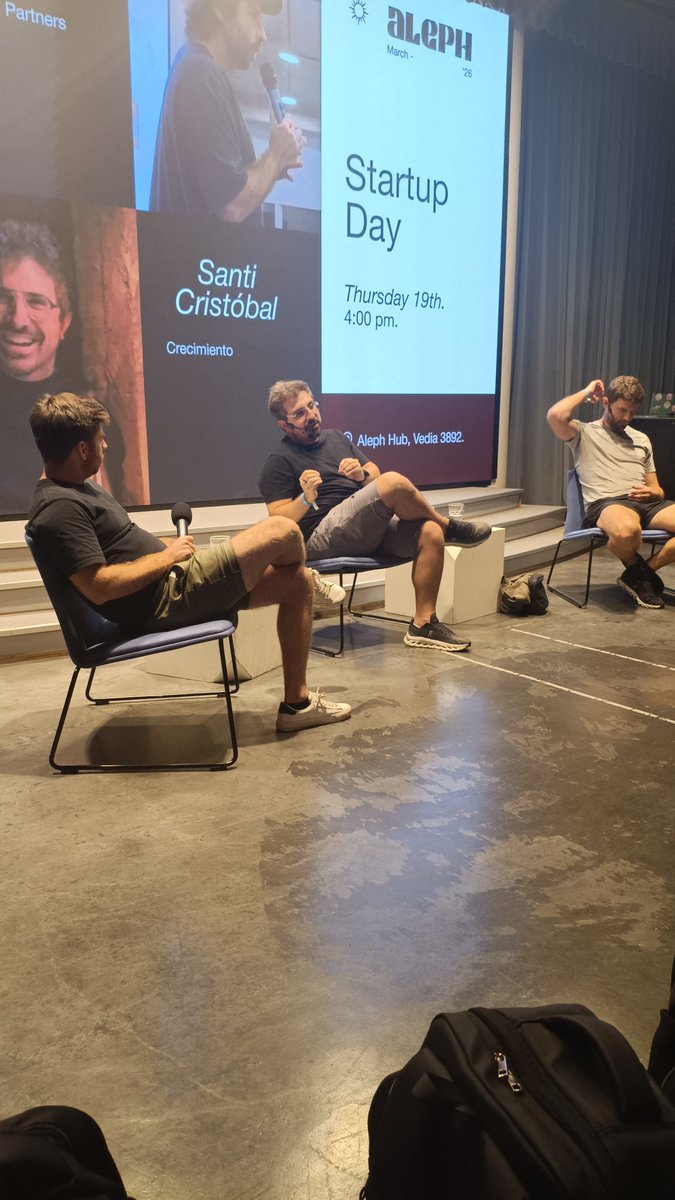
Ato at Aleph March ´26 @JuanCereigido, founder of @heyato_ai, and Mario Pergolini are already on stage. They’re telling us the story of Ato, how it came about and where it’s heading.
Gonto 🤓
7.1K posts

@mgonto
Developer turned product growth & mktg exec. Now run @HypergrowthP helping some of the best: @vercel @tryramp @n8n_io @clerk @braintrust @ashbyhq + more


Ato at Aleph March ´26 @JuanCereigido, founder of @heyato_ai, and Mario Pergolini are already on stage. They’re telling us the story of Ato, how it came about and where it’s heading.


STARTUP DAY AGENDA — MARCH 19 Today, at 2:30 pm, we kick off Aleph March '26 Startup Day! Here is the agenda for an afternoon of conversations and panels. To end the day, we have Crecimiento's Demo Day at 6:00 pm.

LO MANIJA que estoy por este jueves, lit si te gustan las startups y el mundo emprendedor es EL LUGAR Startup Day en @crecimientoar Mario Pergolini y @JuanCereigido con la historia de @heyato_ai @yenkel y @mgonto sobre cómo escalaron @auth0 desde ing y growth @HannaSchiuma conversando con @aarrieta de @NXTPvc y @Tatopata de @DraperCygnus Y un Demo Day con 10 startups pitcheando Va a estar buenisimo, la manija me consume. Ojalá verlos a todos Abajo les dejo los links


After today's unfavourable $50M swap on our interface, there's a lot of confusion around slippage I'd like to clarify: Slippage is the tolerance buffer on a market order: how much the final fill price can deviate from the quoted price due to market movement between signing and execution. On the Aave interface, suggested slippage is algorithmically calculated from asset pair volatility and order size. Since we offer both market orders (with adjustable slippage) and limit orders, our slippage and fee estimates are tuned for execution time. Users can always tighten it (or set limit amounts) and will typically get a surplus back thanks to @CoWSwap's auction mechanism. In this case, the user sent a market order with the suggested 1.21% slippage. But the core issue wasn't slippage, it was just the accepted quote with 99% price impact: As you can confirm it yourself on the CoW explorer, the order includes a quote field showing the original rate (50M USDT -> <140 AAVE) presented to the user before fees and slippage. It was already a very bad rate. All the interactions were also verified via internal analytics, and the user even received a 0.7% surplus, confirming the swap mechanics worked exactly as intended. Thanks to our open-source nature, anyone can reproduce this. So, the price impact warning was displayed. The checkbox was checked, sadly. While we're working on stronger guardrails for all our users, we'll always believe in permissionless DeFi.

Earlier today, a user attempted to buy AAVE using $50M USDT through the Aave interface. Given the unusually large size of the single order, the Aave interface, like most trading interfaces, warned the user about extraordinary slippage and required confirmation via a checkbox. The user confirmed the warning on their mobile device and proceeded with the swap, accepting the high slippage, which ultimately resulted in receiving only 324 AAVE in return. The transaction could not be moved forward without the user explicitly accepting the risk through the confirmation checkbox. The CoW Swap routers functioned as intended, and the integration followed standard industry practices. However, while the user was able to proceed with the swap, the final outcome was clearly far from optimal. Events like this do occur in DeFi, but the scale of this transaction was significantly larger than what is typically seen in the space. We sympathize with the user and will try to make a contact with the user and we will return $600K in fees collected from the transaction. The key takeaway is that while DeFi should remain open and permissionless, allowing users to perform transactions freely, there are additional guardrails the industry can build to better protect users. Our team will be investigating ways to improve these safeguards going forward.


Today, we're launching Ramp Agent Cards. There's been no safe way for agents to spend money, until now. Ramp Agent Cards give agents the ability to spend, governed with real spend limits, merchant controls, and full visibility into every transaction.