Michael Waples
83 posts


You can get to walkcycles too, but from my experience, you'll need image2video to help you with it. Pure image generation still doesn't do walkcycles properly.


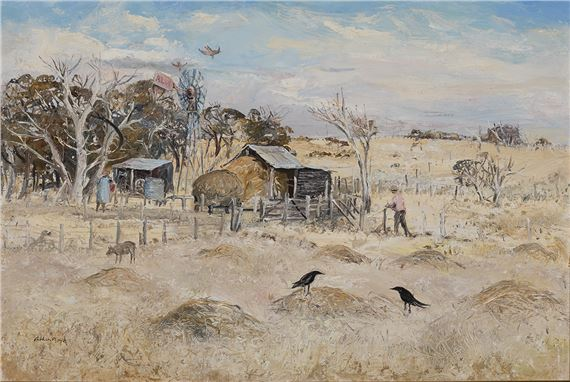
In the 1840s, there was a push from Australian farmers to import cheap Indian workers to act as shepherds. Reading the testimony of these pastoralists is striking. They were aggrieved about the unreliability and high expectations of British settlers in a tight labour market. They provided explicit details about just how much cheaper – and tractable – Indian workers were compared with both free settlers and convicts. And they warned of dire economic consequences if their request was declined. Colonial authorities listened – and said no. Authorities Wanted an Egalitarian and Cohesive Australia. This decision was based on a clear understanding of the economic and social impact of cheap foreign labour. It also reflected officials’ insistence that the narrow interests of employers should not trump broader goals. So, what happened to fix the shepherd shortage? Wire fences. Article | spectator.com.au/2026/04/the-jo…


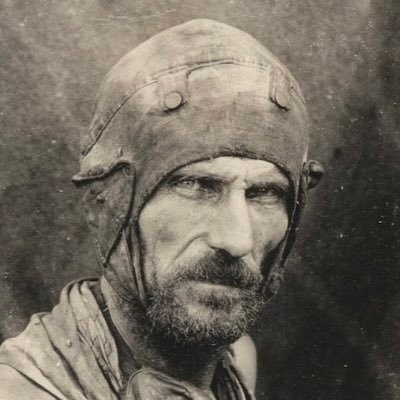
Some controversy has arisen recently about the “Dark Briton” phenotype. Such people are found all over Britain and Ireland but are more common in Wales, Cornwall and Southern Ireland. In Britain prior to the 1950’s we used to refer to such people as “black” which is confusing now due to modern racial terminology. In this thread I will explain that British people have diverse phenotypes and that these swarthy people are just normal natives of the British isles. Historically there have been a number of popular pseudo-historical explanations for these darker people. The most common was that they were descended from Spanish sailors washed ashore after the Armada sank in 1588. This is nonsense. A somewhat more plausible theory that was common among academics of the 19th century is that they are native Britons who have less Anglo-Saxon blood. 1/6 🧵