
Mihailo Bjelic

18.3K posts

Mihailo Bjelic banner
Mihailo Bjelic

Mihailo Bjelic

@MihailoBjelic

Prev. Co-Founder @0xPolygon | Technology. Prosperity. Peace.

Katılım Eylül 2012
1.4K Takip Edilen68.2K Takipçiler
Sabitlenmiş Tweet
Mihailo Bjelic
Mihailo Bjelic@MihailoBjelic·
PSA: After much thought and reflection, I’ve decided to step down from the board of the Polygon Foundation, and wind down my day-to-day involvement with Polygon Labs. I was introduced to crypto in 2013 (damn, time flies). By 2017, I was deep down the rabbit hole, fascinated by the idea of a global, inclusive economic layer of the society. Since then, I’ve devoted myself to helping materialize that inspiring vision. Polygon was born in 2019, and we’ve come a long way since then. From significant breakthroughs in zero-knowledge tech, to onboarding some of the world’s biggest brands, we’ve made meaningful strides toward that grand vision. I’m proud of this, and grateful for the privilege to work with so many talented people. As projects evolve and mature, it is natural for visions to evolve, and sometimes diverge. With this in mind, I can no longer contribute to Polygon to the best of my abilities. That said, I remain confident that Polygon leadership is committed to the success of the project. I’ll always be cheering from the sidelines, and supporting however and whenever I can. I remain as passionate as ever about the promise of crypto, its potential to transform systems, empower individuals, and create a more equitable world. That belief continues to inspire and guide me, and you will likely still see me around. Thank you to everyone who has been part of this journey.
English

176
40
1K
212.8K
Josh Stark (0xstark.eth)
After 5 years on the @ethereumfndn leadership team, I’ve decided to step away and pass the torch. I made this decision in early March, and will wrap up my work at the end of April. I’ve made no plans for the future, other than taking a long break to reset and spending time with my family & friends. Working for Ethereum at the Ethereum Foundation has been a great honour. I’m proud to have worked with great people inside and outside of the EF, and proud of what our community has accomplished together. And I’m grateful to have worked with @aerugoettinea, @dannyryan, @hwwonx, @tkstanczak, @tjuliang, @VitalikButerin, and @AyaMiyagotchi on the leadership team over the years. We share a vision and a set of values that mean I will always be your ally and your friend. This journey has been a gift. I have had the rare privilege of seeing up close how small teams of great people can do the impossible. It has changed how I see the world and my place in it. We do not need to accept the world as it is, or where we fear it is going. That is not hope, it is definite: I have seen the proof. The Ethereum ecosystem has reliably done things the world told us was impossible. It is easy to forget how much real fear and doubt there was that Ethereum would never launch, that DeFi would never work, or that Proof of Stake would never ship. The lesson is not that our success was guaranteed and the doubters are always wrong, but that truly wicked problems can be overcome when great people make an extraordinary effort. You must make an extraordinary effort.
English
131
62
986
70.2K
Mihailo Bjelic
Mihailo Bjelic@MihailoBjelic·
@GhostofWhitman Financial sovereignty and more accessible and efficient financial system, among other things.
English
0
0
2
56
Stevie Smith
Stevie Smith@steviesmith6955·
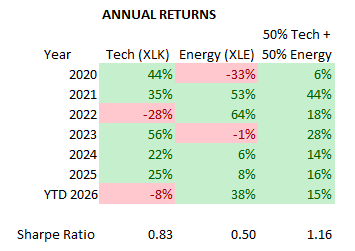
@johnarnold Now run back to 1990 and show return of s and p and a 60/40 next to if if you wanna be serious and not a clown
English
5
0
66
28.9K
John Arnold
John Arnold@johnarnold·
I think I finally solved the stock market.
John Arnold tweet media
English
231
557
10.3K
1.6M
Mihailo Bjelic
Mihailo Bjelic@MihailoBjelic·
@johnhemming4mp @MarcosArrut Aging is remarkably synchronized across our bodies and our species. On the other hand, nuclear, i.e. histone acetylation is fundamentally a localized, stochastic process. Feels like there might be a higher-level "clock" that controls the aging process..
English
1
0
2
218
Marcos Arrut
Marcos Arrut@MarcosArrut·
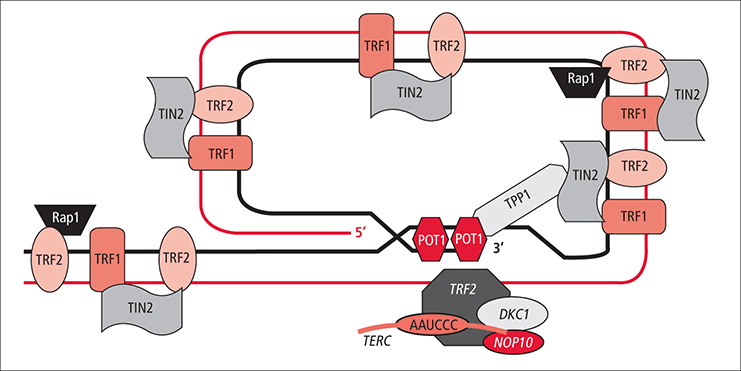
Telomeres are not the cause of aging. And I’m going to explain why. The idea that telomeres are the cause of cellular aging is one of the earliest formal theories of modern aging. It emerged in 1971 with Alexey Olovnikov, a Soviet scientist, and was later expanded and popularized by researchers such as Elizabeth Blackburn. The central idea is simple—and precisely because of that, it was extremely seductive. Telomeres are repetitive DNA sequences located at the ends of chromosomes. They function as “caps” that prevent the loss of genetic information during replication. Due to a structural problem of DNA polymerase (the end-replication problem), telomeres shorten with each cell division. When they reach a critical length, the cell enters senescence or dies. Based on this, an intuitive conclusion emerged: if telomeres shorten over time and cells stop dividing, then aging would essentially be a problem of telomere shortening. In theory, it sounds logical. But let's look at what the data actually say: First, let's start from a basic premise: if aging were caused by telomere shortening, then all organisms that age should show telomere shortening. But this is not the case. A classic example is Leach’s storm-petrel (Hydrobates leucorhous). In this bird, telomeres not only do not shorten with age, but actually lengthen over time (Haussmann et al., 2003). And yet, its lifespan is comparable to that of other procellariiform birds. It is an animal that ages and dies, but does not shorten its telomeres. This is not an isolated case in nature. In 2025, Smoom et al. showed that in the blood and tail of the house mouse (Mus musculus), telomeres do not shorten over time, but instead maintain a remarkably stable length throughout the animal's life. Moreover, in wild mice, a tendency toward telomere lengthening with age was even observed in peripheral blood. This shows that telomere shortening is far from being a universal phenomenon across species. And if we perform an interspecies analysis, the telomere hypothesis becomes even weaker. If telomeres were the causal factor of aging, then species with longer telomeres would live longer, and species with shorter telomeres would live shorter lives. There would be a clear correlation between lifespan and telomere length. But what do the data show? A mouse is born with telomeres of approximately 50,000 base pairs and lives about 2 years. A human is born with telomeres of around 10,000 base pairs (five times shorter) and lives about 80 years (forty times longer). There is no correlation. Not weak. Not noisy. It simply does not exist. The usual counterargument here is that in mice, telomeres shorten faster. But the data from Smoom show that they do not even shorten at all. On the other hand, alongside what has already been mentioned, there is another issue that defenders of the telomeric theory often use as evidence: telomerase. In addition to telomeres, there is telomerase, an enzyme that can elongate them. In humans, its catalytic subunit is encoded by the hTERT gene. There are studies that indeed show that overexpression of TERT increases lifespan in mice. Why does this happen? If what we are arguing here is correct, then increasing telomere length should not increase lifespan. This is an excellent question. The answer is that TERT is not just a protein that creates telomeres. TERT has pleiotropic functions—that is, it is a gene with multiple roles. Among them, it modulates the WNT/β-catenin pathway through BRG1. Basically, TERT binds to BRG1 (also known as SMARCA4), which is the motor of a chromatin-remodeling complex called SWI/SNF, and settles on promoters of specific WNT pathway genes (Park et al., 2009). WNT/β-catenin is an evolutionarily conserved mechanism, essential for embryonic development, tissue homeostasis, and—crucially—deeply involved in cellular reprogramming and the epigenome. In other words: when TERT extends lifespan, it does not do so by elongating telomeres, but by acting on central regulatory networks of cellular state. Let's look at another non-trivial point. Telomere shortening occurs in dividing cells. But the human body is not composed exclusively of proliferative cells. There is a vast number of post-mitotic cells—that is, cells that do not divide, or divide extremely little—and that are absolutely critical for organismal function. Two paradigmatic examples are cardiomyocytes (heart cells) and neurons. An adult cardiomyocyte barely replicates. A mature cortical neuron does not replicate at all. So the question is inevitable: How can we explain that a cardiomyocyte ages in a comparable way to a keratinocyte, when one does not replicate its DNA and the other does so constantly? If aging were caused by telomere shortening, the molecular changes associated with aging should be radically different between mitotic and post-mitotic tissues. Aging would be a heterogeneous, fragmented phenomenon, almost exclusive to proliferative tissues. But that is not what we observe. Aging affects the organism systemically: heart, brain, muscle, liver, kidney. Even in tissues where telomere shortening cannot operate as a primary mechanism, aging occurs anyway. This shows that it cannot be the causal agent in humans. And it is precisely at this point that a familiar wildcard counterargument appears from defenders of this theory: “Well, but aging is not a purely telomeric phenomenon; it is a multicausal phenomenon.” Let's examine this. If someone believes that aging is multicausal, then they do not believe in a telomeric theory of aging. These two positions are contradictory. If there are 150 causes of aging because aging is multicausal and telomeres are just one more, then telomeres are not the true primary cause of aging. At best, they are a partial correlate. About 0.67% of the total number of causes. Moreover, the multifactorial argument is often used in a misleading way. Every time it is shown that molecular damage does not cause aging, the response is: “what happens is that there are other damages we don’t know about, or that we know about but are difficult to repair.” The multicausal argument is used as a safety net: every time a mechanism fails to explain the data, new causes are added to avoid discarding the theory. There is no clear criterion for falsification. “Everything explains everything,” and therefore, nothing explains anything. A theory like this drifts away from being a scientific theory. It becomes a non-falsifiable hypothesis. My research focus starts from a clear premise: aging as a genetically programmed phenomenon, executed by the epigenome. If the data demonstrate otherwise, this theory will not be “patched” by adding new causes to save it. If the theory is not useful to explain biological reality, the theory is discarded—period. Then a framework is designed that does explain the new information truthfully. Does all this mean that telomeres have no relationship whatsoever with aging? No. It means something more precise: telomere shortening in humans is a consequence of aging, not its cause. It is not the engine—it is a symptom. And in science, confusing smoke with fire is not a minor mistake: it is losing decades chasing the symptom while the program that causes it continues running silently. As a result, while secondary effects were attacked, the central process remained intact. That is exactly what allowed aging to continue being treated as inevitable. But that has an end. Scientific advances will allow us to stop aging. Aging will be stopped. Mortality associated with aging will be stopped. The biological clock will be stopped. And it will be us who stop it. Once and for all. That's all.
Marcos Arrut tweet media
English
20
13
133
5.9K
Mihailo Bjelic
Mihailo Bjelic@MihailoBjelic·
@alextatem Great content, thank you! Curious how would you rank testosterone itself? Also, you placed growth hormone in the S-tier, yet there are studies claiming that its risk-benefit profile is not that great (e.g. ncbi.nlm.nih.gov/books/NBK74769/). Care to comment?
English
1
0
0
873
Dr. Alex Tatem
Dr. Alex Tatem@alextatem·
This is the COMPLETE Peptide Tier List compilation — Parts 1 through 3 combined into one deep dive. We break down the most talked-about compounds in fitness, longevity, anti-aging, and fat loss: Semaglutide, Tirzepatide, Retatrutide, Mazdutide, Growth Hormone (HGH), HCG, IGF-1 LR3, Tesamorelin, Sermorelin, CJC-1295, Ipamorelin, BPC-157, TB-500, NAD+, Melanotan, Selank, SEMAX, MOTS-C, Kisspeptin, Insulin, and more. If you’ve ever searched: • Best peptides for fat loss • Best peptide for muscle growth • GLP-1 vs growth hormone • Is BPC-157 legit? • Is insulin dangerous for bodybuilding? This thread answers it. We cover: ✔️ Real human data vs hype ✔️ Fat loss vs muscle-building compounds ✔️ GLP-1 agonists (semaglutide, tirzepatide, retatrutide) ✔️ Growth hormone secretagogues ✔️ Longevity + nootropic peptides ✔️ The compounds people massively overestimate Some are revolutionary. Some are promising. Some are pure internet fantasy. This isn’t bro science. It’s mechanism + data + real-world application. If you’re considering peptides for weight loss, muscle gain, performance, anti-aging, or cognition — read this before you inject anything. 👇 Which compound surprised you the most?
English
54
108
1.1K
235.3K
Mihailo Bjelic
Mihailo Bjelic@MihailoBjelic·
@PortfolioXpert You say “occurred in gold,” which suggests it is no longer happening? The gold price trend appears to support this, since gold has gained value against the dollar over time, as one would expect from a trusted, scarce asset. Why would that be the case?
English
0
0
6
1.3K
Bob Kendall (The Kendall Report)
Bob Kendall (The Kendall Report)@PortfolioXpert·
So here’s the issue you get influencers like this guy have a quarter million followers and they claim they don’t know why it is declining… it’s because they don’t understand basic mechanics of price discovery. They don’t understand that the marginal buyers or the float determines price they think the onchain bitcoin is that is the price discovery Well, it was once upon a time but now.. Once you can synthetically manufacture the supply, the asset is no longer scarce and once scarcity is gone, price becomes a derivatives game, not a supply-and-demand market. This is exactly what has happened to Bitcoin. This is the same structural break that occurred in gold, silver, oil, and eventually equities once they became derivatives-dominated. The original premise that no longer exists Bitcoin’s entire valuation logic was built on finite supply (21M) and inability to be rehypothecated. That died the moment: •Cash-settled futures •Perpetual swaps •Options •ETFs •Prime broker lending •Wrapped BTC •Total return swaps were layered on top of the chain. From that moment forward: Bitcoin supply became theoretically infinite. Not on-chain in price discovery. The metric that explains the collapse Synthetic Float Ratio (SFR) Once you can synthetically manufacture the supply, the asset is no longer scarce — and once scarcity is gone, price becomes a derivatives game, not a supply-and-demand market. That is exactly what has happened to Bitcoin. This is the same structural break that occurred in gold, silver, oil, and eventually equities once they became derivatives-dominated. Why Wall Street can now “trade against” Bitcoin They do exactly what they’ve done in every commodity market: 1.Create unlimited paper BTC 2.Short into rallies 3.Force liquidations 4.Cover lower 5.Repeat They are not “betting” — they are manufacturing inventory. The same 1 BTC can now support: •An ETF unit •A futures contract •A perpetual swap •An options delta •A broker loan •A structured note All at once. That is six claims on one coin. That is not a market. That is a fractional reserve price system.
The ₿itcoin Therapist@TheBTCTherapist

Bitcoin actually tagged $73,000 today, which is borderline insane. What’s remarkable is no one actually knows what’s happening and why price is going down. It’s all predicated on some BS glitch narrative from 3 months ago and the 4 year cycle which means absolutely nothing.

English
1.2K
2K
15.8K
4.9M
Amir Taaki ⛛
Amir Taaki ⛛@lunardragon420·
Epstein emailed me because I was like the CEO of Bitcoin at that time. As you can see they view me as the enemy, not a friend. What happened: I was a 22 yo nerd hacker living in my mum's spare bedroom. I founded a company with a friend. Some random billionaire offers to invest. I'm like omfg yes. My cofounder does due diligence and allegations come up so he has doubts. He happens to be visiting NY so I put them in touch, and he actually visits Epstein. Later he came back and was like "absolutely not" then killed everything. I actually wonder. From this email quoted, you can see they actually despised us for being idealists and radicals, but were just trying to get intel from us. They ended up funding all the other Bitcoin guys, not us tho.
English
212
546
5.7K
913.6K
Laura Shin
Laura Shin@laurashin·
@lunardragon420 Nonetheless, I loved seeing Anarchist Amir pop up in the files 😂
English
6
2
184
44.5K
Mihailo Bjelic
Mihailo Bjelic@MihailoBjelic·
@imadl_official I’m not sure what you mean. I simply said that most agencies and organizations seem aligned on a 2030 to 2035 window for Q Day, while the Bitcoin community is not. Is that statement inaccurate?
English
0
0
1
101
iMad ⚡
iMad ⚡@imadl_official·
@MihailoBjelic What do you have against the Bitcoin maxis? Genuinely curious
English
1
0
0
111
Mihailo Bjelic
Mihailo Bjelic@MihailoBjelic·
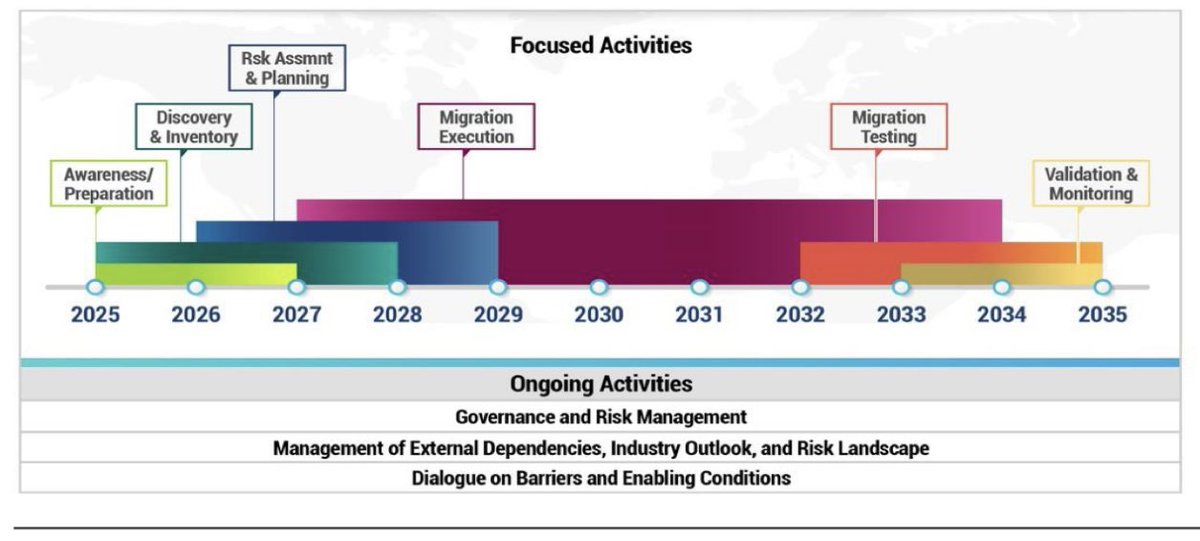
The G7 cyber expert group just published a statement and a roadmap for post-quantum crypto, targeting full migration by 2030–35, in line with NSA and NIST targets. Almost everyone seems aligned on Q Day timing, except the Bitcoin community, of course… home.treasury.gov/system/files/1…
Mihailo Bjelic tweet media
English
5
4
31
2.8K
Mihailo Bjelic
Mihailo Bjelic@MihailoBjelic·
@AriannaSimpson Congrats on the journey. You are one of the OGs who helped build the whole space. 🙏
English
0
0
0
356
AriannaSimpson.eth
AriannaSimpson.eth@AriannaSimpson·
Some news! After 6 incredible years, I’m going to be transitioning out of a16z. I’m starting a fund of my own to do what I love most, which is investing in great founders as early as I can find them, with a broader aperture across the many verticals where great companies are being built today. I learned a huge amount during my time at a16z. @cdixon is widely known as a legendary investor and having the opportunity to work closely with him for the past 6 years has been an honor. I am extremely grateful for his mentorship, the opportunities he gave me here, and for the capital and responsibilities he entrusted me with. His frameworks will shape how I think about investments for the rest of my career. When I joined, the crypto vertical was 7 people (it’s now north of 80), and the firm, while already successful, was nowhere near the scale or scope it has today. At the time I thought the firm’s moves to dominate the industry had mostly unfolded, but I underestimated how much the lead could widen in a few short years. @bhorowitz and @pmarca have built an institution, and I am glad to have had the chance to play a small role on the team. I’m sure I’ll be looking back 6 years from now and see the firm in a position  that’s  hard to even imagine from today’s vantage point. Most of the best people I’ve worked with in my career to date have been at a16z – there are too many to name. I’m very grateful to have worked with so many incredible folks here, and I know that I am leaving the crypto team and the investing practice in extremely capable hands with @cdixon, @alive_eth, and @guywuolletjr. I’m also really going to miss working with @jasonrothenal and @eddylazzarin every day in Menlo Park — I’ve learned so much from both of them. I’m very proud of the work I did here, and most importantly, of the founders I had the privilege of working with. They are the reason why I love being an investor. Sometimes it takes dozens of meetings, but every time you find a star, it makes you fall in love with the job all over again. a16z’s passion for and commitment to founders and their companies is what made me love this job in particular. I’m excited to keep doing that in my next chapter — and if you’re building, I’d love to meet!
English
276
25
1.3K
593.9K
Mihailo Bjelic
Mihailo Bjelic@MihailoBjelic·
@KevinWilliams Just to understand, are you suggesting that both should be locked, or you want your tokens unlocked at TGE as well? 😁
English
0
0
2
652
Kevin Williams
Kevin Williams@KevinWilliams·
I think we as a VC community need to put an end to “Ecosystem” and/or “Foundation” tokens being unlocked at TGE meanwhile “Investor” tokens have a 1 year cliff and 24 month linear vesting. We all know that Ecosystem and Foundation tokens are just going back to the pockets of the founders anyways. It’s not right to have VCs invest and have to wait while founders can spend the money VCs invested and get immediate liquidity from tokens while VCs have to wait.
English
28
3
80
32.5K
Mihailo Bjelic
Mihailo Bjelic@MihailoBjelic·
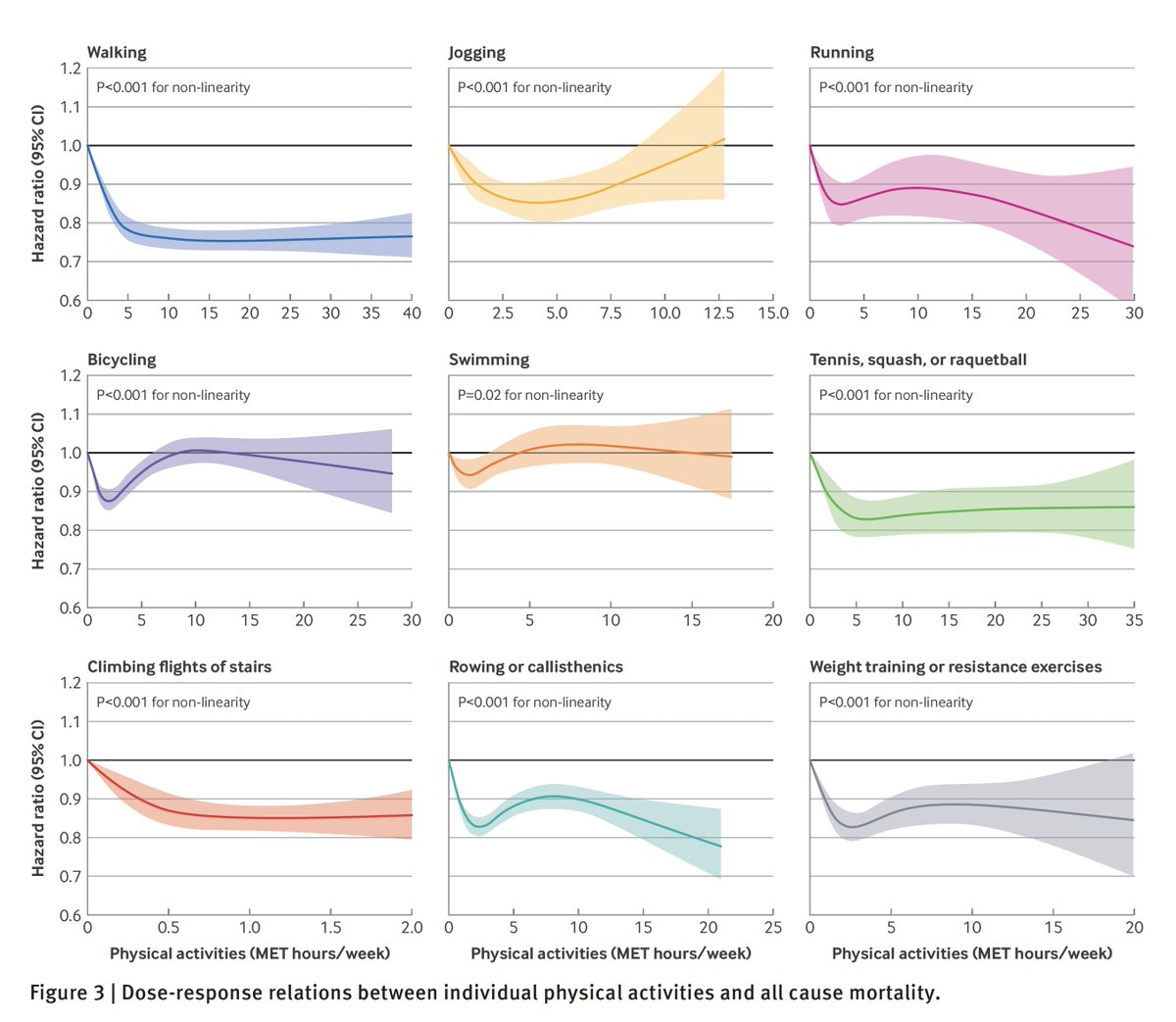
@EricTopol Unfortunately, at least a few of those charts don’t make sense..
English
1
0
5
11.7K
Eric Topol
Eric Topol@EricTopol·
Physical activity and the reduction of all-cause mortality, from 2 very large prospective cohorts 1. The relationship is non-linear, suggesting a threshold effect for many types of exercise as seen below
Eric Topol tweet media
English
305
903
5.9K
3.4M