
mike retweetledi
mike
1.4K posts

mike
@mike77387635
Canadian. Trying to understand the world. Constantly learning. Trying to invest without losing all my money.
Katılım Kasım 2019
139 Takip Edilen29 Takipçiler

mike retweetledi

This is exactly the person George Orwell wrote about
Dr. Eli David@DrEliDavid
Former New Zealand Prime Minister Jacinda Ardern: “Free speech is a weapon of war, and censorship is necessary to protect free speech.” This evil creature destroyed New Zealand through her fascist policies, and recently left the country.
English
mike retweetledi
Every G7 country hit the brakes on money printing. Except Canada.

English
mike retweetledi
Michael Shellenberger: "I think free speech is hanging by a thread globally and that thread is Elon Musk… What's happening on X is the change of consciousness and… the establishment is desperate to either shut it down or censor it"
English
mike retweetledi

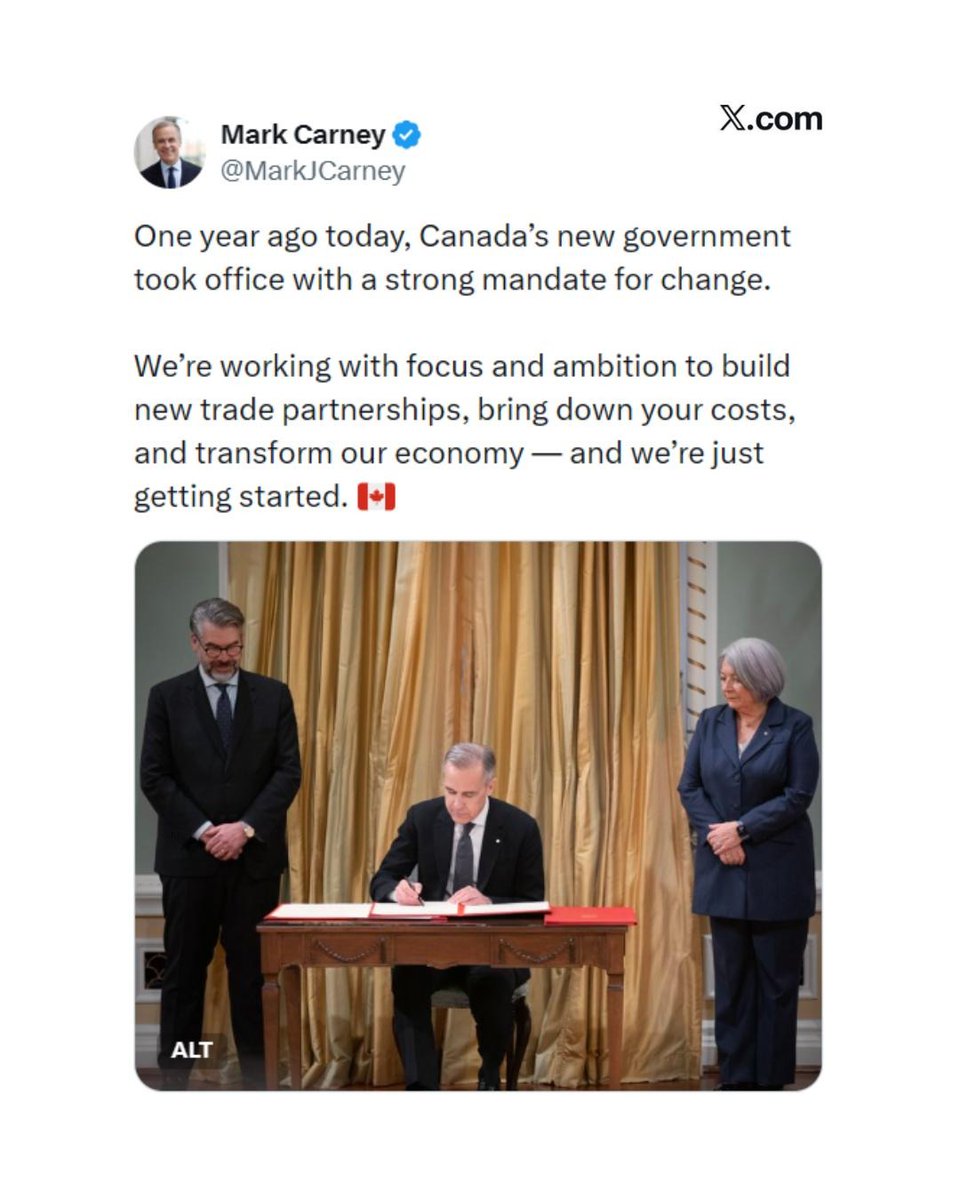
Happy 1st anniversary, Mark Carney!
-Deficit doubled
-Highest food inflation in the G7
-2nd highest unemployment in the G7
-No pipelines approved
-Homebuilding dropping 15%
-Immigration system still broken
-Violent crime skyrocketing in our major cities
A year later, illusion meets reality. Congratulations, sir, you’re just another Liberal.
English
mike retweetledi

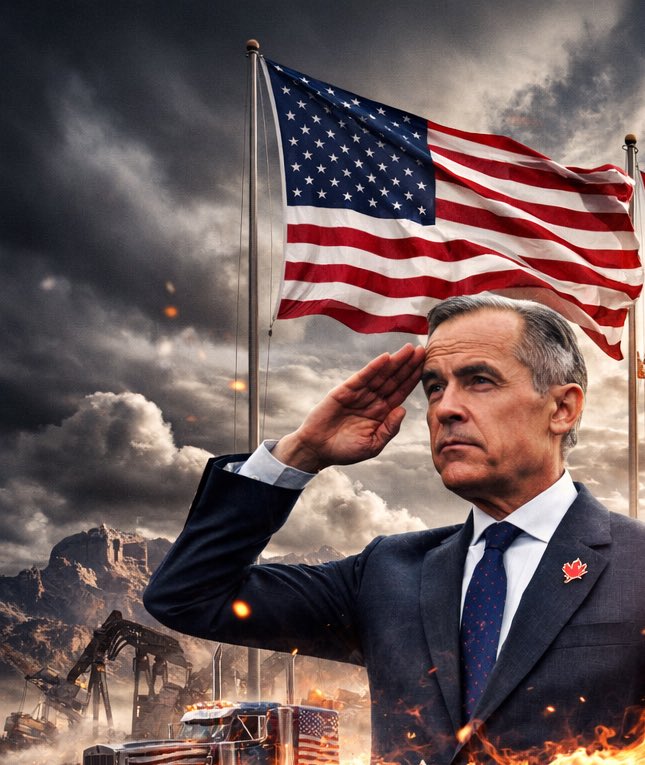
🚨 Read this slowly.
• Wife lives in the U.S. 🇺🇸
• Four kids live & study in the U.S. 🇺🇸
• ~91% of his portfolio in the U.S. 🇺🇸
• Home in the U.S. 🇺🇸
• Brookfield moved HQ to the U.S. 📍
Yet he tells Canadians:
“Buy Canadian.” 🇨🇦
“We can’t depend on America.” 🇺🇸
Do you see the contradiction?
#cdnpoli #Canada #US #Reality
English
mike retweetledi

This is when…
Movie Producer John Paul Rice Broke his Silence on The Hollywood Pedophile Global Network and PizzaGate - “They Have a Pipeline of Children From Haiti to the Vatican”
Before Jeffrey Epstein & Ghislaine Maxwell was known publicly, we found a global network of pedophiles who were selling children back and forth to each other.
The Mainstream Media, Hollywood, the Royal Family, the Vatican are all implicated in human trafficking.
In Hollywood, there’s a hidden layer, & when the Me Too movement started in 2017, he reached out to prominent actresses, and he asked, what about the children. They all said, “We Know. We Know.”
Edge Dot Org was a multibillionaire club financed by Jeffrey Epstein. Contributing members:
• Bill Gates
• Marina Ambramovic
• Paul Allen
• Heads of Major Industries
They raped & tortured these girls.
They sacrifice these children.
They harvest organs of children.
They’re murdering these children for pleasure. They own all politicians & there is a unified cabal.
PIZZAGATE, IF look how the New York Times covered it & compare it to the James Alefantis Instagram images, they completely omitted pictures of children in compromising positions.
All of James Alefantis friends were talking about how delicious those children looked.
Look at “PedoGate 2020” or “Out of Shadows” to see how disgusting these people are.
“I worked in Hollywood for 20 years & I saw shit nobody should see.”
When you see celebrities like Britney Spears, Amanda Bines, or any of these pop stars have meltdowns, it’s not because of fame or pressured— It’s because They are Sexually Abused and Handed Around Like Candy.
They Have a Pipeline of children going from Haiti all the way to the Vatican on Boats.
“You will not believe the level of satanic crap… this satanic shit going on in Hollywood & the music industry with Baphomet & pentagrams…”
They do these things to children because it’s the closest thing to God on this earth.
rumble.com/v1f12nz-movie-…
English
mike retweetledi

The predictions for 2026 is going to be a tough one.
We are now way off the rails on Federal spend (globally)
- from here out we’re looking at serial gimmicks every 6-12 months - for the next 50 years.
(I am not joking about that)
English
mike retweetledi
mike retweetledi

David Sacks breaks down the true risk of AI
@DavidSacks "It’s not that I think the AI is going to develop a mind of its own. I don’t think the technology is anywhere close to that.
But I do think that it could be used by the government in a much more invasive and intrusive way, in the manner that the government was, the Deep State was already trying to get in bed with the social networks.
There is a real risk that AI is used by future governments or the Deep State basically to surveil us, to censor us, and even potentially to brainwash us, because it is really good for that."
English
mike retweetledi

Carney helps Chinese interference make a comeback: Full Comment podcast nationalpost.com/opinion/carney…

English
mike retweetledi

Michael Ma does not represent Markham Unionville he can only represent himself! Your voice your choice🇨🇦 Let’s fix the Loophole. Any MP ‘CROSSING THE FLOOR’ needs to trigger a ‘by-election’ automatically. Sign here
c.org/BsCdMHrWsd
#FixCrossingTheFloorLoophole
#YourVoteYourChoice
#FloorCrossingtriggersByelection
#MichaelMaMustResign
English
mike retweetledi

@globalnews Last week I moved an amendment to bill C12 that would have stopped non-citizens convicted of serious crimes from making bogus asylum claims.
The Liberals voted against it.
English
mike retweetledi
Michael Burry @michaeljburry I have read your work and have lots of questions.
I'd be very happy to interview you about your views on AI & GPU depreciation
And why you chose $NVDA as your short instead of say, $CRWV or $ORCL
English
mike retweetledi

Weird how “imaginary taxes” still show up on real bills.
A little bit louder for everyone in back 📢
OUT 👏 OF👏 TOUCH👏
English
@porterstansb You can still drink it. I do. But that doesn’t mean I don’t admit it’s garbage.
English
Fuck off. You take my diet soda out of my cold, dead hands.
ⁿᵉʷˢ Robert F. Kennedy Jr.@RobertKennedyJc
Let’s call it what it is: Soda is liquid poison. -Loaded with sugar, dyes, acids, & chemicals -Feeds addiction, wrecks your gut, spikes insulin -Pulls minerals from your bones and teeth But they sell it with smiles, celebrities, & Super Bowl ads. Replace with sparkling water!
English
@TaviCosta For companies located n Canada doesn’t a weak dollar help them? Pay your expenses with a weak Canadian dollar and sell your product at an elevated price? Or do I have that wrong and as long at commodity prices hold they ben fit?
English

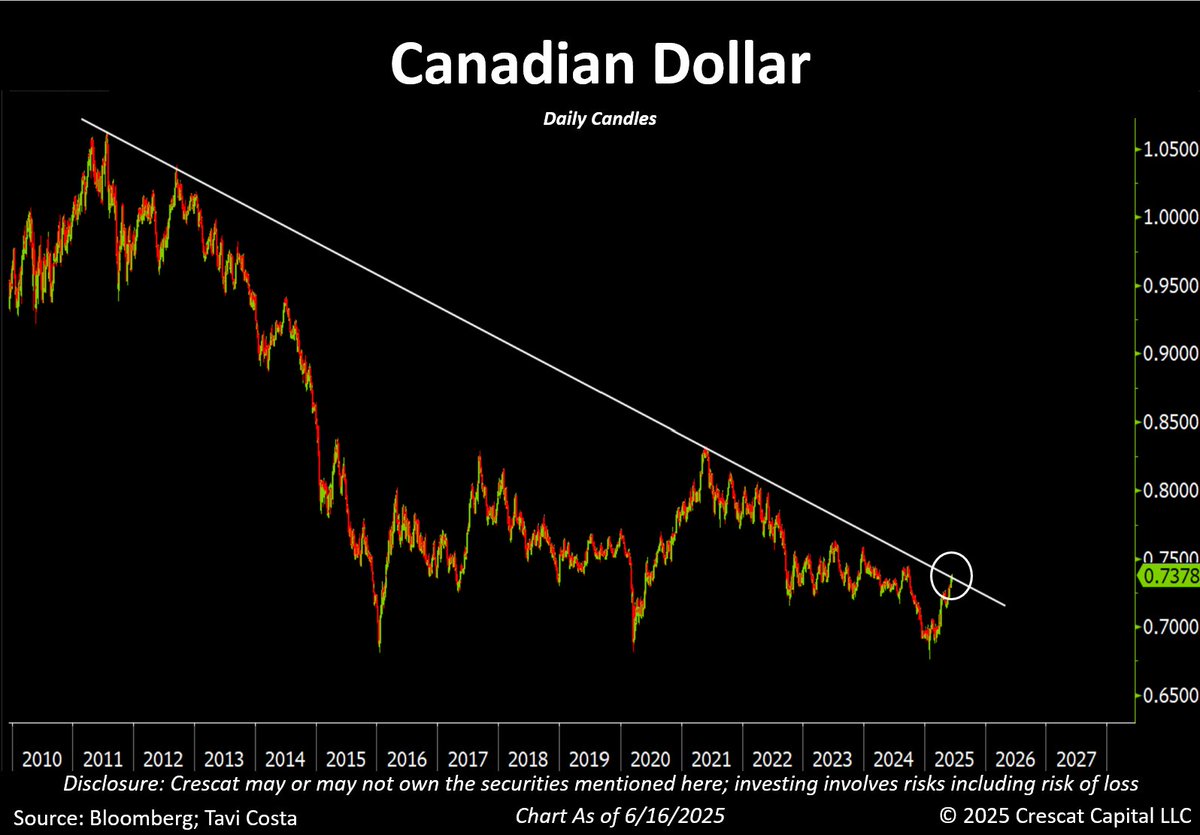
Oops, I know no one cares, but the Canadian dollar is breaking out as we speak.
This is likely the beginning of a broader move, in my view.
CAD-denominated assets stand to benefit significantly from this shift.
And yes, that should include the majority of mining companies.
English
mike retweetledi
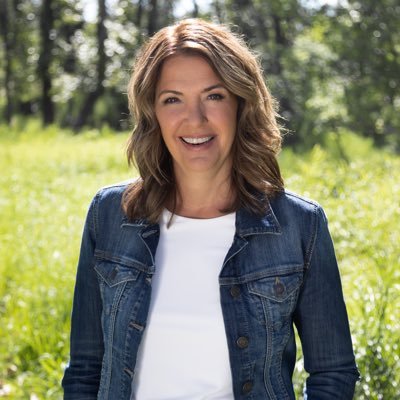
I congratulate Prime Minister @MarkJCarney on his minority government election victory last night.
I also want to sincerely thank @PierrePoilievre for his powerful and principled advocacy against the last decade’s punitive taxation and anti-resource policies that have made our country weaker, more divided and overly-dependent on the United States.
Mr. Poilievre’s vision for a safer, more affordable, united and prosperous Canada drove the policy debate in this country for the last several years and has inspired millions to see the unique potential of our nation. While Liberals and New Democrats demeaned and demonized Albertans, our values and our industries for political gain, Mr. Poilievre made empowering Albertans and our energy sector a cornerstone of his campaign. His respect and admiration for Albertans could not have been clearer. He is and continues to be a true friend of Alberta.
As Premier, I invite the Prime Minister to immediately commence working with our government to reset the relationship between Ottawa and Alberta with meaningful action rather than hollow rhetoric. A large majority of Albertans are deeply frustrated that the same government that overtly attacked our provincial economy almost unabated for the past 10 years has been returned to government.
As Premier, I will not permit the status quo to continue. Albertans are proud Canadians that want this nation to be strong, prosperous, and united, but we will no longer tolerate having our industries threatened and our resources landlocked by Ottawa.
In the weeks and months ahead, Albertans will have an opportunity to discuss our province’s future, assess various options for strengthening and protecting our province against future hostile acts from Ottawa, and to ultimately choose a path forward.
As Premier, I will facilitate and lead this discussion and process with the sincere hope of securing a prosperous future for our province within a united Canada that respects our province’s constitutional rights, facilitates rather than blocks the development and export of our abundant resources, and treats us as a valued and respected partner within confederation.
Our government will be holding a special caucus meeting this Friday to discuss this matter further. I will have more to say after that meeting is concluded.

English
mike retweetledi

Don’t import your conflict to 🇨🇦.
When my parents came to 🇨🇦, they made a conscious decision to leave behind the war they fled.
The communist regime took everything from them, but they didn’t relitigate it here in 🇨🇦. They came here to start a new life of peace and opportunity.
Western Standard@WSOnlineNews
Poilievre has a message for immigrants: "Bring your culture, bring your traditions, bring your family, but do not bring foreign conflicts onto our streets."
English
mike retweetledi
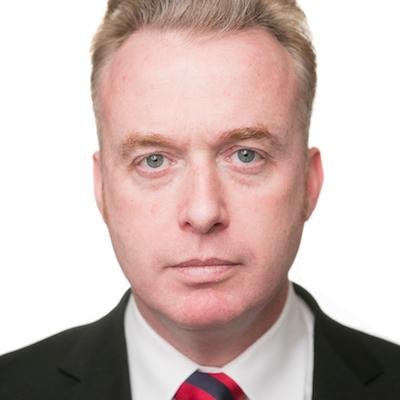
Bob Fife of The Globe and Mail on CBC after Mark Carney’s hissy fit where he claimed not to have met with people and an organization that he did meet with.
Fife explains the story.
x.com/CanadianOilExe…
English