Mion. retweetledi
Mion.
3.7K posts

Mion. retweetledi
Mion. retweetledi

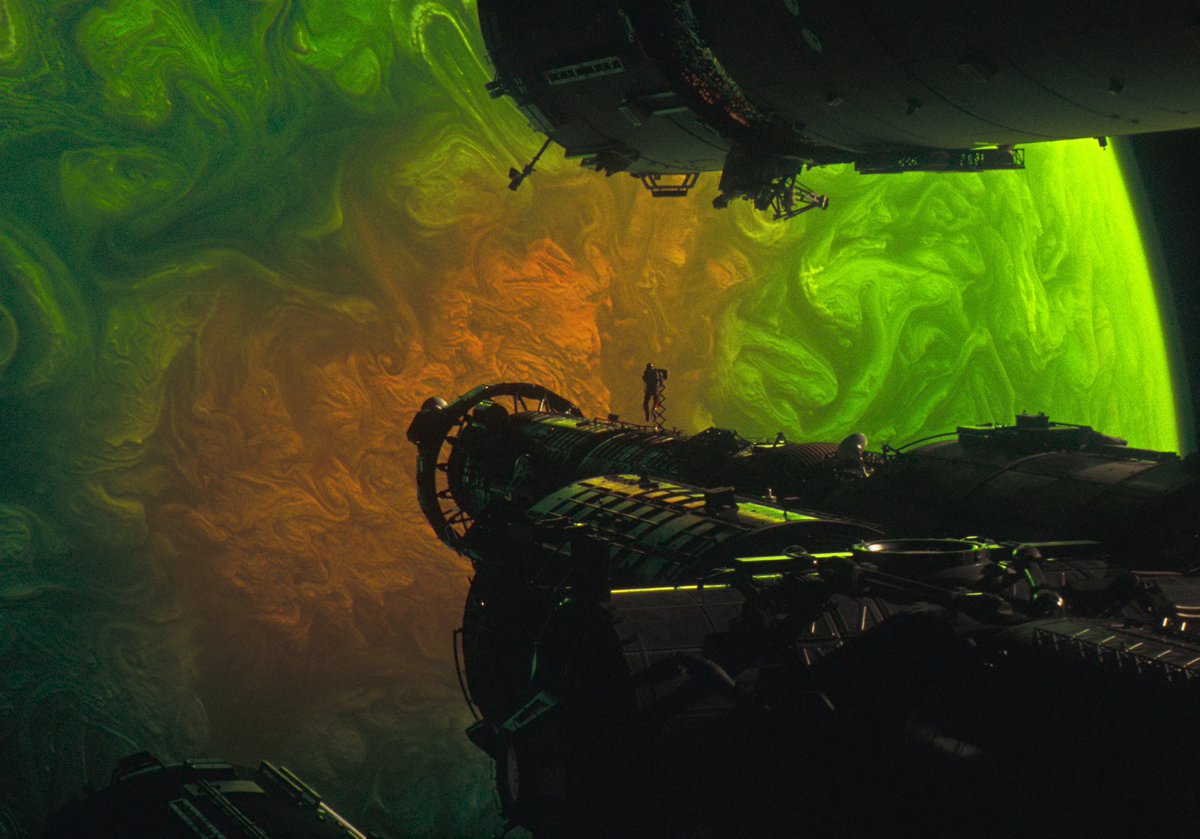
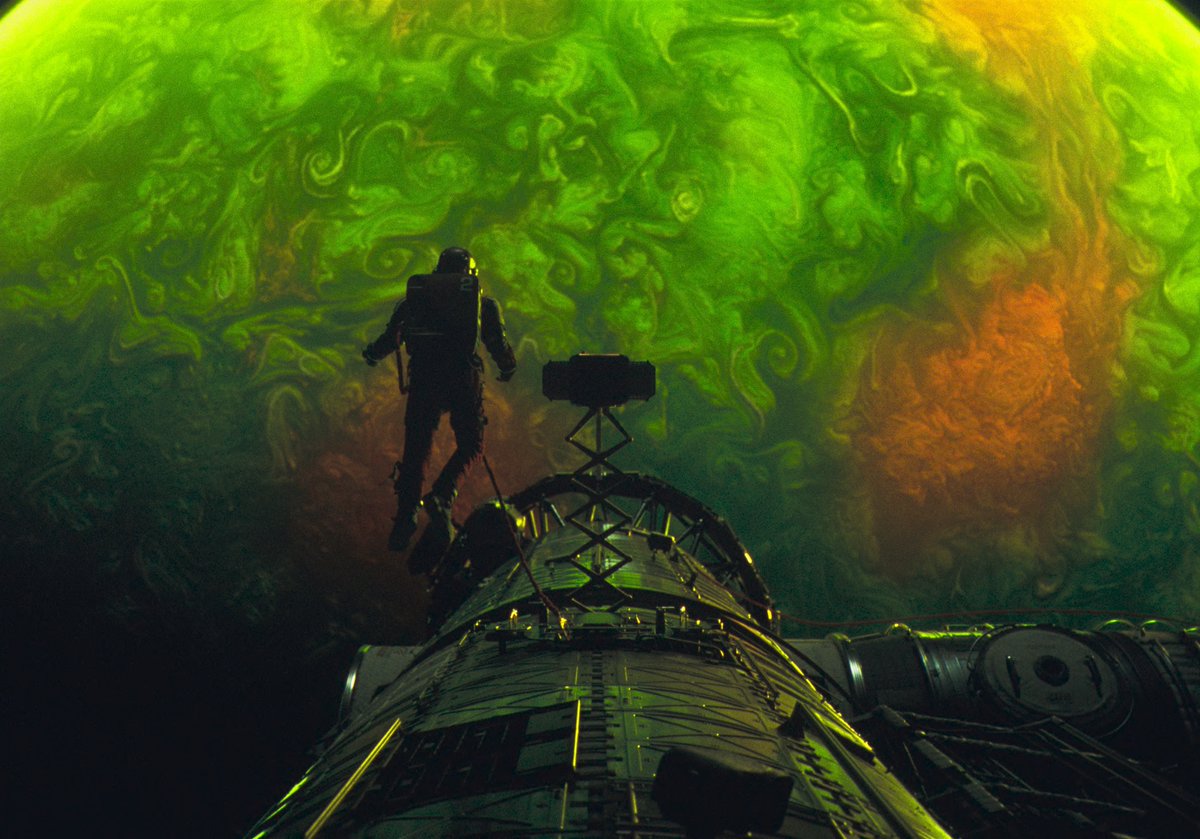
PERCEIVE 👁️ - I decided to pair @dreamina_ai Seedance 2.0 with lyrics for some music I've generated with @suno 5.5 for a song called PERCEIVE. Song written by me with my Theremin infused genre I'm experimenting with.
My goal was to create a dreamlike sequence about perception. Nothing is real, but her perception of her new imagined reality makes her feel truly connected with an otherworldly environment, she becomes one with it and experiences total bliss and freedom.
I've had my own fair share of dreams where I'm flying so I wanted to incorporate that. Weightlessness with free will must truly be one hell of an experience.
#DreaminaSeedance2 #DreaminaAI #DreaminaCPP #Seedance2
English
Mion. retweetledi
Mion. retweetledi

Wan2.7-Video is live! 🚀
Stop gambling with AI "slot machines." 🎲
🔹 Instruction Editing: Change weather/outfits via text.
🔹 Consistency: Lock 5 subjects across shots.
🔹 Fluidity: 15s stable cinematic sequences.
Don’t Re-generate, Just Edit. ✍️🎬
Try: wan.video/?cref=im&cinfo…
Doc & API: int.alibabacloud.com/m/1000411584/
English
Mion. retweetledi

Netflix dropped some useful stuff. VOID -video object and interaction deletion.
- removes objects while realistically simulating physical consequences;
- beats Runway/ProPainter;
- CogVideoX-5B + SAM 2;
looks good, no smudges/artifacts
void-model.github.io
English
Mion. retweetledi
Mion. retweetledi

Seedance 2.0 will change things.
The iphone realism + physics here...
One-shotted this:
+ Used omni-reference.
+ (2) images from an amazon listing.
+ (1) Prompt detailed scenes...cuts...and timing.
+ Very specific language on the hook visual copy + pacing.
(1) Prompt - (1) Output.
Feels like video will have its Nano-banana moment in 2026.
English
Mion. retweetledi

🚨PromptShare🚨
POV time-freeze JSON PROMPT for Seedance 2
PROMPT
{
"shot": {
"composition": "POV time-freeze with hands moving through frozen environment",
"lens": "ultra-wide cinematic lens with subtle distortion",
"camera_movement": "slow walk, precise hand movements, sudden time release burst"
},
"subject": {
"description": "person moving while everything else is frozen mid-action",
"wardrobe": "hands visible",
"props": "frozen people, objects mid-air, suspended debris"
},
"scene": {
"location": "busy city street",
"time_of_day": "day",
"environment": "people frozen mid-motion, objects suspended in air"
},
"visual_details": {
"action": "walk through frozen crowd, move objects, sudden time resumes explosively",
"special_effects": "time freeze particles, motion snap release",
"hair_clothing_motion": "fabric still then snapping with time"
},
"cinematography": {
"lighting": "clean daylight with sharp shadows",
"color_palette": "natural tones with crisp contrast",
"tone": "mind-bending, cinematic"
},
"audio": {
"music": "slow ambient then explosive drop",
"ambient": "silence then sudden chaos",
"sound_effects": "time snap, object movement",
"mix_level": "contrast silence and burst"
}
}
English
Mion. retweetledi

LLM Knowledge Bases
Something I'm finding very useful recently: using LLMs to build personal knowledge bases for various topics of research interest. In this way, a large fraction of my recent token throughput is going less into manipulating code, and more into manipulating knowledge (stored as markdown and images). The latest LLMs are quite good at it. So:
Data ingest:
I index source documents (articles, papers, repos, datasets, images, etc.) into a raw/ directory, then I use an LLM to incrementally "compile" a wiki, which is just a collection of .md files in a directory structure. The wiki includes summaries of all the data in raw/, backlinks, and then it categorizes data into concepts, writes articles for them, and links them all. To convert web articles into .md files I like to use the Obsidian Web Clipper extension, and then I also use a hotkey to download all the related images to local so that my LLM can easily reference them.
IDE:
I use Obsidian as the IDE "frontend" where I can view the raw data, the the compiled wiki, and the derived visualizations. Important to note that the LLM writes and maintains all of the data of the wiki, I rarely touch it directly. I've played with a few Obsidian plugins to render and view data in other ways (e.g. Marp for slides).
Q&A:
Where things get interesting is that once your wiki is big enough (e.g. mine on some recent research is ~100 articles and ~400K words), you can ask your LLM agent all kinds of complex questions against the wiki, and it will go off, research the answers, etc. I thought I had to reach for fancy RAG, but the LLM has been pretty good about auto-maintaining index files and brief summaries of all the documents and it reads all the important related data fairly easily at this ~small scale.
Output:
Instead of getting answers in text/terminal, I like to have it render markdown files for me, or slide shows (Marp format), or matplotlib images, all of which I then view again in Obsidian. You can imagine many other visual output formats depending on the query. Often, I end up "filing" the outputs back into the wiki to enhance it for further queries. So my own explorations and queries always "add up" in the knowledge base.
Linting:
I've run some LLM "health checks" over the wiki to e.g. find inconsistent data, impute missing data (with web searchers), find interesting connections for new article candidates, etc., to incrementally clean up the wiki and enhance its overall data integrity. The LLMs are quite good at suggesting further questions to ask and look into.
Extra tools:
I find myself developing additional tools to process the data, e.g. I vibe coded a small and naive search engine over the wiki, which I both use directly (in a web ui), but more often I want to hand it off to an LLM via CLI as a tool for larger queries.
Further explorations:
As the repo grows, the natural desire is to also think about synthetic data generation + finetuning to have your LLM "know" the data in its weights instead of just context windows.
TLDR: raw data from a given number of sources is collected, then compiled by an LLM into a .md wiki, then operated on by various CLIs by the LLM to do Q&A and to incrementally enhance the wiki, and all of it viewable in Obsidian. You rarely ever write or edit the wiki manually, it's the domain of the LLM. I think there is room here for an incredible new product instead of a hacky collection of scripts.
English
Mion. retweetledi
Mion. retweetledi
Mion. retweetledi
Mion. retweetledi

Hippo fluid scene pushed to 100M particles made with HydroFX. Foam, bubbles, and spray all simmed together in one system for a cohesive result, fully GPU accelerated. Meshed + extra sand interaction in Houdini, final lookdev/render in Blender. Get HydroFX storm-vfx.com
English
Mion. retweetledi

Depth is starting to feel less like an image… and more like geometry.
InfiniDepth (open source) pushes exactly in that direction🤩
Depth is no longer just a map.
It’s becoming a geometry representation.
Single image → depth → 3DGS🥳
It’s not replacing real-world capture,
but it’s definitely changing how image-to-3D works.
English
Mion. retweetledi
Mion. retweetledi
Mion. retweetledi


how dare Elon try to cure differently abled people! Such an evil, evil man Elon is... truly bad
(this is sarcasm)
Neuralink@neuralink
ALS has gradually taken away Kenneth’s ability to speak. Through Neuralink’s VOICE clinical trial, he’s exploring how a brain-computer interface designed to translate thought to speech could help restore autonomy in his daily life. Watch to learn more:
English

These executives fundamentally misunderstand their job. Windows 11 is hated so much because it's basically an adware now. They don't get the importance of focusing on the product and making it the best product possible for the user. Revenue will grow if you focus on quality.
Dexerto@Dexerto
Xbox's new CEO Asha Sharma reportedly wants to find ways to make Game Pass cheaper This could include introducing lower-cost tiers with ads or bundling it with Netflix

English