Nusratsathi

8.7K posts

Nusratsathi banner
Nusratsathi

Nusratsathi

@mirajsathi

Love Allah

Katılım Haziran 2020
3.7K Takip Edilen1.1K Takipçiler
Sabitlenmiş Tweet
Nusratsathi
Nusratsathi@mirajsathi·
Gprisma everyone Beyond the Machine: The PrismaX Vision ​1. From Labor to Asset: ​In traditional setups, human effort is a disposable resource once the task is done, the value vanishes. PrismaX flips this. Every human intervention is treated as a structural asset that stays within the system forever. ​2. Solving the Memoryless Problem: ​Most robots operate in the moment. If they fail and a human fixes it, the robot learns nothing. •​The Problem: Real-world experience is wasted. •​The PrismaX Solution: It captures the why behind the movement, ensuring that every correction leaves a digital footprint of high-quality intelligence. ​3. Data-Centric Teleoperation: ​The goal isn't just to move a robotic arm from point A to B. It’s about recording: •​Context: Why was the decision made? •​Quality: How precise was the movement? •​Outcome: Did the intervention succeed? This data becomes the DNA for future autonomous workflows. ​4. Human Labor as Foundational Knowledge: ​In this ecosystem, the human operator is no longer just a driver. They are a data scientist through action. Their labor becomes a composite source of operational knowledge that trains the entire network to be smarter. ​5. The Path to Deep Learning: ​By turning interventions into clear traces, PrismaX allows for: •​Training Improvements: Better datasets for AI models. •​Scalable Efficiency: One human’s solution can be deployed across a thousand robots. •​Deep Learning: Systems that actually understand real-world physics and edge cases through human guidance. ​ Connect with PrismaX ​Website: prismax.ai ​Discord: discord.gg/prismaxai ​X (Twitter): @PrismaXai
Nusratsathi tweet media
English
10
0
22
237
Legend
Legend@legendary54321·
Just got 2nd role in @PrismaXai Contributions are getting recognition here ..... Just real creation get recognition,,,,,, Congratulations to all new role holders,,, New roles will be unlocked soon ... Thanks team for recognising my contributions.... @vivianrobotics
Legend tweet media
Legend@legendary54321

Core Pillars of @PrismaXai • Robotics (Operate Robots): Robots perform real world tasks and connect digital intelligence with physical environments. • Data Generation (Generate Data): Robots produce valuable real world data that is accurate and useful. • Artificial Intelligence (Train Better AI): AI uses this data to learn, improve, and become more efficient over time. • Blockchain Integration: Ensures security, transparency, and decentralized trust across the ecosystem. • Authentic Contribution: Focus on real human effort and original content to maintain quality and fairness. In simple words: Robots → Data → AI → Better ecosystem.,, @vivianrobotics

English
38
0
73
1.9K
Masum billah
Masum billah@AdilMahmud82917·
@RAFA_AI – Where ideas don't sleep, they just take shape in dreams… Soft nights, calm surroundings, and a little creativity—just like this picture,@RAFA_AI is a platform where your ideas are nurtured. 💙 Here, every concept slowly turns into real art and innovation.❤️‍🔥
Masum billah tweet media
English
3
0
4
32
Asha
Asha@mrs0361·
ZKM (Zero-Knowledge Machine Learning) is an alternative approach to verifying AI (Artificial Intelligence) systems through verification of output based on hidden information (data), including the following:
Asha tweet media
English
3
0
3
20
MD RIFAT
MD RIFAT@RIFAT5666·
𝐈𝐧 𝐫𝐨𝐛𝐨𝐭𝐢𝐜𝐬, 𝐚𝐮𝐭𝐨𝐧𝐨𝐦𝐲 𝐢𝐬 𝐮𝐬𝐮𝐚𝐥𝐥𝐲 𝐭𝐡𝐨𝐮𝐠𝐡𝐭 𝐨𝐟 𝐚𝐬 𝐚𝐧 𝐢𝐧𝐡𝐞𝐫𝐞𝐧𝐭 𝐩𝐫𝐨𝐩𝐞𝐫𝐭𝐲 𝐨𝐟 𝐦𝐚𝐜𝐡𝐢𝐧𝐞𝐬.  Reality, it is the gradual result of repeated learning outside of a controlled environment.  A robot is not competent when it performs well against a predetermined standard; the real question is whether the system can continue to function even when the assumed conditions of training are violated. This is where most robotics frameworks stop. The reason for this deficiency is not simply a lack of model-level intelligence, but the absence of a complete feedback structure around the performance of the task. In the current reality, humans are constantly involved in this loop:  When the grip fails, the motion plan deviates, or the policy is disrupted by unpredictable environmental friction, the operator intervenes. While these interventions solve immediate problems, they are seen as mere operational labor rather than as long-term learning tools. This view creates an artificial boundary in the way of knowledge accumulation. The real obstacle is the lack of a coherent system for accumulating experience. Without a context for corrective action, quality assurance, and improvement, machines that can do the job today will fail tomorrow. The solution lies in making teleoperation a learning infrastructure, not a temporary option. Every intervention must be a written record of the operator’s perspective, response pattern, and recovery effectiveness. @PrismaXai is built around this idea.  Here, human control is transformed into structured system input through trace capture, evaluation layers, and incentives. Teleoperators are no longer unintelligent ancillary labor, but an active coordination layer that transforms real-world experience into reusable signals. When robotic systems learn to transform intervention into knowledge, the gap between deployment and improvement begins to narrow. That’s when autonomy becomes a cumulative product of continuous learning with reality rather than a static demand.
MD RIFAT tweet media
MD RIFAT@RIFAT5666

Teleoperation is often portrayed as a laborious obstacle, but this view ignores the real potential. The real goal is not simply to put more robots in the hands of more people. The point is to turn every human correction into a permanent structural asset. If an operator's instructions are lost as soon as the task is completed, the system is memoryless. It gets the job done, but it doesn't have the ability to learn deeply from real-world experience. What matters is whether each intervention leaves something behind that is sustainable, clear traces of the decisions, the context, the quality of the movement, and the circumstances that determined the outcome. And this is where @PrismaXai is intriguing to me. It brings teleoperation closer to a permanent level of coordination, where every action is recorded, evaluated, and re-enacted as usable intelligence within the system. Once this cycle is in place, human labor is no longer a temporary fix.  It becomes a composite source of operational knowledge that paves the way for training improvements, workflows, and future efficiency gains across the entire network. Website: prismax.ai Discord: discord.gg/prismaxai X: @PrismaXai

English
14
0
16
137
Nusratsathi
Nusratsathi@mirajsathi·
Gprisma everyone Beyond the Machine: The PrismaX Vision ​1. From Labor to Asset: ​In traditional setups, human effort is a disposable resource once the task is done, the value vanishes. PrismaX flips this. Every human intervention is treated as a structural asset that stays within the system forever. ​2. Solving the Memoryless Problem: ​Most robots operate in the moment. If they fail and a human fixes it, the robot learns nothing. •​The Problem: Real-world experience is wasted. •​The PrismaX Solution: It captures the why behind the movement, ensuring that every correction leaves a digital footprint of high-quality intelligence. ​3. Data-Centric Teleoperation: ​The goal isn't just to move a robotic arm from point A to B. It’s about recording: •​Context: Why was the decision made? •​Quality: How precise was the movement? •​Outcome: Did the intervention succeed? This data becomes the DNA for future autonomous workflows. ​4. Human Labor as Foundational Knowledge: ​In this ecosystem, the human operator is no longer just a driver. They are a data scientist through action. Their labor becomes a composite source of operational knowledge that trains the entire network to be smarter. ​5. The Path to Deep Learning: ​By turning interventions into clear traces, PrismaX allows for: •​Training Improvements: Better datasets for AI models. •​Scalable Efficiency: One human’s solution can be deployed across a thousand robots. •​Deep Learning: Systems that actually understand real-world physics and edge cases through human guidance. ​ Connect with PrismaX ​Website: prismax.ai ​Discord: discord.gg/prismaxai ​X (Twitter): @PrismaXai
Nusratsathi tweet media
English
10
0
22
237
Shah.eth
Shah.eth@iamshah35·
While others are busy launching tokens and farming hype, @PrismaXai is doing something different They’re working with actual robots in real environments. Not simulations, Not concepts. Real machines, Real movement.
Shah.eth tweet media
English
1
0
4
77
AshiQ
AshiQ@0xAshiqX·
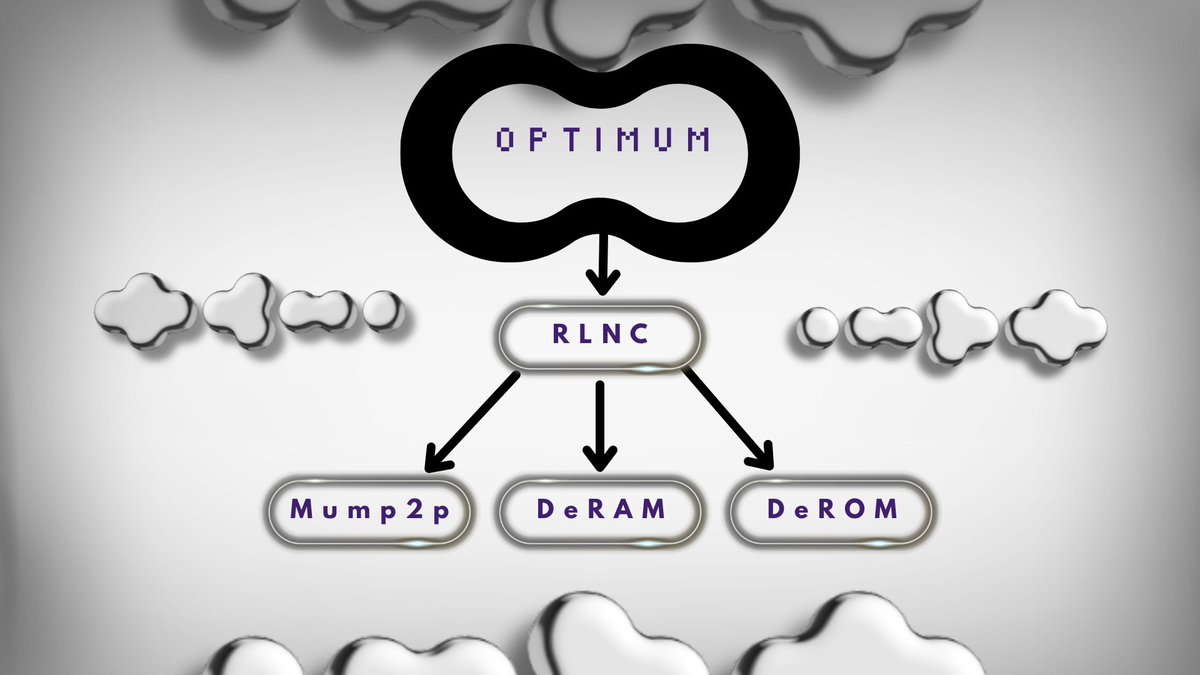
Web3 Built Fast, The Network Layer Didn't. Chains got faster. Consensus got smarter. But the protocol layer that moves data between nodes? Still running on Web2 era assumptions and nobody's talking about it. Every validator, dApp, and rollup relies on gossip to propagate blocks, blobs, and transactions. Traditional gossip floods the network with redundant data. Under contention, latency spikes. Validators miss slots. Users feel the lag. @get_optimum is the fastest decentralized internet protocol for Web3. Its core is Random Linear Network Coding (RLNC) developed under Professor Muriel Medard at MIT applied directly to gossip propagation. Instead of forwarding identical data chunks, nodes transmit coded combinations. Any sufficient subset reconstructs the original, regardless of which fragments arrive. Three Products One Infrastructure Layer. 🔹mump2p live today. RLNC accelerated pub/sub, dropin compatible with libp2p/gossipsub. Measurable latency gains, no stack rebuild required. 🔹DeRAMcoming next. Atomic read write shared memory across distributed nodes. Real time coordination without centralized infrastructure. 🔹DeROM optimized for broadcast and caching workloads. High throughput, read heavy, append oriented. Anyone can run a Flexnode alongside their existing setup no migration, no trade off and contribute to the network immediately. @get_optimum isn't competing with any chain. It's making all of them better, at the layer most people never think about. @blockchainjeff @shariaronchain
AshiQ tweet media
English
8
0
12
104
Monk Tanvir🌶️
Monk Tanvir🌶️@jamestanvirqaz·
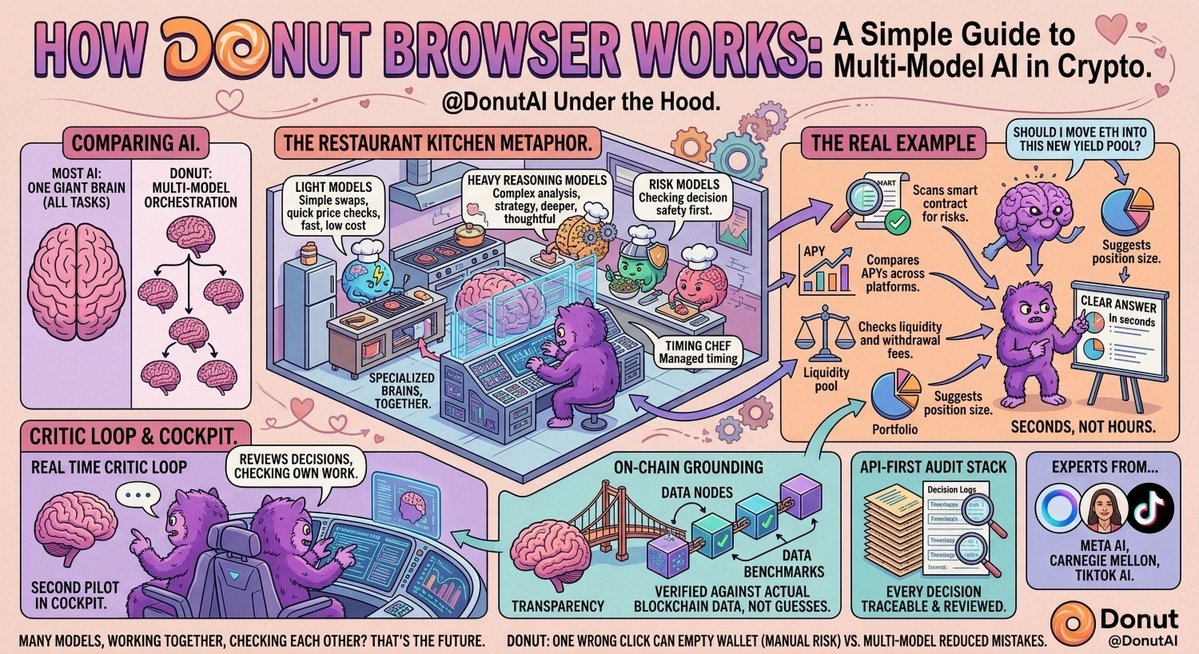
How Donut Browser Works: A Simple Guide to Multi-Model AI in Crypto I used to think all AI was the same. One brain. One model. One way of thinking. Then I learned about multi model AI and suddenly a lot of things clicked into place. This is exactly how @DonutAI Browser works under the hood. Let me explain it simply What is multi-model AI? Instead of one giant brain trying to do everything, multi-model AI uses many smaller specialized brains. Each one does one thing really well. Think of it like a restaurant kitchen. One chef grills meat. One makes salads. One handles desserts. One manages the timing. They work together. Nobody does everything. Most AI tools use one model One model answers questions. One model analyzes data. One model writes code. But crypto is too complex for that. You need different thinking for different tasks. A simple swap doesn't need heavy reasoning. A complex yield strategy does. Here's how Donut does it differently Donut uses what they call a multi model orchestration system. Fancy words. Simple meaning. Different AI models handle different jobs and a "conductor" coordinates them. Let me break down the models: Light models → for simple swaps and quick price checks Fast. Efficient. Low cost. Heavy reasoning models → for complex analysis and strategy Slower. Deeper. More thoughtful. Risk models → for checking every decision before execution Safety first. Always. Real example time You ask Donut: "Should I move my ETH into this new yield pool?" Here's what happens inside: One model scans the pool's smart contract for risks. Another model compares APYs across similar platforms. Another model checks liquidity and withdrawal fees. Another model looks at your portfolio and suggests position size. A final model orchestrates all of this and presents you with a clear answer. Seconds, Not hours. But here's what impressed me most Donut has something called a "real time critic loop." Translation: the AI checks its own work. Before executing anything, a separate model reviews the decision. Did we miss something? Is this risk acceptable? Should we double check? It's like having a second pilot in the cockpit. And then there's on chain grounding Fancy term. Simple idea. Every AI recommendation is verified against actual blockchain data. Not guesses. Not predictions. Real, verifiable information. Donut publishes benchmarks so you can see how well the models perform. Transparency. Not black boxes. One model makes mistakes. Many models, checking each other, make fewer mistakes. In crypto where one wrong click can empty your wallet that difference matters. Donut's architecture includes an API first audit stack. Meaning every AI decision can be traced, reviewed, and verified. And the team behind it? Experts from Meta AI, Carnegie Mellon, and TikTok AI. What excites me here is the honesty Most AI tools pretend to be magic. Donut shows you how it works. Multiple models. Critic loops. On chain verification. That transparency in a world full of black boxes feels refreshing. Multi model AI isn't just for crypto browsers. It's the direction all serious AI is heading. One model to rule them all? That's dying. Many models, working together, checking each other? That's the future. Donut is just one of the first to build this way for crypto. Still early. Still experimental. But the logic is sound. Would you trust a system where one AI makes all the decisions? Or do you prefer multiple models, checking each other, before acting? I know which one I'd choose.
Monk Tanvir🌶️ tweet media
English
5
0
6
28
S H A HE D (privacy szn)
S H A HE D (privacy szn)@shahed05miazee·
Blockchain throughput is often measured by how many transactions a system can process. But processing transactions is only one part of the equation. > For high throughput to work in practice, data must also move efficiently across the network. As blocks or rollup batches are created, they need to be shared with validators, nodes, and data availability layers. If data propagation is slow or inefficient, it creates delays across the system. Even if execution is fast, the network can struggle to keep up. In traditional peer to peer systems, data is broadcast repeatedly. The same dataset is sent across multiple paths, leading to: • redundant transmissions • increased bandwidth usage • slower propagation under load This creates pressure on the networking layer. > Throughput is not just limited by computation it is limited by how fast data can spread. This is where optimized networking becomes critical. Optimum focuses on improving the data propagation layer using network coding. Instead of sending full datasets repeatedly, data is encoded into fragments and distributed across multiple paths. Nodes exchange these fragments and reconstruct the original data once enough pieces are received. > This allows the network to move data more efficiently without overwhelming bandwidth. As a result: • less duplication across the network • faster propagation of blocks and batches • better synchronization between nodes • improved system responsiveness In high demand environments, this directly impacts throughput. > Faster data propagation means the network can process and validate more transactions in less time. By optimizing how data moves, Optimum helps unlock higher effective throughput across blockchain systems.
S H A HE D (privacy szn) tweet media
English
23
0
33
217
𝐃𝐎𝐍
𝐃𝐎𝐍@md_don_Morph·
The Future of Safety is HUMANOID AI Introducing @StrikeRobot_ai AI building the next-gen Embodied Intelligence Platform for real-world danger zones. Nuclear plants High-voltage facilities Radiation environments No humans. No risk. Just intelligent machines. SafeGuard ASF Autonomous Security Fleet → Patrols & monitors high-risk zones → Detects anomalies (heat, smoke, leaks, sound) → Uses AI + sensors for real-time decisions → Works autonomously or via teleoperation Result? ✅ Predictive hazard prevention ✅ Millisecond response time ✅ Safer operations ✅ Scalable AI-driven workforce And this is just the beginning… Coming next: Robotics RL Training Platform → Train humanoid robots in custom environments → Cloud-based, scalable, enterprise-ready From security → healthcare → logistics → emergency response This tech will reshape entire industries. We’re entering the era of Physical AI BPO Would you trust robots in dangerous environments?
English
5
2
118
267
𝐄𝐓𝐇𝐀𝐍
𝐄𝐓𝐇𝐀𝐍@Ethan_broz·
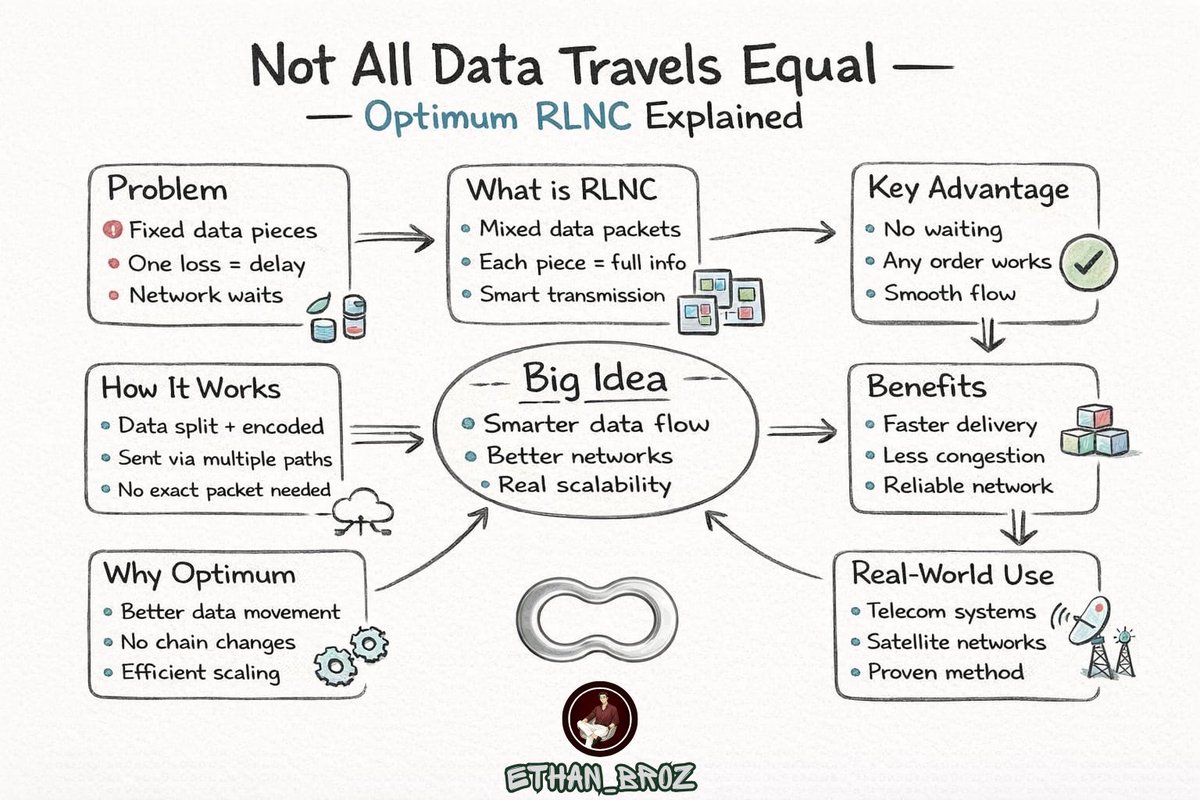
Not All Data Travels Equal-Optimum RLNC Explained in Simple Way. @get_optimum What is the problem? In Web3, we always talk about speed - faster chains, lower fees. But the real issue is how data moves in the network. Right now, data is sent in fixed pieces. If one piece is lost or delayed, everything slows down because the system has to wait for that exact piece again. What is RLNC? RLNC (Random Linear Network Coding) is a smarter way to send data. Instead of sending normal pieces it mixes the data into coded pieces. Each piece is not separate -it contains information about the whole data. How does RLNC work? Data is broken and mixed into small coded parts. These parts are sent through different paths in the network. The receiver does not need every exact piece back. It only needs enough pieces to rebuild the original data. Even if some parts are missing, the data can still be recovered. Why is this better? Because the system does not wait for one missing piece. Data can arrive in any order, and the network keeps working smoothly without delays. • No need to wait for missing data • Data can be rebuilt from partial pieces • Faster and smoother data delivery • Less delay and less congestion Where is this used? This method is already used in telecom, satellites, and big networks. It is tested and proven in real-world systems. Why is Optimum using this? Optimum wants to fix how data moves in Web3. By using RLNC, they make networks more efficient, faster, and more reliable without changing the blockchain itself. What is the big idea? Optimum is not just trying to make things faster. It is trying to make data move in a smarter way. When data moves better, the whole system becomes better. That is how real scaling happens.
𝐄𝐓𝐇𝐀𝐍 tweet media
𝐄𝐓𝐇𝐀𝐍@Ethan_broz

𝐇𝐨𝐰 𝐦𝐮𝐦𝐏𝟐𝐏 𝐖𝐨𝐫𝐤𝐬: 𝐓𝐡𝐞 𝐂𝐨𝐫𝐞 𝐄𝐧𝐠𝐢𝐧𝐞 𝐁𝐞𝐡𝐢𝐧𝐝 𝐎𝐩𝐭𝐢𝐦𝐮𝐦 @get_optimum Most people understand that Optimum is trying to improve how data works in Web3, but the real value comes from how it actually does it. That’s where mumP2P comes in - the system designed to completely rethink how data moves between nodes. Instead of sending full data directly from one node to another (which is slow and inefficient) mumP2P uses a smarter approach. It breaks data into smaller coded pieces, then sends those pieces across multiple paths in the network. These pieces are mixed and distributed in a way that allows the receiving node to quickly reconstruct the original data, even if some parts are delayed or missing. This system is powered by network coding (RLNC), where nodes don’t just forward data - they actively optimize how it moves. In traditional networks, data follows fixed paths and if one path slows down, everything gets delayed. But with mumP2P, data flows through multiple routes at once,removing bottlenecks and making the network more resilient. What makes mumP2P different? • Breaks data into smaller coded pieces • Sends data through multiple paths at once • Recovers data even if some parts are missing • Removes single points of delay in the network Because of this approach, the entire system becomes more efficient: • Faster and more reliable data delivery • Lower latency across nodes • Better block propagation • Improved synchronization between validators mumP2P is not just about making things faster - it’s about making data movement smarter. By fixing how data travels at the core level, Optimum is building a stronger foundation for Web3, where networks can scale more efficiently without changing their base structure.

English
9
0
12
92
Nusratsathi
Nusratsathi@mirajsathi·
The Bottleneck is Data, Not Just Consensus ​Most blockchains are trying to run a marathon while breathing through a straw. They use legacy data propagation methods that are linear, fragile, and prone to choking when the market heats up. ​Enter Random Linear Network Coding (RLNC). ​@get_optimum isn't just tweaking the dial they are rewriting the transmission protocol for the decentralized age. Here is why RLNC changes everything: ​1. Beyond the Next Block Wait: ​Standard chains send data in rigid chunks. If one piece drops, the whole line stops. RLNC allows data to be sent as a mathematical stream. It doesn’t matter which packets arrive first the network reconstructs the truth instantly. ​2. Built for the Pressure Cooker: ​When TVL spikes or a RWA (Real World Asset) rebalances, traditional data layers brittle. Optimum’s RLNC-powered routing ensures that as the load increases, the network actually gets smarter about how it moves information. ​3. The Internet-Speed UX: ​We’ve promised instant global settlement for years, but the latency often says otherwise. By optimizing the data layer: •​Stablecoins move with the velocity of cash. •​RWAs reflect real world market shifts in milliseconds, not minutes. •​DeFi protocols maintain solvency even during extreme volatility. •​The Verdict: If we want a world where blockchain is invisible and seamless, we have to fix how data travels. Optimum is building the nervous system that Web3 has been missing. ​The infrastructure isn't coming soon it's being coded into reality right now. ​@shariaronchain @cryptooflashh
Nusratsathi tweet media
English
7
0
17
194
Roronao Zoro
Roronao Zoro@KhurGaja·
Speed isn’t just a metric its an advantage @get_optimum is pushing Ethereum forward by cutting latency at its core Extra rewards potential for validators & stakers When latency drops confidence rise This is how Ethereum gets stronger one millisecond at a time more reliable
Roronao Zoro tweet media
English
9
0
12
54
Pinku Neel
Pinku Neel@pinku_neel71449·
Distributed systems are simple in theory: Computers sharing data. But the way they do it? Not so efficient. Most systems keep repeating the same data across the network. That’s wasted bandwidth. @get_optimum changes that with network coding. Instead of repeating data: ⚪ it sends encoded chunks ⚪ every chunk is useful ⚪ nodes only need enough pieces No need to wait for exact data. Result? Faster propagation Less duplication Smarter communication This is how modern networks should work. @blockchainjeff @shariaronchain
Pinku Neel tweet media
Pinku Neel@pinku_neel71449

I Submitted last night Optimum Sticker Quest form. This one’s all about creativity memes, emojis, characters, even animations. If your design stands out, it could become an official Optimum sticker on Discord + you might get shoutouts and merch. Rules: • PNG/APNG • 320×320 • Under 512KB Deadline: April 17 (Today last chance to submit) Focus on quality > quantity. One great sticker beats many average ones. Good chance to get creative and actually be part of @get_optimum. Let’s see who cooks the best. @blockchainjeff @shariaronchain

English
13
0
17
107
Danial
Danial@DanialC32129·
Most “Fast” Blockchain Projects Are Just Marketing Many blockchain projects say they are the fastest, most scalable, and have the lowest latency. But most of these claims are based on tests done in perfect lab conditions, which are very different from real-world situations. This is why @get_optimum feels different and more reliable. Its performance is not just based on marketing or simple benchmarks. Instead, it comes from a strong mathematical model developed at MIT. This model proves that its system is optimal. When Optimum says its network is the best for speed and data sharing, even in difficult conditions like network loss or heavy traffic, it is not just a claim. There is a real mathematical proof behind it. The Web3 community should be more careful when believing performance claims. People should ask for real proof, not just charts and numbers. Optimum shows a better standard for how blockchain systems should be built. @get_optimum @blockchainjeff
Danial tweet media
English
19
0
24
138
Sakib49💥
Sakib49💥@shahriyasakib29·
I am contributing on @PrismaXai since nov 2025. Basically I am doing so many activities there.. ★ I am teleoping in prismaX web. ★ Regular Grinding on their Discord. ★ Write content about @PrismaXai. ★ Joined various event on DC like content clinic, trivia etc. This is my prismax id card which is made for me @0xAshiqX who is very decent person & contributing on prismaX so hardly. We believe on prismaX... @PrismaXai | app.prismax.ai @shayebackus @vivianrobotics
Sakib49💥 tweet media
English
10
0
17
254
Masum billah
Masum billah@AdilMahmud82917·
Just like a smart eagle builds the future in its own world,@RAFA_AI offers you a new AI-powered experience. 💻 Here ideas are not just thoughts—they become reality! 👉 The future is being created now… Are you ready to move forward with @RAFA_AI
Masum billah tweet media
English
6
0
8
59
Himu ¹⁰
Himu ¹⁰@himuK0105·
Heartfelt congratulations to the PrismaX family for reaching 50,000 members! 🎊 Basically @PrismaXai is a powerful teleoperation platform, where everyone can Teleoperate remotely from home, controlling devices from a distance. I’ve created a special mosaic collage, where I gathered photos of our community’s most core contributors to create the logo of PrismaX . Thank you to everyone who is part of this achievement, and together, our future will be even brighter! Also, I invite all of you who haven’t joined our server yet to come and be part of PrismaX Join discord.gg/prismaxai
Himu ¹⁰ tweet media
English
17
0
42
606
Nusratsathi
Nusratsathi@mirajsathi·
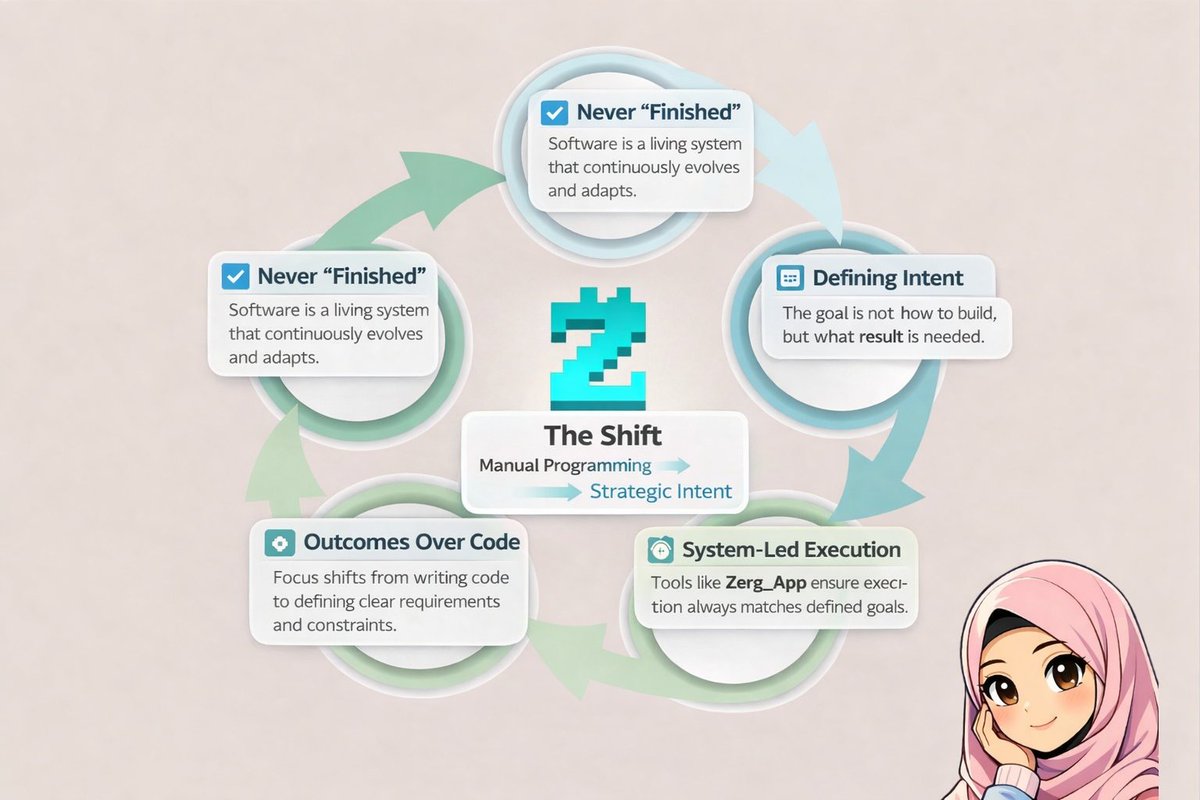
The Essence of Continuous Software •​Never Finished: Software is no longer a static product but a living system that constantly adapts and evolves. @Zerg_App •​Outcomes over Code: Developers stop focusing on writing lines of code and start defining specific requirements and constraints. •​Defining Intent: The goal shifts from how to build to what result is needed. •​Autonomous Alignment: Tools like @Zerg_App ensure the implementation always matches those defined goals. •​System-Led Execution: Humans define the destination; the AI handles the journey and the execution. ​The Shift: From Manual Programming to Strategic Intent.
Nusratsathi tweet media
English
2
0
4
74