Sabitlenmiş Tweet
Mittul Kalawadia
313 posts
Mittul Kalawadia retweetledi

An investor's biggest risk to his welath creation is his own behavior when his portfolio goes through a downcycle. A look at data suggests that even the most sophisticated investors panic and sell in downturns and top up and chase returns during up turns. Basic fundamental investing requires patience and discipline. Simple but truly rare traits. No wonder only 1% of the world own 50% of world's assets.
Getting rich is not a democratic right; voting is.
English
Mittul Kalawadia retweetledi

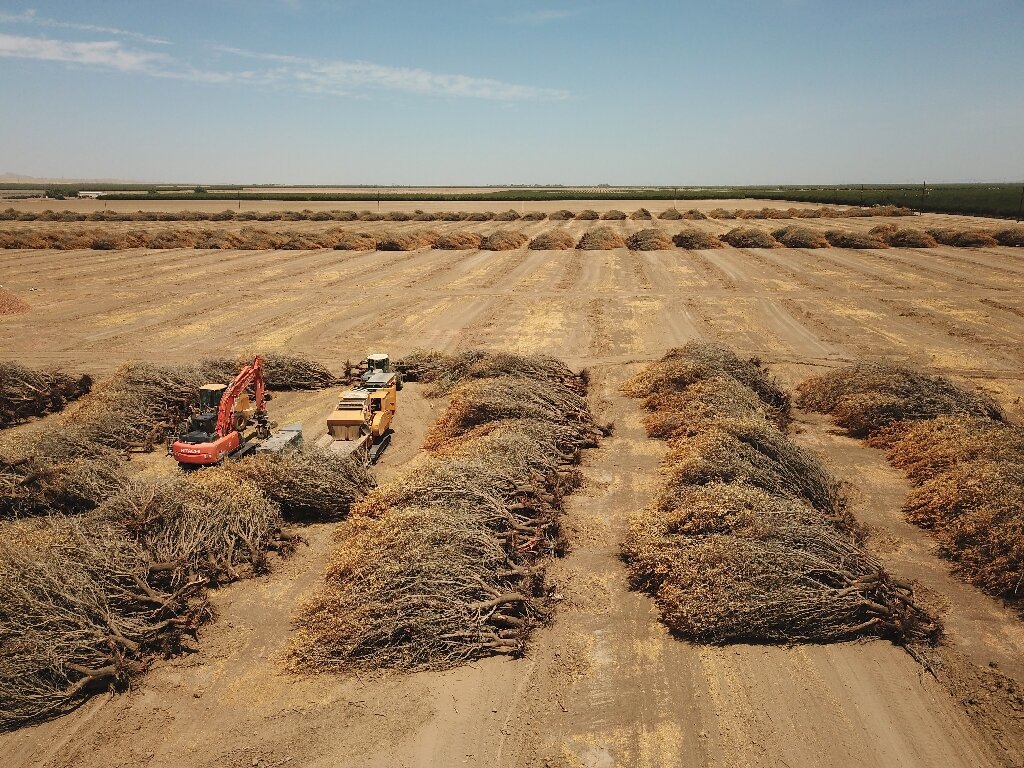
California's Central Valley produces 80% of the world's almonds. Each almond requires 3.2 gallons of actual irrigation water to grow. Not rainfall. Actual tap water pumped from aquifers.
One gallon of almond milk requires 162 gallons of irrigation water. Compare that to dairy milk at 8 gallons of tap water per gallon, with the rest being rainfall that falls on pasture anyway.
But here's where it gets properly grim. Almonds bloom for exactly three weeks in February. During those three weeks, California needs every pollinating bee in North America transported to the Central Valley or the crop fails entirely.
Commercial beekeepers truck in 31 billion honeybees. That's two-thirds of America's entire managed bee population, all concentrated in one valley for three weeks. The bees are packed into trucks, driven across the country, dumped into almond groves drenched in pesticides, worked to exhaustion, then packed up and shipped to the next crop.
The mortality rate is catastrophic. Beekeepers report losing 30 to 50% of their hives annually. That's billions of bees dead. Not from natural causes. From being used as disposable pollination machines for your almond milk.
The pesticides don't help. Almond groves are sprayed with neonicotinoids which scramble bee navigation systems, fungicides which weaken their immune systems, and herbicides which eliminate the wildflowers they'd normally forage on between almond blooms.
Meanwhile the aquifer depletion is permanent. The Central Valley has sunk 28 feet in some areas from groundwater extraction. That water took 10,000 years to accumulate. It's being drained in decades for almond milk.
Your vegan latte killed more bees and used more water than a year's worth of dairy milk. But it's got "plant-based" on the label so you're definitely saving the planet.

English
Mittul Kalawadia retweetledi

Long hours in the OT shouldn’t mean battling heat, sweat, and fatigue. Beat the heat in the OT. Smart Scrubs by Thermaissance dry 66% faster and are nearly 2x more breathable—proven in ISO-certified labs for comfort under PPE.
#antimicrobialscrubs #smartscrubs #thermaissancecare
GIF
English
Mittul Kalawadia retweetledi

Last one on this topic, and I have been holding this in myself for a while.
For centuries, class divides kept the labor of the poor invisible to the rich. Factory workers toiled behind walls, farmers in distant fields, domestic help in backrooms. The wealthy consumed the fruits of that labor without ever seeing the faces or the fatigue behind it. No direct encounter, no personal guilt.
The gig economy shattered that invisibility, at unprecedented scale.
Suddenly, the poor aren't hidden away. They're at your doorstep: the delivery partner handing over your ₹1000+ biryani, late-night groceries, or quick-commerce essentials. You see them in the rain, heat, traffic, often on borrowed bikes, working 8–10 hours for earnings that give them sustenance. You see their exhaustion, their polite smile masking frustration with life in general.
This is the first time in history at this scale that the working class and consuming class interact face-to-face, transaction after transaction. And that discomfort with our own selves is why we are uncomfortable about the gig economy. We want these people to look our part, so that the guilt we feel while taking orders from them feels less.
We aren't just debating economics. We are confronting guilt. That ₹800 order might equal their entire day's earnings after fuel, bike rent, and app cuts. We tip awkwardly, or avoid eye contact, because the inequality is no longer abstract. It's personal.
Pre-gig era, the rich could enjoy luxury without moral discomfort. Labor was out of sight. Now, every doorbell ring is a reminder of systemic inequality. That's why debates explode. It's not just policy. It's emotional reckoning. Some defend the system (“they choose it”), others demand change (“this isn't progress, its exploitation”).
And here’s the uncomfortable twist: the unsaid ask of clumsy ‘solutions’ isn’t dignity. It is about returning to invisibility.
Ban gig work and you don’t solve inequality. You remove livelihoods. These jobs don’t magically reappear as formal, protected employment the next day. They disappear, or they get pushed back into the informal economy where there are even fewer protections and even less accountability. Over-regulate it until the model breaks, and you achieve the same outcome through paperwork instead of slogans: the work evaporates, prices rise, demand collapses, and the people we claim to protect are the first to lose income.
And then what happens?
The rich get their old comfort back. Convenience returns without faces. Guilt dissolves. We go back to clean abstractions and moral posturing from a distance. The poor don’t become safer, they become invisible again: back in cash economies, back in backrooms, back in shadows where regulation rarely reaches and dignity isn’t even debated.
The gig economy just exposed the reality of inequality to the people who previously had the luxury of not seeing it. The doorbell is not the problem. The question is what we do after opening the door.
Visibility is the price of progress. We can either use this discomfort to build something better (which we keep doing continuously as delivery partners are our backbone), or we can ban and over-regulate our way back into ignorance. One of those choices improves lives. The other simply helps the consuming class feel virtuous in the dark.
English
Mittul Kalawadia retweetledi

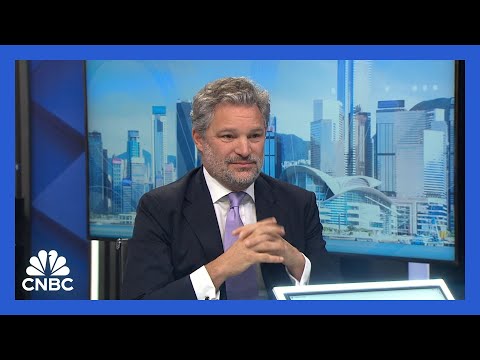
2026 Reset? Louis-Vincent Gave on ‘stupidly cheap’ Asian FX, 'damaged' c... youtu.be/u4XoK7PbeCY?si… via @YouTube

YouTube
English
Mittul Kalawadia retweetledi

I recently revisited "100 to 1 in the Stock Market" by Thomas Phelps, a book written in the 1970s, to reflect on its key insights in today's context in 2025.
Two Big Points: In my view, the author conveys two key thoughts:
First: Seek investments that hold the potential for substantial long-term returns, for example, 50-100x returns. This is possible to achieve only if one believes in the possibility and directs efforts toward it.
Second: Develop the patience to hold such investments for extended periods—10, 20, or even 30 years.
Relevance in 2025: In today's context, the idea of adopting such long time frames—10, 20, or even 30 years—may seem stupid/unlikely, especially amid rapid changes. In addition, the current environment presents challenges like high overall starting valuations and intensified competition from a growing number of investors. While opportunities for outsized returns will surely continue to exist, they may be harder to uncover. To succeed in spotting such outsized outcomes, I think it is essential to cultivate the behavioral attitudes emphasized in the book; otherwise, the chances of realizing such gains diminish sharply.
English
Mittul Kalawadia retweetledi

Some time ago, saw an interview of Saurabh Mukherjea. I don't remember the exact discussion, but this is the gist:
Sankaran Naren one day called Saurabh and advised him not to ignore valuations in pursuit of quality. Anything is good at one price and bad at another price. Valuations ultimately prevails.
Saurabh gratefully recalled how nice of Sankaran Naren to initiate the call and advise him.
My respect for Sankaran Naren went up further. It needs a great heart to call a professional competitor and try to save him from wealth destruction.
In a world, where only we want to make money and other investors to lose, such a behaviour is rarest of rarity.
English

@BrianRoemmele Thanks. In general how much is the productivity gain in training and in usage of AI models due to this. Does this lead to 40-50% cost savings.
Is this scale at industrial scale ?
English
Mittul Kalawadia retweetledi

The stock market is a diabolical doctor that injects us with despair, hubris, or FOMO - sometimes all three at the same time.
When we are injected with despair, it feels like you can do no right. Every decision you make is the wrong one. The stocks you buy go down. The stocks you sell go up. The stocks you hold go nowhere.
When we are injected with hubris, it feels like you can do no wrong. The Lord blesses you for 6-12 months with a crystal ball as a brain. You can see the future. Every decision you make is the right one.
At all times we are injected with FOMO. We watch stocks we don't own outperform what we own. It makes us do stupid things.
No one is spared from the diabolical doctor, not even the GOATs (Greatest of all Time).
microcapclub.com/fear-of-missin…
English
Mittul Kalawadia retweetledi

What could be today’s equivalent of the 90s steel sector? In cyclicals, watch 2 things:
1️⃣ Supply: it floods in at peak profits & kills the industry for years.
2️⃣ Balance sheet strength: who survives the next downturn.
Demand at peaks = useless. Track demand at bottoms, for a possible turnaround, when supply vanishes.
#investing
Niteen S Dharmawat, CFA@niteen_india
This thread reminds me 90s when one such huge upside in steel came. A young family friend with a good family background decided to set up a steel plant. It was such times that attracts everyone investors and entrepreneurs both alike. The start was great and end very sad. 1/n
English
Mittul Kalawadia retweetledi

@mittulk, Senior Fund Manager @ICICIPruMF explains how the fund house strikes the right balance between dividend yields and growth @ETMarkets @nikkhill @ambakhshi
#DividendYieldEquityFund
#mutualfunds
m.economictimes.com/markets/expert…
English

The fastest way to waste a decade is to optimize for goals you never chose.
Every week, I meet operators smashing revenue targets yet privately admitting they have no personal North Star.
That mis-alignment bleeds into hiring, roadmap…even family time.
My fix is a one-page Dream Future State prompt.
15 mins with it drags your ACTUAL ambitions into daylight.
Comment “🚀” and I’ll DM it.
English
Mittul Kalawadia retweetledi

New Article
How Do You Achieve a 30% CAGR over 27 years in the Oil and Gas Industry?
microcapclub.com/how-do-you-ach…
English
Mittul Kalawadia retweetledi

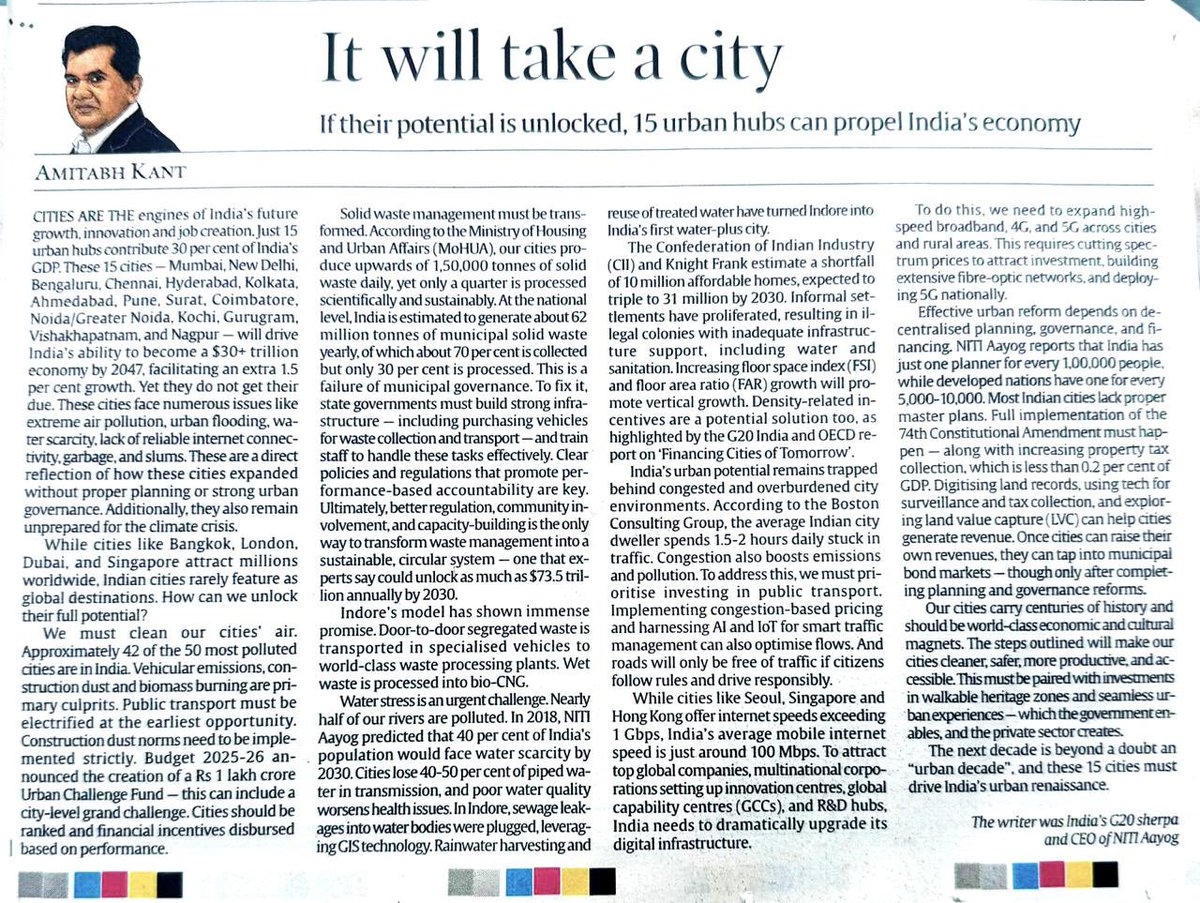
Just 15 Indian cities contribute 30% of India’s GDP. These urban hubs alone– will drive India’s ability to become a 30 + trillion economy by 2047, facilitating an extra 1.5% of growth.
How can we unlock their full potential and position them on the world map?
Transforming these cities is an economic necessity. They will shape India’s growth, global image and drive India’s future prosperity. Without making them the finest cities in the world India will never become a 30+ trillion $ economy.
My Op-ed in today’s IE .
amitabhkant.co.in/upload/article…

English
Mittul Kalawadia retweetledi

This week I wrote a new article on how to ride small stocks.
The best time to buy great microcaps is before discovery.
Get on the ride before the first big hill. When you buy before the initial discovery move it’s just you and few others that are still living in their parent’s basement. The others probably don’t even understand what they own.
The first big discovery move in a microcap is always the easiest. Why? No one owns it to sell it. There is the least amount of friction. Just a few people with low expectations.
The catalyst could be a large contract win or series of small wins, legislation change, competitor leaving the market, or any number of reasons that create a quick 20-100% growth spurt in the business over 2-6 quarters.
The first breakout quarter is like a siren going off to the thousands of retail and small institutions looking for such things.
The revenue growth flows through the income statement with relative ease producing operating leverage on the bottom line.
The crowd gets excited. The stock moves up 100-500% in 12 months. The issue with discovery moves is expectations become too high.
Everyone projects out 50% annual revenue growth and 200% net income growth for the next 10 years. Smart retail buys first, small institutions second, and finally dumb retail pay the highest price at the top.
The stock trades for perfection. You've reached the height of the discovery move.
microcapclub.com/small-stocks-a…
English
Mittul Kalawadia retweetledi

When you are sitting on a large cash position it's easy to become too bearish. Too large a cash position clouds your judgement. You wake up hoping the markets crash, and your negativity paralyzes your common sense. Instead of timing a bottom you should be slowly adding to the businesses you love.
microcapclub.com/be-superman/
English