

anunneymouse
1.4K posts

Firepower Friday!
The battleship USS Iowa (BB-61) fires a salvo from her forward turrets during a gunnery exercise on 23 April 1987.
I had recieved a question about the number of 16" (406mm) projectiles that were available to the Iowa class following their reactivation.
The United States had a sizable number of 16" shells in storage. An inventory taken at the start of the 1980s showed that 21,088 16" shells remained in storage. Out of those shells, 3,200 were of the Armor-Piercing type, 2,300 were practice shells, and15,450 were High-Capacity (High-explosive).
However, at the time, about 62% of these shells were considered to be in good enough shape that they could be brought into service quickly. The remainder would need more substantial work to make them usable. In addition, there were enough components in storage to assemble another 5,050 shells if needed.

English
@radioactivered There’s a really good book called The Radium Girls about the women who painted the dials and hands in pilots watches with radium paint during WW2. The health problems they suffered as a result and their fight for compensation. I got it on Kindle. Worth a read.
English

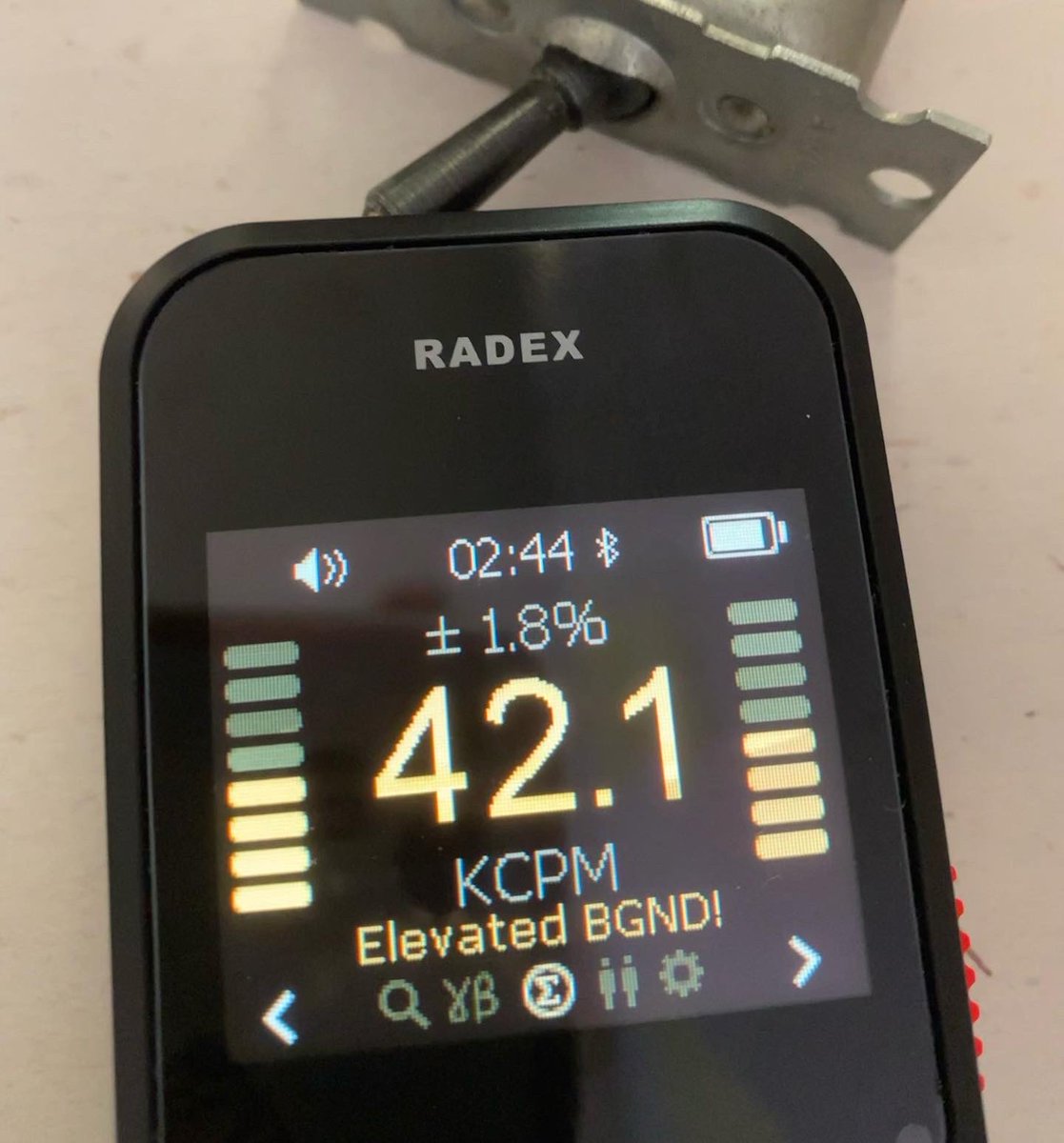
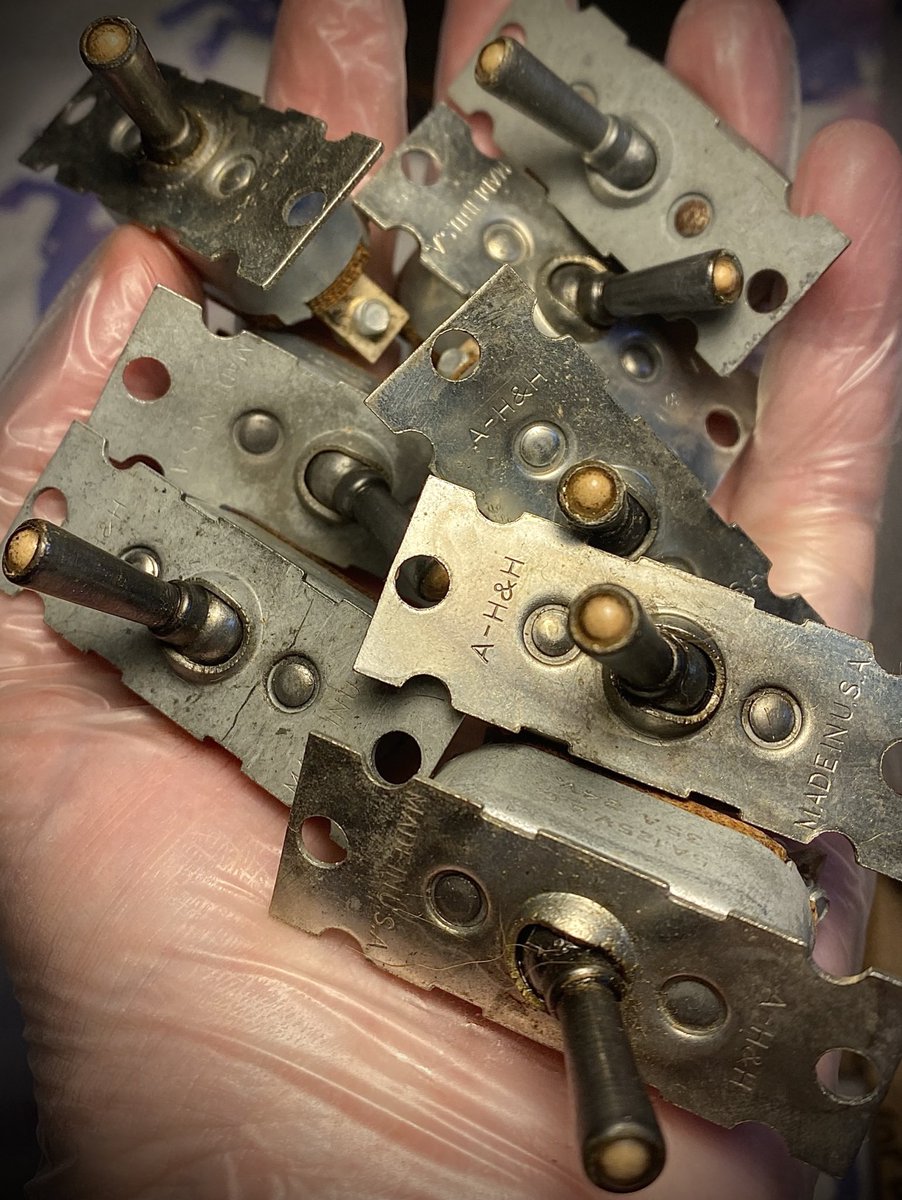
During World War II, many military control panels used radioluminescent toggle switches so operators could locate and operate controls in darkness without turning on lights that might reveal their position. These switches feature a pivoting lever that opens or closes an electrical circuit. The tip of the lever contained a small capsule of luminous material made from Radium-226 mixed with a phosphor such as Zinc sulfide. Radium-226 (part of the Uranium-238 decay chain) primarily emits alpha particles, but its decay produces beta and gamma radiation as well.
Over decades, the phosphor degrades from radiation damage, so surviving switches no longer glow on their own, even though the radium-226 inside remains radioactive. These switches were widely used in aircraft instrument panels, military radios, naval equipment, and armored vehicles, allowing crews to operate equipment quickly and safely at night or in low-light conditions.
These surviving examples are marked H&H (Hubbell & Hubbell/Cutler-Hammer) and they are an amazing example of industrial and atomic history. ☢️
English
@NicoleOnRacing I actually like these regs so far. Good battles, more lead changes etc. Strategy is now lap by lap, in the drivers hands. Todays sprint was exciting from start to finish. Watched F1 since 1985 and it’s as good as it’s ever been in my humble opinion
English

anunneymouse retweetledi


@airmainengineer Used to get this on 747 ADI’s when I worked in a BA workshop. A capacitor used to fail in the control circuit. Often wondered what the pilots thought when they were halfway across the Atlantic and this happened😀
English

Can you guess what’s happening here?
English


Is this a reasonable way to drive? Do you think she should be reported?

English

One was; United Flight 272 had a non-contained failure of that 3rd engine in the tail that took out the rudder, elevator and trim tabs just as I mentioned could happen if the containment ‘structure’ failed. This was very much an engine failure compounded by a structural failure.

anunneymouse@moopamike
@DannerFoundati1 @airmainengineer Yeah, but no VC10 was ever lost due to structural failure. Afaik the only one lost was blown up on the ground by terrorists.
English
@MikeCowgill @airmainengineer And until very recently was the faster subsonic passenger jet ever.
English

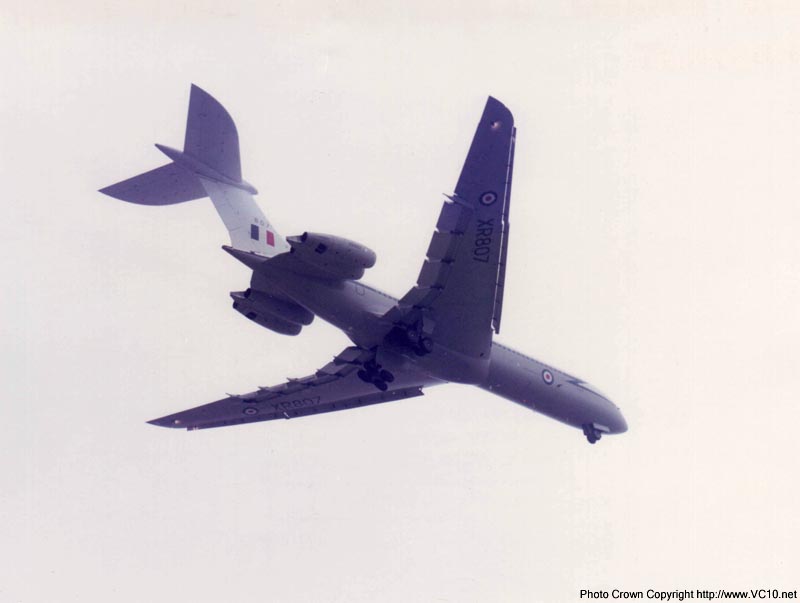
@airmainengineer The Vickers VC10 was designed for hot and high short runways in Africa etc, the engine configuration made it remarkably quiet and smooth inside. Passengers loved it. Popular as a military refuelling aircraft too.
English
In aircraft with rear engine layouts**, the engines are mounted toward the back of the fuselage or on the tail. Engineers explored multiple configurations — such as twin engines on each side, engines near the base of the vertical stabilizer, or embedded within the fuselage. These layouts aim to improve aerodynamics, reduce cabin noise, and optimize aircraft balance and safety.
🎯 Key Focus Points**
* Design Goals**: Reduced drag, better fuel efficiency, and safer engine-out performance.
* Noise Reduction**: Rear engine placement lowers noise levels in the passenger cabin.
* Clean Wings**: Without engines under wings, designers gain aerodynamic and structural advantages.
* Examples**: Aircraft like the Dassault Falcon 7X, McDonnell Douglas DC-9, and experimental models have used rear-engine layouts.
💡 Did You Know?**
Some business jets and older regional airliners still use rear engine layouts because they work well on short runways and reduce ground debris ingestion.
🤯 Interesting Fact**
One rear-engine concept placed four small engines** at the back to improve redundancy and control in case of engine failure — a unique approach to balancing safety and performance.
📸 by fb/aviation lovers

English
@DannerFoundati1 @airmainengineer Yeah, but no VC10 was ever lost due to structural failure. Afaik the only one lost was blown up on the ground by terrorists.
English
There are a lot of other factors to consider from a stress standpoint when yiu stick an engine back there. A) it weighs a LOT. Means I have to putbthe wings further forward, little other choice. If that thing starts shedding parts-pieces-parts, we will be decidedly nose heavy…and that will be a problem. Now I need a lot of elevator to compensate and some big flaps or can only land at Space Shuttle runways in such emergencies. Better have ballistic containment so if they do fly apart the weight is contained…but what is those parts are afire?
Can you tell I’m not a fan?
English
@airmainengineer Hammer Siddely Trident 3 b had 3 normal engines and one booster for hot/high short runway takeoffs. Afaik it’s the only four engined three engined airliner😂
English
@airmainengineer As a young apprentice (BA), I sat at that panel during a single engine run after replacement.The fuel flow gauge was a blur as it ran!
English

English

@James1940 I just wish I could hear one. 24 cylinder, high revving Napier Sabre.
Must have been deafening!
English

anunneymouse retweetledi

anunneymouse retweetledi
Well well Kelloggs have arrived at Ness Point, the most easterly point of uk.
#kelloggs
#cornflakes
#lowestoft


English
anunneymouse retweetledi

anunneymouse retweetledi


@aufzucht2000_j @SeanHarris999 10 minutes running, one 20 minute walk, 23 and a half hours lazing about! Absolutely great house dogs. We were privileged to live with ours for ten years. Still miss her.
English

@SeanHarris999 They are most amazing furbabies, many people need to understand they DONT NEED lots of exercise, I walk & zoomies in garden & they are happy couch potatoes 😛
English

Early ‘24, my wife & I rescued an ex-racing Greyhound
We think she was retired/abandoned due to health (& the expense that came w/ it)
After a tough year, she’s doing amazing & has just had her first Christmas (at the age of 6)
I’d like to share a photo of THE happiest dog
/1

English