
Mo

8.6K posts

Mo banner
Mo

Mo

@mozesobuye

🇰🇪

Nairobi Katılım Ağustos 2011
364 Takip Edilen130 Takipçiler
Mo retweetledi
Moe
Moe@moneyacademyKE·
Kenya is becoming less attractive to investors due to high electricity costs, frequent tax changes and bureaucracy. Economists say countries like Rwanda, Tanzania, Ethiopia and Egypt are attracting more investment with cheaper power, tax incentives and simpler regulations.
English
77
977
3.3K
55.8K
Mo retweetledi
Moe
Moe@moneyacademyKE·
ByteDance, the parent company of TikTok, will launch an AI-powered creator platform called Tazama in Kenya. The platform will help Kenyan creators use AI tools, reach global audiences and earn more from their content.
English
13
75
450
13.6K
Mo retweetledi
Sizwe SikaMusi
Sizwe SikaMusi@SizweLo·
People defend capitalism because they confuse it with commerce. They believe “capitalism” is when people start businesses and sell things. If people understood that the thing they call capitalism and love so much is actually just commerce and that it’s not the same thing as capitalism, they would feel very different. This is because a local baker selling bread, a mechanic fixing cars, or an artisan selling wares on a digital storefront is a sign of commerce in a market economy, which is simply a mechanism for exchanging goods and services based on supply and demand. Needless to say, this has existed for thousands of years before capitalism was created. As economic historian Fernand Braudel pointed out, commerce and capitalism are not only distinct; but historically, they have often operated at cross-purposes. According to Braudel, ordinary commerce is competitive and transparent, while capitalism is anti-competitive and deliberately opaque, making it a zone of privilege held by a small elite who bend the rules in their favour. Braudel further argues that commerce, or the market, is horizontal, transparent, and competitive and as old as civilization itself. It involves individuals or small groups trading goods, where barriers to entry are low, no single player dominates, and profit is a reward for fulfilling a specific need. Capitalism, meanwhile, is a specific institutional arrangement that emerged relatively recently in human history, around the 16th to 17th centuries. It is NOT just people “trading stuff”. It is instead the legal and financial system where the means of production are privately owned, and the primary objective is the continuous, infinite accumulation of capital. Because of this accumulation-obssessed nature of capitalism, when it scales up, it seeks to eliminate the free play of commerce to protect its investments. True market competition is risky for massive capital as it drives prices down and threatens profit margins. Braudel contended that capitalism only begins where commerce ends. It is the zone of high finance and state collusion. Because it operates across vast distances such as the 17th-century spice trade, information takes months to travel, which creates a deliberate lack of transparency. Braudel noted that the great capitalists of the early modern era in Madeira and Venice or the Dutch East India Company, never wanted to compete in a fair, transparent market because competition slices profit margins to the bone. Instead, they secured royal charters, exclusive trading rights, and naval protection. At the same time, the state granted them legal monopolies, effectively outlawing competition. Therefore, capitalism naturally trends toward creating monopolies and securing state interventions like bailouts, subsidies, and regulatory capture to shield itself from the very market forces it claims to champion. In fact, the most important takeaway from Braudel’s analysis is that capitalism is NOT the natural evolution or the highest form of the free market, it is its dark shadow. So, when our lizard overlords use “free market” and “capitalism” interchangeably, they’re deliberately hiding this distinction and using the moral legitimacy of the hard-working, transparent business owner to defend the structural privileges of the protected financial elite and its regulatory capture. If ordinary people could comprehend these distinctions, many self-described “capitalists” would realise they are just pro-commerce, and actually anti-capitalist, because it would be clear that defending “capitalism” means defending the right of a small parasite class to bypass the market entirely.
Sizwe SikaMusi tweet media
English
325
2.5K
5.4K
219.6K
Mo retweetledi
Elvin Calcaño
Elvin Calcaño@elvin_calcano24·
En Brasil están atribuyendo el declive de su selección de fútbol al avance del evangelismo. Y no me parece descabellado pensarlo. Por lo siguiente: 1. El fútbol brasileño tenía una identidad enraizada en la exuberancia, fiesta y colorido propios de una cultura hija del sincretismo entre lo católico y los imaginarios religiosos de origen africano. Cuando Brasil arrasaba en los mundiales sus jugadores llegaban a los estadios cantando samba y tocando tambores afrobrasileños. El juego en la cancha no era más que la extensión del festejo. Pero así era cuando los jugadores eran católicos y practicantes del sincretismo afrobrasileño. Hoy los jugadores de Brasil son mayormente evangélicos. Y el evangelismo, dada su matriz dispensacionalista y su escatología cerrada, expulsa toda forma de sincretismo: de diversidad. Es decir, acaba con el fútbol-fiesta. Los actuales jugadores de la selección brasileña llegan rezando a los partidos...Ahora tocar los tambores e invocar los santos del sincretismo afrobrasileño es cosa del diablo. Está muy mal visto. Se volvieron tristes, marciales y predecibles. Tanto en sus vidas como en la cancha. 2. En el catolicismo cuando uno se equivoca o le va mal debe reflexionar y buscar causas para mejorar. En la escatología evangélica ya todo está escrito. Si ganan el mundial es porque Dios así lo quiso. Y si pierden estrepitosamente como ahora es porque los tiempos de Dios son perfectos...En tales condiciones el jugador nunca es responsable, en última instancia, de los malos resultados. Se busca ganar y mejorar, pero siempre pensando en que pase lo que pase todo está en manos de Dios quien de antemano determina lo que va a pasar. 3. El evangelismo que llega a Brasil (y al resto de América Latina) es individualista. Es una religiosidad que articula la noción calvinista del esfuerzo individual como devoción por Dios, con la teología de la prosperidad neopentecostal. El evangélico privilegia lo individual frente a lo colectivo. La salvación es de cada uno. El fútbol brasileño de los Pelé, Garrincha, Zico, Ronaldo, Romario, Rivaldo y Ronaldinho (cuando Brasil era insuperable en la cancha) tenía un componente profundamente colectivo tanto en su aspecto táctico como estético. Cosa muy difícil de cultivar hoy en jugadores evangélicos que se ven a sí mismos como actores individuales cada uno en búsqueda de su salvación privada. 4. El evangelismo es severo y castigador. Mientras que el catolicismo (sincrético) que imperaba en Brasil era abierto y matizado. Esto amplía la creatividad y la búsqueda de distintas opciones. El futbolista brasileño del jogo bonito era ante todo creativo. Veía los partidos cerrados como algo a superar creando e inventando jugadas. Hoy, con jugadores evangélicos, la selección brasileña luce predecible y sin imaginación. En fin, invito a que sigan el debate que hay hoy en Brasil en relación a lo que consideran son los efectos nocivos del evangelismo en la identidad de su fútbol. Porque ese debate puede extrapolarse a muchos otros ámbitos de esa sociedad. Y, por tanto, a cualquier otro país latinoamericano donde el evangelismo haya sustituido a la matriz católica (sincrética) como religiosidad mayoritaria. Al final, estos discursos de odio, vaciamiento democrático y destrucción de lo público que vemos en nuestros países no vienen de la nada.
Español
706
4.5K
18.8K
1.1M
Mo retweetledi
Larissa
Larissa@laridiniz·
Sobre a atuação da CIA e dos Estados Unidos para implementar o neopentecostalismo na América Latina: Embora pareça teoria da conspiração, não é. Os Estados Unidos ativamente trabalharam, na década de 1980, para disseminar o neopentecostalismo na América Latina. O objetivo era, a princípio, barrar a Teologia da Libertação, uma corrente católica que incorpora elementos de esquerda e tem como princípio norteador diminuir as injustiças e desigualdades sociais. O Relatório de Santa Fé (1980), produzido pelo Council for Inter-American Security, um think tank ligado à campanha do Ronald Reagan, afirmava que a política externa americana deveria "começar a contra-atacar (e não apenas reagir) a Teologia da Libertação". O documento tratava a Igreja como instrumento político e a corrente progressista como vetor de infiltração marxista na América Latina, que era disputada entre as potências bipolares da Guerra Fria. Também é amplamente documentado o apoio de operações americanas a governos que perseguiram clero católico progressista, como a Guatemala sob Ríos Montt, El Salvador durante o assassinato de Romero e das freiras americanas, Nicarágua com o financiamento aos Contras (guerrilha armada). Missões protestantes em solo latino-americano não foram raras. Ao contrário, se tornaram cada vez mais comuns e, por fim, começaram a influenciar a própria Igreja Católica, turbinando a já existente Renovação Carismática Católica (RCC), que incorpora elementos protestantes e neopentecostais. É na década de 1980 que começam a ganhar força os grandes movimentos da RCC no Brasil (como a Canção Nova e a Comunidade Católica Shalom), muito pela legitimação internacional que receberam (dos EUA, que impulsionavam práticas neopentecostais e queriam ocupar espaço na América Latina e, também, do Vaticano, que queria parar a Teologia da Libertação). Aí surge uma competição entre Teologia da Libertação x Neopentecostalismo no Brasil e na AL. Quem ganharia? Quem venceu foi a teologia da prosperidade, uma das partes importantes do neopentecostalismo. Começa pela geografia. Um templo neopentecostal fica a três quadras, abre todo dia, e o culto acontece à noite, depois do turno. A paróquia católica fica a quarenta minutos de ônibus e celebra missa obrigatória aos domingos. O Brasil tem cerca de 1 padre para cada 10 mil católicos. A razão pastor/fiel do lado evangélico é uma ordem de grandeza menor. Onde a Igreja Católica não chega, alguém chega. Aí, vem a hierarquia. Um homem sem escolaridade formal entra como obreiro, vira diácono, pode virar pastor. Ganha título, terno, microfone, autoridade sobre outras pessoas. Para o mesmo homem, a Igreja Católica exige seminário (3 anos de graduação em Teologia + 3 anos de graduação em Filosofia), latim e celibato obrigatórios. Há também um efeito material que, inclusive, tá documentado por pesquisadores. A Cecília Mariz e a Elizabeth Brusco mostraram que a conversão pentecostal redireciona o salário do boteco para dentro de casa. O marido para de beber, para de bater, e a renda familiar sobe. No Brasil, em geral, mulheres convertem primeiro e trazem o marido depois. E há, ainda, a rede de apoio. Emprego, empréstimo, creche, indicação, carona, doação de alimentos, escolinha dominical. Numa periferia onde o Estado não chega, a igreja neopentecostal chega. A Teologia da Libertação, que era a frente católica mais próxima às perfiferias, oferecia um diagnóstico estrutural com promessa de longo prazo, mediada por organização política. As frentes católicas pediam que o pobre se reconhecesse como classe e agisse coletivamente. Numa favela dos anos 1990, entre desemprego, cocaína e milícia (que estavam em alta em toda a América Latina), venceu quem prometeu resolver hoje, não quem prometeu resolver coletivamente. As missões neopentecostais vieram para a América Latina com o objetivo de substituir o catolicismo "marxista", mas acabaram rachando ainda mais a sociedade. Enquanto as classes econômicas mais privilegiadas continuaram católicas, as classes mais vulneráveis encontraram amparo no neopentecostalismo. Só que aí a gente volta no ponto inicial, que eu fiz no meu primeiro post sobre isso: o catolicismo sempre foi comunitário, coletivo e, a nível individual, sempre exigiu responsabilização do indivíduo por seus erros, além de exigir a revolta com as coisas que são ruins na teologia da libertação. No catolicismo, você alcança a salvação confessando seus erros e tentando não cometê-los novamente. A lógica neopentecostal que bebe da predestinação calvinista e de princípios arminianos é oposta a isso. Seus êxitos vêm do seu esforço (porque a teologia da prosperidade é arminiana e aceita a ascensão positiva pelo dízimo, pela fé e pelo esforço), mas suas falhas são "plano divino" (porque existem elementos de predestinação como mecanismo de cope para situações negativas). Exceto, é claro, quando a comunidade decide humilhar a pessoa: aí você fracassou porque teve pouca fé, pagou pouco dízimo e tem o demônio no corpo. Mas se você é pobre, se você perdeu o emprego, se seu marido é alcoólatra e abandona você e seus filhos... Tudo isso é plano divino, Deus já predestinou sua vida. Sobre o futebol e a política: A questão não é que jogador/político A ou B, lá em 1990, já usava camisa enaltecendo Jesus Cristo. O problema não é a fé individual dos jogadores. A questão aqui é que o neopentecostalismo se dissemina social e culturalmente na América Latina e, principalmente, no Brasil. É uma maneira de pensar, uma maneira de construir imaginário coletivo e influenciar a sociedade. O imaginário coletivo é cada vez menos responsável por suas falhas, confessa cada vez menos seus erros e se individualiza cada dia mais. Afinal, os meus êxitos ocorrem porque eu tenho muita fé em Deus; as milhas falhas ocorrem porque Deus sabia o que era melhor para mim e, assim, eu só me responsabilizo pelas coisas boas. As coisas ruins não são culpa minha, não me geram revolta, não me deixam desconfortável, não me tiram do lugar. Elas apenas são o que são. É assim que a América Latina caminha.
Português
94
1.3K
5.2K
113.4K
Mo retweetledi
Dr. John Njenga Karugia PhD.
The corruption you saw happen to Egypt is how things are rigged using computers and software in backrooms against the powerless across the world by global institutions comparable to FIFA. Global exchange rates, credit ratings, interest rates, travel rules, visas, courts etc. ⚖️
English
53
1.5K
4.7K
66.6K
Mo retweetledi
Charles Onyango-Obbo
Charles Onyango-Obbo@cobbo3·
Hmh, just read this: South Africa has by far one of the largest and most extreme cases of private security guards globally. It has about 2.2 million registered security officers with 16,000 companies. This outnumbers the South African Police Service (180,000–190,000) by roughly 3:1 or more, and exceeds police + army combined. Ratio can reach 2.5+ private personnel per police officer. South Africa accounts for nearly 61% of Africa's private security personnel.
English
28
110
349
32.5K
Mo retweetledi
MOgada
MOgada@m_ogada·
Its vital that the "car inspection" tax is stopped. The moment it starts, GoK will calculate the collections, raise it to the level they want, and securitize it as collateral for a multibillion dollar loan at commercial interest rates.
English
5
406
766
12.3K
Mo retweetledi
Mihr Thakar
Mihr Thakar@MihrThakar·
The failure of iTax during critical periods, including for normal invoice generation, is yet another testament to the fallacy of first world regulations with third world infrastructure.
English
6
206
542
12.1K
Mo retweetledi
Eric
Eric@amerix·
The NTSA mandatory annual vehicle inspection is the Motor Vehicle Tax that was impugned in the disgraced 2024 Finance Bill but is now being reintroduced with a different name. It is a TAX. Reject it.
English
108
2.6K
8.2K
151.7K
Mo retweetledi
Chinese Embassy in Kenya
Chinese Embassy in Kenya@ChineseEmbKenya·
From a muddy riverside shoal in 1909 to the futuristic skyline of today, Chaotianmen tells the story of Chongqing’s transformation.🌃 Now known as China’s famous “8D City”, #Chongqing attracts visitors worldwide with its unique mountain landscape, stunning urban design, and rich cultural heritage. #CPC105
Chinese Embassy in Kenya tweet media
English
2
7
16
852
Mo retweetledi
Arnaud Bertrand
Arnaud Bertrand@RnaudBertrand·
This is one of the funnier cultural differences between China and the West: what we respectively see as "healthy food." In the West, healthy food tends to be raw, cold, and uncooked - think salads, smoothies, raw soups (gazpachos, etc.), cold-pressed juices, etc. In China, it's almost the opposite: raw and cold foods are generally to be avoided, especially if you have health issues or a weak constitution. What is seen as healthy is what we in the West could call comfort food: warm soups, congee (porridge), cooked vegetables, stews - everything soft, warm, and easy to digest. In fact, I'm probably underselling it: cold food in China, especially if you listen to the older more traditional folks, is seen as almost hazardous. Personal anecdote on this: one of the closest I ever came to having Child Protective Services (CPS) called on me with my kids was at an airport in China when I gave ice water to my then 2-year old daughter. I did it in front of a group of older Chinese ladies and I heard a collective gasp when my daughter started drinking, as if something genuinely awful had just happened. The ladies started lecturing me to the effect of "do you realize what you've just done? Ice water to a little child? This is terrible for her digestion! She'll get sick!" Believe me, this was the last time I gave ice water to my daughters in public in China 😅 Why this belief? It comes from Traditional Chinese Medicine (a subject I happen to know a fair amount about because I studied it and I built the largest TCM information website out there in English: meandqi.com). Without going too deep in TCM theory, the belief is that cold/raw foods force your body to work harder for digestion, effectively taxing your system instead of nourishing it. Over time this weakens your digestive system, leading to what TCM calls "dampness" and "phlegm". Ironically, still according to TCM, dampness and phlegm are also the primary explanation for obesity. There's a classic saying: 肥人多痰 (féi rén duō tán) - "fat people have much phlegm." Excess weight in TCM is understood largely as accumulated dampness and phlegm that the Spleen was too weak to properly transform and clear. Now I'm obviously not saying that TCM believes eating salad makes you fat. It does however slow down, essentially, your metabolism - which is the root cause of weight gain. Quite the irony. What does modern science have to say on this matter? Is TCM correct that eating raw cold foods isn't that good for you, or are we in the West correct they're the healthiest foods out there? It may surprise you that science supports the TCM intuition on pretty much every count. And not in a small way: the scientific consensus is basically that one of the single most beneficial things that ever happened to our species nutrition-wise was to learn to cook food. Take the book "Catching Fire: How Cooking Made Us Human" by Harvard biological anthropologist Richard Wrangham: he argues that cooking made food dramatically more digestible, allowing our ancestors to grow bigger brains and smaller guts - eventually becoming us. In other words, what science says is that the most important nutritional breakthrough in the history of our species was for us to stop eating the equivalent of salad. And there are plenty of detailed studies on individual ingredients that back this up. For instance Wrangham in his book demonstrated that cooked eggs are over 90% digestible, while raw eggs are only 50-60% digestible. Another very famous study is this one by Cornell University (pubs.acs.org/doi/abs/10.102…) on tomatoes that concludes that cooking them considerably increases their nutritional value (more antioxidants like lycopene) directly contradicting the notion that raw veggies is more nutritious (that's the actual conclusion of the study, that it goes "against the notion that processed fruits and vegetables have lower nutritional value than fresh produce"). Or take this 1995 study on the effect of cold drinks on digestion (pmc.ncbi.nlm.nih.gov/articles/PMC13…), published in Gut, one of the world's top gastroenterology journals: cold drinks at 4°C significantly suppressed stomach contractions and disrupted normal digestive motility compared to body-temperature drinks. So those Chinese grandmothers lecturing me at the airport? Science is actually on their side! Now to be fair there doesn't seem to be much research on the long-term effects of cold and raw food consumption on metabolism - i.e. TCM's claim that it builds "phlegm" and chronically slows your metabolism down, contributing to weight gain. But I wouldn't be surprised if that one was eventually validated too. Overall conclusion: next time you're virtuously eating a cold kale salad and notice a Chinese grandma looking at you disapprovingly, maybe put the fork down and ask her what she recommends instead.
English
128
325
1.8K
104.3K
Mo
Mo@mozesobuye·
Maybe the question should be who does corruption ultimately serve or benefit the most? Africa loses an estimated $89 billion annually to illicit financial flows. extractive industry predatory contracts, high debt servicing, profits repatriations.. Colonialism created a system.
Ocham@OchamOliver_

Colonialism didn't create corruption in Kenya, but it normalized governance that served those in power rather than the public. Corruption is totally manufactured by the early Kenyan leaders we call "founding fathers"

English
0
0
1
30
Mo retweetledi
Carol Radull
Carol Radull@CarolRadull·
Uruguay's WC journey ended with more than just elimination... even the private flight home has been cancelled. They'll now return on a commercial flight 😂
Carol Radull tweet media
English
0
14
122
13.3K
Mo retweetledi
Mihr Thakar
Mihr Thakar@MihrThakar·
KRA system has been down for the last 24 hours. The war on business is being waged from multiple angles.
English
12
106
339
13.4K
Mo retweetledi
NTV UGANDA
NTV UGANDA@ntvuganda·
Military lays siege to Daily Monitor, NTV after Gen Muhoozi orders shutdown.
English
631
1.7K
7.2K
458.1K
Mo retweetledi
SokoAnalyst
SokoAnalyst@SokoAnalyst·
How will inspecting private cars stop drivers who overtake dangerously, misuse climbing lanes, overlap recklessly, tailgate other motorists or blind oncoming traffic with full beams? How will inspections fix roads with missing signs, faded markings and poor lighting—conditions that make driving at night or in heavy rain unnecessarily dangerous? Road safety requires disciplined drivers, visible traffic enforcement, properly marked roads, functioning signage and swift punishment for reckless behaviour. These are the issues @ntsa_kenya must address first if it is serious about reducing road carnage. Turning private-car inspections into another annual charge will not automatically make our roads safer. NTSA must first fix enforcement, road infrastructure and driver discipline—not impose another costly burden on already struggling motorists.
English
19
65
149
6.1K
Mo retweetledi
Motorist Association
Motorist Association@motoristsoffice·
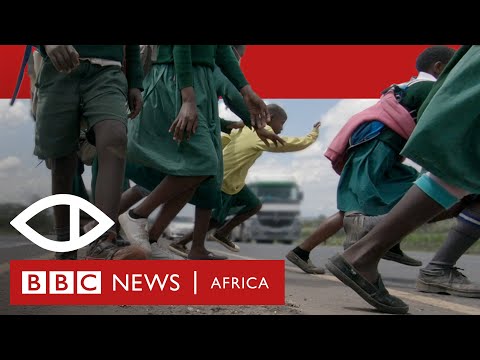
The current commercial inspection is riddled with corruption, where vehicles get inspection certificates in exchange for bribes. The BBC Investigative Report, which exposed gross corruption within the NTSA. youtube.com/watch?v=papUXp…
YouTube video
YouTube
English
7
98
132
3.3K