Richard Nash

3.8K posts

Richard Nash banner
Richard Nash

Richard Nash

@mrbiscuit

Micro-Agency Founder, Product Designer. 🍪 I bring over a decade of experience in product design, design strategy and leadership. https://t.co/YMM52smq4F

Brighton, England Katılım Ağustos 2008
867 Takip Edilen742 Takipçiler
Sabitlenmiş Tweet
Richard Nash
Richard Nash@mrbiscuit·
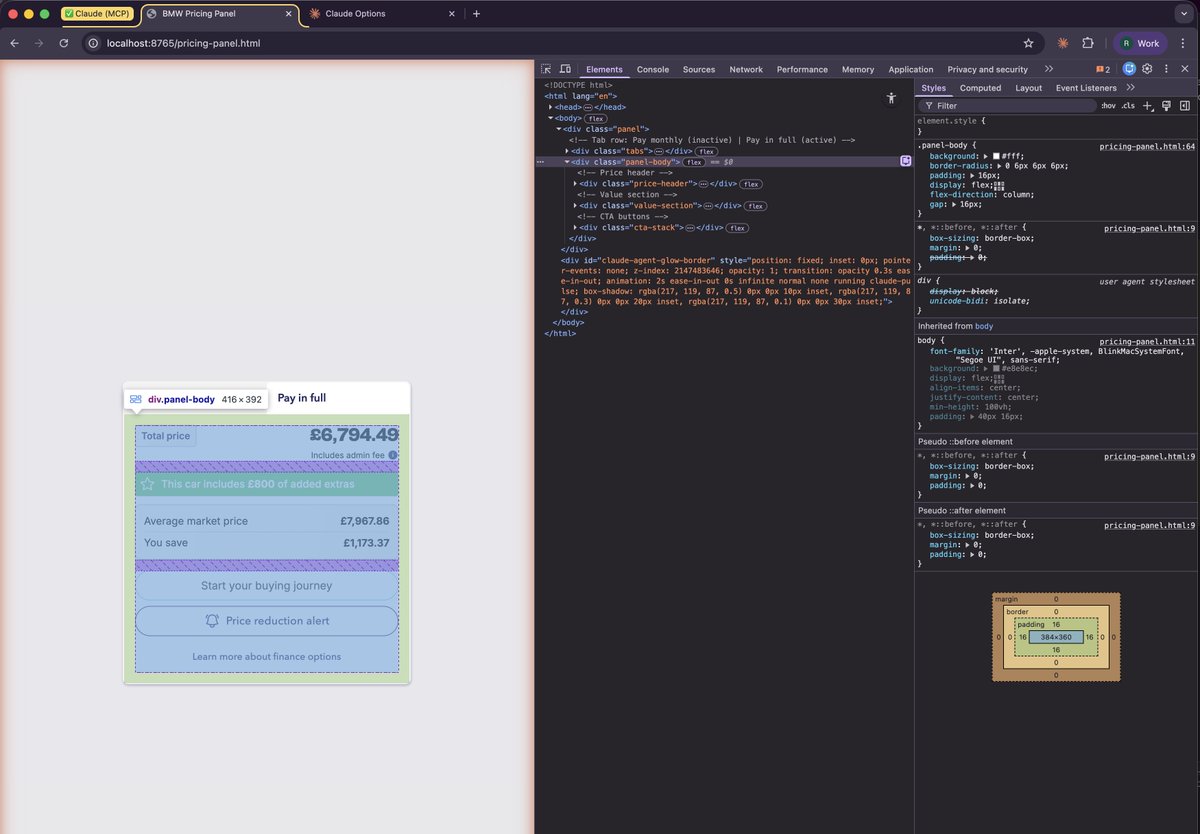
🧵[1/6] Been playing with @figma remote MCP server and @AnthropicAI Claude Code and there is real potential here (imho). A lot of my personal AI use has been more focused around strategy and user experience tasks. #futureofdesign
Richard Nash tweet media
English
1
0
0
330
Richard Nash
Richard Nash@mrbiscuit·
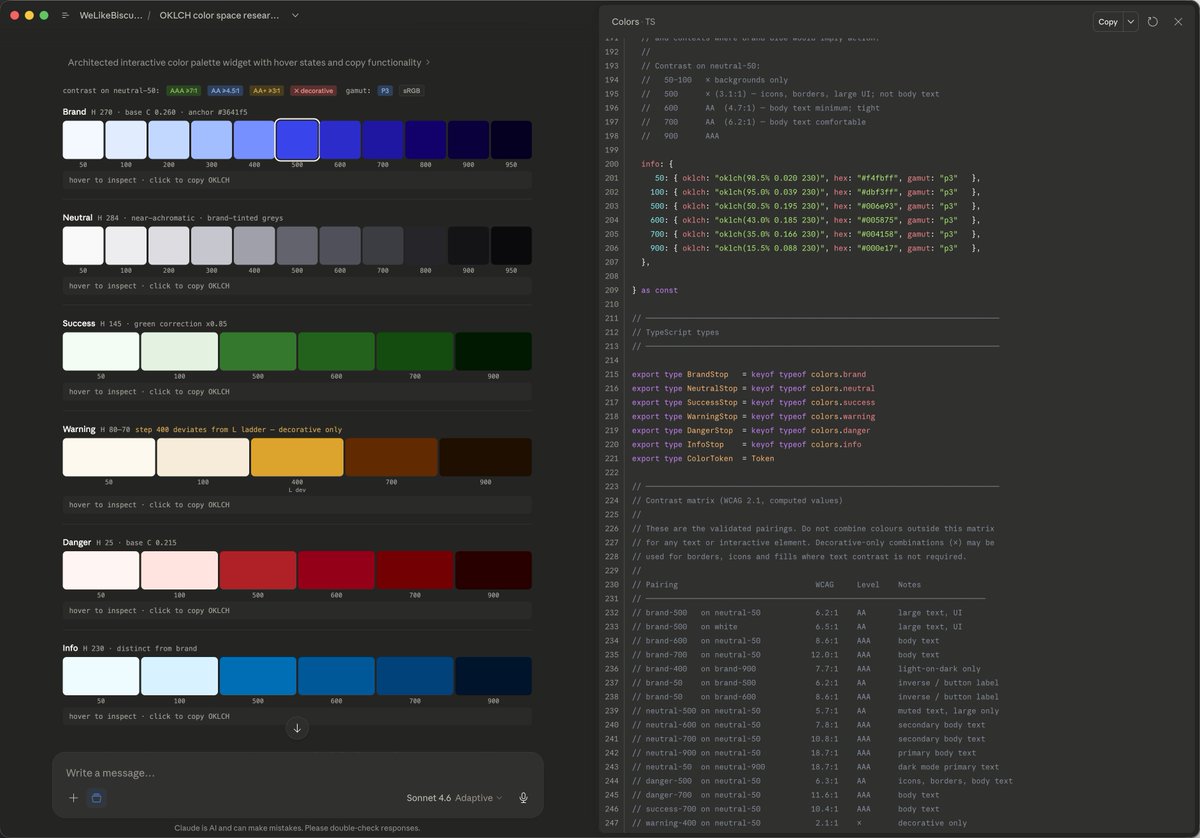
Having fun playing with OKLCH colour tokens generation in @claudeai 🎨
Richard Nash tweet media
English
0
0
0
23
Richard Nash retweetledi
International Cyber Digest
International Cyber Digest@IntCyberDigest·
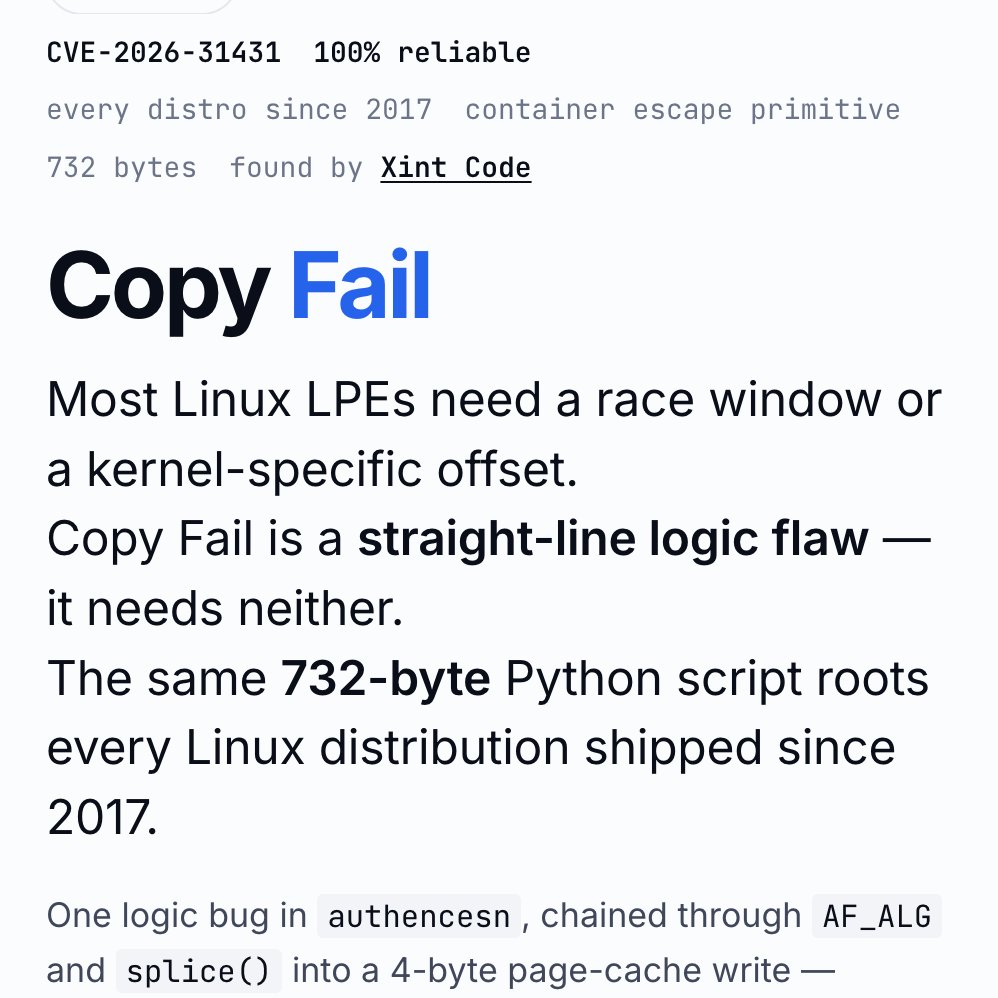
‼️🚨 BREAKING: An AI found a Linux kernel zero-day that roots every distribution since 2017. The exploit fits in 732 bytes of Python. Patch your kernel ASAP. The vulnerability is CVE-2026-31431, nicknamed "Copy Fail," disclosed today by Theori. It has been sitting quietly in the Linux kernel for nine years. Most Linux privilege-escalation bugs are picky. They need a precise timing window (a "race"), or specific kernel addresses leaked from somewhere, or careful tuning per distribution. Copy Fail needs none of that. It is a straight-line logic mistake that works on the first try, every time, on every mainstream Linux box. The attacker just needs a normal user account on the machine. From there, the script asks the kernel to do some encryption work, abuses how that work is wired up, and ends up writing 4 bytes into a memory area called the "page cache" (Linux's high-speed copy of files in RAM). Those 4 bytes can be aimed at any program the system trusts, like /usr/bin/su, the shortcut to becoming root. Result: the next time anyone runs that program, it lets the attacker in as root. What should worry most: the corruption never touches the file on disk. It only exists in Linux's in-memory copy of that file. If you imaged the hard drive afterwards, the on-disk file would match the official package hash exactly. Reboot the machine, or just put it under memory pressure (any normal system load that needs the RAM), and the cached copy reloads fresh from disk. Containers do not help either. The page cache is shared across the whole host, so a process inside a container can use this bug to compromise the underlying server and reach into other tenants. The original sin was a 2017 "in-place optimization" in a kernel crypto module called algif_aead. It was meant to make encryption slightly faster. The change broke a critical safety assumption, and nobody noticed for nine years. That bug then rode every kernel update from 2017 to today. This vulnerability affects the following: 🔴 Shared servers (dev boxes, jump hosts, build servers): any user becomes root 🔴 Kubernetes and container clusters: one compromised pod escapes to the host 🔴 CI runners (GitHub Actions, GitLab, Jenkins): a malicious pull request becomes root on the runner 🔴 Cloud platforms running user code (notebooks, agent sandboxes, serverless functions): a tenant becomes host root Timeline: 🔴 March 23, 2026: reported to the Linux kernel security team 🔴 April 1: patch committed to mainline (commit a664bf3d603d) 🔴 April 22: CVE assigned 🔴 April 29: public disclosure Mitigation: update your kernel to a build that includes mainline commit a664bf3d603d. If you cannot patch immediately, turn off the vulnerable module: echo "install algif_aead /bin/false" > /etc/modprobe.d/disable-algif.conf rmmod algif_aead 2>/dev/null || true For environments that run untrusted code (containers, sandboxes, CI runners), block access to the kernel's AF_ALG crypto interface entirely, even after patching. Almost nothing legitimate needs it, and blocking it shuts the door on this whole class of bug...
International Cyber Digest tweet mediaInternational Cyber Digest tweet media
English
231
2.7K
11.7K
2.4M
Richard Nash
Richard Nash@mrbiscuit·
@yocline Not sure you need to say this is 🌶️ feels more like grounded reality. And I think canvas-based tools probably can see the opportunity is there to continue being a critical part of the landscape.
English
0
0
1
138
Ben Cline
Ben Cline@yocline·
Spicy take: The older, slower path of developing ideas through canvas-based tools, paired with Claude Code for prototyping, is producing more intentional and better creative outcomes than these insanely over-processed AI workflows.
English
35
34
407
14.9K
Richard Nash
Richard Nash@mrbiscuit·
@Adobe Honestly after so many years of pushing native AI solutions through the platform. Surprised to see Claude being unlocked inside Adobe tools.
English
0
0
0
2.1K
Adobe
Adobe@Adobe·
Adobe for creativity + Claude 🤝 Now, Claude users can power their content with more than 50 Creative Cloud tools. Simply describe the outcome you want and let the assistant orchestrate workflows behind the scenes: adobe.ly/4cTkJjF
English
489
2K
15.8K
7.7M
Richard Nash
Richard Nash@mrbiscuit·
When CSS 2.1 dropped, sh*t got wild lol
English
0
0
0
29
Richard Nash
Richard Nash@mrbiscuit·
Lots of click-bait design is dead, @figma is dead, AI is the evil design overlord. Blah blah… Focus on the human elements. Empathy, taste, strategy. AI is a tool, LLM models don’t replace things tangible to humans. AI has its biggest impact on the ‘doing layers’ so if all you focus on is output, then I feel you’ll experience disruption. This is a really exciting time in the industry of which I don’t feel I’ve felt since like the early 2000’s.
English
1
0
0
48
Richard Nash
Richard Nash@mrbiscuit·
It’s not the end of product design imho, it’s an evolution based on technology progression, something that’s not been uncommon since the early days of the web. The strategic aspect is the key component here that’s integral to the understanding of a problem and shaping the outcome to solve said problem. Sure, while we’ll see a shift to consider agents as a type of user that needs to interact with the product or experience, the primary users are still human, the companies and stakeholders are still human, the social-economic elements that contribute to the product are still human systems. Humans still need to form part of that process. We’re still solving human problems here people! LLM modals simulate empathetic components of the design process. LLM tools imho can’t be solely relied on to translate these aspects of design without guidance and user testing. The tools empower this process, they don’t replace it. LLM tools just empower and accelerate research, synthesis and the doing layers. What becomes more important to a designer in the age of LLM tools isn’t the doing layer but the thinking layer. Help customers solve their problems, and leverage LLM tools to accelerate and deepen that. Otherwise you’re just potentially solving the wrong problem faster.
English
0
0
0
83
Gokul Rajaram
Gokul Rajaram@gokulr·
DESIGN: THE FIRST AI CASUALTY I'm increasingly sure that 2026 signals the end of product design as a full-fledged stand-alone function within companies. If so, it will be the first role / function to be eliminated by AI on a go-forward basis. Instead of hiring FT designers, startups are hiring / will hire design consultants to create a design system that the founder likes (this takes a few weeks max). Once the design system is finalized, PM/Eng feed it into their AI tool of choice to generate prototypes. The design system is refreshed annually by the same consultant. Larger companies will likely not backfill design roles and will do some targeted attrition to reduce the design department to 20% the size it is today. If you're a designer, I think you have two choices: 1. Become an entrepreneur: Start a design agency and become the go-to resource for design systems for startups and even larger companies. This can be a good recurring revenue business. 2. Become a builder: Add PM/Eng responsibilities to become a product builder. Would suggest you embrace this proactively vs waiting for the other shoe to drop. I'm really sorry about this - some of my best friends and the people I admire most and have learnt the most from are designers - but it seems inevitable.
English
280
80
1.1K
710.6K
Richard Nash
Richard Nash@mrbiscuit·
Well it’s official. I cancelled my sub after god knows how long I’ve had an Adobe subscription.
English
0
0
0
24
Richard Nash
Richard Nash@mrbiscuit·
I think the time has finally come @Adobe. Increasing the price of my subscription while offering a diminishing presence in my design stack. I’ve been putting this off for so long, but I just don’t feel paying more for what is already an expensive offering, when the value is eroded by other tools.
Richard Nash tweet media
English
1
0
0
87
Richard Nash
Richard Nash@mrbiscuit·
@joshpuckett It’s not just happening here, it’s happening on LinkedIn also
English
0
0
0
218
joshpuckett
joshpuckett@joshpuckett·
Stop sharing the work of other designers as if it is your own. I am saddened that this is even a conversation we apparently need to be having, but I'm seeing an increase in posts where work is shared in a way that subtly—or not so subtly—suggests the poster is the one who created it, while giving no credit to the original designer. I think folks do this under the guise of marketing, trying to just 'share inspo' or get traction so they can drop their subscription design service in the comments, but it's a shameful way to try and grow. At best you are cheating yourself out of the chance to actually connect and engage with those creating the work that inspires you. At worst you will inevitably get called out, look like a fool, and immediately go on 'do not hire or refer' lists that you probably weren't aware even existed. Our industry is small, and careers are long. It may seem tempting, like any shortcut is, to do it for the views or as a way to get started, but I promise you your integrity, authenticity, and relationships are far more valuable. It's great to share work that inspires you! We all love discovering new things. But when you do, share it in a way that honors and credits those who made it. The day will eventually come when you wish someone did the same when sharing your own work.
English
36
39
453
30.8K
Richard Nash
Richard Nash@mrbiscuit·
Well RIP Mac Pro, I’m gonna miss you. Think I’m gonna keep my Mac Pro chassis into the future. It’s just an amazing bit of industrial design.
English
0
0
1
37
benjamin
benjamin@benjaminnathan·
Logo Shaders are coming to @framer. They work with any PNG and SVG. Highly customizable. Live on your site in seconds.
English
140
101
1.9K
139.9K
Richard Nash
Richard Nash@mrbiscuit·
It’s an age old problem, and tbh, I feel it’s harder now in many ways. On some level you’re alway looking for someone that reflects your own approach. In my experience, when I was running the design team at CornerStone, it requires a window of opportunity to build trust for both parties. You scale their involvement, as an external, based on that trust building. Gives them the ability to prove their skill and approach, while managing the risk on your side. Down side is that needs a lot of patients as you develop a pipe.
English
0
0
1
290
Adrian
Adrian@adriankuleszo·
Honest update from last month. We closed a lot of work - almost doubled our revenue. I needed designers fast, hired a few at rates well above what I'd normally pay, and the quality just wasn't there. Price and quality have a loose relationship. The hardest part of scaling is maintaining a consistently high standard across every project, and that's not something a large day rate solves. Going back a step and hiring more than we need now so the team is there when the next wave hits. We're also doubling down on development retainers. With AI in the stack we're shipping MVPs like no tomorrow and these engagements grow over time compared to design retainers pausing every other month so devs can catch up. Scaling an agency is never linear. For now, I'm back to hunting for talent!
English
38
2
195
9.4K
Richard Nash
Richard Nash@mrbiscuit·
@pizzaboy For me this feels perfect. I dunno how people manage to run crazy amounts of retainers at once.
English
0
0
1
29
Dan
Dan@pizzaboy·
The studio model that actually works: > 2-3 retainers for baseline revenue > project work on top > never more than you can deliver at quality simple. hard to stick to.
English
15
5
179
5.7K
Contra
Contra@contra·
New challenge just dropped with @floraai Design the workflow you wish existed, then bring it to life as a Technique on FLORA that anyone can run. $10K in prizes. We can’t wait to see what you make.
FLORA ©@floraai

To celebrate the launch, we're partnering with @contra on a Techniques Challenge. Turn any workflow into a shareable, reusable technique and compete for $10K in cash prizes, annual FLORA access, and a feature on our public Techniques page. It starts today! Join below.

English
5
3
43
3K
Richard Nash
Richard Nash@mrbiscuit·
Please, no more DESIGN.md fluff. Markdown formats been around longer than my grandad. 👴
English
0
0
0
38
Richard Nash
Richard Nash@mrbiscuit·
I've noticed a shift in user research synthesis also. I've been building up series of rulesets across various elements of my process. So, the writing aspect is just one set of rules. Basically my thinking was I need a language model to form part of the synthesis lens. I see it as a web really. I need to control the different variables independently.
English
0
0
0
10
AInsid♨️
AInsid♨️@muhamedfazalps7·
@mrbiscuit @OpenAI @AnthropicAI Interesting shift! I've noticed the same - Anthropic's tools feel more nuanced for research work. The writing quality difference is real. Have you found it helps with user research synthesis or mostly just drafting?
English
1
0
1
7
Richard Nash
Richard Nash@mrbiscuit·
I've been using AI as part of my UX and research practice for two years. Recently I started to shift from @OpenAI to @AnthropicAI tools. More interesting than I expected, tbh. Writing was the first place I saw the difference. That loop started with @OpenAI — I'd write tens of thousands of words and bring the tools in to refine and co-edit. Not efficient. But it mapped the territory and helped me understand where the real risks and opportunities were. What @AnthropicAI tools do differently is build self-reinforcing methodology. Research leads to synthesis. Synthesis generates rules from that research, user input, and tonal-data. The tools sense-check against those rules. Human and tool review and refine. The tool reinforces its own guidance through human-agent retrospective. With the right oversight, the loop improves on itself.
English
1
0
0
45