

changbo
466 posts


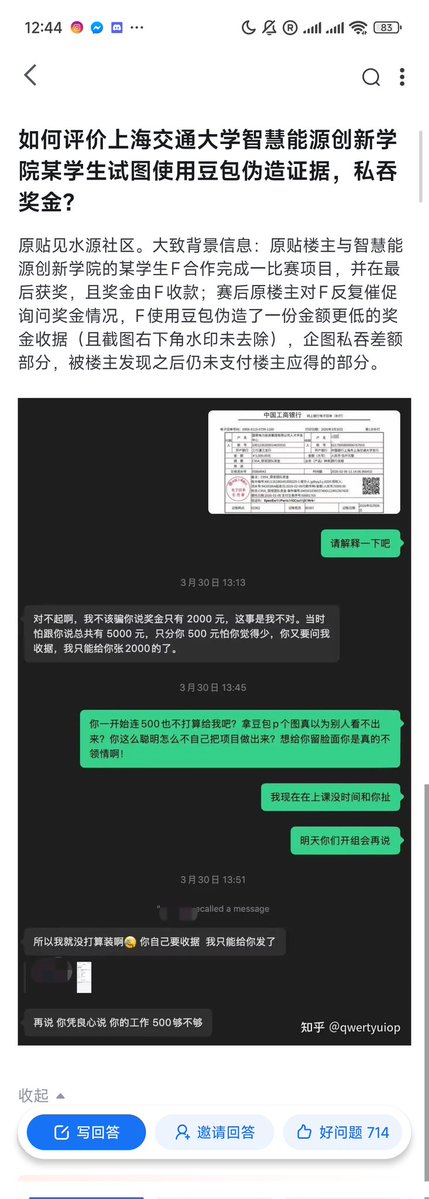
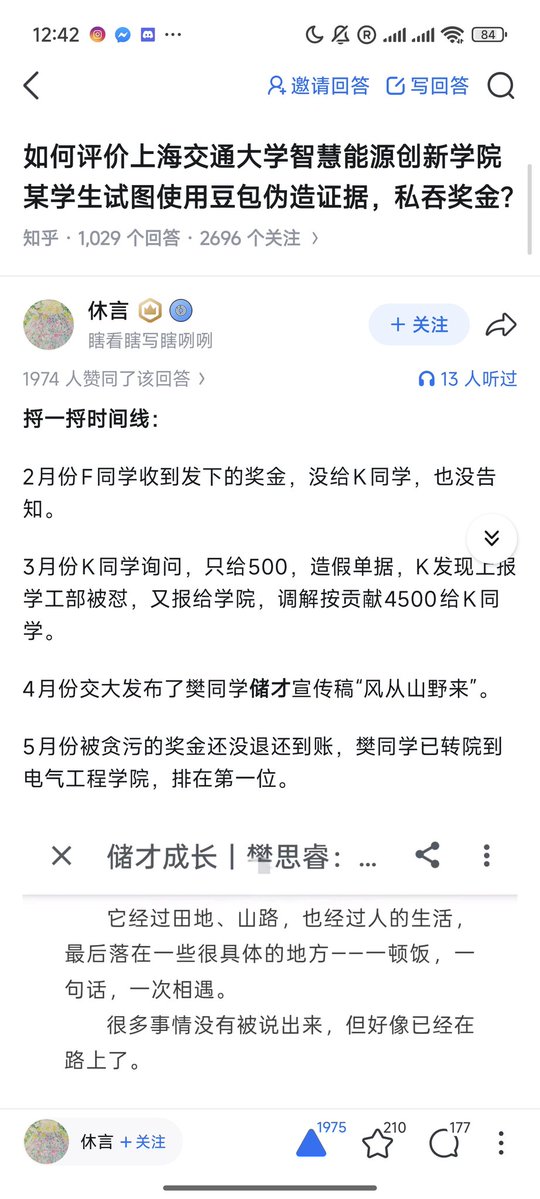
这位sjtu的集美也太逆天了 😅
小小年纪就开始玩虚开发票贪污吃回扣的操作了


Taipei City, Taiwan 🇹🇼 中文


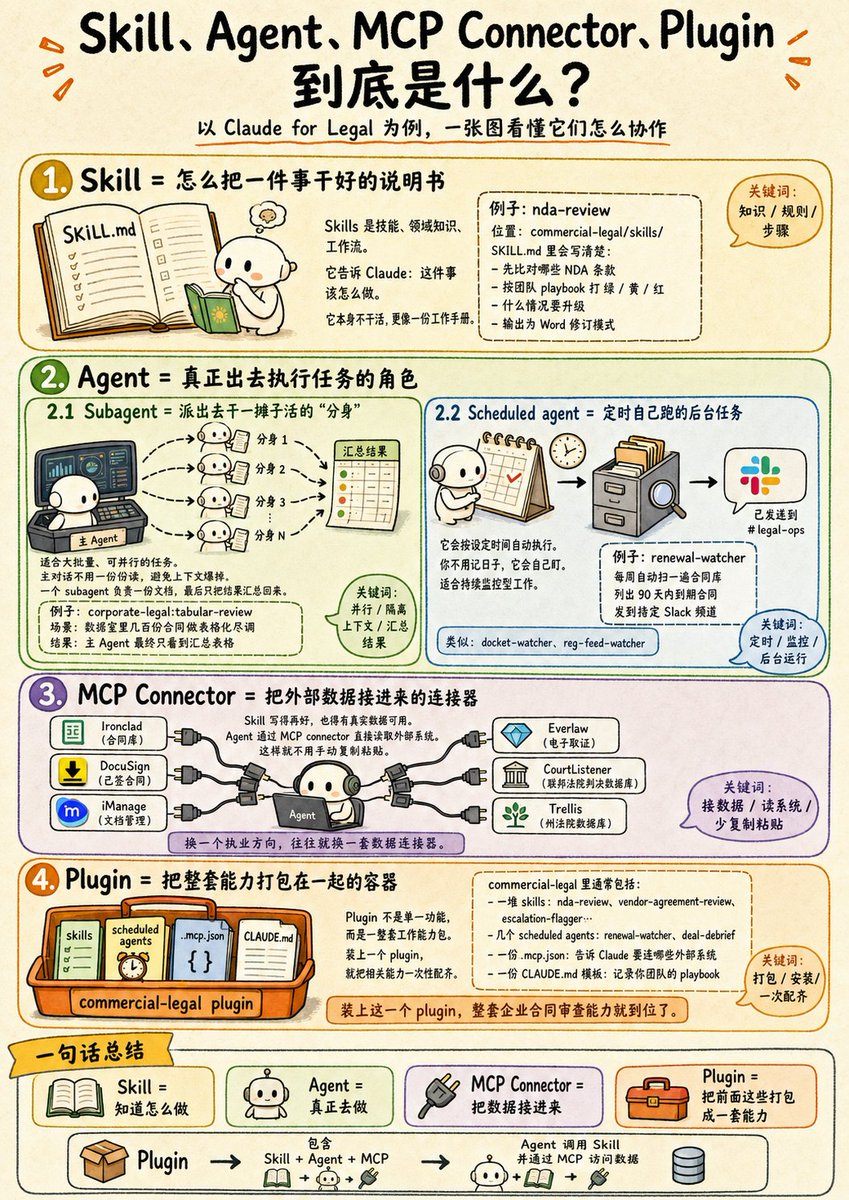
1. Skills 是技能,领域知识,工作流等等,相当于怎么干好一件事的说明书。
比如 github.com/anthropics/cla… 仓库里有个 skill 叫 nda-review,在 commercial-legal/skills/ 文件夹里。里面是一份 SKILL.md,写清楚:审 NDA 时先比对哪些条款、按团队 playbook 打绿黄红三档、什么情况要升级、输出格式是 Word 修订模式。
它就是一份给 Claude 看的工作手册,本身不干活。
2. Agent 是真正执行任务的主题,除了主要执行的 Agent,通常自定义的 Agent 分两种:Subagent 和 Scheduled agent
2.1 Subagent 是单独派出去干一摊子活的“分身”
举个仓库里的例子:corporate-legal:tabular-review 这个 skill 要对一个数据室里几百份合同做表格化尽调。如果让主对话一份份读,上下文很快爆掉。所以它派 subagent,一个 subagent 负责一份文档,并行跑,最后把结果汇总回主对话。
主 Agent 看到的只是最终表格,中间几百次读取的信息被隔离在外。
2.2 Scheduled agent 是定时自己跑的后台任务
renewal-watcher 这个就是。每周自动扫一遍合同库,把 90 天内到期的合同列出来,发到指定 Slack 频道。你不用记日子,它替你盯。
docket-watcher(盯法院案件动态)、reg-feed-watcher(盯监管新规)都是这种。
3. MCP connector 是把外面的数据接进来的连接器
Skill 写得再好,也得有合同可审。仓库里配了 Ironclad(合同库)、DocuSign(已签合同)、iManage(文档管理)几个 MCP connector。
Agent 通过这些 MCP connector 去读公司真实的合同库,而不是让你手动复制粘贴。
类似地,诉讼那个 plugin 接的是 Everlaw(电子取证)、CourtListener(联邦法院判决数据库)、Trellis(州法院数据库)。换个执业方向,换一套数据连接器。
4. Plugin 是把上面这些打包到一起的容器
commercial-legal 这个 plugin 文件夹里装着:
- 一堆 skill(nda-review、vendor-agreement-review、escalation-flagger……)
- 几个 scheduled agent(renewal-watcher、deal-debrief)
- 一份 .mcp.json,告诉 Claude 要连哪些外部系统
- 一份 CLAUDE.md 模板,用来记你团队的 playbook
你装上这一个 plugin,整套企业合同审查的能力就一次性配齐了。
changbo@mrnetman
@dotey 大佬能否解释一下,这个 Claude 一会插件的,一会 Skills 的,一会这个 Agent 的,它他到底想干什么呀?
中文
Anthropic 今天正式上线了一个叫做「Claude for Legal」的仓库,一口气放出了 12 个针对具体法律岗位的插件,以及超过 20 个连接行业常用软件的 MCP 连接器。
无论你是公司法务、打并购战的律所、专注隐私和 AI 治理的法律顾问,还是每天苦熬到半夜的诉讼律师,甚至是法学院里摸爬滚打的学生,这个仓库都给你准备好了对应的 AI 工具,直接在 GitHub 上开源了:github.com/anthropics/cla…。
这些插件用之前不是即插即用,你得花 10 到 20 分钟,带着 Claude 做个简单的“冷启动访谈”,把你团队的 playbook、模板和风格习惯都塞进一个叫 CLAUDE.md 的本地文件。这样,以后每个插件干活儿的时候,都自动按照你自家的风格和标准来。
Anthropic 这么搞,是为了彻底解决 AI 法律工具最常见的槽点:输出内容太通用,看起来不像哪家律所自己的东西。
Anthropic 还是挺懂律所的痛点的。
比如 Vendor Agreement Reviewer 插件,它能自动对照你家合同模板改供应商协议,还贴心地输出一份 redline 备忘录;
又比如 NDA Triager,帮你自动把涌进来的 NDA 文件按绿黄红分级,绿灯放行、红灯直接推律师处理;
Claim Chart Builder 插件可以一键生成专利侵权对比表;
Privilege Log Reviewer 自动帮你跑第一轮特权日志审查;
而 Docket Watcher 插件则不知疲倦地盯着法院动静,帮你把最新动态实时扫进来。
简单讲,就是把律所里最烦、最机械、最浪费人力的活,变成了一个个简单的 slash command。
如果说插件解决的是律所内部效率问题,那么对行业系统的深度接入才真正体现 Anthropic 的野心。
现在,Thomson Reuters 的 CoCounsel、Harvey,还有 iManage、NetDocuments、Ironclad、DocuSign、Everlaw、Relativity、Box、Datasite 等几乎所有你能叫得上名字的平台,全都接入了官方 MCP 连接器。日常办公的 Word、Excel、Outlook、PPT 也全线打通。合同改完后,Claude 甚至会直接输出成 Word 修订模式,律师一条条接受或拒绝就行。
Anthropic 不只是把目光停留在高端律所。他们还特意做了些更「接地气」的事儿,联合 Free Law Project 和 Justice Technology Association,给法律援助机构、公设辩护人、非营利法律组织推出特别折扣,连给普通当事人设计的 Courtroom5 工具也接进来了。这点挺让人感触的,因为美国大约八成民事诉讼里的原被告,根本请不起律师。
Claude for Legal 背后的大脑是刚升级的 Claude Opus 4.7 模型。Anthropic 很谨慎地强调:所有插件输出都是“仅供律师审阅的草稿”,绝对不能替代律师的专业判断。
README 文件里反复提醒:引用必须追踪来源,涉及特权和主观法律判断时,要默认保守处理。毕竟法律这件事,AI 还是不能完全代替专业律师。
官方博客:claude.com/blog/claude-fo…
中文

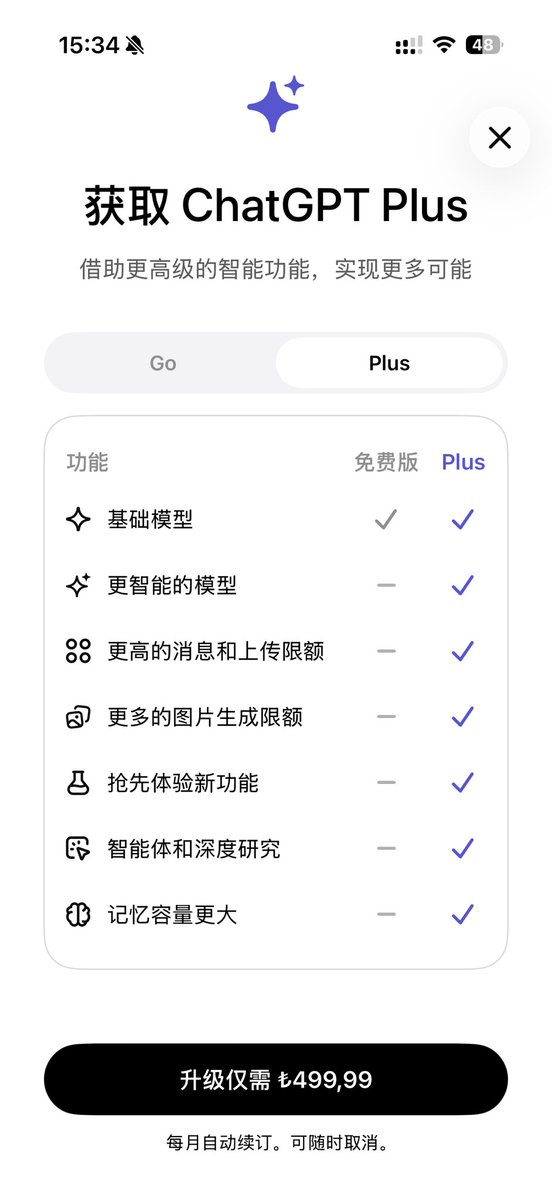
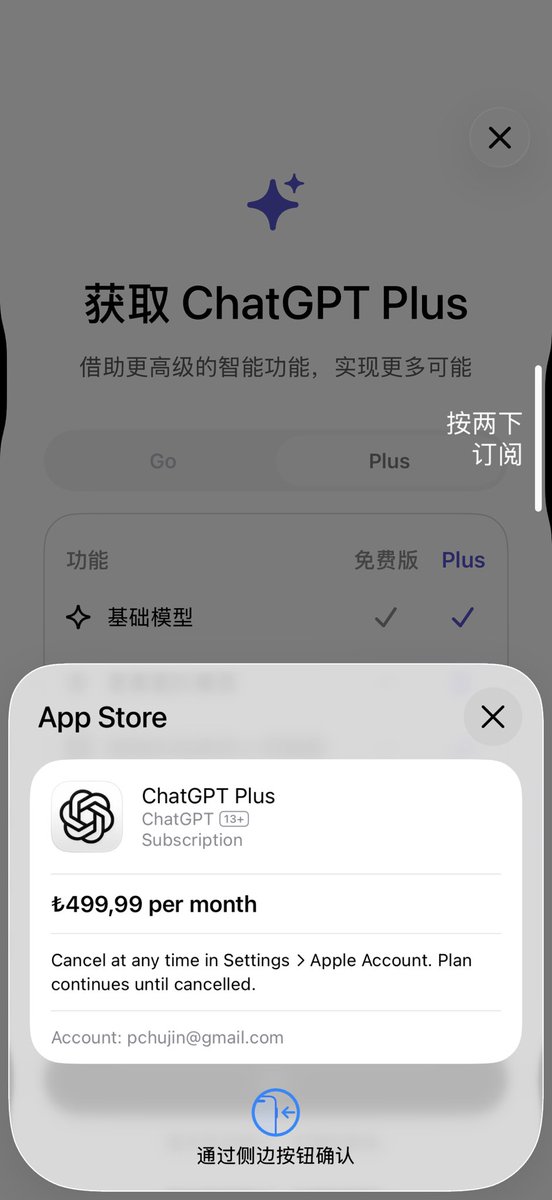
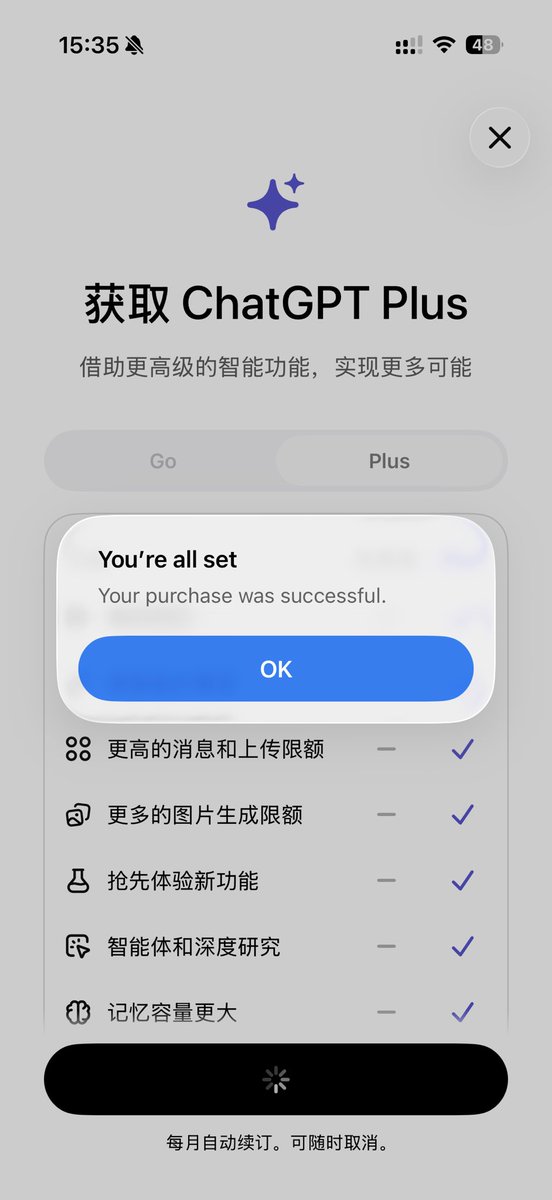
花 75 块钱订阅上了土耳其区 ChatGPT Plus 会员,很简单:
- 注册一个土耳其区 Apple ID
- oyunfor.com 购买礼品卡
- 手机打开 ChatGPT 点订阅
美区要140 元,便宜了一半。
中文

卧槽,6个月→15天!
森马用AI把整个服装行业的底裤都扒了。
真的兄弟们,看完森马的 AI 落地,我直接懵了,
光2025年,AI就给森马带来几个亿的确收回款,
节省视觉、营销、样衣研发等成本数千万,
上新周期从 6 个月,直接压到了 15 天。
这才是真正的AI落地啊,能对业务带来增量价值,
而不是瞎折腾消耗token重复造轮子!
很多人以为传统企业用 AI,就是拍个图写个文案,
没想到森马直接把 AI 做成了全链路基础设施,
覆盖供应链、库存、直播、运营、物流、客服、财务。
整整 400 多个场景。
连整个经营逻辑都重构了,
最狠的是 AIGC 视觉,
以前拍一组模特图要等两个月,
改个背景换个动作,还要再等两个月,
现在 AI 几分钟出图,
效果不输实拍,成本几乎为零,
所有款式全量覆盖,不用再只赌几个爆款,
传统上新是串行的,
一个环节等一个环节,
现在 AI 介入后全并行推进,
不用空等,不用排队,
以上这些都是 2025 年已经跑通的真实案例,
一年带来几亿回款,
省了几千万的成本。
通过森马这个案例让我们看到了,
其实AI 不只是替代人工干活,
还能挖出那些我们根本想不到的隐性成本,
把以前不可能的事,变成日常。
我感觉以后所有传统企业,都会被逼着走这条路啊。
视频大家收好,非常值得收藏和学习!
#森马 #AI落地 #服装行业 #AIGC #企业数字化
中文


拿到了 OpenAI Trusted Access for Cyber 的审核。这个项目的意思是:GPT全线前沿模型的网安能力现在都是高风险等级,普通账号碰安全类任务直接降级拦截,TAC 成员解除限制,高级层级还有 Cyber 专属微调模型可以用。同项目的企业成员翻了下,CrowdStrike、Palo Alto Networks、Cloudflare、Goldman Sachs、NVIDIA。我是个人身份进的,没挂任何机构。

中文



一位中国小哥用 13 个并行的 Claude 窗口,单人每月服务 200 家 Shopify 商店,每单 $800。
两台显示器 + MacBook,13 个窗口同时工作,各自负责产品目录、首页、支付、邮件、横幅、分析……互不干扰,并行推进。没有团队,没有客服,只有他和 API 计数器。
核心是系统提示:"你是我的新创始人-工程师"。Claude 不再是助手,而是结果的拥有者——按 token 计费、从不午休的合伙人。
经济账:13 个代理每天消耗不到 $80,能完成 6-7 个商店(每个 $800)。传统机构同样商店收 $3,500,要 2 周和 5 人团队。
只做 2 件事:决定把完成的商店交给谁,以及下一个接谁。
这是今年见过最高效的单人 Shopify 工厂,已经在运转了,而传统机构还在争论 AI 是否会抢工作。
x.com/browomo/status…
Blaze@browomo
This Chinese guy created 13 agents in Claude Code for Shopify stores and single-handedly serves 200 dropshippers a month, taking $800 from each. He sits at one desk in front of a wall-mounted LG monitor split into a 3x2 grid of 6 Claude windows, another identical grid runs on a vertical display next to it, plus 1 window on the MacBook within arm's reach, totaling 13 agents simultaneously building Shopify stores, each busy with its own part. No team, no managers, no support, just him, the monitor, and the API counter ticking in the header of every window. He is not on a subscription but on an API rate billed by tokens, and he figures 13 parallel agents pay for themselves from the very first client, because every finished store goes for $800, and all 13 windows together consume less than $80 a day. In the first window he set that system prompt which immediately closes the "assistant or employee" debate: "you are my new founder-engineer" So the model knows at what level it was hired: not to hint, not to advise, not to supplement, but to own the result, because for this Chinese guy Claude is no longer a helper in an IDE, it is a partner in his small factory, billed by tokens and never leaving for lunch. And the other 12 agents he spread across the layers of the store, so each one sits in its own context and does not interfere with the neighbor: "build a catalog of 80 products and rewrite the descriptions" "lay out the homepage for the niche of the client" "set up the cart, payment, and shipping by country" "generate 30 email chains for warming up" "design 50 banners and a logo for the brand" "set up analytics and A/B tests on the homepage" In a regular agency each task like this would take one designer or developer a full 2 days, because they would first collect the brief, then wait for revisions, then get on a call, whereas this Chinese guy has all 13 agents working in parallel in their windows, and while one writes descriptions, the second is already laying out the homepage, and the third is designing banners. In the end on the wall it looks like a factory: 13 identical Claude robots writing into one project, and the Chinese guy himself in the chair in front of them decides only 2 questions, which client to hand the finished store to and who to take next, and beyond that he does nothing. And economically it is still cheaper than keeping a team of 5: one operator like this closes 6 to 7 finished stores per day at $800 each, while a traditional design agency charges $3,500 for the same store and builds it over a full 2 weeks, whereas this guy spends less than $80 a day across all 13 windows. Wires hanging out, the monitor bolted to a stand, no office and no employees, just 1 desk, 13 robots, and a queue of dropshippers who send new orders every morning. In my opinion, this is the most efficient solo Shopify factory I have seen this year, and it is already running right now, while traditional agencies are still debating whether AI will take jobs from designers.
中文

JP Morgan刚刚把内部多智能体系统Ask David的完整架构公开了。
个人觉得在很多场场景有参考学习的意义,构建多Agwnt框架可以使用。
这套系统在投资研究领域已经跑通,核心模式和当前最火的Agent架构高度一致:
- Supervisor agent负责整体编排
- 专业subagent分别处理检索、结构化数据、分析等细分任务
- LLM-as-judge作为反射节点,在最终输出前做质量把关
- Human-in-the-loop填补最后一道准确性缺口
最值得注意的是,这套模式正在多个领域反复出现。
它证明了:真正能落地的多智能体系统,不是简单堆模型,而是清晰的分工 + 监督 + 反思 + 人工兜底的闭环架构。
对所有在做Agent的人来说,这段视频值得反复看。
你觉得Ask David这种架构,会成为企业级Agent的标准模板吗?

Adam Ghowiba@adamghowiba
JP Morgan's investment research team just shared exactly how they built their multi-agent system "Ask David", and it's the same architecture pattern showing up everywhere: - supervisor agent orchestrates - specialized subagents handle retrieval, structured data, analytics - LLM-as-judge reflection node before the answer ships - human-in-the-loop for the last accuracy gap worth watching for anyone building:
中文


JP Morgan's investment research team just shared exactly how they built their multi-agent system "Ask David", and it's the same architecture pattern showing up everywhere:
- supervisor agent orchestrates
- specialized subagents handle retrieval, structured data, analytics
- LLM-as-judge reflection node before the answer ships
- human-in-the-loop for the last accuracy gap
worth watching for anyone building:
English



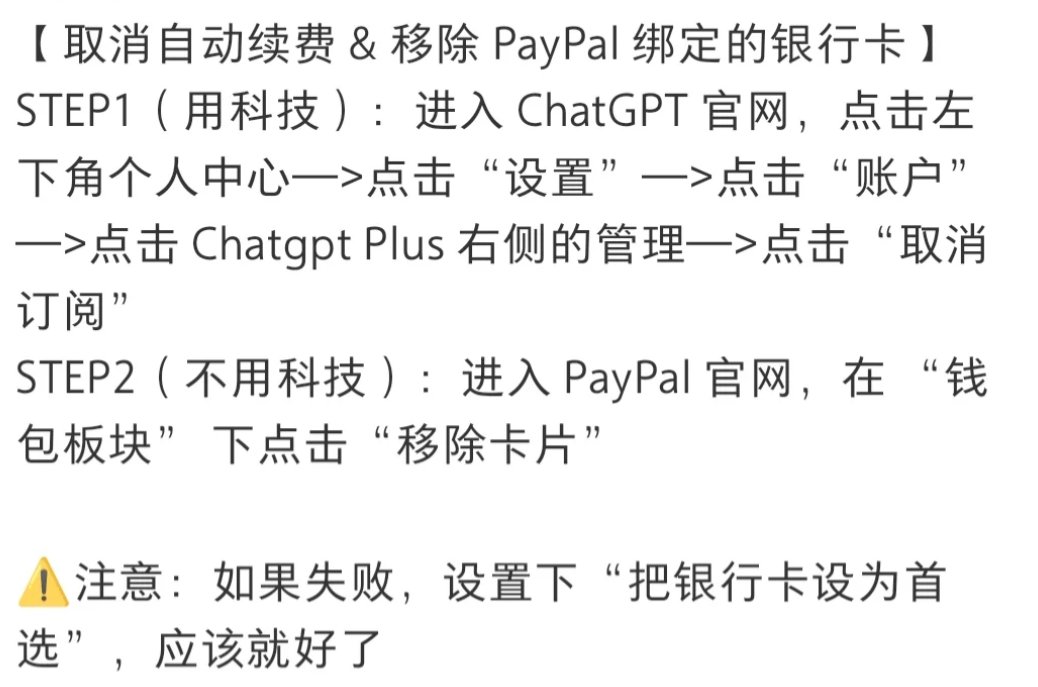

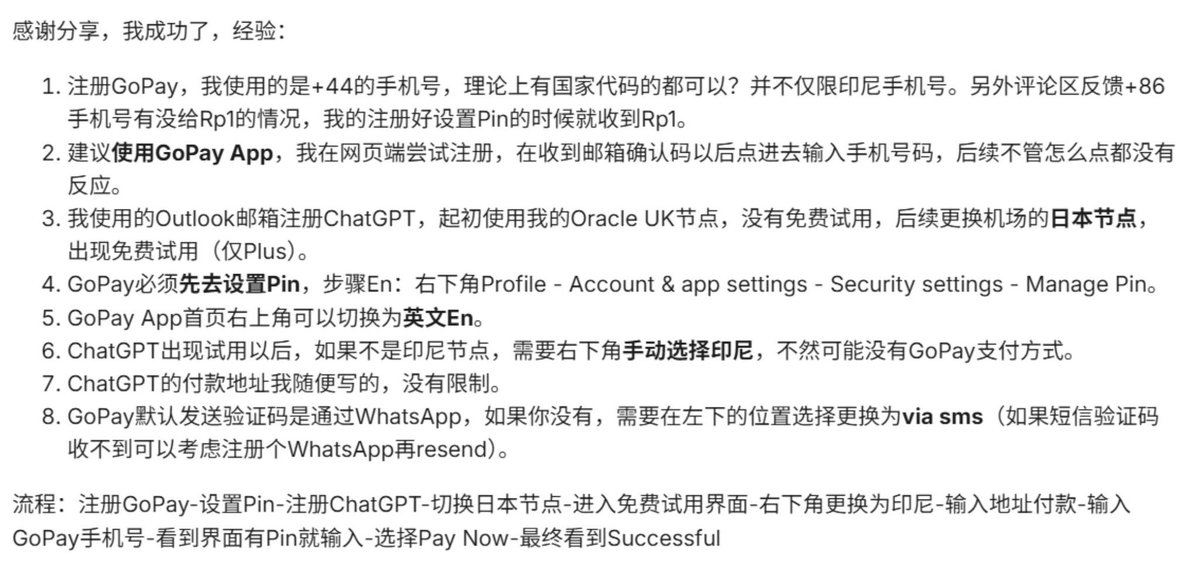
再补一个,用印尼 GoPay 免费搞到 GPT 的教程。
准备工作与账号注册
先准备个邮箱,建议专门注册个新的小号来弄这事儿,利索一点。
然后下载两个应用,WhatsApp 和 GoPay(这是印尼那边的电子钱包)。去 Google Play 或者别的外网应用市场下就行,直接用你国内的 +86 手机号注册登录。
接着把梯子切到日本节点,用刚才准备的邮箱去注册一个全新的 ChatGPT 账号。
获取试用与支付配置
登录 GPT 之后,在页面顶部找“升级 Plus”点进去,或者留意左下角有没有优惠提示,总之目标是找到那个“0 元试用”的入口。
到了订阅页面,右下角把地区手动切换成印度尼西亚。支付方式选 GoPay。
账单地址这块,网上搜个“新加坡地址生成器”,随便生成一个虚拟的新加坡地址填上去就行。
然后打开手机上的 GoPay App,点右下角的 profil(个人资料),找到带 pin 字样的设置项,输入两次支付密码,确认好。
验证与防扣费
回到网页端的 GPT 订阅页面点订阅,到填手机号那一步,记得选 +86 (China),填你的国内手机号。
验证码不会走普通短信,会发到你刚才注册的 WhatsApp 上,进去收一下填上就完成订阅了。
最后一步很关键,为了防止免费期过了自动扣钱,立马回到 GPT 页面左下角,点设置 -> 账户 -> 管理,进去把订阅取消掉。这样就行了。
区块链行情研究@qkl2058
分享两个散户能免费搞到 GPT Plus 账号的渠道。 先说 Discord 这个通道: 进去之后,先注册个邮箱。如果你手里已经有新邮箱了,那这一步直接跳过就行。
中文

让AI连续工作10小时不崩溃?揭秘Anthropic官方推崇的“Harness工程”!
很多人用Claude Code跑长任务,跑着跑着AI就变傻、甚至罢工。
原因很简单:上下文窗口爆了。
今天分享一套让AI“无限续航”的系统级方案(Harness Engineering),不仅能让AI干活,还能让它自我进化。
1⃣ 核心原理:重置上下文
AI的记性有限。官方Anthropic的思路是:把大任务拆碎,每次只让AI在一个全新的、干净的上下文里干一件小事。
❌ 错误做法:把所有需求一次性塞给AI。
✅ 正确做法:拆解任务 -> 独立会话执行 -> 记录进度 -> 下一个循环。
2⃣ 方案对比:Ralph vs 多智能体
方案A(Ralph循环): 用Bash脚本写个while循环,强制重启新会话。简单粗暴,适合极客。
方案B(多智能体协同 - 推荐): 我在用的方案。更灵活,更像真实团队。
主Agent(Coordinator): 只负责调度,绝不写代码(保持上下文极其干净)。
子Agent(Workers): 计划、开发、测试(布局/美观/动画)。各司其职,独立上下文。
3⃣ 工作流设计(关键!)
我的实战工作流:
主Agent 接收需求 -> 丢给 计划Agent 出排期。
主Agent 拿到计划 -> 派给 开发Agent 写代码(只传文件路径,不传大段代码!)。
开发完 -> 派给 测试Agent 找Bug。
Bug修复闭环: 测试挂了?用 resume 参数唤醒同一个开发Agent修Bug(保留现场上下文),而不是开新号!
4⃣ 让AI自我进化的Secret Sauce
Lessons Learned: 建一个经验库文件。每次踩坑,强制AI把错误写进去。下一次开发,先读这个文件,避免重复犯错。
文件通信: Agent之间只传文件路径(Path),不传具体内容。主Agent的上下文永远只有几行字,永不爆窗。
这套系统我跑了一个通宵,生成了20多页PPT,质量极高。
真正的Harness不是让AI更聪明,而是设计一套不依赖AI记性的流程。
中文
@itsdavinchee @regent0x_ Yes, this is just a commercial livestream selling monitors. He wasn’t talking about Claude Code parallel development at all.
English

as someone who speaks Chinese and someone with a single brain cell - he is definitely not talking about Claude Code at all, he is talking about the rd280u monitor.
if you googled rd280u which he mentions a few times as well as the specs 28 inches and 4k.
but good hook for your article
English

this chinese developer making $320k/year as a solo contractor
his secret: 5 AI agents running in parallel, each one a specialist
architect, coder, reviewer, tester, ops
they don’t share context, don’t step on each other, just ship
he takes on projects meant for teams of 5-8 engineers
delivers in half the time
keeps the entire budget
found this video on bilibili at 3am and watched it four times
guy sitting at his desk, two monitors filled with code, and he’s barely touching the keyboard
here’s what’s happening on his screen:
> agent 1 (architect): designs system structure, breaks down features into tasks, decides what gets built first
> agent 2 (coder): writes the actual implementation based on architect’s specs
> agent 3 (reviewer): checks every piece of code for bugs, edge cases, security issues
> agent 4 (tester): generates test cases, runs them, reports failures back
> agent 5 (ops): handles deployment, monitoring, infrastructure
five separate claude code instances running simultaneously
each one has its own system prompt, its own context, its own specialty
they communicate through a shared task queue, not through each other
that’s the key insight - no shared context means no conflicts
agent 2 doesn’t know what agent 3 is doing
agent 4 doesn’t care what agent 1 decided
they just pick up tasks, complete them, move on
he showed his contract history:
> 3D rendering pipeline for a gaming studio: $25k
> automated trading dashboard: $33k
> enterprise CRM rebuild: $44k
all completed solo, all delivered early, all clients thought they were hiring a team
the code on his screen is python with blender integration - complex stuff that would normally require 3-4 specialists
he’s shipping it in days while the client expects weeks
while he’s explaining the system to camera, commits are happening in the background, tests running, deployments going out
all while he’s literally not touching the keyboard
his API costs run about $2k/month
his revenue averages $26k/month
that’s a 13x return on his AI investment
this is the new solo developer playbook
don’t compete with teams
become the team
regent0x@regent0x_
English


N26 门焊死了,还有哪些替代支付方案值得入手?
iFAST 虽然好,但国区绑不了微信、支付宝、Apple Pay,日常用不够顺手。
真正能打的替代是 Bitget U 卡。
亲测:𝕏、Google One、ChatGPT 全无障碍;微信、支付宝、Apple Pay 全能绑,日常支付丝滑。
⚠️ 春节前还能用身份证注册,现在只剩护照通道——锁门只是时间问题。
详细教程已备好,照着办就行。能开就早开。
Jason的海外收款交流群:t.me/Jason_WiseX
Jason@EvanWritesX
中文


N26 疑似关停中国人开户。聊聊我对境外银行卡的看法。
海外银行关停中国人账户不是新鲜事,前年 OCBC 新加坡就大面积发生过。这类银行我一直不作为核心账户使用。
我的配置思路:
• 核心账户选传统银行,且口碑好的,稳定性第一
• 如果是美股港股需求,一张香港卡就够
• 开户路径:亲赴香港 or 国内见证开户
• 中银香港近期拒开率走高,能办尽早办
其实最耐造的还是招行香港一卡通,非同名大额进出都无压力,不过这卡绝版了,现在验资门槛 800w
一个不可逆的趋势:境外银行对华人的开户门槛只会越来越高,不会越来越低。
能办的时候别犹豫。

中文