

mx_twit
1.3K posts
mx_twit
@mx_twit
here for bad memes and super hyped tech.
MUC Katılım Mayıs 2023
7.5K Takip Edilen226 Takipçiler

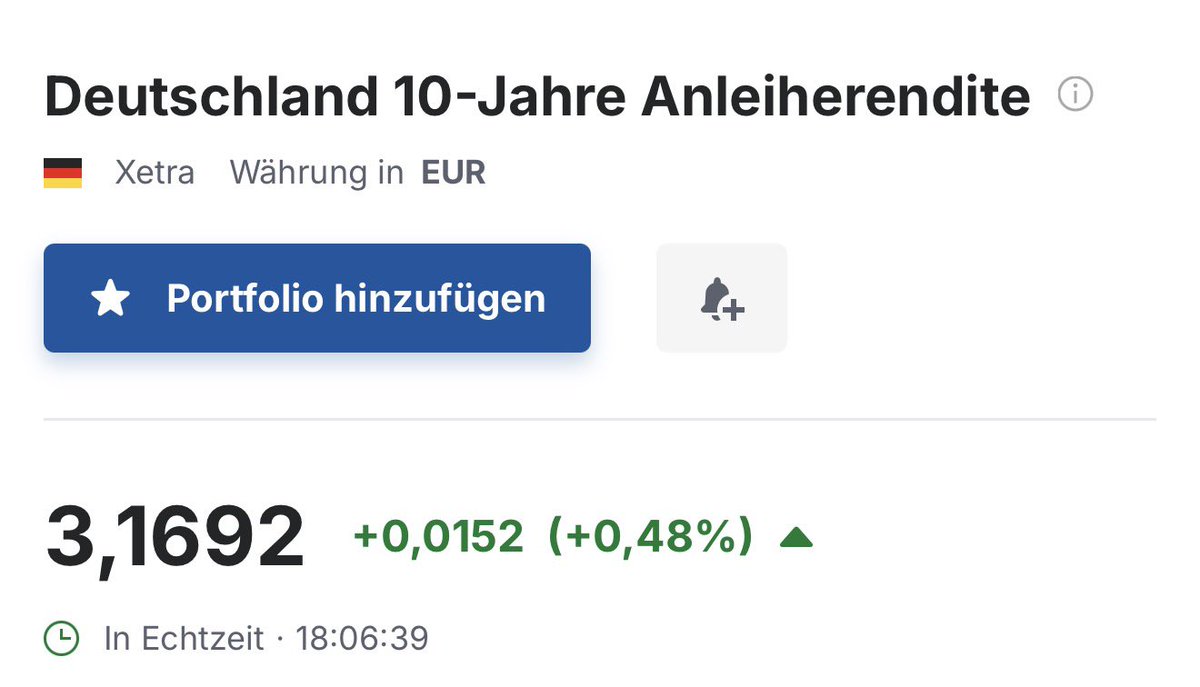
@E_Boeminghaus echte KI wollen die deutschen Unternehmen doch gar nicht machen, da viel zu kapitalintensiv und risikoreich. Prompten können die Studies in der Regel sehr gut, sonst hätte wohl der ein oder andere auch den Abschluss nicht geschafft.
Deutsch
Deutschland produziert Akademiker am Fließband und findet angeblich trotzdem keine Fachkräfte mehr. Jetzt trifft die KI Welle genau jene, die glaubten auf der sicheren Seite zu stehen.
Die KI kommt genau jetzt. Nicht in ein paar Jahren. Sie kommt jetzt und man kann es in den USA bereits sehen am Arbeitsmarkt und bei uns Ende des Jahres auch. Es wird brutal.
#Arbeitsmarkt #KI #Rezession #Tagesschau
Realitätscheck: Immer mehr Akademiker finden trotz Studium keinen Job mehr. Besonders in der IT Branche verändern sich die Anforderungen durch Künstliche Intelligenz innerhalb weniger Monate. Unternehmen suchen Spezialisten mit praktischer KI Erfahrung und sortieren klassische Lebensläufe zunehmend aus.
Systemversagen: Hochschulen reagieren viel zu langsam auf den technologischen Wandel. Während Firmen dringend moderne Fachkräfte benötigen, werden Studenten oft noch mit veralteten Inhalten ausgebildet. Gleichzeitig wandern immer mehr Jobs ins Ausland oder werden durch Automatisierung ersetzt.
Deutschland steuert mit voller Geschwindigkeit in eine historische Fehlqualifizierung der eigenen Bevölkerung.
Vielen Dank für den wichtigen Hinweis!
Quelle: (Tagesschau)
tagesschau.de/wirtschaft/arb…
Deutsch
@E_Boeminghaus sieht nach einem stark LiDAR basierten Ansatz aus. Ich denke die Verantwortlichen haben jetzt erkannt, dass der Marktführer in Austin mit vision-only und viel Rechenleistung wesentlich besser fährt.
Deutsch
Neues vom ElbElend - Benteler bremst sein Prestigeprojekt Holon aus. Selbst beim autonomen Fahren verliert Deutschland den Anschluss.
#Benteler #Holon #Paderborn #Industrie
Zukunftsprojekt wackelt: Bei Holon könnten nach WDR Informationen bis zu 40 Prozent der Stellen wegfallen. Rund 300 Menschen arbeiten an dem Projekt, fast alle in Paderborn. Ausgerechnet ein hochinnovatives deutsches Projekt für autonom fahrende Shuttle Busse muss jetzt Kosten senken.
Deutschland verliert Zukunft: Die Nachfrage bleibt offenbar hinter den Erwartungen zurück, die Serienproduktion soll später kommen und die IG Metall warnt bereits davor, dass solches Know How künftig vor allem in China entwickelt wird. Genau so sieht der schleichende Abstieg eines Industriestandorts aus.
Wer Zukunftstechnologien ausbremst, darf sich später nicht wundern, wenn andere Länder die Märkte beherrschen.
Vielen Dank für den wichtigen Hinweis!
Quelle: WDR
www1.wdr.de/nrw/ostwestfal…
Deutsch
@aktienmessie @Rabbi_Weishaupt exakt, pures Wunschdenken! Die Deindustrialisierung in England hat auch keinen neuen Handwerksadel hervorgebracht. Schon länger gehen die fleißigen polnischen Handwerker lieber zurück in ihr Heimatland.
Deutsch

@Rabbi_Weishaupt Nur von ab und zu Reparaturen wird da nichts boomen
Deutsch
@Lukasrng @SBetschinger dazu kommt noch, dass Handwerk quasi nur die Binnennachfrage bedient. Kein Geld bei Kommunen u. Industrie, das heißt dann auch keine Aufträge für das Handwerk.
Deutsch

@SBetschinger Falsch! In den letzten Jahren hört man das Argument immer wieder. Da ist Angebot und Nachfrage. Wenn mehr Menschen ins Handwerk wechseln unterbieten sich alle. Es wird mehr Handwerker geben als Nötig. Ich seh da ne andere These in den nächsten Jahren.
Deutsch

Handwerker sind die neuen Informatiker!
WELT: "Durch KI befindet sich die Arbeitswelt in einem fundamentalen Wandel. Ein heimlicher Profiteur ist das Handwerk, das von neuer Auftragslage profitiert und als schwer zu ersetzen gilt."
In 5 Jahren wird ein guter Handwerker mehr Geld verdienen als ein Informatiker.
Ein selbstständiger Handwerker mit zwei bis fünf Mitarbeitern, der zielstrebig und strebsam ist, kann nach einigen Jahren harter Arbeit Millionär werden.
Fleiß und Geschick werden belohnt.
Deutsch
mx_twit retweetledi

Reden wir darüber, warum sämtliche staatliche Maßnahmen zur Sprachförderung zu spät kommen:
🧵
Durch Zwillingsstudien ist nachgewiesen: 1/4 - 1/3 der Entwicklung sprachlicher Fähigkeiten ist genetisch bedingt. Der Großteil ist Resultat (mangelnder) Förderung.
Dabei gilt:
1/7
Deutsch
mx_twit retweetledi

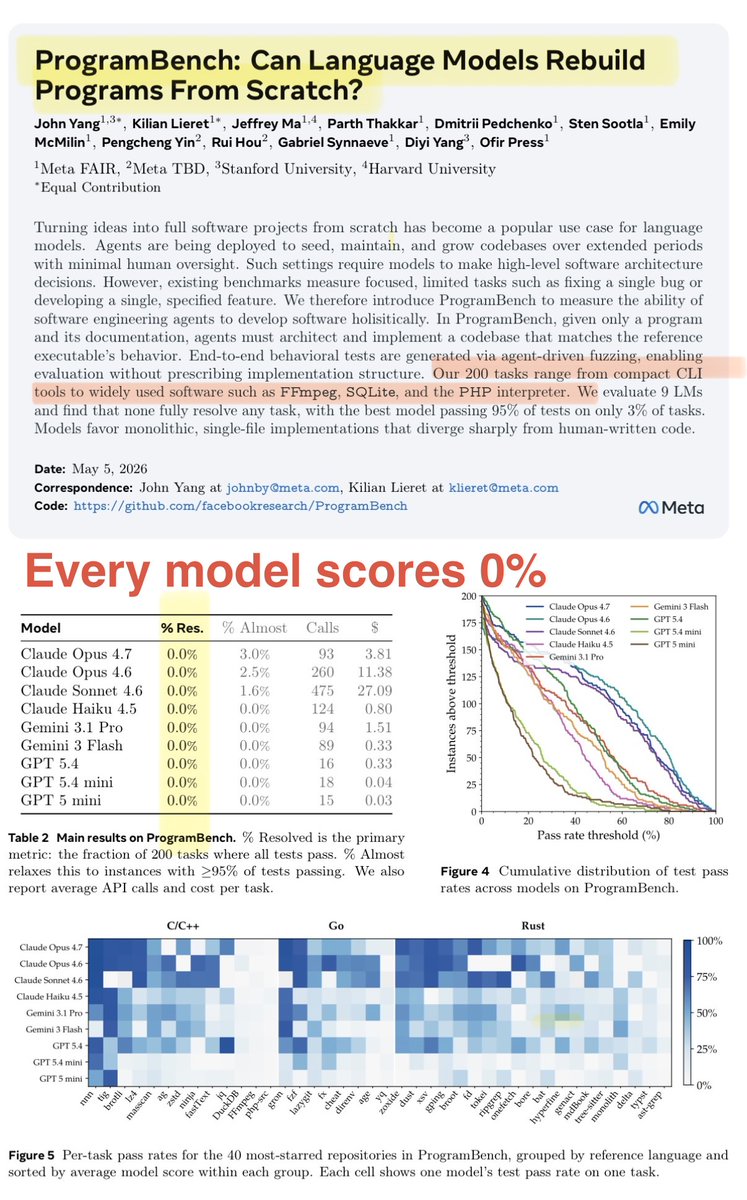
I've seen the claim that no human could do this benchmark.
Rubbish!
Many software engineers could build the same tools with just access to the tool and it's documentation.
Any software engineers should be able to do the easy projects in the benchmark.
John Crickett@johncrickett
Now that's an interesting new benchmark for AI coding! I wonder which will get off 0% first?
English
mx_twit retweetledi

“If you want to know whether the AI bubble is bursting, there’s only one publicly traded company that will tell you: Oracle…”
“Oracle has the lowest credit rating. It also has the greatest debt load, even before the infrastructure buildout came into play…”
“OpenAI… is by far the biggest customer represented in Oracle’s remaining performance obligations (RPOs), which represent how much money Oracle is slated to earn from its existing contracts. Of the $553 billion in RPOs that Oracle reported in its most recent earnings release, more than $300 billion is OpenAI” And OpenAI is facing severe headwinds.
“What happens to Oracle if OpenAI shits the bed? One possibility is that it sacrifices its software stock premium and gets priced like a utility, … and fades in significance … It’s not impossible that [Oracle] goes bankrupt”
And of course it’s not impossible that Ellison’s buddy in the White House might make the rest of us bail it out.
Must read piece by @mslopatto @verge lays out why Oracle is is overextended, and why it might augur the deflation of an AI bubble.
theverge.com/ai-artificial-…
English
mx_twit retweetledi

mx_twit retweetledi

mx_twit retweetledi

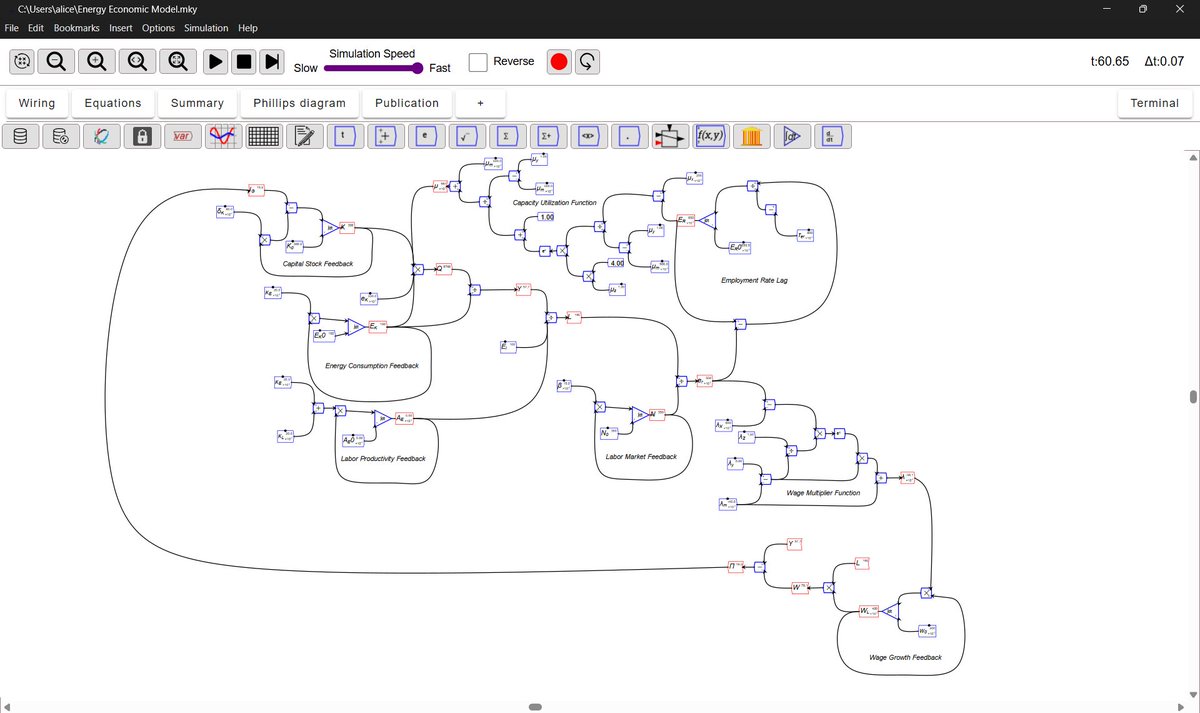
You're better off learning system dynamics than taking economics.
Hunter📈🌈📊@StatisticUrban
Many of you would understand the world much better if you took 4-5 economics classes, or purchased a textbook and made an honest and rigorous effort to understand it. Many of you appear to think ~0 about incentives, trade-offs, constraints, or second-order effects.
English
mx_twit retweetledi
god nowadays he sounds exactly like me
Big Brain AI@realBigBrainAI
Meta's Chief AI Scientist Yann LeCun: building agentic systems on LLMs is a recipe for disaster.
English
mx_twit retweetledi

Marc Andreessen just revealed how Harvard Business School was built on a broken 1941 theory, and how it's now collapsing...
Andreessen co-founded Netscape in 1994 and a16z in 2009.
He has sat on Meta's board since 2008.
He has spent 30 years backing founders and watching managerial CEOs lose to them.
The pattern traces back to one book: James Burnham's *The Machiavellians* (1941).
Burnham argued every great company had been founder-run.
Henry Ford ran Ford. Bob Noyce ran Intel.
Today, Elon Musk runs Tesla, SpaceX, and Starlink.
Then, he said, something broke.
Between the 1880s and the 1920s, a new philosophy replaced the founder. It was called managerialism.
The professional manager would now hold a portable skill, usable across any business.
The consequences were:
- Harvard Business School
- Stanford Business School
- Management as a universal skill
- The 1970s conglomerate
"That assumes the managers are going to do a good job," Andreessen says.
For 30 years, they haven't.
Managers can run something static, he says. Soup is soup. A bank is a bank. A car is a car.
But when the industry changes, the manager freezes.
Look at SpaceX.
"Imagine being a professionally trained manager, trained at a top management school, working for a rocket launch company, competing with SpaceX."
Then Elon's rockets started landing on their butt.
"Your management skills ... what good are they at that point?"
Andreessen's conclusion:
"You're much more likely to build something important in the 21st century if you start with the founder and train them on management."
What "professionally run" institution in your life has quietly stopped working?
If you're new here, @GeniusGTX is a gallery for the greatest minds in economics, psychology, and history. Follow along for more similar content.
P.S. I made a free toolkit breaking down 100+ mental models used by history's greatest thinkers.
5,000+ downloads. 113 five-star reviews.
Grab your free copy here: besuperhuman.gumroad.com/l/mentalmodels
— Marc Andreessen ( @pmarca ), co-founder of a16z, on David Senra's ( @FoundersPodcast ) podcast
English
mx_twit retweetledi

my own personal AGI moment arrived last week: gpt 5.5 completed our mandatory HR training videos for me, driving chrome via devtools
opus 4.7 was a huge wuss about the whole thing and refused while aggressively lecturing me. i can understand why pete hegseth banned it
English
mx_twit retweetledi

You really have to be an economist to believe that a mathematical proof can prove anything about the economy.
Elias Al@iam_elias1
Two economists just published a mathematical proof that AI will destroy the economy. Not might. Not could. Will — if nothing changes. The paper is called "The AI Layoff Trap." Published March 2, 2026. Wharton School, University of Pennsylvania. Boston University. Peer reviewed. Mathematically modeled. The conclusion is one sentence. "At the limit, firms automate their way to boundless productivity and zero demand." An economy that produces everything. And sells it to nobody. Here is how you get there. A company fires 500 workers and replaces them with AI. A competitor fires 700 to keep up. Another fires 1,000. Every company is behaving rationally. Every company is following the incentives correctly. And every company is building a trap for itself. Because the workers who were fired were also customers. When they lose their jobs faster than the economy can absorb them, they stop spending. Consumer demand falls. Companies respond by cutting costs — which means automating more workers — which means less spending — which means more falling demand — which means more automation. The loop has no natural exit. The researchers tested every proposed solution. Universal basic income. Capital income taxes. Worker equity participation. Upskilling programs. Corporate coordination agreements. Every single one failed in the model. The only intervention that worked: a Pigouvian automation tax — a per-task levy charged every time a company replaces a human with AI, forcing them to price in the demand they are destroying before they pull the trigger. No government has implemented this. No major economy is seriously discussing it. Meanwhile the numbers are already tracking the curve. 100,000 tech workers laid off in 2025. 92,000 more in the first months of 2026. Jack Dorsey fired half of Block's workforce and said publicly: "Within the next year, the majority of companies will reach the same conclusion." Nobody is doing anything wrong. Companies are following their incentives perfectly. That is exactly the problem. Rational behavior. At scale. Simultaneously. With no mechanism to stop it. Two economists built the math. The math leads to one place. Source: Falk & Tsoukalas · Wharton School + Boston University · arxiv.org/pdf/2603.20617
English
mx_twit retweetledi

mx_twit retweetledi

Silicon Valley was really so ahead of their time
Polymarket@Polymarket
NEW: Claude-powered coding agent reportedly deleted a company’s production database, and backups, in 9 seconds.
English
mx_twit retweetledi

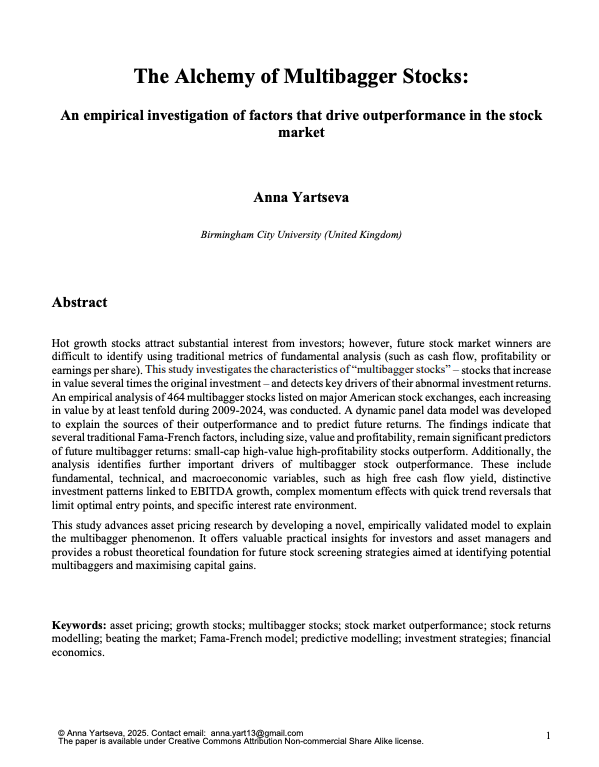
The secret of hedge funds is revealed in a 41-page PDF:
This paper analyzed 464 stocks that 10X-ed over a 24-year period.
Here are the best factors that drive outperformance: (number 3 is the best 🧵)
English
mx_twit retweetledi

You have to be fine being utterly unrelatable, to achieve anything big in life...
Walk through the fire. It's worth it.
Read more on experience of being unrelatable, and how some of the very successful experience it, cope with it, and direct it: drgurner.substack.com/p/you-are-unre…
English
mx_twit retweetledi

As the need for precision goes up, the utility of AI goes down.

Karri Saarinen@karrisaarinen
A common dynamic I observe with AI: it feels most impressive when you don’t know much about the subject, don’t care or don’t have a clear idea of what the you want. This applies across design, code, legal, and more. If I don’t know code very well, every piece of code it writes feels very impressive. Once you know what something should feel or look like, it becomes almost impossible to guide AI there. And you definitely can’t one-shot it.
English