

Natasha Loder
29.3K posts

@natashaloder
Health Editor, The Economist


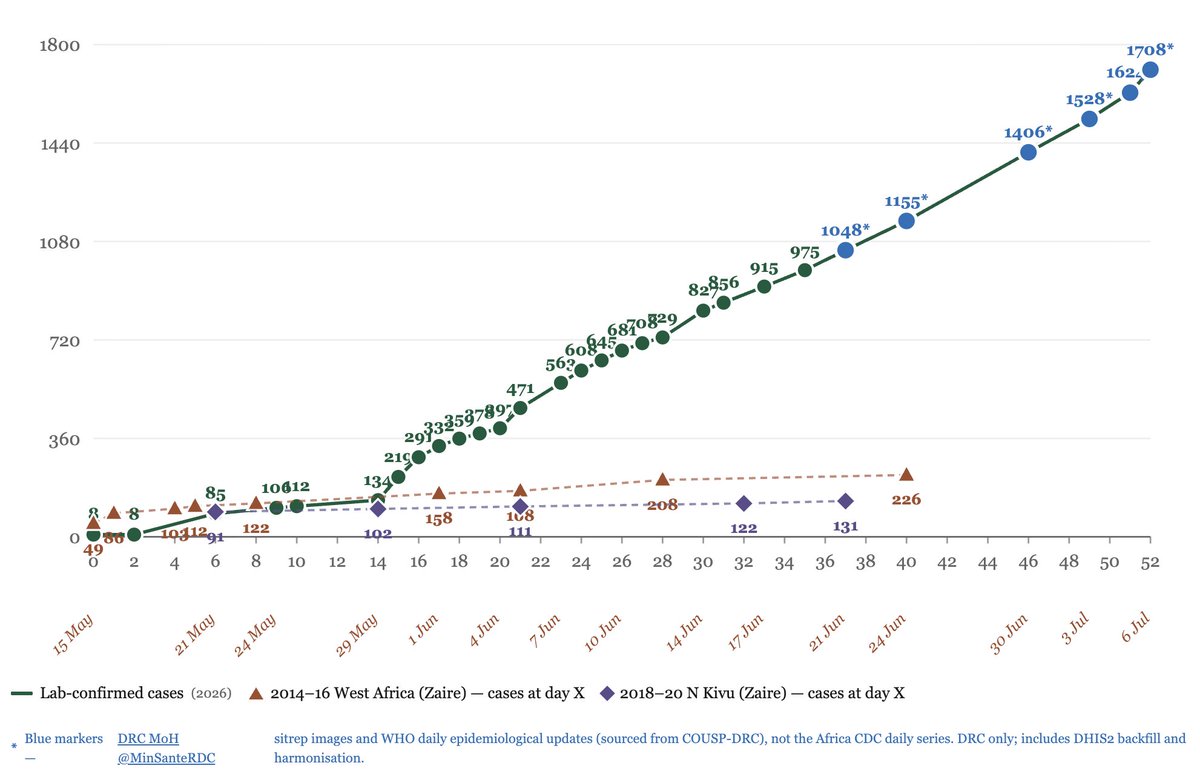
Can she not see the plateau?


All DOGE required was contact information of the recipients to confirm that funding was not fraudulent. No validated medical funding was stopped. Anything that appeared to be legitimate lifesaving funding continued and is now administered by the State Department. If anyone had actually died as a result of DOGE, their names would be worldwide headline news! On the other hand, USAID did help fund the Wuhan Virology Institute, which caused the deaths of millions, and the revolution that started the Russia-Ukraine war.

Ugh this sucks @PeterKolchinsky, bad for MA jobs @JakeAuch and bad for US nat sec @sethmoulton, @IAmBiotech. So exhausting that our own VC leaders in biotech are working against US startups and US biotech scientists. This tactic of offshoring to low cost scientific labor in China is going to fail. US biotech startups are going to prove it, we’re not giving up without a fight.

Ugh this sucks @PeterKolchinsky, bad for MA jobs @JakeAuch and bad for US nat sec @sethmoulton, @IAmBiotech. So exhausting that our own VC leaders in biotech are working against US startups and US biotech scientists. This tactic of offshoring to low cost scientific labor in China is going to fail. US biotech startups are going to prove it, we’re not giving up without a fight.


There is a major IP diligence issue hiding in China biotech asset acquisitions. Some enabling technologies may be patented in the U.S. but practiced abroad where enforcement is weaker or impractical. Under 35 USC 271(g), importing, selling or using in the U.S. a product made by a U.S.-patented process can create infringement exposure. 35 USC 295 can also shift the burden under defined conditions. This is no longer just a 'China cost advantage' issue. It is an IP provenance issue for acquirers: what platform, process or enabling technology was actually used to generate the asset?