
nuvin

486 posts

nuvin banner
nuvin

nuvin

@navinmoney

biding my time til nirvana. @avencard

Katılım Ağustos 2019
295 Takip Edilen198 Takipçiler
nuvin retweetledi
Sadi
Sadi@SadiSKhan·
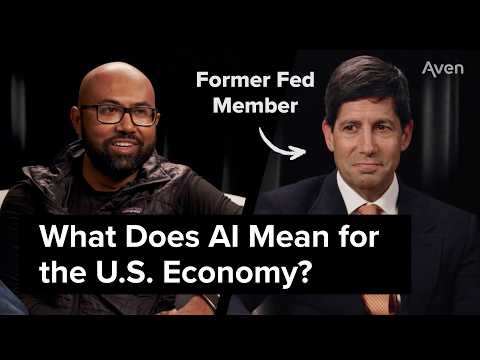
Just had a powerful convo with former Fed Governor Kevin Warsh about AI, growth, and what founders should really be focused on right now. Kevin explains why most founders are thinking about AI backwards, how crypto got its branding wrong and why they took 10 years to fix it, and how AI can expand businesses and ship new products now. Watch the full interview if you’re building now: youtube.com/watch?v=6LtRcC…
YouTube video
YouTube
English
4
8
24
2.8K
nuvin retweetledi
Bryan Johnson
Bryan Johnson@bryan_johnson·
Ok, here is my trip report from 4.67 grams of magic mushrooms, 24.9 mg of psilocybin. The dose used in modern clinical trials. First, the experience was exhilarating. Positive in every way. I felt like a kid finding and exploring a new playground. My sensory perception was dialed up to levels I must have felt as a kid but have been dulled with time. I experienced sense of touch with awe. Feeling my fingers rub together felt novel. Touching my skin and running my feet over the threaded quilt lit up my brain. It seemed that my mind was insatiably curious and wanted to deploy its sensors into the world and discover all things. I felt the same sensory joy in moving my body. Rolling my joints, curving my back, curling up in a ball, flexing muscles and moving all about in a fluid fashion. My body felt nimble, supple, fit, and strong. My sense of hearing was equally as elevated. It helped that I was also wearing my new hearing aids which restore frequencies I’d long stopped noticing. The music I listened to hit more fully than I have memory. My facilitator gave me some water in a glass jar. The visuals of the light reflections, water dynamics and sensory experience of holding the glass were so fascinating that I forgot to drink. My brain wanted to stare, study and marvel. One of the most satisfying things I discovered was taking huge, deep breaths. Inhaling life and fueling the body’s needs and wants. I did it over and over and over. This material of existence, all around us, was available and free to be mined. You just needed to breathe in. (After peaking and coming down, I ate a salad. It tasted like the most delicious food I’d ever eaten. The flavor exploded in my mouth. I savored every bite.) At one point, I felt like my entire body was still. I had a perceived sense of total body control.  Like my heart had stopped. Complete stillness. This was surprising as I’m acutely tuned to my heart beat. I monitor my heart all day every day and can usually discern my heart rate by sensation. In that moment, I couldn’t feel my heart beat or any pulse pressure through my blood vessels. First time that’s ever happened. I asked Kate to check my heart rate on my wearable and it was mid 50s. I wasn’t worried. Just curious about my sensory experience. With this heightened sense of sensory perception, it felt like my consciousness was dialed up to 10/10. I felt hyper aware and hyper alive. It felt like mushrooms restored my perception to youthful levels, returning them to factory settings and dissolving my aged numbness. Once my senses were reset, my attention sifted from the texture of existence to existence itself. We spend most of our time playing games at the layers of people, dramas, companies, politics, jobs, money, ideologies, and status.  Underneath these games is the knowing that physical death has been inevitable. Everyone before us has died. When death is inevitable, people pick their game among a wide array of options including reincarnation, heaven, legacy, offspring, ancestral veneration, existentialism and many more. These frameworks make death soothing, a virtue, and something positive to be anticipated. But what if death is no longer inevitable? I’m not suggesting immortality. I am suggesting a radical remake of human life. The speed of progress in AI, biology and medicine point to a new frontier of possibility. Are we cavemen-equivalent now compared to what we will be like in 50 years? It’s now harder to argue why we should limit our imagination. With so much promise, why have we not shifted our societal attention to secure our own existence? To solve aging. To address existential risks. To care for our planet. Why are we still messing around with self destruction, war and ignoring preserving our own existence? We work hard to be fit. To learn a skill.  Build a relationship. To make money. When we identify an opportunity, we focus and work hard. It seems to me that we’re not yet aware or awake to the opportunity of what existence could become. Whatever one’s life philosophy and belief of what happens after this life, the majority of us want to live to see tomorrow. We have stuff going on and things to look forward to. And when tomorrow arrives, we want to see the next day. Wanting tomorrow is functionally equivalent to wanting infinitely. The want to exist is deeply embedded in all of us. Our actions prove this every day. Humans have been the alpha form of intelligence for a while now, imposing our will upon all we can. Our powers have increased dramatically in the past few decades. We can edit our own DNA, design materials at the nano scale, and build thinking machines. Our alpha status is now challenged by AI. Whether AI is friend or foe, and in what ways, and on what timelines is anyone’s guess. No one knows. Mushrooms opened up my sensory awareness of this landscape to depths I hadn’t accessed before. My ability to see and understand felt like the movie Inception, where characters take a sedative to enter a different realm to carry out missions. A space as real as what we experience each day, but with different foundational pillars of reality. It felt convincing that without the aid of a reality expanding intervention (like mushrooms), you can’t really see or understand this dimension, handicapping awareness. While in this mushroom-induced dimension, it felt clear that we are about to start waking up from a slumber that has hypnotized us into accepting death. This will happen faster than people think. Once people see a practical path to extending a healthy life, they will adopt ferociously. The body positivity movement came to mind. Most people don’t really want to be overweight and unhealthy. But when we want something we can’t achieve, we come up with moral frameworks about why we didn’t want it in the first place (i.e. sour grapes). Once GLP-1s came about, people’s attitudes changed overnight. The same will happen with aging. No one wants to be crippled and handicapped by age. This awakening will also come about with the emergence of new ideologies. Revolutions erupt when a civilization’s founding myth becomes incompatible with its reality.  The system fractures, dissolves, and opens up space for new meaning to rush in and replace it. This pattern has been repeated throughout history. > The agrarian empires (800-200 BCE) ruled via tribal power and violence, creating a moral crisis that gave rise to Buddhism, Greek philosophy, Judaism and Confucianism. > Feudalism (1600-1800) ruled via divine monarchy, creating a stagnation crisis that gave rise to rational inquiry, the scientific method, individual rights and democracy. > Industrial capitalism (1848-1945) ruled via mechanization and labor exploitation, creating a crisis of alienation, mass poverty and urban chaos that gave rise to socialism, nationalism, regulation and collective rights. > Liberal capitalism (1980-2025) ruled via consumer sovereignty and free markets, creating a crisis of attention capture, metabolic collapse and existential despair that will give rise to something new. Capitalism solved for scarcity. Its defining virtue was freedom to choose. Ironically and perhaps inevitably, compulsion replaced scarcity and freedom decayed into addiction. Revolution is at our doorstep. Our current systems are fractured, evolving, and opening up space for new meaning to rush in and replace it. Change has been a reliable feature of human society. It will happen on accelerated timescales given the pace of technological and scientific advance. After journeying this terrain, I was left feeling unbridled enthusiasm for the future of existence. That we may be the equivalent of cavemen trying to anticipate a future that is unimaginable to our current minds. And that existence could be more exquisite than any can actually paint at this moment. New archetypes will emerge: warriors and caretakers of existence. People who are defiant of death, and view self-destruction as primitive and low-status.  Who take the continuation of human existence as seriously as profits, fame or power. They will emerge as our high-status societal idols. The irony is that people thought this experience would collapse my interest in life and have me willfully kneeling to death. To find truth though, one must always invert. What seems more likely is that people use death to shield from the disappointment of not experiencing the potential of life without the limitations of death.
English
1.6K
1.2K
17.4K
3M
nuvin retweetledi
Kasey Zhang
Kasey Zhang@_WEEXIAO·
We've raised $7M to help companies build AI agents that actually learn and work. @Osmosis_AI is a platform for companies to fine-tune models that outperform foundation models with reinforcement learning. Better, faster, and cheaper.
English
138
90
639
1.2M
nuvin retweetledi
DR22 Ω 🪬🎭
DR22 Ω 🪬🎭@DejaRu22·
Napoleon 20 cups of coffee a day Bach 30 cups of coffee a day Teddy Roosevelt 40 cups of coffee a day Voltaire 50 cups of coffee a day
English
97
100
1.9K
190.8K
nuvin
nuvin@navinmoney·
the permanent underclass will be spending the rest of eternity making slop videos of the things the chosen few will be experiencing irl
English
0
0
0
84
nuvin
nuvin@navinmoney·
Working doc
nuvin tweet media
English
0
0
2
81
nuvin
nuvin@navinmoney·
nuvin tweet media
roon@tszzl

@Pavel_Asparagus look you guys gave me a lotta flak back then I gotta collect my W congrats to both of you on everything

ZXX
0
0
4
2.6K
nuvin retweetledi
FOX Sports
FOX Sports@FOXSports·
24 years ago today, Tom Brady subbed on for an injured Drew Bledsoe... The rest is history.
English
269
3.7K
42K
2.5M
nuvin
nuvin@navinmoney·
28-3
QST
0
0
0
55
nuvin retweetledi
Ani Iyengar
Ani Iyengar@aniiyengar·
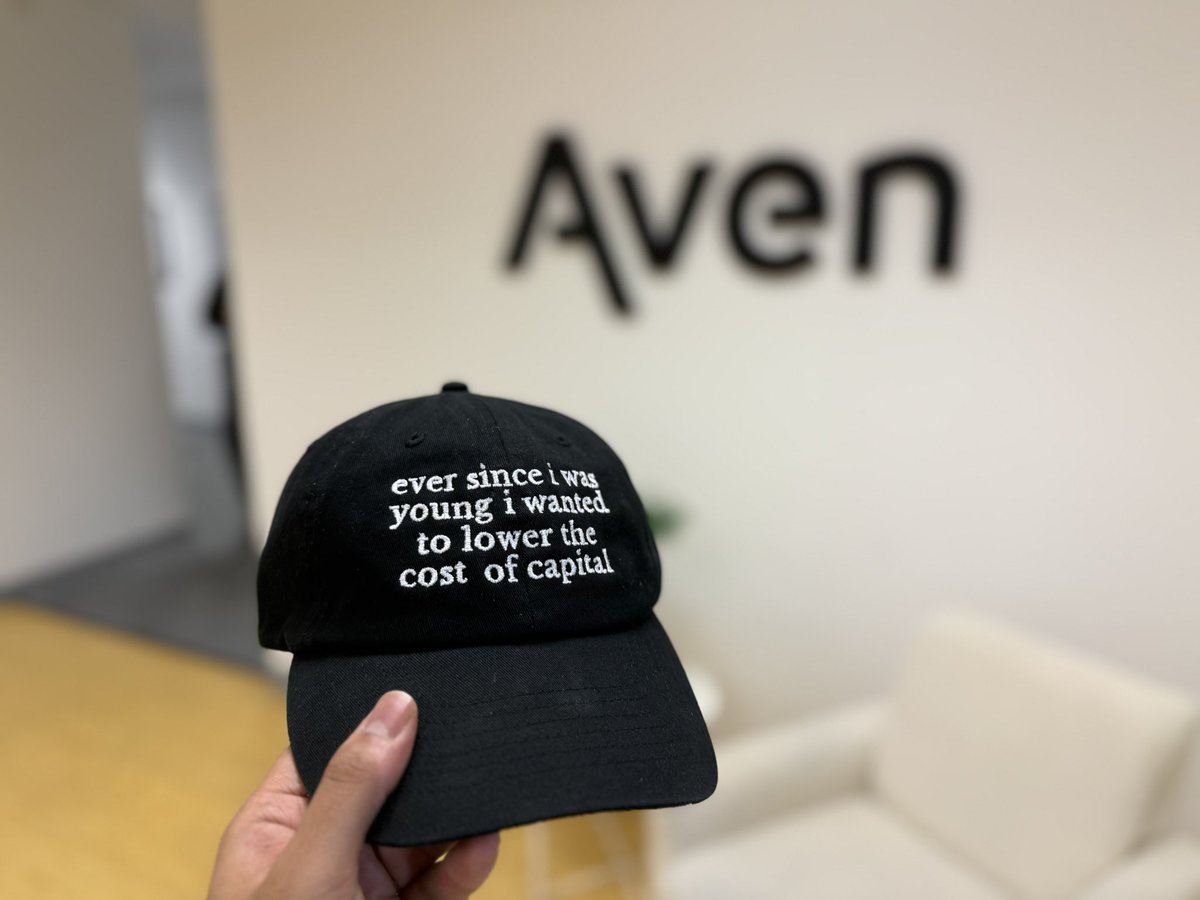
Got these hats to celebrate the rate cuts
Ani Iyengar tweet media
English
3
2
25
1K
nuvin retweetledi
roon
roon@tszzl·
the closer you are to perfect competition, race dynamic, the more the machine owns you. moloch runs the show. only monopolies can be kind
English
101
34
913
58.4K
nuvin retweetledi
Matthew D. Sacchet
Matthew D. Sacchet@MatthewSacchet·
For thousands of years, Theravāda Buddhism—an ancient tradition with origins in India—has described what is considered the highest meditative attainment, called nirodha samāpatti, regarded as deeply connected to nirvana/enlightenment. For the first time, we have been able to use brain imaging techniques to observe material correlates related to this meditative event in advanced meditators: the physical signature of the human brain in this condition. Our findings provide initial validation for those who have wondered whether such a state has measurable correlates, or questioned the reports of practitioners who describe it. Equally important, the material patterns we observed, when compared and decoded quantitatively against existing brain-mapping indices, aligned strikingly with indicators of well-being and the absence of suffering. For now, I want to share this preprint because it represents a landmark not only in the neuroscience of meditation but also in the broader study of cognition. We believe this preprint marks a milestone in the scientific study of meditative traditions, notably here from South Asia, and brain states, while also offering fresh insights into the nature of consciousness itself. There are further deep implications for ongoing questions in neuroscience, which I will explore in future posts. More to come. We're entering the era of empirical enlightenment: A scientific understanding of what might be the deepest forms of human spiritual development. For the first time, science is starting to empirically capture what contemplatives have claimed for centuries: that conscious experience can be completely shut off on purpose. Not from trauma, sleep, or drugs, but through advanced meditation. And what comes after might be one of the most profound psychological shifts a person can experience. We’ve just released an initial preprint of the first-ever scientific study of Extended Cessation (EC). Using ultra-high-resolution 7T fMRI, we intensively tracked advanced meditators as they entered what some describe as nirodha samāpatti—the most advanced meditative state in certain Buddhist traditions, characterized as the cessation of all mental activity and conscious experience, and thought to be closely related to enlightenment (e.g., nirvana, nibbana). Each participant, as a rare practitioner, accessed this state through advanced concentration and insight practices and all reported the same thing: no thoughts, no sensations, no emotions, no awareness, not even the sense of being. Consciousness went offline for extended periods. Our neuroimaging results aligned with these first-person reports. Among the most striking findings: —Major brain systems, including the visual, central executive, and default mode networks, as well as subcortical and brainstem regions, reorganized significantly during EC, suggesting the brain was functioning in a fundamentally different way when consciousness went offline. —Most brain regions communicated much less during EC, especially between the brainstem and higher-order cortical networks, suggesting a global quieting of brain communication, with a few sensory and subcortical areas remaining selectively active. —The brain’s overall organization shifted in a surprising way: instead of going flat like in sleep or anesthesia, it became more polarized, suggesting that some types of neural processes may actually sharpen during cessation. —The brain’s basic energy patterns dropped significantly, especially compared to memory-driven states, pointing to a broad cortical dampening consistent with a mental ‘shutdown.’ —Neural activity during EC aligned with brain regions rich in histamine H₃ receptors, linked to alertness and sensory clarity, while calming in areas tied to higher-order thinking and emotional reactivity. This pattern may help explain the clarity and peace reported after EC. —Brain activity during EC was also related to brain modes associated with alertness and sensory clarity, while less with brain modes associated with psychological suffering such as loss, pain, anxiety, fear, and stress. EC mirrors some descriptions from Buddhist texts of nirodha-samāpatti. Traditionally, this state is seen as a gateway to the radical reduction, even cessation, of psychological suffering. And that’s exactly what our participants described. After coming back online, they reported deep alterations to their minds: exquisite clarity, sensory vividness, radical openness, and lasting inner peace and joy. We’re entering a new era of meditation research where radical contemplative claims and cutting-edge neuroscience are finally meeting on rigorous, empirical, and incredibly exciting terms. What once sounded like mystical metaphors are turning out to be measurable states and reproducible human capacities. And thanks to the astonishing dedication of a few rare practitioners who we have had the honor to study, we’re starting to explore questions about consciousness—and what the brain may still be capable of—in ways never before possible. I am deeply grateful for my incredible colleagues on this study: Winson Yang @winsonfzyang, the first author, and our collaborators Akila Kadambi, Kilian Abellaneda-Pérez @kabellanedap, Grace Mackin, Isidora Beslic, Ruby Potash, and Terje Sparby @terjesparby. You can read the full free preprint of the study in the comments. If you find this work exciting or moving, my colleagues and I at the Meditation Research Program would be deeply grateful for reposts and sharing with others who may be interested. This work is only made possible and meaningful through the generosity, dedication, collaboration, and insights of our growing community of scientists, scholars, and practitioners around the world. May this work benefit many 🙏
Matthew D. Sacchet tweet mediaMatthew D. Sacchet tweet mediaMatthew D. Sacchet tweet mediaMatthew D. Sacchet tweet media
English
109
464
2K
164.7K
nuvin retweetledi
Ani Iyengar
Ani Iyengar@aniiyengar·
What did you get done this week to lower the cost of capital?
TBPN@tbpn

IN NEWS: @AvenCard raises $110M Series E to build America’s first “machine banking” platform for homeowners. @sadiskhan (Co-founder & CEO, Aven) on navigating interest rates and consumer demand: “Our goal is to build a product with the lowest cost of capital for consumers after your primary mortgage. Rate hikes or cuts don’t change that mission.” He says when interest rates go down, demand for credit rises, and homeowners tap into home equity more, especially because refinancing is harder when mortgage rates are low and locked in.

English
0
1
8
954
nuvin retweetledi
TBPN
TBPN@tbpn·
IN NEWS: @AvenCard raises $110M Series E to build America’s first “machine banking” platform for homeowners. @sadiskhan (Co-founder & CEO, Aven) on navigating interest rates and consumer demand: “Our goal is to build a product with the lowest cost of capital for consumers after your primary mortgage. Rate hikes or cuts don’t change that mission.” He says when interest rates go down, demand for credit rises, and homeowners tap into home equity more, especially because refinancing is harder when mortgage rates are low and locked in.
English
4
7
26
14.2K
nuvin retweetledi
roon
roon@tszzl·
when sama was fired in ‘23 i had vietnam level flashbacks to the great beanstalk flash loan attack
English
29
9
533
37.4K
nuvin
nuvin@navinmoney·
nuvin tweet media
ZXX
0
0
2
100
nuvin retweetledi
Ani Iyengar
Ani Iyengar@aniiyengar·
Life update: I have spent the last year+ as an engineering lead at Aven, working on consumer apps and growth. This is a talent-dense team working on a single problem: reducing the cost of capital for everyone. Hiring aggressively - if you or a friend would be a good fit, DM me!
Aven@AvenCard

We just raised a $110M Series E at a $2.2B valuation to cut America’s credit card interest burden in half. Led by @khoslaventures with @generalcatalyst, @caffeinated, @gic_sgp, @ElectricCapital, and @foundersfund. The stats: $1T+ in credit card debt and growing. $200B in interest paid every year. 20%+ APRs that haven't budged in decades. We can do better. We’ve already saved families $215M+ in interest and counting. Today, we’re expanding into mortgage refinancing. Our ambition? To drive the single largest reduction in the cost of capital in American history. 🇺🇸

English
9
8
140
29.9K
nuvin retweetledi
General Catalyst
General Catalyst@generalcatalyst·
Americans are carrying $5T in non-mortgage consumer debt while $35T in home equity sits underutilized. This disconnect represents one of the biggest opportunities in consumer finance (Source: St. Louis Federal Reserve 2025). @SadiSKhan and the @AvenCard team seized this opportunity, making it their mission to help everyone lower their cost of capital. Aven saw an opening to create what they believe is an entirely new category with its machine banking platform. They built breakthrough technology, including robotic arms for remote notarizations, automated compliance systems across origination, servicing, and customer support, and worked with cutting-edge capital markets participants to help investors understand this entirely new product category. The result is their Home Equity Card that you can sign up for in minutes, cuts APRs in half, earns 2% rewards on all purchases, and delivers a delightful user experience with the convenience of a credit card at HELOC rates. The market validation speaks volumes. Over $215M in interest savings delivered to homeowners, with 80% of customers having never accessed home equity before. We believe Aven represents the future of consumer finance through technology that makes healthier financial lives possible for everyone.
General Catalyst tweet media
English
2
3
12
2.1K