

Neil Smith
16.5K posts
Neil Smith
@neils888
https://t.co/wisBZKQCcn Volcanoes, Business, NMFC tragic, Australian Politics, IR & photography. All views (except RT) are my own
Ermington, Sydney Katılım Nisan 2010
2.3K Takip Edilen1.6K Takipçiler

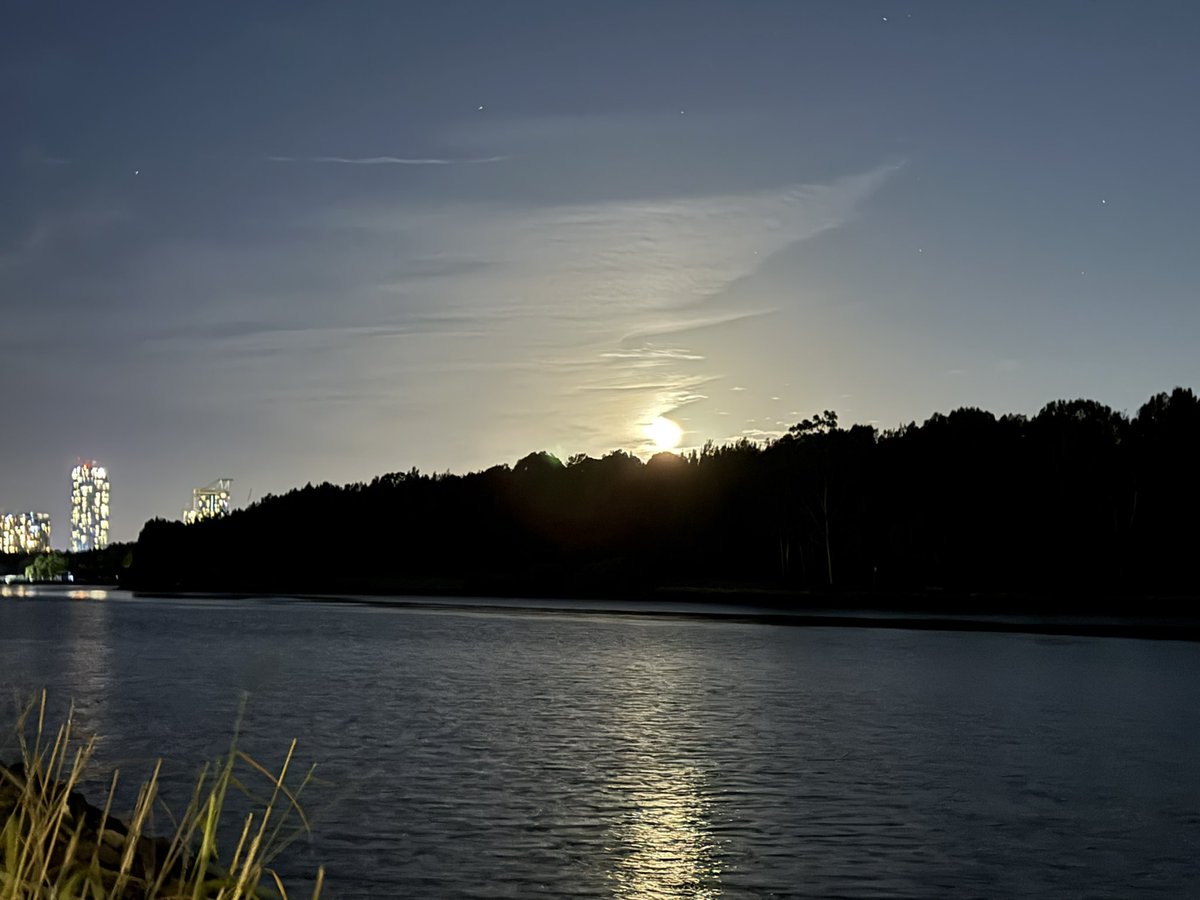
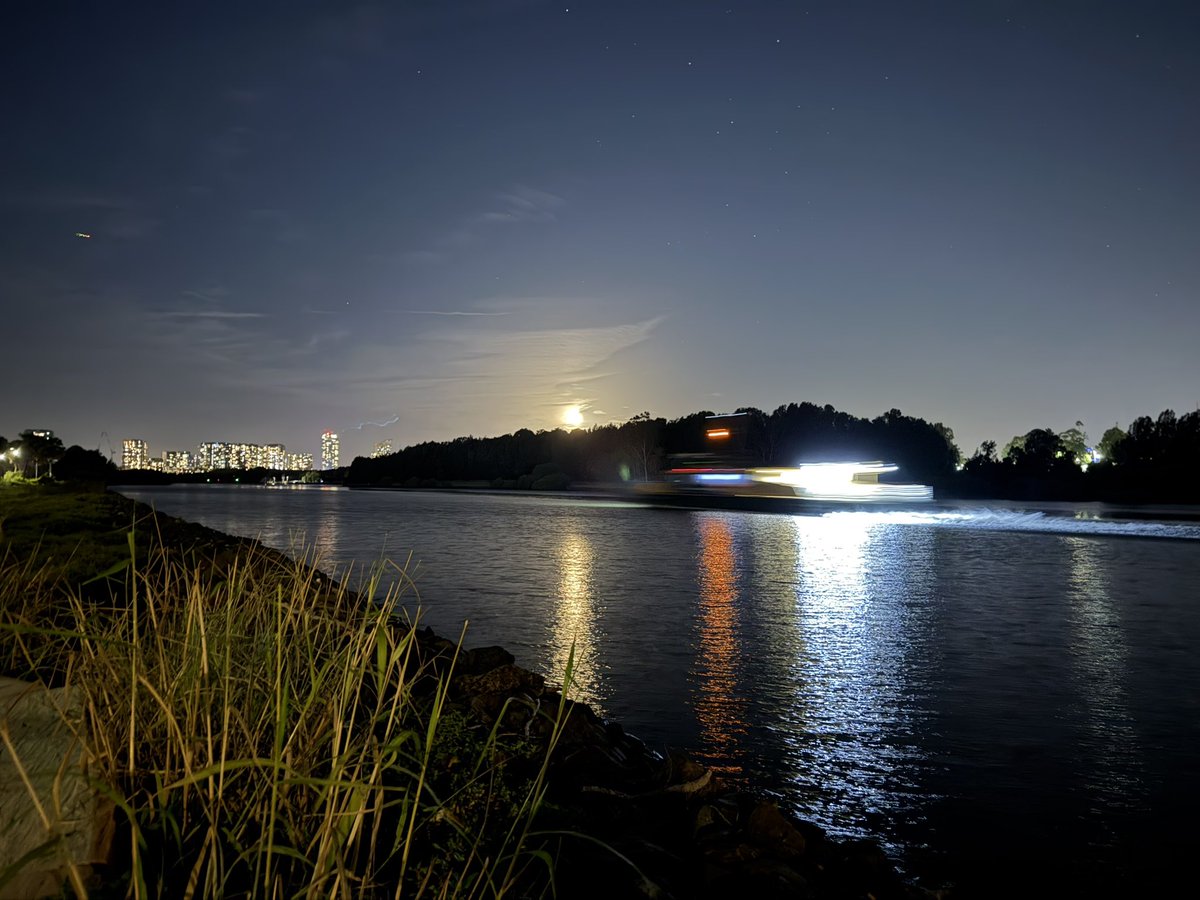
Drop a picture of a sunset/sunrise✨
#SundaySunset
Every sunset carries a trace of yesterday we cannot keep..

Chriz@chriz31_07
Drop a picture of a sunset/sunrise✨ #SundaySunset Every sunset carries a trace of yesterday we cannot keep..
English

Central Bankers they don’t serve capitalism. They serve their own interests.
If capitalism were their aim, we would have built stronger industries, deeper productive capacity, and a broader class of owners, makers, engineers, farmers, builders and manufacturers.
Instead, the system was selected for deindustrialisation. It rewarded financial extraction over production, asset inflation over wages, imports over national capability, and dependence over sovereignty.
In the 17th century, a serf might work three days for the manor house. Today, many workers spend a similar portion of their lives working for the bank.
The name and firm have changed, but the system is familiar. The modern worker is chained to his shelter by debt, rent, mortgages, fees, inflation and financial claims created by institutions that contribute little to the real economy.
In a systemic sense, they are patristic; sure, they provide capital, though in this cycle, they provided capital to financialise the systems indentured workers.
The banks don't support the economy. Too often, they sit above it. They create credit, expand asset prices, collect interest, and then claim they are the indispensable engine of prosperity.
But when finance grows too large, it stops funding production and starts feeding on it. We stopped funding production decades ago.
Which is the cycle? Every time banks and financial interests overstep, they become too greedy. Every time they become too greedy, they distort the economy. Every time they distort the economy, the political class eventually protects them instead of the public. Then the technocratic class arrives to justify the arrangement with complicated language, models, forecasts and moral lectures.
But the outcome is fewer real industries, fewer independent producers, fewer competitive markets, and more dependence on a narrow class of financial and technological gatekeepers.
Hamilton understood the importance of productive industry. Eisenhower warned against concentrated power and the military-industrial machine. Robert Menzies understood that national strength required more than consumption and financial speculation.
Leaders of the past, whatever their flaws, often understood something many modern leaders have forgotten: liberty is not built on debt, dependence and imports. Freedom rests on the ability of a people to make things, defend themselves, feed themselves, power themselves and not be permanently beholden to foreign suppliers or domestic financiers.
A nation that cannot produce is not truly sovereign. A nation that cannot manufacture becomes strategically weak. A nation that sells off its productive base and calls the result “efficiency” is not modernising, it is dismantling its own state.
When production and finance fall out of balance, rivalry becomes inevitable. Nations that lose their industrial base become insecure. Nations that dominate supply chains become aggressive. Financial elites profit from instability, while ordinary people pay the price through inflation, unemployment, debt and war.
Central banks and financial institutions may not print ammunition directly, but they create the conditions that make conflict more likely. They inflate assets, punish workers, reward speculation, and push nations into dependency. Then, when the imbalance becomes dangerous, the same class that caused the instability presents itself as the only class capable of managing it.
Real capitalism requires competition, productive investment, broad ownership, failure for the incompetent, reward for the capable, and markets that are not permanently rigged in favour of insiders. But most of the modern economy is not that. It is dominated by duopolies, monopolies, cartels, too-big-to-fail banks, captured regulators, and technology platforms that behave more like private governments than companies.
Capitalism exists as an ideal, and at certain points in the economic cycle, it briefly appears. But it rarely remains pure for long. Power concentrates. Finance captures politics. Corporations eliminate competitors. Banks socialise losses and privatise gains. The productive economy gets hollowed out while everyone is told this is progress.
A free society cannot survive on financial engineering, imported goods, inflated property values and digital monopolies. It needs productive strength. It needs industry. It needs skilled workers. It needs competition. It needs national independence. Above all, it needs a system where money serves the real economy, not the other way around.
Once finance becomes the master rather than the servant, liberty begins to disappear. And once a nation forgets how to make things, it eventually forgets how to defend itself.
English
GIF
English

English
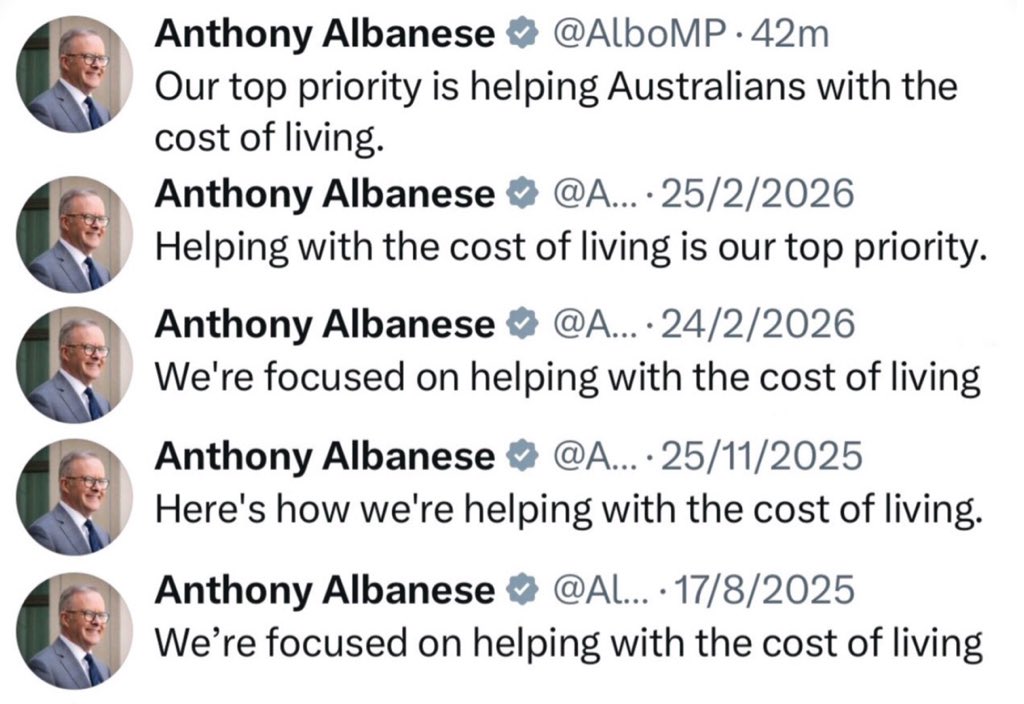
One year since the election, we've been focused every day on helping with the cost of living.
English
@Robs1812 @EnergyWrapAU First step in fixing a problem is admitting that there is a problem.
Bowen denies that there is a problem to resolve. Hence the Federal Government is not doing anything meaningful to address the problem; save begging for molecules across the region
English
@neils888 @EnergyWrapAU It is nothing more than a cheap political stunt - go & read the actual LPN announcement...
English


@Robs1812 @EnergyWrapAU Our idiot Energy Minister says Australia does not need any of the above.
You’ve got an energy background Rob, explain how that position makes sense in 2026?
English
@Kyptastic1 @JaneTerrane07 #gold
Extremely clever.
BTW alternative Weakness of Kane Cornes:
“Thinking he has even 1% of the talent of Hunter S Thompson”
English

English

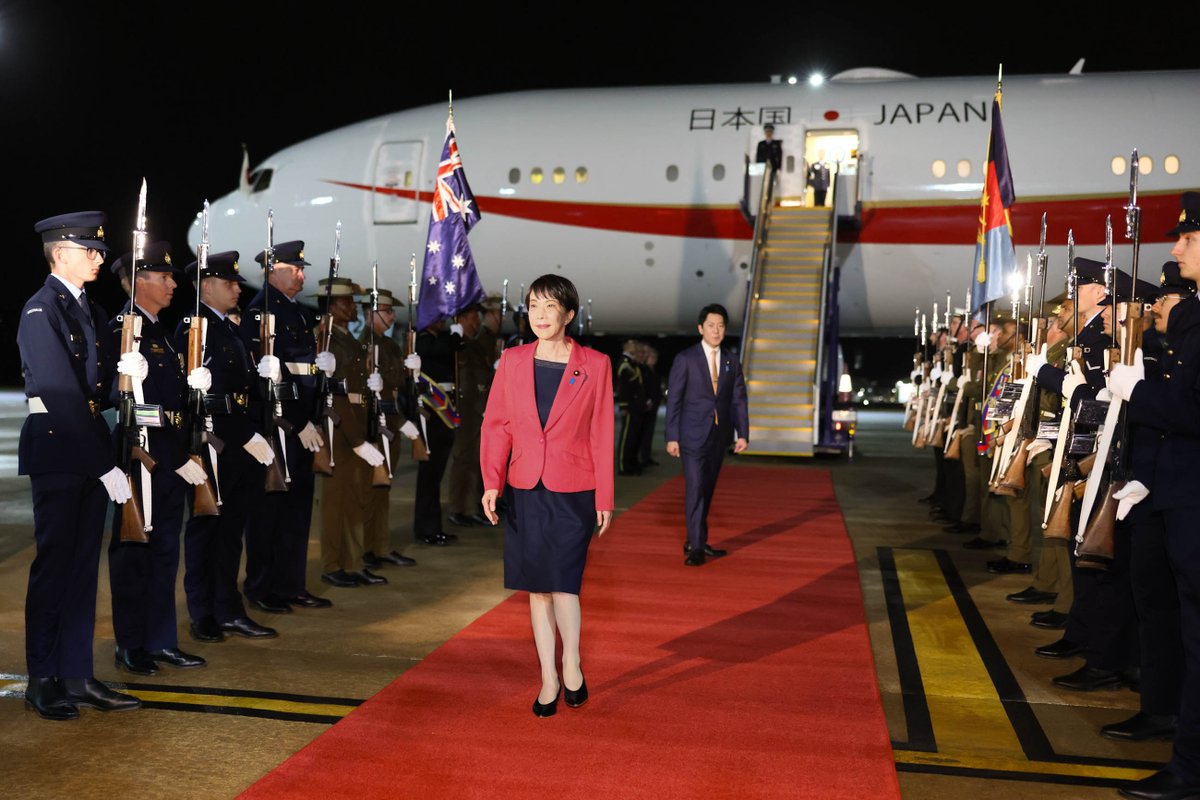
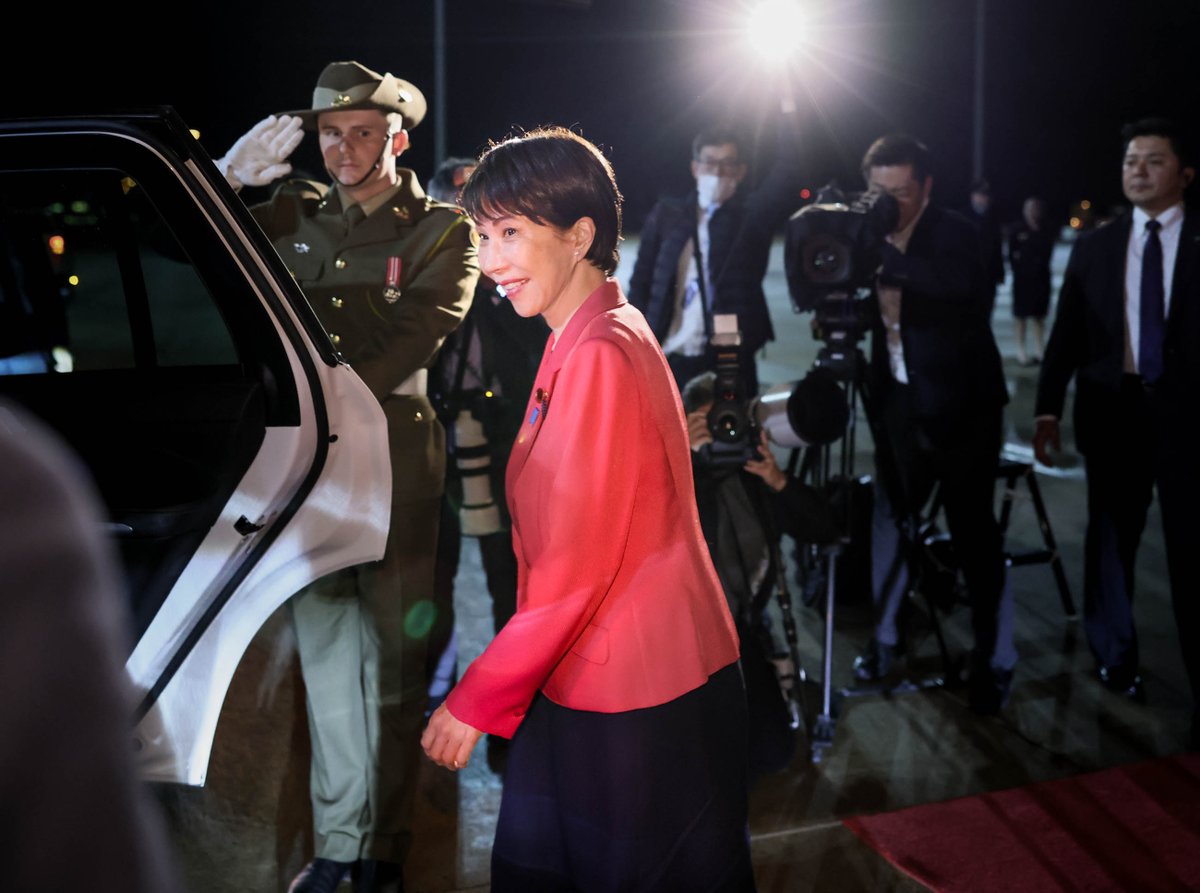
オーストラリアの首都キャンベラに到着しました。
日本の総理として、約3年半ぶりのオーストラリア訪問になります。
本年は日豪友好協力基本条約署名50周年という節目です。
地域の安全保障環境が一層厳しさを増す中、この半世紀、揺るぎない友好関係を築いてきたオーストラリアとの連携はますます重要になってきています。
アルバニージー首相@AlboMPとの間で、重要鉱物やエネルギー安全保障を含む経済安全保障、経済、近年の強固な日豪関係の基盤となっている安全保障、人的交流といった幅広い分野の協力について議論を行うとともに、地域情勢や現下の厳しい国際情勢についても、真剣で率直な意見交換を行い、両国の連携を確認したいと考えています。


日本語

@BenSomerson @AlboMP If @AlboMP only delivered 10% of what they claimed they would be well….
Unfortunately the scoreboard is -50% and getting worse
English

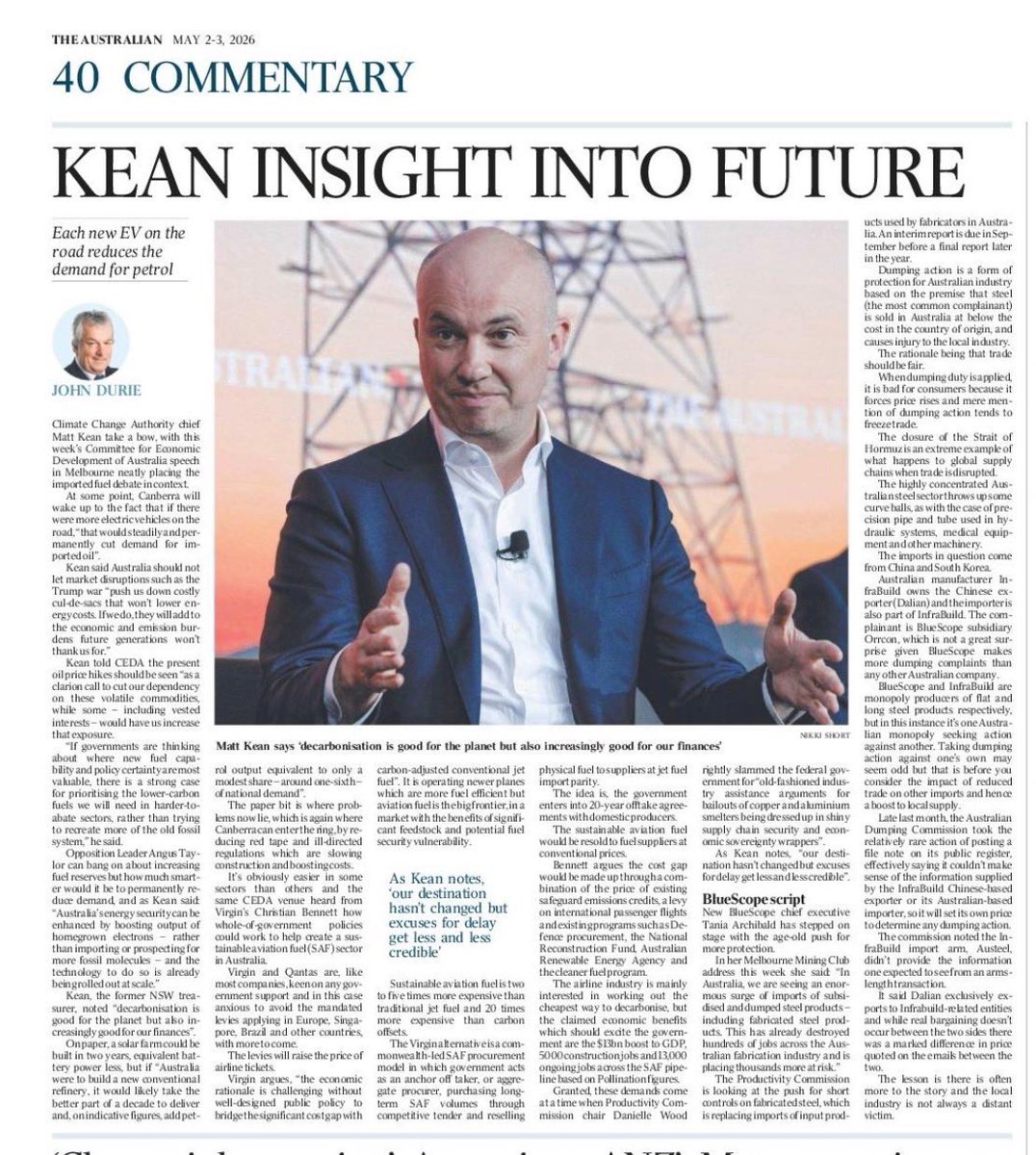
🇦🇺 Australia’s energy security won’t be solved by drilling more holes.
It’ll be solved by needing less of the stuff in the first place. 🌏 Our destination hasn’t changed — but excuses for delay get less and less credible. Check out my comments in @theaustralian today. #CAE2026
English
@GreenTyler27 When the black outs begin I seriously hope that the role Chris Bowen is held accountable.
In the meantime I will continue to help anyone who is seriously trying to dislodge Bowen from his electorate.
English

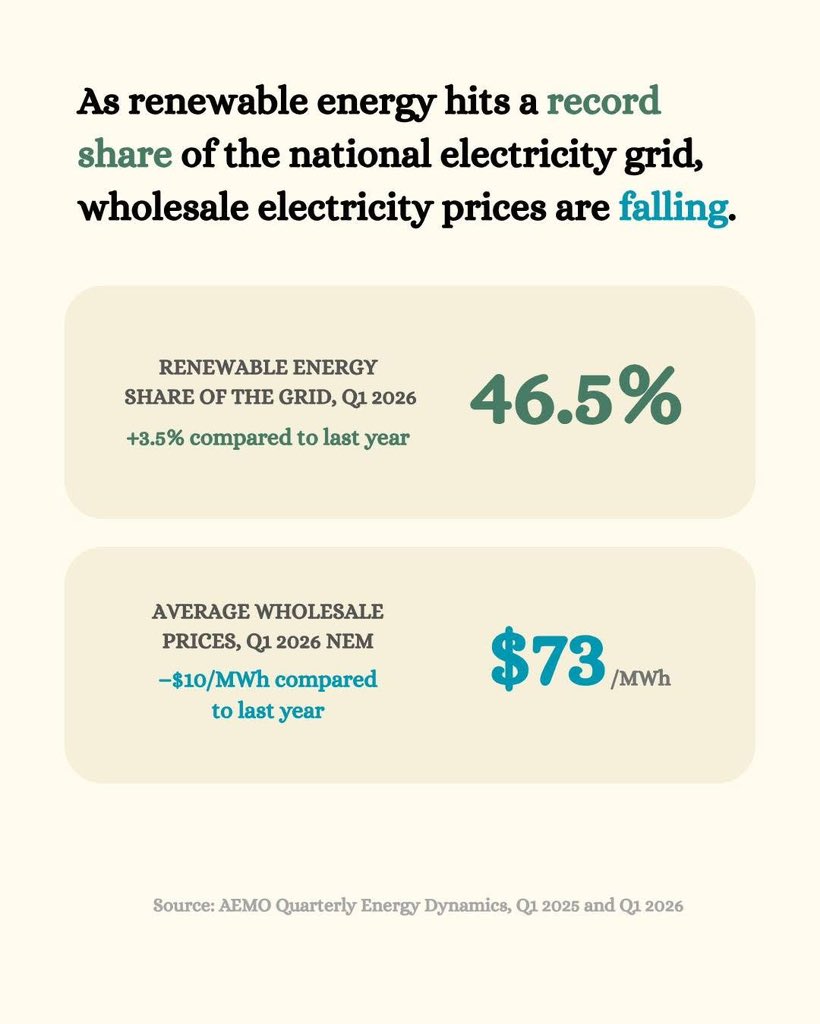
More games from the energy minister in Australia. Chris Bowen is pointing to falling wholesale prices as if he government is doing well. But most Aussies understand we that households don’t pay the wholesale rate.
We pay for:
- New poles & wires
- Backup for when wind/solar fail
- Massive new transmission lines
- Government-guaranteed returns to investors
The wholesale generation price of electricity is actually only ~⅓ of your bill.
You don’t run an energy grid on averages, you pay for it at its weakest point.
English
Excellent point @EnergyWrapAU
The Australia Institute should be an open book in terms of its funding sources. WHO is actually paying the bills?
And with regards to @DavidPocock he understands his political views are on fertile ground with the close minded voters of the ACT and inner suburban communities of Melbourne Sydney and Brisbane. The search for “truth” is not part of the narrative
English
Beer is obviously too expensive along with electricity, fuel, food, and plenty of other products inflated by taxation.
I align strongly with Kerry Packer who infamously said to the politicians, "you're not spending it that well that we should be donating extra".
Fuel is even taxed twice and we all pay royalties on the resources we consume domestically that generate our electricity. Then we pay retailers who pay tax, then we pay GST on top.
Meanwhile so-called 'free' industrial wind and solar receive subsidies that increase our costs but don't pay any royalty on the sun or wind 'resource' they are consuming.
Despite the frantic claims to the contrary the gas industry does pay tax, it employs a lot of people (like me for example) and spends hundreds of billions setting up their long-term gas projects. It's not a game. Most of them don't see a profit for the first half of the project lifecycle.
But the Australia institute does play a cynical game of 'what's fair and what's not' according to them.
There are plenty of lobby groups on all sides of politics, but who does the Australia institute lobby for?
Who benefits from ending Australian resource industries?
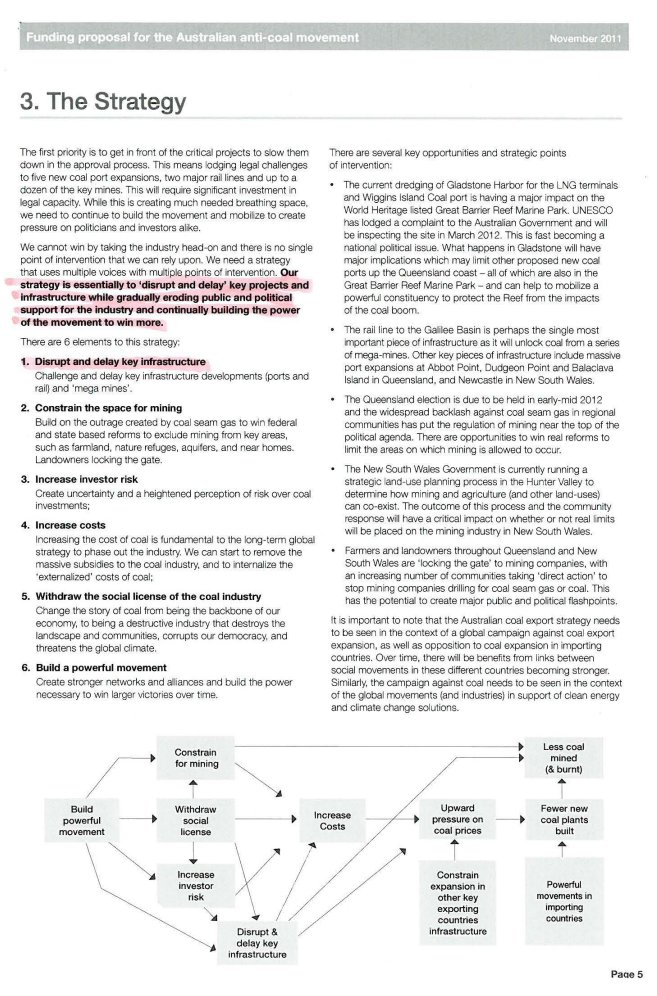
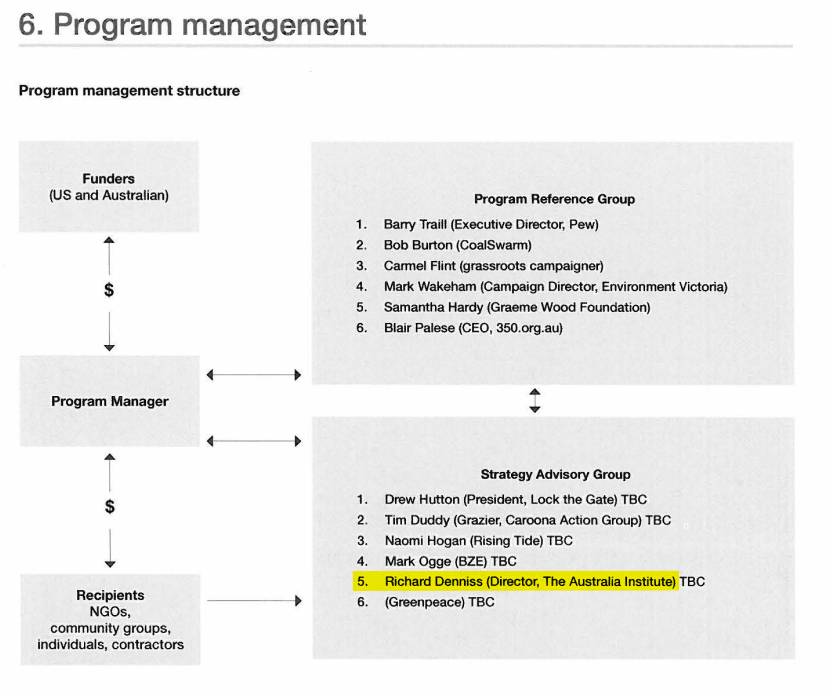
Denniss (head of Australia institute) is named in this 2011 activist playbook which details the strategies intended to shutdown the QLD coal mining sector.
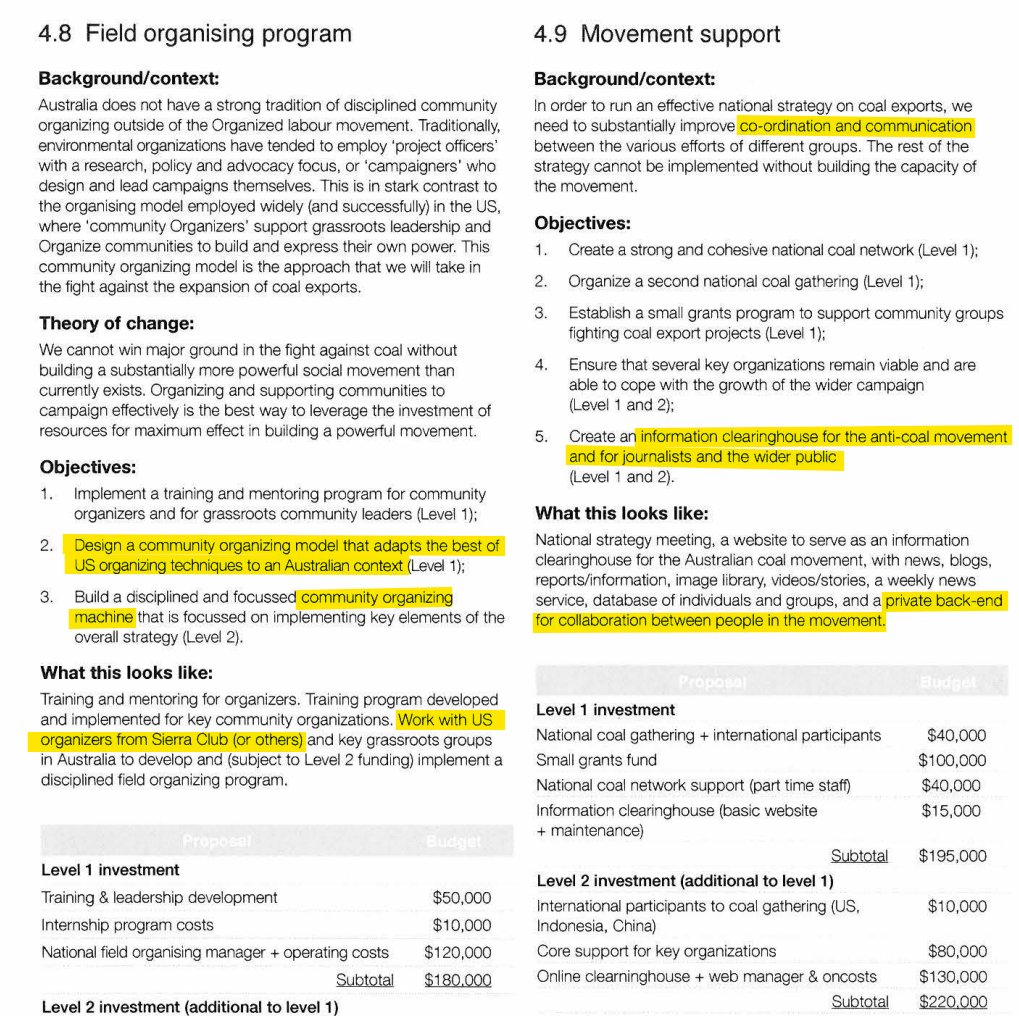
The same strategies are now being deployed by the Australia institute against the gas sector. These strategies include:
- disrupt and delay
- increase risk
- increase costs
- attack social license
These are not my words, these are words from the playbook Denniss is listed in.
So let's follow the money.
I work in the gas sector and I'm perfectly ok with readers judging me by my words and actions. I strive for logic and facts and I do my best to play the ball not the man.
People I work with say to me, "you know it would be great to sit down with David Pocock and explain how the gas industry works, I think he'd change his position on this tax stuff. He clearly doesn't understand".
Most people are operating under the assumption the Pocock's of this world are interested in getting beyond a shallow pre-determined opinion. I think that's mistaken.
In my opinion a politician like David Pocock is not interested. If he was he'd seek out a range of opinions on a subject he knows nothing about. Perhaps I'll be proven wrong and have to apologise. I sincerely hope that's the case. Bring it on.
The gas sector itself (and the wider resources sector) is obviously looking after its own best interests. When it comes to tax and royalties it's also obvious they'll argue for their own interests. So you know where they are coming from.
Likewise industry lobby groups like the Business Council Australia, Queensland Resources Council and Australian Energy Producers - their members are listed publicly. their interests are transparent. They are operating as expected, their actions are predictable.
But what about the Australia institute? Who's interests are they serving?
apps.parliament.qld.gov.au/find?id=5516T7…

Australia Institute@TheAusInstitute
This gas industry ad is trying to convince you they pay their fair share of tax...even though it says exactly the same thing we've been saying! The government gets more from the beer excise than from the PRRT! 🍻 #auspol
English
Morning coffee at the Salt and Butter cafe in Ermington. Good food, great location, excellent team and outstanding service.
If you’re in the area please check it out

English


Two Amazon robots got stuck in an aisle, spending what appears to be an eternity shuffling back and forth because neither one could figure out who should move first.
This is what happens when you forget to teach a $200,000 robot to say "no, after you."
English