Sabitlenmiş Tweet

한국어
Johnny Lim (Woojong Lim) [email protected]
3.7K posts

@neolha
$neolha, https://t.co/bymLLUPu2W father, developer, architect BSV Association Ambassador for Korea I may judge your actions, but never you.
Hoy se estrena la película “Finding Satoshi” auspiciada por Coinbase. Apuesto a que su conclusión es que Satoshi Nakamoto es uno de los candidatos fallecidos. Hay Finney es mi apuesta. Len Sassaman mi segunda opción. A las élites financieras les interesa enterrar esta amenaza
@Brendan_Lee__ you're not stupid. Every BSV user hits this, and most quit right here. BRC-100 doesn't expose a legacy-style receive address. Exchanges don't support BRC-100. Most BSV funds live in legacy wallets — @handcashapp, @ElectrumSV, @rockwallet — and there's no direct path from any of them to a BRC-100 wallet. That's where people give up and wrongly blame the protocol. The friction is a UX gap, not a protocol problem. @DevelopingZack has it right — funding should be as simple as 1, 2, 3: download, setup, fund. @deggen added legacy receive to BSV Browser to help close that gap. Hodos chose to put legacy + BRC-100 in one wallet, side by side in the same app — because the transition needs a bridge. Same philosophy as the browser itself: Hodos Browser bridges Web2 to Web3, Hodos Wallet bridges legacy to BRC-100. Users do need to install a new browser, but Web3 will eventually need full control of the browser layer. Why not get a head start? Credit to @ProjectBabbage and @BSVAssociation for the BRC-100 standards that make this possible. Hodos is independent of both Babbage and the BSVA, we built directly from the public standards — and it interoperates with BRC-100 apps from any independent dev anywhere, like @johncalhooon, with zero coordination required. That's what an open standard looks like in practice. Public beta is live today — HodosBrowser.com

How does one get a receiving address out of the Metanet desktop app? Am I stupid or is it just impossibly obtuse?

Another masterclass from Satoshi Nakamoto: Free Short Course: Programming on Supercomputers youtube.com/playlist?list=…




@CsTominaga the Hayekian economist with a computer science degree with the necessary hardware who built the thing Hayek could only theorize about.
When a BSV node starts for the first time, it has no idea who else is on the network. DNS seeds are the phone book — the node asks "who's out there?" and gets back IP addresses of real nodes to connect to. Without working seeds, a new node sits there with 0 connections. Can't sync blocks, can't relay transactions. Dead on arrival. BSV's official DNS seeds have been dying off. The fewer working seeds, the harder it is for anyone new to join the network. We built a replacement. seed.indelible.one crawls the entire BSV P2P network every 5 minutes, handshakes with every node to verify it's real BSV (not BCH), tracks uptime and latency, and serves verified-good IPs via standard DNS. Who is this for: Node operators who need reliable peer discovery Wallet developers connecting directly to BSV Anyone building apps that talk to the P2P network The BSV ecosystem — more working seeds = easier for new nodes to join How to use it: Add to your bitcoin.conf: dnsseed=seed.indelible.one Or query it directly: dig seed.indelible.one Or use the API: curl seed.indelible.one/api/peers Your node gets a fresh list of verified peers every time it starts. No more failed bootstraps, no more stale peer lists. Open source, free forever, running on the Indelible Federation — 6 VPS across the US. github.com/zcoolz/relay-f…



Cypherpunk Jameson Lopp and other Bitcoin developers propose BIP-361 to freeze quantum vulnerable wallets. This could lock dormant BTC like Satoshi Nakamoto’s 1.1M coins, now worth $74B, before quantum computers can steal them.
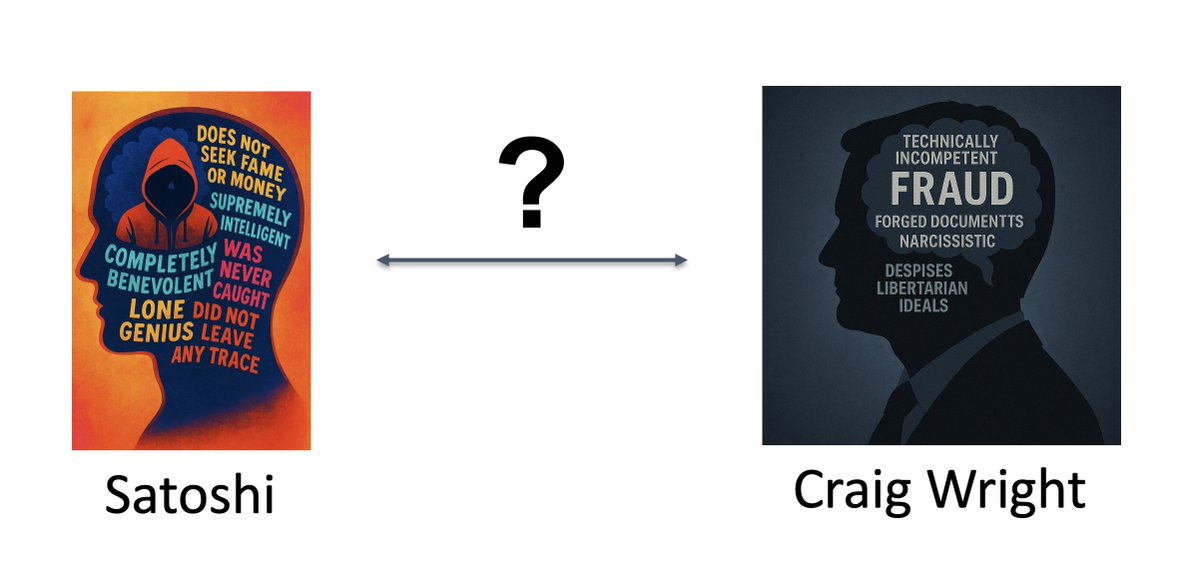
The 10-year legal war over Craig Wright only makes sense under one scenario: He had enough insights, evidence, connections... to support claims of his association with Bitcoin invention, but not enough to be Satoshi alone. But if Craig Wright wasn't Satoshi alone, then who else was part of it? And why has the industry spent a decade making sure nobody asks that question? Enter the rabbit hole: thebyzantinegeneral.org