Training high school volleyball 🏐 athletes to be strong and explosive:
▪️Lift heavy
▪️Jump with weight
▪️Plyometrics
▪️Jump with assistance
▪️Isometrics
▪️Get stronger unilaterally
▪️Train the frontal plane
▪️Build a strong and powerful upper body
Core training doesn’t have to look like high volume Russian twists, crunches, or excessively timed planks that end up aggravating an athlete’s low back:
▪️Banded dead bugs
▪️SA DB press from bridge
▪️Walking GH roll
▪️Copenhagen iso hold
▪️Landmine rotation
▪️Offset heavy carry
Leading sports scientist, Vladimir Zatsiorsky, has identified three ways to develop maximal tension (and therefore, size and strength) in a muscle
The Repetition Method: Higher reps with submaximal weights to spark muscle hypertrophy. More size equals better leverage. Someone with a pancake chest pushes the bar farther on the bench press than a lifter with a barrel chest assuming same arm length. The literature unanimously agrees that a bigger muscle is a stronger one.
Training in “bodybuilding” rep ranges will get you stronger—anecdotal evidence supports this and many of top strength athletes off-season train high reps, giving their central nervous systems a break and for hypertrophy.
The Dynamic Method: Force = Mass x Acceleration. The key is violently exerting as much force possible into the barbell with each repetition, not pumping out res. This is Compensatory Acceleration Training (CAT). Lots of bodybuilders do this unknowingly when doing a set of 12 reps – the first 3-4 reps are explosive, while the next 8-9 reps lose steam. Knowingly or not, they are getting beneficial adaptations from the dynamic method for strength gains in the first few reps. Your first rep is always your strongest – from that point on you are getting weaker – so exerting maximum force from the get-go can help you increase muscle tension.
The Max Effort Method: Lifting weights over 90 percent for 1-3 reps.
This is how most powerlifters train when prepping for a meet. It’s very intense but doesn’t involve very many repetitions, providing some of the same benefits as the Dynamic Method. Bodybuilders like Ronnie Coleman have used the max effort method as little as three weeks out from the Olympia.
Strength is primarily gained by lifting heavy weight for low reps and lots of sets, mostly as a result of adaptations in the central nervous system (CNS). This maximizes neural efficiency or, in other words, gets you more coordinated at the movement. Greater coordination leads to leads to more efficiency of a lift, allowing all participating muscles to more fully contribute to each rep.
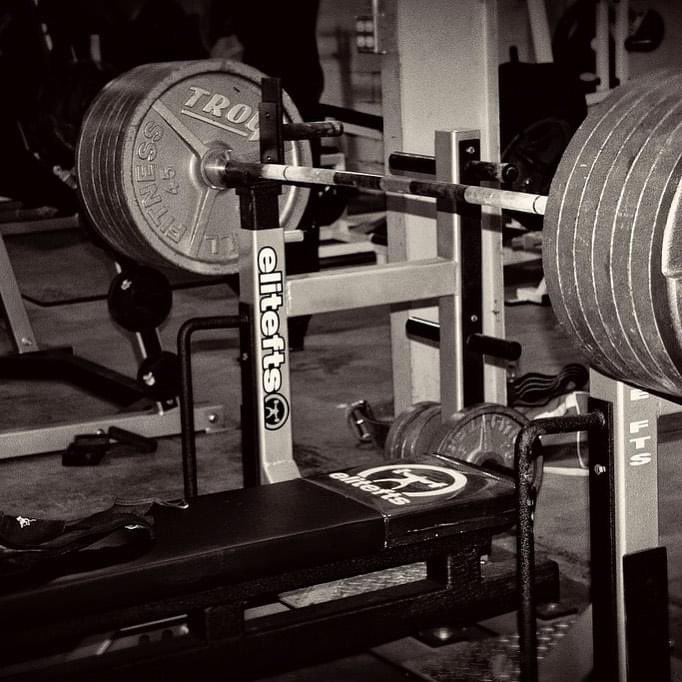
It takes longer to get strong with <80% but happens faster with CAT 📸 @elitefts
Having a consistent message and focused vision important for both management and sustainability. @HoundsAcademy competitive @ECNLgirls training simultaneously at different facilities developing same concepts #LTAD
Learn to climb, master the floor:
Barbell Presses
Bench press
Jerks
Front squats
Cleans
Snatches
Overhead squats
Chinups
All require prerequisite hand/wrist/shoulder strength and flexibility. Before mastering the barbell, it's a good idea to master the floor and climbing, which for young developing athletes is a great option to develop upper body strength and mobility. #LTAD
Heard a coach this weekend say "Discipline on the way Down. Attitude on the way Up" referring to controlling the bar down, explode on the way up.
Just know it's being used every day this week
This was such a great break from Nashville and should’ve been a goal. The ball from Surridge is yet another example of his underrated ability in buildup, and it’s nearly perfect service from Mukhtar. Maybe a tad under hit, but Shaffelburg should score.
Should you be doing "Recovery Workouts?"
Or are they doing more harm than good?
I have a free case study on exactly this
With a sample in-season training schedule you can use
To get it:
1 Retweet this
2. Reply “RECOVER”
I’ll DM it to you
Must be following