
Srinivas retweetledi

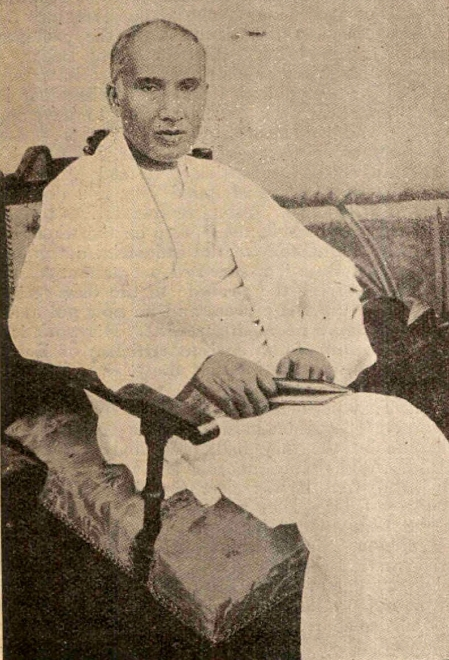
We talk about the Tata Steel Plant (TISCO) as a monument of Indian industry, but w/o this man, Jamshedpur would just be a patch of jungle. In 1904, a retired geologist sent a letter to J.N. Tata that would change the destiny of a continent. Pramatha Nath Bose was not just a scientist; he was a Seeker of the Earth's Heart.
While the British were busy mapping India for taxes, Bose was mapping it for treasure. He was the 1st Indian to hold a high post in the Geological Survey of India, & he used his position to discover the massive iron ore deposits in Mayurbhanj. He gave the Tatas the Iron Map to build their empire, then quietly stepped aside, refusing to take a single rupee of the billions he had helped create."
P.N. Bose (1855-1934) was a pioneer in more than just rocks; he was a pioneer in self-respect. Despite being the most senior & qualified geologist at the Geological Survey of India (GSI), he was passed over for the Director’s post in favor of a junior British officer, Thomas Holland.
Instead of swallowing the insult, Bose resigned immediately. He walked away from a prestigious colonial career to serve the Princely States & Indian industry. This act of defiance is what led him to the service of the Maharaja of Mayurbhanj, where he made his most famous discovery.
The Tatas were originally looking for iron in the Dhalli-Rajhara region (which Bose had also identified earlier), but they were facing logistical nightmares. On February 24, 1904, Bose sent a fateful letter to Dorabji Tata. He told them to stop looking in central India & come to the Gorumahisani hills in Mayurbhanj.
He did not just point at a map; he provided a detailed geological analysis of the high-quality hematite ore. That letter is the literal foundation stone of TISCO (now Tata Steel). W/o P.N. Bose, the city of Jamshedpur would still be a dense forest called Sakchi.
P.N. Bose's career was a series of "Firsts" that were systematically downplayed by colonial historians: He was the 1st to report the presence of oil in Assam (Digboi). He discovered the Daltonganj coalfield in Bihar. 1st soap factory. He was the 1st to discover the Dalli-Rajhara iron ore deposits (which now feed the Bhilai Steel Plant).
He was the man whose efforts catalysed the foundation of the Bengal Technical Institute which is better known as the Jadavpur University today of which Bose was the 1st honorary principal. He understood that finding iron was useless if Indians did not know the science of turning it into steel.
Bose did not believe science existed in a vacuum. He wrote extensively on the History of Hindu Civilization, arguing that India’s decline was not due to a lack of intelligence, but a loss of its scientific & industrial spirit. He was a close friend of Rabindranath Tagore, making him a core part of the Bengal Renaissance elite who were trying to bridge the gap b/w ancient wisdom & modern tech.
While the Tatas became global icons, P.N. Bose died in 1934 as a man who sought no fame. In Jamshedpur, there is a bust of P.N. Bose, but few among the millions who live in the Steel City realize that their entire livelihood exists because of the intuition of a man who was once too Indian to lead a British survey.
P.N. Bose did not just find rocks; he found the strength of a future superpower. He was the Geological Ghost who proved that the wealth of India was not in the coffers of the British, but under the feet of the Indian people. He mapped the skeleton of a new nation, ensuring that when India finally woke up to freedom, it had the iron & steel to build its own destiny.
English