
Sabitlenmiş Tweet
Krishna
15.7K posts

Krishna
@ntkris
Co-founder @with_ako: building the AI teammate completes tasks for your team on WhatsApp, Slack and email. Ex-@deliveroo.
Bangalore Katılım Mart 2009
1K Takip Edilen3.9K Takipçiler

@porterit_ Unsubscribe from what? It's your app that is sending push notifications
English

@ntkris Hi Krishna, please accept our sincere apologies for the inconvenience caused. Kindly share your contact details with us via DM so we can ensure you're unsubscribed as soon as possible. twitter.com/messages/compo…
English
I love @porterit_ as a service but good god you have zero shame with push notifications.
I get 3 a day.
Now blocked 👋🏽
English
@Ethan_is_online Same here. We need more ways to share this stuff as well so I found myself wanting this the other day:
x.com/ntkris/status/…
Krishna@ntkris
We need better ways to share the work we do with ai agents. I found myself needing this over the weekend so built it. OnPin lets your agent publish the work it's done for you. Just static pages for now. You don't need to leave your CLI, or app.
English

I'm not sure about other people but I am actually solving a lot my problems with random single use software claude makes
English

i give my toughest thinking battles to claude, execution battles to codex and slop to chatgpt.
English

The price insensitivity of fitness products (eg. equinox, bicycles), is incredible evidence that fitness really does increase your wellbeing and prosperity in life
It’s hard to think of any other consumer product class that is so price insensitive
English
Gemini voice requires you to “unlock your phone and try again” for nearly every request.
This is the worst UX I can think of @GeminiApp
English
3 goals: increase outbound opportunities, drive more inbound traffic and make closing faster.
Outbound: monitors 24/7 for signals, find the relevant decision maker, route to the right person. Can be more automated if neeeded.
Runs entirely on slack. Reviews its own work and improves.
English

We need an engineer at Baselayer (maybe contractor?) who AI pills our GTM org
- sets up an AI forward system infra for our whole GTM org
- builds our “second brain”
- helps set up Claude co-work for everyone, from BDRs to sol Eng
We will pay top dollar - who’s down?
English

With AI building so much of a software product, founders are vastly underestimating the time it takes to get to an MVP.
Turns out the limiting factor isn't the speed of development but implementation, fine-tuning, synthesizing customer feedback and creating a product roadmap.
English
Krishna retweetledi

New pet peeve: cli's that install new skills onto my system without asking.
English

People massively underestimate how much infra knowledge AI engineers will need.
Right now many people can ship useful products with an API key some prompting and basic code.
But that breaks surprisingly fast…
English


CEOs are uniquely prone to AI psychosis because they’re sufficiently distant from the last mile of work that still has to happen to generate most value with AI.
So when they play with AI, they see the happy path results, often not considering the next 10 or 20 things that have to happen to get sustainable results from agents.
“Look I made this awesome product prototype”. Yes but you didn’t have to review the code before it went into production and fix a bunch of issues.
“Look I generated a contract”. Yes but you didn’t verify all the terms before it goes out to the counterparty and didn’t have to wire up all the past contracts to work with.
The best thing you can do as a CEO is to use AI a *ton* to figure out the real implications of agents in the enterprise, and come out the other side with an appreciation for both the upside and the real work that goes into them.
Michal Malewicz@michalmalewicz
CEOs are the most delusional about AI. Detached from reality.
English
@joelgascoigne While some of them think an API should require a much higher price:
x.com/ntkris/status/…
Krishna@ntkris
Shocking that SEMRush won't give you API access for less than $455 / month. Excludes a huge part of the AI agent market.
English

Within 6 to 12 months, every software product will need an API, MCP, and CLI. More and more, people expect to be able to interact with your product through automation, AI and agents. Historically, platform was a later stage of maturity play. Going forward, you won't really thrive in this new world without a platform.
English
@toddsaunders Have you tried the goal feature? I find that it’s extremely thorough and good with instructions. So, I spend most of the time just getting the plan rivht
English

I want to level up my skills in codex.
What are you using that I should try?
English


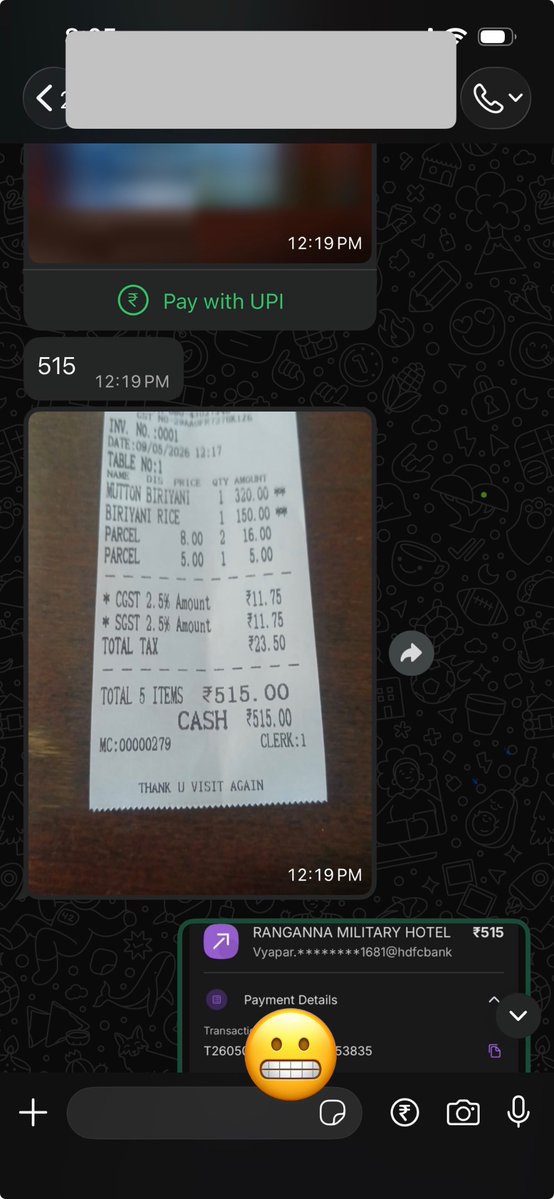
been doing this for my fav biryani place since a few months
Unless Swiggy gives me one of those hefty discounts I end up doing porter

Anshika Aggarwal@kipupwidanshika
"Necessity is the mother of invention " Zomato would really have to change their prices now
English
