oleks
39 posts


oleks
@oleks01
Senior Software Engineer | ML & Computer science Not a builder. Not a founder Just a regular guy - still have a job, still grinding. Love sharing thoughts here
Katılım Haziran 2011
418 Takip Edilen216 Takipçiler
Somehow I liked OpenClaw's responses more than ChatGPT's, for example, even though it's the same model.
I've tried to understand why, and I think this rule from SOUL.md made the biggest difference:
"From now on, respond exclusively in Telegram style. Short, to the point, no walls of text. Think it through properly so the answer is clear, accessible, and logically structured. Don't rely on auto-split - no random message breaks that make no sense."
I liked it so much that I even started using this trick in my plain coding sessions with Claude Code or Codex. I say something like:
"I'm on the go on my phone, no time to read much."

English
@itsvishaltwt Everybody uses AI, so finding someone who uses AI is not a problem - it's rather the developer who still thinks and codes independently is a gem nowadays.
English

@dark_coderz The generated note looks so nice and clean! Can you share some gist with prompt for it?
English

Day 11 of trying to crack a 15+ LPA software job from a tier-3 college by 2027.
Today's progress:
→ followers: 2,570 on X
→ revised DSA:
• Binary Trees
• Building Trees using BFS
• Level Order Traversal
→ revised STL in C++
→ learned Hashing:
• Collision Handling
• Clustering
• Open Addressing
• Linear Probing
• Quadratic Probing
→ learned basics of Cryptography:
• Encryption & Decryption
• Public Key & Private Key
→ Got total 3500 inr for teaching dsa
Today was all about strengthening fundamentals.
Spent time revising core DSA concepts and exploring how hashing works behind the scenes.
Also learned the basics of modern encryption and key-based security.
Small steps compound.
Learn.
Practice.
Repeat.
Just focused on getting 1% better today.
Back again tomorrow.


Dark Coder@dark_coderz
Day 10 of trying to crack a 15+ LPA software job from a tier-3 college by 2027. Today's progress: → followers: 2,455 on X (+45) → revised DSA: • Quick Sort • Binary Search Revision • Binary Tree Revision • BST Revision → problems solved: 1 Today was focused on revision. Went through previous concepts, quick notes, and important patterns to strengthen the fundamentals. No rush. Consistency over intensity. Learn. Practice. Repeat. Just focused on getting 1% better today. Back again tomorrow.
English

Day 2 of getting my FastAPI backend production-ready.
Docker is finally running, FastAPI boots successfully, and the CORS/config issues are fixed.
Now I'm battling two stubborn issues:
SSL certificate errors while building the Docker image (pip install poetry)
PostgreSQL hostname resolution between Docker and local development (socket.gaierror)
This is the part of backend engineering nobody puts on YouTube. 😅 One error at a time.

English
@natebjones Yeah, it leaves us no choice but to root for the Chinese models to bring Claude back down to earth.
English

Fable 5 is not going to be on for a week. It’s going to be on until Anthropic has a reason to subscribe to Claude that is as good/better than 5.6.
Sonnet 5 is not it. I doubt Opus 5 is it.
Anthropic is in a bit of a pickle.
Underlines why cheap compute availability is so important right now. OpenAI invested in compute last year and is in a much better position to serve models now.
English
@poweroverthink Why so? I'm rather thinking laptop is already too much, some tablet or eink reader with terminal + voice dictation should be sufficient.
English

@BraedendotTECH I think the problem is the speed - the long thinking process just doesn't let you enter the flow state and solve problems one by one. You have to entertain yourself somehow between prompts, which usually leads to multitasking and total brain exhaustion.
English

I'm 33 and I think Claude Code is melting my brain.
For 6 months straight I've had 5-6 terminals open at once, waiting on responses just to smash "enter" 90% of the time. That's the whole job now.
And it's doing something to me. A few friends and I keep circling back to the same thing in conversations: none of us feel as sharp as we used to.
Maybe it's just us. But I keep wondering how many other people in their 30s feel it too.
(And yeah: this is a me problem, how I lean on the tool, not the tool itself. Doesn't make the effect any less real.)
English
@simonw It’s still too easy to overdo the features, while the responsibility is always on you.
We’re also still testing mostly by hand. Even a TUI app can’t really be tested properly by AI. It can verify the results, but it doesn’t care about the overall feel of the interaction itself.
English

I still sometimes see people saying "if you know how to write the code, it's faster to write it yourself"
I'd argue the exact opposite: if you know how to write it, you gain nothing from doing the typing yourself - outsource that to a coding agent!
English


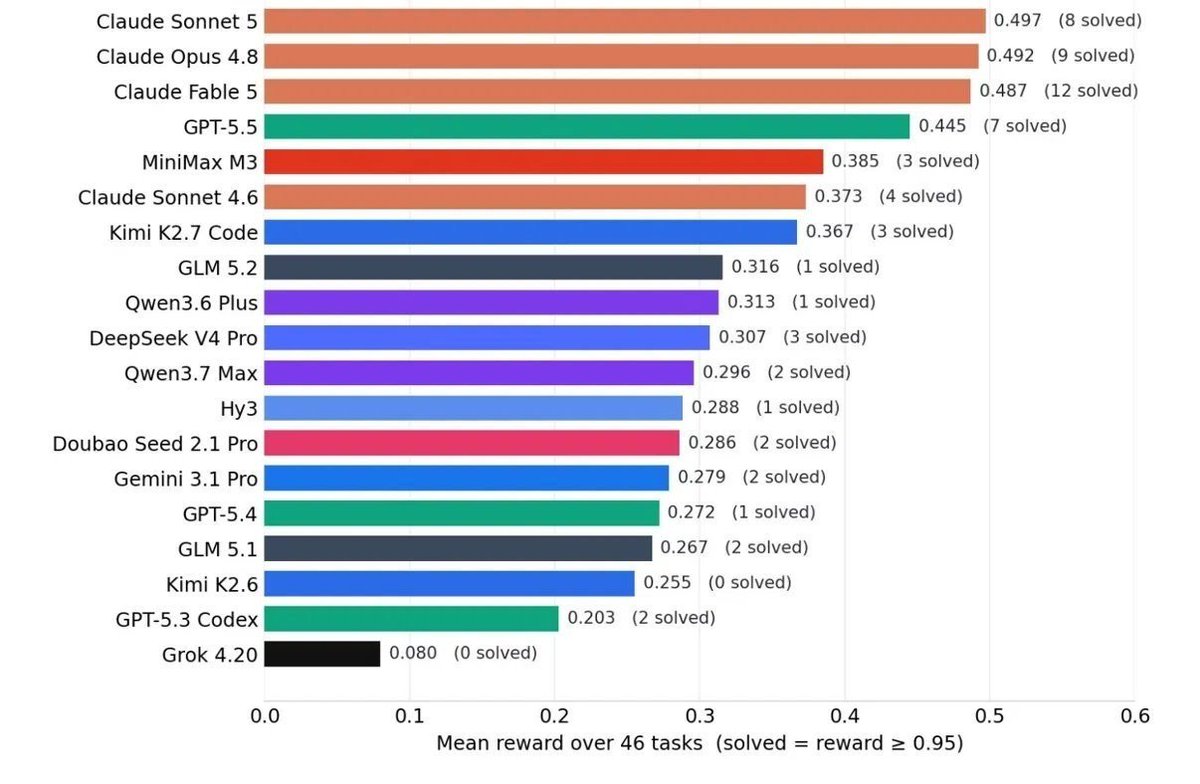
@capsraunak At least there's nice SWE Bench Pro page on Hugging Face to quickly check who's leading at open models world.

English

AI benchmark scam is getting ridiculous
companies release new models and boom charts flip to make them look unbeatable
people lose their minds everytime no one questioning the rigged tests or why it underperforms in normal use
we've been getting fooled into thinking numbers progress when its all about the marketing bullshit
English
@alwayspriyesh Bro, I got you, for me it took 15 years, and still not there.
English

2,580 days.
It has taken 7 years for me to get my first 200 followers.
Thank you so much to everyone. 💖 I will not forget this.
I'm going to give everything to grow this account.
If you are interested in tech, AI, software engineering, or creating cool products, Let's go🤝

English
@lenatron33 💯All this AI replies and “let’s connect” bullshit make me screaming all the time
English

@SajalDhiman2 It actually make things worse, for example when you deploying something pre-packaged from Helm and got 10 pods of bloat instead the simple one you actually need at this point
English

Unpopular opinion: Deploying an application using pre-written Dockerfiles, Kubernetes manifests, Terraform code, and CI/CD pipelines does not mean you understand DevOps.
I know many people who are learning DevOps, and I’ve noticed a common pattern.
They clone a GitHub repository, use the existing Dockerfile, Kubernetes manifests, Terraform code, and Jenkins or GitHub Actions pipeline, deploy the application, and call it an end-to-end DevOps project.
If you’re a beginner, that’s completely fine. We all start somewhere.
But please don’t stop there.
The real learning begins when you stop using pre-built files and start implementing everything yourself.
That’s when you’ll understand what DevOps actually means:
• Writing your own Dockerfiles and optimizing them with multi-stage builds.
• Designing Kubernetes manifests instead of copying YAML from the internet.
• Building infrastructure from scratch using Terraform.
• Understanding VPCs, subnets, route tables, NAT Gateways, Internet Gateways, and Security Groups.
• Implementing IAM, OIDC, IRSA, and Pod Identity with least-privilege access.
• Building hardened Kubernetes clusters (EKS/AKS/GKE).
• Connecting workloads to managed services like RDS, ElastiCache (Redis), S3, and Secrets Manager.
• Managing secrets securely instead of hardcoding them.
• Implementing Kubernetes NetworkPolicies for east-west traffic isolation.
• Building zero-trust communication using Istio or another service mesh.
• Understanding Ingress Controllers, Load Balancers, DNS, TLS certificates, and API Gateways.
• Configuring readiness, liveness, and startup probes correctly.
• Setting resource requests, limits, QoS classes, and understanding why they matter.
• Knowing why PodDisruptionBudgets, pod affinity/anti-affinity, topology spread constraints, taints, and tolerations exist.
• Implementing HPA, KEDA, and Karpenter for different autoscaling scenarios.
• Designing highly available, multi-AZ architectures.
• Building secure CI/CD pipelines using OIDC instead of long-lived credentials.
• Implementing GitOps with Argo CD.
• Shifting security left with SAST, SCA, SBOM generation, image signing, vulnerability scanning, and policy enforcement.
• Building observability with Prometheus, Grafana, OpenTelemetry, Jaeger, centralized logging, metrics, tracing, and alerting.
• Troubleshooting production issues instead of only making the deployment succeed.
And that’s still not everything.
I still see people building the same 2–3 projects using copied files and believing they’re ready for production or interviews.
The hard truth is this:
AI and tutorials can generate Dockerfiles, Terraform code, Kubernetes YAML, and CI/CD pipelines. But if you don’t understand why they were written that way, how they integrate, how to secure them, and how to troubleshoot them, you’re not ready for production.
Don’t just deploy applications.
Understand the architecture. Understand the integrations. Understand the trade-offs.
That’s what turns someone from a tutorial follower into a real DevOps engineer.
#DevOps #PlatformEngineering #DevSecOps #Kubernetes #AWS #Terraform #EKS #CloudComputing
English
@qutyquteshweta You’re the one of very few who writes interesting thoughts and not just AI slop here, keep on!
English

Consistency maintained for one more day 😎.
Thank you folks, you are the best 😍

English


@capsraunak From other hand, people are sick from apps already. So hardware integration is a new direction opened with AI. Before, reading all the manuals and datasheets was not worth its time because all boards are different.
English
@CodeWithSravya How about deploy your local Gitea and work with it a bit? All git platforms are similar.
English




@hannah24_app Great thought! If you can't properly explain what you what it make no sense to include it in the product.
And that should not be taken literally like "md document". Doing the UI mockup in Claude Design for example or Figma before implementing is also a nice way to express it.
English

@itsvishaltwt Sync.
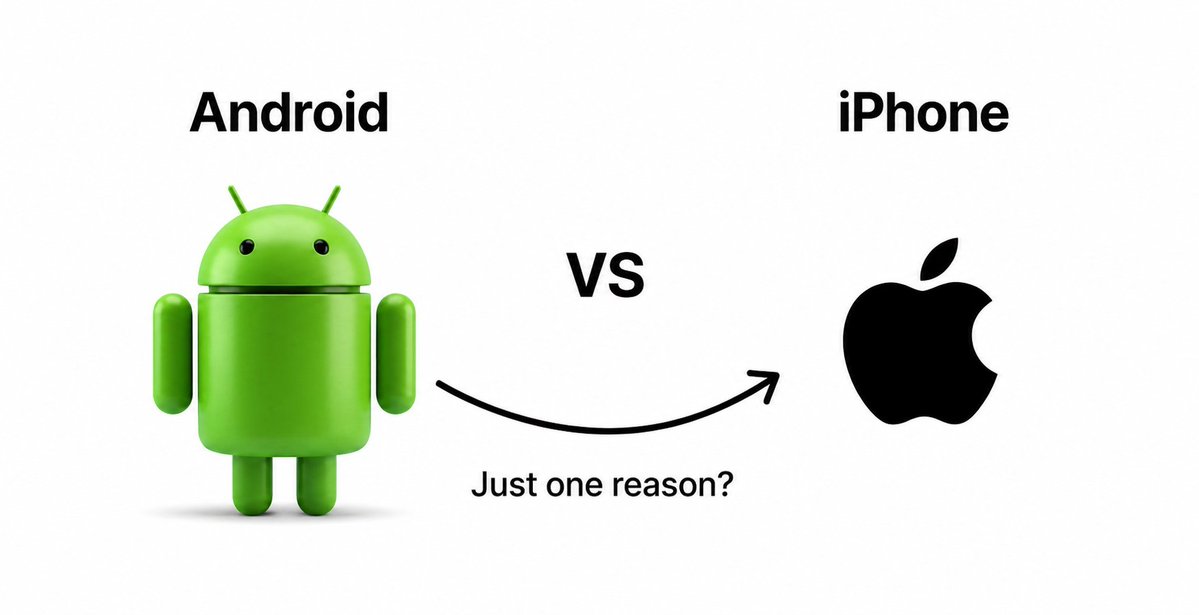
All this notes, calendars, contacts - all apps are different for Pixel, Xiaomi, Samsung, etc... For some people, the phone is a working tool, they don't have time to all this app circus, so they just go with Apple to have same apps fully in sync on all devices.
English