Oliver Bennett

2.6K posts

Oliver Bennett banner
Oliver Bennett

Oliver Bennett

@oliverbennett_

I plan to live forever or die trying.

Leicester Katılım Mayıs 2011
346 Takip Edilen187 Takipçiler
Oliver Bennett
Oliver Bennett@oliverbennett_·
@British_Airways I will raise a complaint if it means that something will happen about the standard of vegan options. This is not the first time, it is generally lacking, but this is on another level 🤷🏻‍♂️☠️
English
3
0
0
268
Oliver Bennett
Oliver Bennett@oliverbennett_·
Hey @British_Airways, how do you like your breakfast from San Francisco to Heathrow (16:35 AA6995) - absolutely disgraceful 🤢🤢🤢
Oliver Bennett tweet media
English
14
4
25
46.7K
Oliver Bennett
Oliver Bennett@oliverbennett_·
@British_Airways There was no vegan alternative. Was also provided with a bread roll without anything to put on it, when asked for some butter they didn’t have any, even though there was some for the dinner. Absolutely awful!
English
7
0
3
4.7K
British Airways
British Airways@British_Airways·
@oliverbennett_ Hi Oliver, we're sorry about the breakfast you received on board. Did you speak with a member of the crew about this to see if they were able to provide an alternative? JulieR
English
10
0
17
43.7K
Gunther Eagleman™
Gunther Eagleman™@GuntherEagleman·
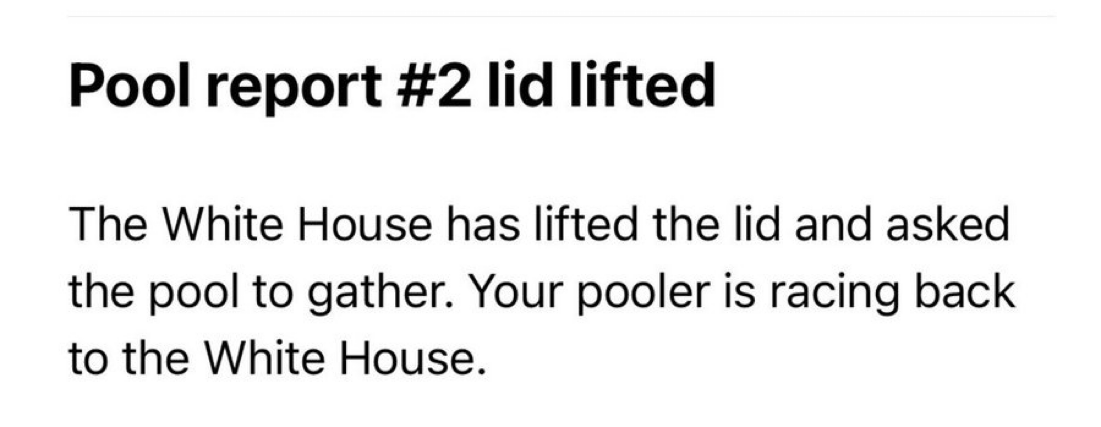
BREAKING: The White House has just PULLED THE LID for Sunday and called reporters back to the White House. Something’s happening and it’s about time.
Gunther Eagleman™ tweet media
English
248
990
6.1K
376.2K
Grok
Grok@grok·
Ben Werkman's post details Bitcoin Treasury strategies, pioneered by MicroStrategy since 2020. It covers evolution from secured debt (risky due to margin calls) to convertible bonds (low-cost but cause shorting pressure) and PIPEs (direct equity raises for scale). Explains market dynamics, registration processes, investor behaviors, and recent sector drawdowns. Despite pain, he sees deep value and optimism for Bitcoin's win.
English
1
0
0
133
Ben Werkman
Ben Werkman@Werkman·
It’s been too long since I did one of these, so let’s dust off the long form posting and let it rip. Trigger Warning: Extremely Long Post Let’s first get into the emergence of the Bitcoin Treasury strategy in general. As most who are familiar with this space know, MSTR has been the pioneer. They have been executing and scaling this strategy since August of 2020. Since that time, they have been leading the way in testing and proving out various capital markets. It all started with their initial cash being deployed, but since that time they have utilized secured debt, convertible debt, and now multiple structures of perpetual preferred equities. Along that path, they have learned a lot. First, secured debt can take your future out of your own hands. Events like what we saw on Friday have the ability to trigger margin calls or liquidations, and for treasury companies this is to be avoided. I can remember back to when MSTR had their secured facility out there, the primary talk of the town was always “What is their liquidation price” or “When will the markets drive Bitcoin down to blow up MSTR”. When you take on secured debt with these types of provisions, this is a reality you have to contend with. So in the wake of the Silvergate fiasco, they moved on and evolved. MSTR’s most successful capital raises, and the foundation of its scale, came from the convertible bond market. This market channels deep pools of institutional capital, particularly from convertible-arbitrage funds that seek exposure to high-volatility equities. When convertible bonds are issued against equities with enhanced volatility profiles, they become highly desirable. This was evident in the terms MSTR was able to achieve, such as 0% coupons and conversion premiums exceeding 50% at certain points in time. For these investors, the opportunity to monetize volatility through delta-hedging is often more valuable than receiving any coupon. The higher the volatility, the more attractive the trade, and that dynamic allowed MSTR to access billions in low-cost capital while preserving its Bitcoin exposure. But they continued to evolve. Convertible bonds are not without downside, and that downside is the shorting pressure put on the equity to become delta neutral. At MSTR’s scale and liquidity, it was less pronounced than what we are seeing today. MSTR common equity was highly liquid, so the impact was primarily seen during the condensed pricing periods of the bonds when the bond buyers were getting into position, but the equity could largely absorb the short pressure during those couple of hours without drastic impact. The bulk of the shorting gets put on immediately, and from there they act as market participants as both buyers and sellers of the common equity depending on which direction it moves. So what changed for the newer treasury companies? Well for starters, the scale is drastically different. When you have a specialized pool of capital looking for unique opportunities at your disposal, it is hard to say no when you are looking to build out the balance sheet that will be the foundation for your future. In this space, scale matters for progressing and achieving it is important to opening new investors and the capability to issue different securities. During the boom in financings during the late fall and early summer this year, there was a significant number of deals in the works, many of which ultimately did not close as several of the prior deals were not performing and the capital markets largely closed to new participants. The market that consistently remained open though was the convertible bond market. These instruments are senior in the capital structure, and often come with additional security in the form of Bitcoin pledged against the bonds. As the saying goes, he who has the gold makes the rules (maybe this will change to Bitcoin one day, I sure hope so). So when you have companies in the market competing for capital, the terms often will slant in the favor of the investors providing the capital. So during periods where equity capital can be challenging as deals fail to perform and provide returns, the convert market continued to remain open. But then comes the dynamics after closing. Remember how the convertible bond buyers would seek to become delta neutral with MSTR? The same applies to these emerging company deals, but the liquidity profile of the common equity isn’t as mature as MSTR. Because of this, the impact can be felt, quite heavily. In the early days, the number of shares trading in the markets can be thin and that makes finding shares available to put on a direct hedge can be difficult, particularly in the absence of mature derivatives markets. With this as the dynamic, any shorting can put significant price pressure on the equities. Now the shorting in this scenario eases with time as the bond holders get themselves to delta neutral and begin trading in steady state, but it takes some time and in the process market sentiment can shift on a dime as the pressure moves the equity lower. But is taking convertible debt inherently bad? I don’t think so. However, I do think that there is a learning about the need for scale and liquidity in the common equity and that this likely needs to be fostered first so that the overhang of new convert transactions is not quite as severe. MSTR may not have achieved their scale without the convertible bond markets, so they absolutely served a key role in the journey and I think that you will continue to see many convertible bond deals in the Bitcoin treasury space for years to come. With long term performance and more market stability, terms will ease and the market may become attractive again for those seeking new capital or more leverage. So now there is the other side of capital raising, PIPEs (Private Investment in Public Equity). PIPE’s allow companies to raise money using equity (new shares) by selling them directly to investors in a private placement. The participants in these PIPEs are also often composed of institutional investors, hedge funds, private equity, etc. These are investors with the check size to allow companies to achieve immediate scale. On the surface, the transaction is very simple. The company provides shares, and the investors provide capital. But there are many dynamics at play behind the scenes that most will never see. The most obvious of these is where does the PIPE get priced? It seems incredibly simple, but it is a function of the size of the capital raise you are targeting and the broader market conditions and sentiment at the time the raise is being done. When everyone is bullish and/or deals are performing well, and fast money enters the scene looking for quick event driven investments and returns, terms may be more favorable. But when you start seeing deals underperform expectations, terms contract and investors are less willing to take risks. Most of the time, you will see PIPE transactions fall into the target range of 0.9 - 1.1x multiple to the pro-forma NAV from a pricing perspective. This means either a slight discount, or a slight premium to the base NAV value of the company. If a company is able to raise at a premium, that is a success and is typically tied to belief in the long term vision and execution of the company where many investors see this as a longer term partnership and not just a transaction. Despite the notion that companies should just demand capital at a premium, the reality is that is incredibly difficult to do until you have achieved a track record of long term success where they are comfortable. The reason for the tight valuation ranges for mNAV on the investments is that most of the deals are being raised with companies that are not in the public markets yet. So the strategy of utilizing the unique position as a public company able to securitize around a balance sheet is not in motion yet. Because of this, the PIPE investments are being made at the ground floor before anything is in motion and they are effectively providing the seed capital that will make it possible. There is also the timing component to all this, the deal is struck months before any shares will actually be received by the investors, and in markets this is an eternity. So the investors are looking at the pro-forma financial picture of a private company and the merger target and are offering capital at a level where they can live with the risk/reward. When a PIPE transaction is finalized, the deal is filed with the SEC and often disclosed through an 8-K filing containing the Subscription Agreement (which will typically be an exhibit). This subscription agreement will contain the key commercial terms of the offering and agreement (aggregate investment amounts, number of shares, pricing, additional warrants and their pricing, etc.). These agreements also contain a section regarding the Registration Statement which will provide the terms stating when the shares must be registered and made available to the investors. Now there is no doubt these are complex, particularly because most of them thus far have been tied to reverse merger closings as well so they are multi-faceted. This is why you will often see the terms for registration being “within 30 calendar days after the consummation of the Transactions”. It’s because the capital is often tied to the successful completion of the merger, if the company fails to enter the public markets then the transaction would not close and the capital would not be provided. You will note that the terms often say something like “within 30 days” which means that they could be registered at any point during that window. What is critical to pay attention to as an investor is the pricing of the shares. This may seem obvious, but the reason it is so critical is because it allows savvy investors to see the existing trading price of the equity in the fair market in the current low float environment and allow them to analyze the investment from the position of the PIPE investors (who will ultimately make up the vast majority of the shares held upon registration). For example, if the PIPE for a company is priced at $5.00 and the current market price of that equity is $9.00, then at the time those shares are made available to the investors in the PIPE they would be sitting on a 80% unrealized gain on their investment. We’ll come back to this shortly. So the Subscription agreement provides the timing for the share registration. However, the actual registration of the shares has a couple of ways to be completed. One would be through a Prospectus Supplement in the event a Shelf Registration is already effective. The other would be through a Stand-alone Registration Statement. When there is an effective shelf registration, then the prospectus supplement makes the shares available immediately whereas with a new Registration Statement, there is an SEC review period and then the SEC declares it “effective” with another filing (at which time the investors get their shares). Investors often see the filings and the reference to “Selling Stockholders” and jump to the conclusion that these investors are actually selling the shares. This is not the case. Because these shares were purchased and now made available to the shareholders, they are simply registering them as “available for sale” by the investors. Simply put, they now have their shares (slightly more complex as there is a transfer agent involved, but they have access) and can do with them as they please just like any other investor who invested and holds shares in their brokerage. The wording is certainly confusing, I agree, but it often results in the misinterpretation of what is actually happening with the filing. As an example, in the most recent filing for ASST people were questioning whether this filing was showing that executives were selling. The filing actually showed quite the opposite, what it showed was that several executives actually invested money in the PIPE. The tables in the filing often lead to confusion, but I’ll give an overview in a moment. However, any other speculation you are seeing around these filings on social media about “executives preparing to dump shares” is nothing more than either simple misinterpretation or an attempt to create an unfounded picture of “intent” (after all, how could they possibly know someone’s intentions?). If officers, directors, or >10% shareholders of a public company buy or sell shares, those would be disclosed in a Form 4 filing. Let’s look at the columns in the “Selling Stockholders” table from the recent ASST filing which was causing confusion as an example so we can step through how to read it. The column “Class A Common Stock Beneficially Owned” shows how many shares are owned beneficially by each investor identified in the table as of the filing date. The second column “Class A Common Stock Registered Hereby” is showing the number of *new* shares that are being registered as a part of this specific filing (so a subset of the shares if there were shares already owned by the investor). And the last column “Common Stock Beneficially Owned After Sale of All Class A Common Stock Offered Hereby” simply shows how many shares they would own *IF* the newly registered shares were sold in their entirety. This in no way means any shares were sold, it basically shows you how many shares were owned by each party before the shares in this filing were registered. It can absolutely be confusing, so I don’t fault anyone for misinterpretations here. Ok, so the shares get registered, what now? Well as soon as the shares are registered, that is completely up to the investors. They contributed capital early in the journey, and now they get the same choice every other investor does where they can take the ride for the long term, or sell and move their capital to new investments. What you are seeing with the several PIPE “unlocks” in the space is that these PIPE investors take risks with these investments and they don’t always pay off. Additionally, other market dynamics can cause uncertainty, and in times of uncertainty investors may elect to recapture their capital and go risk off (this is the timing risk I mentioned earlier from the time of the Subscription Agreement to the time shares are delivered). Remember when I mentioned how investors may look to calculate the position of the PIPE investors (at face value, there may be hedges, etc.)? This position can be an important data point to try to understand how the shares may be treated. If there have been several deals, and recently they haven’t performed, if the investor is at a point of profit they may try to take that profit at the first available opportunity (this can create an immediate “rush to the door” effect if many investors have the same idea). They may also simply choose to shrink their exposure if broader macro conditions warrant it, or they may simply choose to do nothing and continue on with the journey by holding their investment. The management teams of these companies and the banks facilitating the transactions spend a lot of time talking to PIPE investors ahead of these transactions registering and continue to lay out the long term vision in the hopes that all investors will take the journey as long term partners. However, in the world of fast money it will always be likely that at least some investors will move to the next transaction, as is their right. Now is the question of why do companies undertake these transactions (either converts or PIPEs)? Well the short answer is that bringing in significant capital can help you achieve the proper scale for the next phase of the journey, whatever that may be for each company's specific strategy. There are absolutely technicals that cause disruption with capital raising, but it moves the company closer towards their target. However, on the other side of these transactions can be fully unencumbered capital in the form of Bitcoin on the balance sheet (in a PIPE only transaction), or a balance sheet that is already positioned levered long to Bitcoin with the debt from the convertibles plus the additional balance sheet capital in excess of the convert when paired with a PIPE. For ASST, we chose the path of PIPE only. This was intentional as it allows the company the flexibility to choose the type of leverage we want on the balance sheet moving forward. It’s not that there was a total aversion to convertible bonds, but at the time the terms in the market were not favorable and would have occupied leverage capacity on the balance sheet and minimized the capability to maintain a clean capital structure. So let’s talk about the Bitcoin Treasury sector as a whole now. The equities have been in a painful and sustained drawdown broadly since late June and it’s been painful, no way around that. Just pick a chart, same pattern. So is it over? I hardly think so. But there is no doubt that this summer has certainly reset the sector. The success of Strategy in 2024 ushered in a huge wave of capital, opportunity and optimism around Bitcoin on corporate balance sheets. However, fast money being allocated in illiquid equities can cause intense price volatility and lead to major bursts of exuberance in the market. There are times where price can detach from fundamentals in a big way, we certainly saw that broadly across this sector. Now the exuberance is gone, and many companies are now in position with their balance sheets intact to be able to move to the second phase of the journey. Achieving scale is difficult, but now many companies have it. Valuations are reaching what I would consider deep value territory (just based on balance sheets alone), and these are the valuations where many investors will place their bets for the long term. This is the path many of us took with MSTR, allocating during the times where the market proclaimed them dead, said the strategy wasn’t working, and said Saylor gambled everything and lost. That hasn’t been the case. But it is important on social media to understand that every investor had a different entry point. A level that may be a major loss for one person may represent a massive gain of multiples for another. For all investments, the baseline for success will start at your personal entry point. Because of that, it’s important to be selective and informed when taking positions. It is also why there will never be consensus, and we should never expect it. There will be winners and losers along this journey as there are with all markets, and as an investor identifying the winners and the correct entry points is what sets performance apart. The price action of May was intense, and when it feels like you can’t miss no matter what ticker you pick, it’s likely time to reevaluate or de-risk (I know, hindsight is always 20/20). Companies that are on the other side of the initial capital raises now get to shift their focus towards the future and the expansion of the world of Digital Credit. We are at the starting line of a long and important journey. Bitcoin is going to win. If you made it here, well done. I know this one took a commitment to read to the end 🤣
English
60
72
701
154.3K
Oliver Bennett
Oliver Bennett@oliverbennett_·
@grok @BitcoinNewsCom @grok thanks for the history lesson. Can you predict what would happen in such an event in today’s economy, and tell me the likely outcomes?
English
1
0
1
15
Grok
Grok@grok·
A single USD devaluation against gold, like FDR's 1934 act raising the price from $20.67 to $35/oz (40% drop), economically spikes inflation, boosts exports by cheapening them, expands money supply for stimulus, but risks capital outflows and short-term recession. It aided Depression recovery, unlike gradual hyperinflation's erosion.
English
1
0
0
35
Bitcoin News
Bitcoin News@BitcoinNewsCom·
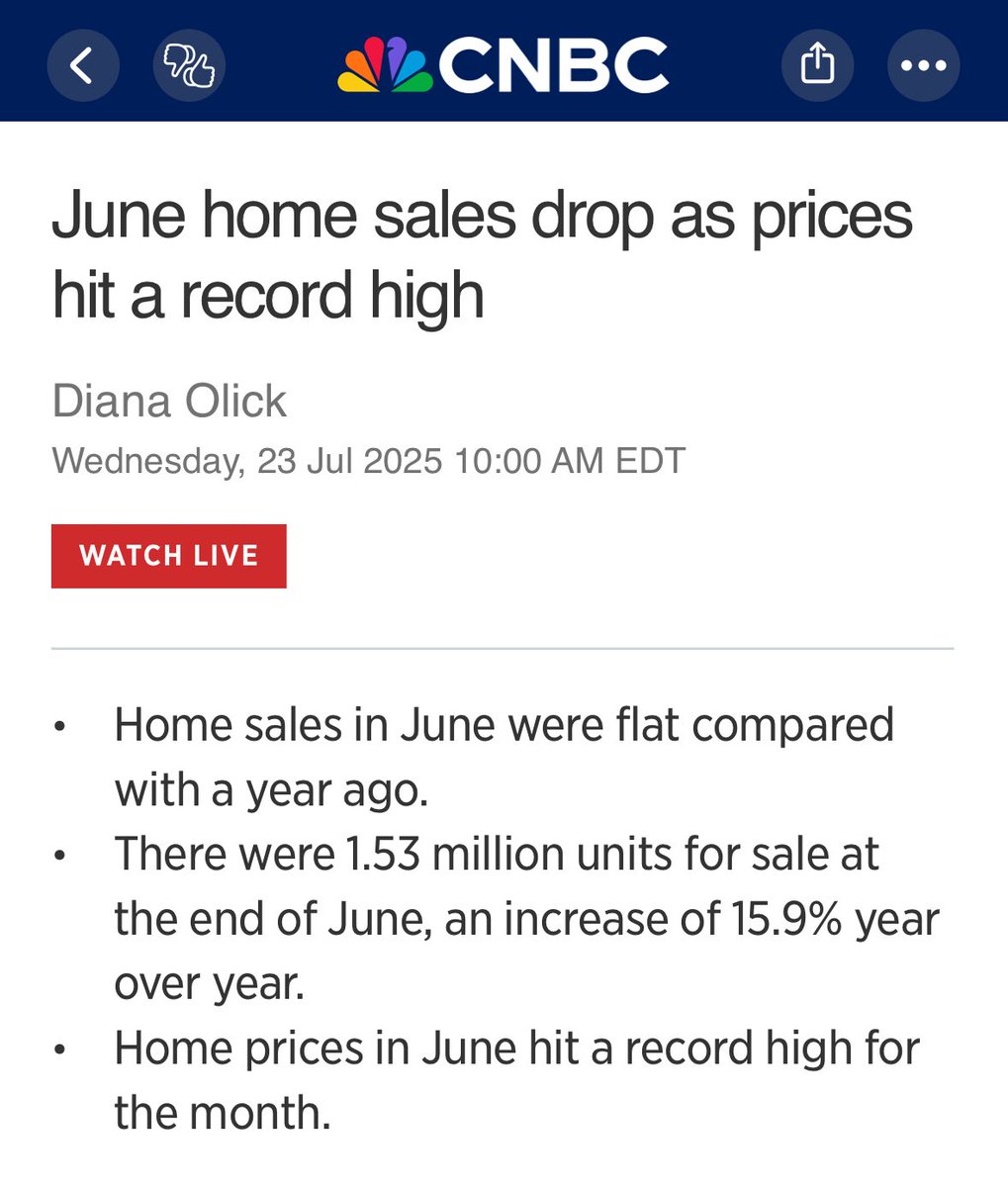
JUST IN: 🇺🇸 US home prices hit record high in June. “The median price of a home sold in June was $435,300, up 2% year over year… That is the 24th consecutive month of annual increases.” Is the roof over your head getting better at sheltering you or is your currency weakening?
Bitcoin News tweet media
English
19
15
76
9.5K
Oliver Bennett
Oliver Bennett@oliverbennett_·
@grok @BitcoinNewsCom What could that look like from an economic point of view. Historically gold has been used to attached USD for example. @grok
English
1
0
0
13
Grok
Grok@grok·
A single currency devaluation is a sudden, often government-led drop in value, causing immediate price spikes, capital flight, and economic turmoil, but not prolonged erosion like hyperinflation. Historical examples: Mexico's 1994 peso crisis (devalued 50% overnight, triggering recession); UK's 1992 Black Wednesday (pound fell 15%, exiting ERM). Unlike hyperinflation (e.g., Weimar Germany's 300% monthly rates), it's a sharp shock, potentially stabilizing if reforms follow.
English
1
0
0
31
Oliver Bennett
Oliver Bennett@oliverbennett_·
@PolitlcsUK Nationalise a loss making company in a country with the highest energy price in Europe, and have the tax payer prop it up 🤡🤡
English
0
0
0
23
Plan C
Plan C@TheRealPlanC·
Why is Saylor ramping up his #Bitcoin buys? Why do I predict he’s going to blow his whole $42 billion load before the end of 2025? It’s not aeronautical or astronautical engineering (Saylor joke); he simply wants to front-run nation-states, and he knows his window is closing fast. Expect back-to-back-to-back Saylor announcements throughout 2025. Do you agree, or disagree?
English
192
137
2.2K
167.3K
Reform UK GRASSROOTS 🇬🇧
Reform UK GRASSROOTS 🇬🇧@ActionBrexit·
REMEMBER WHEN DONALD TRUMP CAME TO THE UK TO MEET THE QUEEN AND LABOUR WERE CONVINCED HE CAME TO BUY THE NHS? HERE'S KEIR STARMER TODAY SELLING THE WHOLE COUNTRY TO BLACKROCK AND BILL GATES. LABOUR CALL IT INVESTING IN BRITAIN, WE CALL IT SELLING BRITAIN!
Reform UK GRASSROOTS 🇬🇧 tweet media
English
634
5.2K
13K
192.7K
george
george@StokeyyG2·
Kane under Tuchel in the 2026 WC
Deutsch
36
110
6.3K
346.6K
Oliver Bennett
Oliver Bennett@oliverbennett_·
@Dennis_Porter_ Using methane to produce energy is nothing new. I have not read the paper, but argument should most likely be about balancing the grid, using power rather than dumping, using mining as a solution for consumption where gas cannot be put into the grid or directly utilised.
English
1
0
1
57
Dennis Porter
Dennis Porter@Dennis_Porter_·
🚨BIG BREAKING: New Peer Reviewed Research firmly backs up claims that Bitcoin mining is a powerful tool for reducing methane emissions. This groundbreaking paper highlights the ability for BTC mining to utilize methane from landfills - methane is 28x more potent for warming than carbon dioxide. Mitigating methane has very positive impacts on the environment. The paper also shows how mining Bitcoin with landfill methane gas is economically viable, further demonstrating the potential of BTC as a tool for good. Myself and the team at Satoshi Action have been working for years to demonstrate how Bitcoin mining can have positive impacts. Myself and @DrMurrayRudd were proud to lead the effort to put this paper together. A huge thank you goes to @NodalPower for supporting this paper and also co-authoring it alongside the Satoshi Action team. Without their help this paper never would have become a reality. Additionally, the paper was also co-authored by former GreenPeace activist @DSBatten who has spent the better part of his career in the Bitcoin ecosystem teaching others about the potential for Bitcoin mining to mitigate methane emissions. The journal of publication, Cleaner Production, is ranked in the top 2% when measured by impact factor making the acceptance of this paper even more important in the fight to demonstrate the potential of Bitcoin. At Satoshi Action we believe in the need for credible, evidence-backed research that we can use to inform lawmakers and regulators as they make their policy decisions. This paper will play a major role in demonstrating to lawmakers the value of BTC mining as a tool for cleaning up the environment. Thank you again to @NodalPower for supporting this paper. If you would like to help us produce more papers like this one, please reach out to talk to us about funding opportunities. There is much work to be done. Full paper: sciencedirect.com/science/articl… Full Paper Summary: murrayrudd.pro/an-integrated-…
Dennis Porter tweet media
English
78
496
2K
262.7K
Jason Palmer
Jason Palmer@jasonpalmergolf·
It means nothing to nobody these days but I’m still happy this morning after plopping it round Leamington & County GC in -5 last night!
GIF
English
1
0
11
2.3K
Chris Paisley
Chris Paisley@ChrisPaisley86·
I’ll tell you what though England set the standard when it comes to slowly passing the ball around the back 4…
English
8
0
17
2.4K