

omid_rhm
804 posts

omid_rhm
@omid_rhm1
Developer. Simple man
Iran,tehran Katılım Aralık 2013
117 Takip Edilen34 Takipçiler

کوواریانس
فرض: دو تا کلاس داریم با دو تا استاد
هدف: سوال کدوم استاد واسه امتحان سخت تر بوده؟چیکار کنیم؟
خب سادهست میایم به میانگین نمرات بعد از امتحان نگاه میکنیم و میگیم هر کلاسی میانگینش بالاتر بود پس سوالاتش راحت تر بوده!
خب شاید کلاسی که معدلش بالاتره دانشجوهاش باهوشترن!
فارسی
omid_rhm retweetledi

این حقیقت رو ملکهٔ ذهنتون کنید:
موفقیت نتیجهٔ انجام سلسله کارهای پیش پا افتاده، خسته کننده و غیر مهیجه؛ منتظر اتفاق یک شبه نباشید.
- دارن هاردی، کتاب: اثر مرکب
فارسی
@CalmExile خیر. تعریف پست از نقش مادر با اونی که توی واقعیت هست، متفاوته، بسیار مادران امروزی که فرزندان رو رها میکنن ، چون مسیولیت پذیری رو دوست ندارن (تجربه شخصی)
فارسی



omid_rhm retweetledi

omid_rhm retweetledi
omid_rhm retweetledi

کتاب خوندن، پادکست شنیدن، کورس تصویری دیدن، بچه داشتن، و ازدواج کردن، بهخودی خود آنچنان موفقیت نیستن. چون اصولاً آدم در کارهایی که آنچنان امکان شکست نداره نمیتونه موفق بشه.
موفقیت مال وقتیه که بتونی با اینا یه کاری بکنی که توش ریسک و احتمال شکست هم هست.
روانشناسِ ایرانی@TheIranianPsy
ازدواج کردن دستاورد نیست، اما توانایی ساختن و حفظ یک رابطهی واقعی و سالم، موفقیته. پولدار شدن دستاورد نیست، اما ثروتی که با خودش آرامش، آسایش و اخلاق به همراه بیاره، موفقیته. مدرک گرفتن دستاورد نیست، اما توانایی فکر کردن، یاد گرفتن و تاثیرگذار بودن، موفقیته. مهاجرت کردن دستاورد نیست، اما ساختن زندگیای که در آن احساس تعلق و شادی داشته باشی، موفقیته. بچهدار شدن دستاورد نیست، اما پرورش دادن انسانی سالم، شاد و متعادل، موفقیته. تنها زندگی کردن دستاورد نیست، اما داشتن استقلالی که به انزوا ختم نشه و بتونی در عین اتکا به خودت از زندگی رضایت ببری، موفقیته. و زیاد دونستن و آگاهی بیش از حد دستاورد نیست، اما به کار بستن دانستهها و عمل کردن به اونها، موفقیته.
فارسی

For Frontend Engineering, Which one are you?
A. HTML -> CSS -> JavaScript -> Responsive Design -> AI APIs
B. React -> TailwindCSS -> JavaScript -> Component Architecture -> AI Integration
C. React -> TailwindCSS -> TypeScript -> State Management -> AI APIs
D. Next.js -> TailwindCSS -> TypeScript -> SSR/SSG -> AI Integration
E. Vue -> TailwindCSS -> TypeScript -> Progressive Web Apps -> AI APIs
F. Angular -> TypeScript -> Enterprise Frontend -> AI Integration
G. Frontend Architecture -> Performance Optimization -> Web Accessibility -> AI-Driven User Experiences
English


omid_rhm retweetledi

System Design Tip: Design for Failure, Not Perfection
In real-world systems, servers crash, APIs timeout, databases slow down, and traffic spikes unexpectedly.
A good system design doesn’t assume everything will work perfectly. It prepares for failure using:
• Load balancers to distribute traffic
• Caching to reduce database load
• Queues for heavy background tasks
• Retries with backoff for temporary failures
• Replicas and backups for data safety
• Monitoring and alerts to catch issues early
The goal isn’t to build a system that never fails.
It’s to build one that fails gracefully and recovers fast.
English
omid_rhm retweetledi

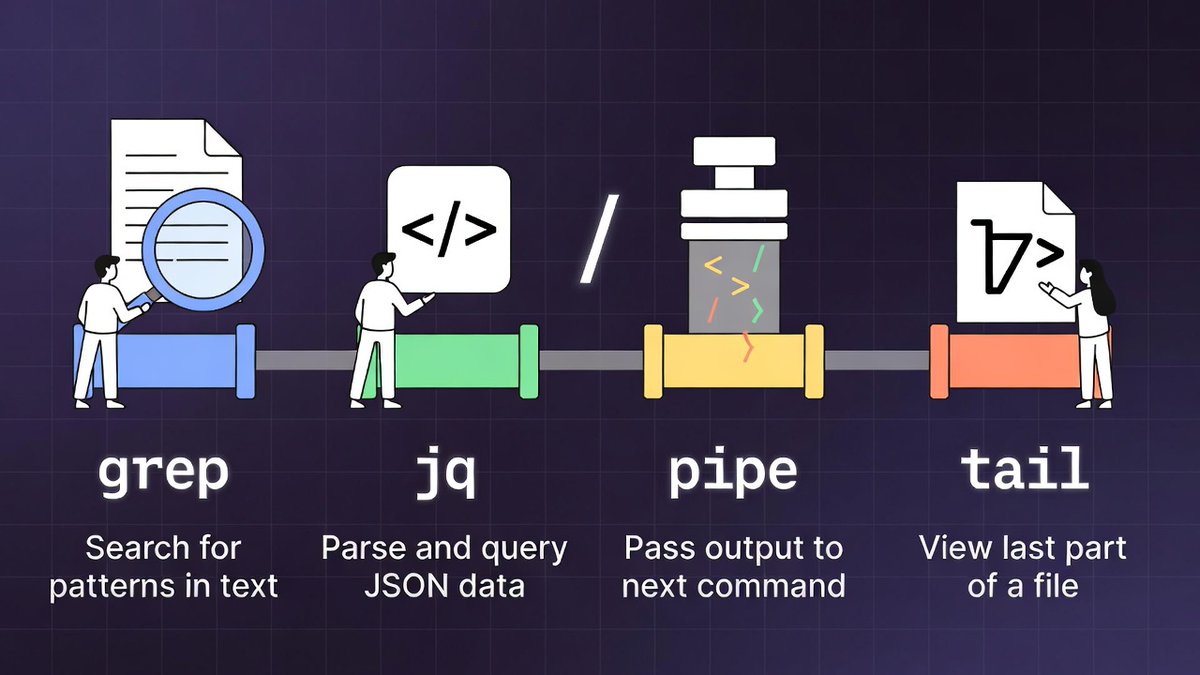
هایپ MCP دیگه از بین رفته و کامیونیتی داره میره سمت استفاده از ابزارهای CLI و یکی از بزرگترین دلایلش مصرف توکن کمتر به واسطه کامندهایی مثل grep، jq، pipe، tail و... هست چون دیگه نیاز نیست کل متن یا فایل خونده بشه!
۱. کامند grep که برای جستجوی یه کلمه خاص تو متن استفاده میشه. وقتی agent این کامند رو ران میکنه، فقط لاینهایی رو میبینه که اون کلمه یا regex داخلشون هست!
۲. کامند jq: فیلتر کردن بر اساس یک فیلد یا ساختار schema از فایل json، مثلا این کامند فقط فیلد name رو از این json میکشه بیرون:
cat data.json | jq '.name'
۳. کامند tail برای دیدن انتهای فایل خصوصا log ها زیاد استفاده میشه. به صورت پیشفرض ۱۰ تا خط آخر رو برمیگردونه ولی میشه با فلگ -n بهش عدد دلخواه داد:
tail -n 50 app.log
۴. پایپ pipe() که باحالترینشه، خروجی یک دستور رو مستقیم به ورودی دستور بعدی میفرسته که قابلیت chaining تا بی نهایت رو داره :)
cat largefile.txt | grep "failed"
اینا دستورات مهمی هست که تو محیط ترمینالی ایجنتها زیاد ازش استفاده میکنن و بد نیست در موردش بدونیم!
فارسی
@patilvishi What's your opinion about Db2, postgress, oracle, MongoDb, ...
English

Why do so many databases end with SQL?
MySQL.
PostgreSQL.
Microsoft SQL Server.
SQLite.
Coincidence?
English
omid_rhm retweetledi
System Design fundamentals - Day 20
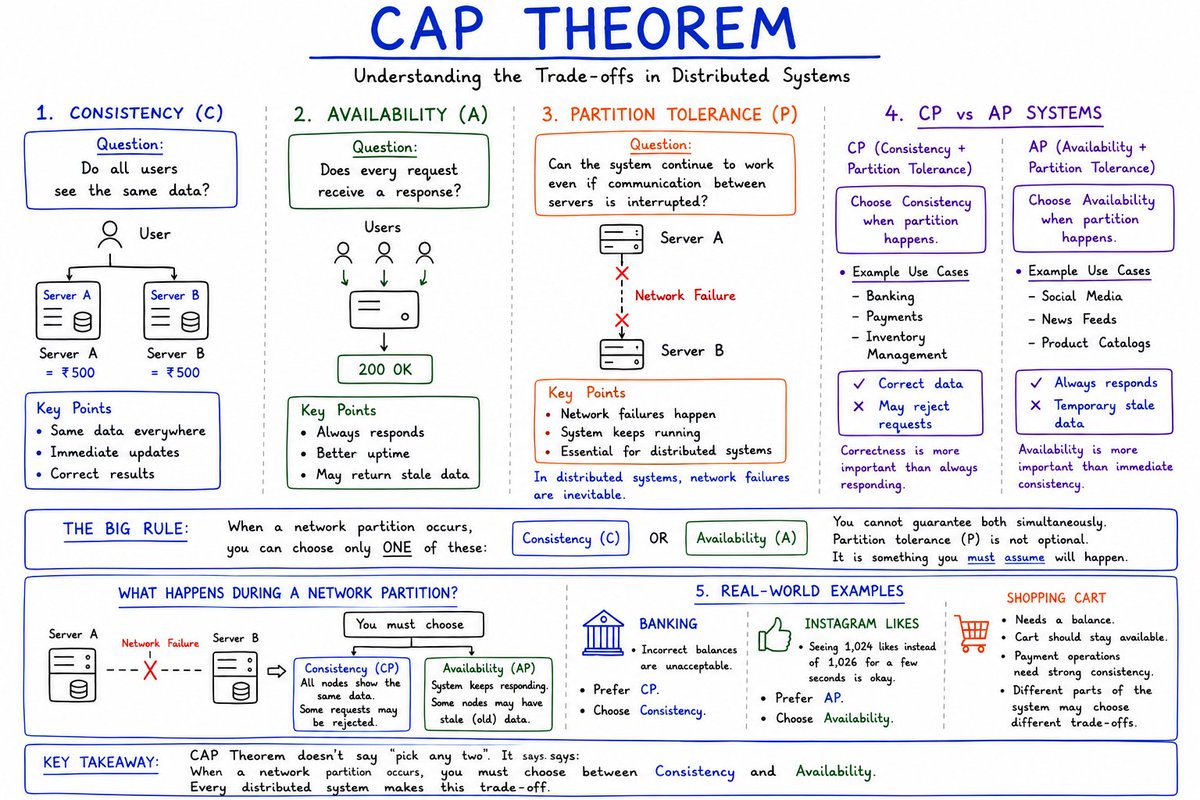
CAP Theorem: Why Distributed Systems Can't Have Everything
Imagine your application is running on multiple servers across different cities.
Suddenly...
The network connection between the servers is interrupted.
Now the system has a choice:
Should it continue accepting requests?
Or should it reject requests until everything is synchronized?
This is exactly the problem the CAP Theorem addresses.
What is CAP Theorem?
CAP stands for:
C - Consistency
Every user sees the same data, regardless of which server they connect to.
Example:
Transfer ₹1000.
Every server immediately shows the updated balance.
A - Availability
Every request receives a response.
Even if one or more servers are unavailable.
The response may not always contain the latest data.
P - Partition Tolerance
The system continues to operate even if communication between servers is interrupted.
In distributed systems, network failures are inevitable.
The Big Rule
When a network partition happens...
You can choose only one of these:
✔ Consistency
OR
✔ Availability
You cannot guarantee both simultaneously.
Partition tolerance isn't optional in distributed systems—it's something you must assume will happen.
CP Systems
Choose:
✔ Consistency
✔ Partition Tolerance
Example:
Server A ✖ Network ✖ Server B
If the servers can't communicate, some requests are rejected to keep data consistent.
Used in
- Banking
- Payment systems
- Inventory management
Correctness is more important than always responding.
AP Systems
Choose:
✔ Availability
✔ Partition Tolerance
Even if servers lose communication, they continue responding.
Some users may temporarily see older data.
Used in:
- Social media
- News feeds
- Product catalogs
Availability is more important than immediate consistency.
Real-World Examples
Banking
Incorrect balances are unacceptable.
Prefer CP.
Instagram Likes
Seeing 1,024 likes instead of 1,026 for a few seconds isn't a problem.
Prefer AP.
Shopping Cart
Many systems choose a balance.
The cart should stay available, while important operations like payment remain strongly consistent.
Key Takeaway
CAP Theorem doesn't say:
"Pick any two."
It says:
When a network partition occurs, you must choose between Consistency and Availability.
Every distributed system makes this trade-off.
Tomorrow we'll explore:
Strong Consistency vs Eventual Consistency
English
@patilvishi Thank you for sharing your knowledge, you reviewed the concepts very well.
English
System design fundamentals-Day 21
Strong Consistency vs Eventual Consistency
Yesterday we learned about the CAP Theorem.
Today lets answer the next question:
What does "Consistency" actually mean?
Not every application needs every user to see the latest data instantly.
---
Strong Consistency
Every user sees the latest data immediately.
Example:
You transfer ₹1000.
The moment the transaction completes...
Every ATM, mobile app, and bank server shows the updated balance.
User A → ₹9,000
User B → ₹9,000
ATM → ₹9,000
Everyone sees the same value.
Immediately.
---
Best For
- Banking
- Payments
- Inventory
- Flight Booking
Correctness matters more than speed.
---
Eventual Consistency
Updates don't appear everywhere instantly.
Instead...
All replicas become consistent after a short period of time.
Write Data
│
▼
Primary Server
│
┌───┴────┐
▼ ▼
Replica A Replica B
A few seconds later...
All replicas contain the same data.
Temporary differences are acceptable.
---
Best For
- Instagram Likes
- Facebook Posts
- Product Reviews
- News Feeds
If your post shows 999 likes instead of 1000 for two seconds...
Nobody notices.
---
Real World Examples
- Banking
Balance must always be correct.
Choose Strong Consistency.
---
Instagram
Likes and comments can synchronize later.
Choose Eventual Consistency.
---
Amazon
Product reviews...
Eventual consistency.
Payment processing...
Strong consistency.
Different parts of the same application use different consistency models.
---
Why Do Companies Choose Eventual Consistency?
Because it improves:
✔ Availability
✔ Scalability
✔ Performance
The trade-off is that users may briefly see older data.
---
Key Takeaway
Strong Consistency
Everyone sees the latest data immediately.
Eventual Consistency
Everyone eventually sees the same data.
The right choice depends on what your application values more:
Correctness...
Or scalability.
Tomorrow we willl explore:
Timeouts, Retries & Idempotency

English
@soha1031ka من نمیدونم، چه جوری پیام شما اومده توی تایملاین من، ولی اصلا نمیتونم باور کنم...خدا بهت صبر بده
فارسی

@Hamzaonchain find /var searching recursively -type f Limits the search to regular files only -size +100M: files larger than 100MB -exec du -h {} + : For each found file, runs du -h: du shows the file's disk usage. Sort _rh Sorts the results.
head -5 Displays only the first 5 lines
English

TEST YOUR LINUX KNOWLEDGE
Which command sequence correctly finds all files larger than 100MB in /var, sorts them by size, and outputs only the top 5?
A.find /var -type f -size +100M | sort -n | head -5
B.find /var -type f -size +100M -exec ls -lh {} \; | sort -k5 -h | tail -5
C.find /var -type f -size +100M -exec du -h {} + | sort -rh | head -5
D. ls -lh /var | grep 100M | sort -r | head -5
English
omid_rhm retweetledi
Vertical vs Horizontal Scaling: How Do Systems Handle Millions of Users?
Your application is growing.
More users are signing up.
More API requests are coming in.
Everything works...
Until one day your server reaches 100% CPU.
Now what?
There are two ways to scale your system.
Vertical Scaling (Scale Up)
Vertical scaling means making one server more powerful.
Example:
4 CPU → 16 CPU 8 GB RAM → 64 GB RAM
You're upgrading the same machine.
Advantages
✔ Simple to implement
✔ No application changes
✔ Good for small to medium systems
Disadvantages
❌Hardware has limits
❌Expensive
❌Single point of failure
----
Horizontal Scaling (Scale Out)
Instead of buying a bigger server...
Add more servers.
Server 1 Server 2 Server 3 Server 4
A Load Balancer distributes requests among them.
Advantages
✔ Handles millions of users
✔ High availability
✔ Better fault tolerance
✔ Easy to grow gradually
Disadvantages
❌More complex architecture
❌Requires load balancing
❌Distributed system challenges
---
Real-World Examples
- Startup
Users
│
Server
Vertical scaling is usually enough.
- Netflix
Users
│
Load Balancer
│
┌────|────┐
▼ ▼ ▼
App1 App2 App3
Horizontal scaling is essential.
---
What Happens If One Server Fails?
Vertical Scaling
Server ❌
Application Down
Horizontal Scaling
Server 1 ✅
Server 2 ❌
Server 3 ✅
Traffic automatically goes to healthy servers.
Users often don't notice.
-----
Can We Use Both?
Absolutely.
Many companies first upgrade a server (vertical scaling).
When that's no longer enough, they start adding more servers (horizontal scaling).
Modern cloud architectures use both.
---
Key Takeaway
- Vertical Scaling
Make one server stronger.
- Horizontal Scaling
Add more servers.
If you're building applications that need to serve millions of users, horizontal scaling becomes the foundation of modern system design.
Tomorrow we will explore another pair of commonly confused concepts:
Availability vs Reliability

English



omid_rhm retweetledi

