Indraneal

10.6K posts

Indraneal banner
Indraneal

Indraneal

@omnilogist

Tech geek, Cricket fan, Part-time Investor, Full-time Learning Machine. Bibliophile, Gamer and Tea-addict. A piece of the universe pondering itself.

Mumbai, India Katılım Şubat 2010
1.6K Takip Edilen1.7K Takipçiler
Indraneal
Indraneal@omnilogist·
If you are structurally dependent on non-substitutable imports (like energy or advanced tech), a weaker currency is very much a forced tax on productivity though
English
0
0
0
45
Indraneal
Indraneal@omnilogist·
This is a good read. The reality of how currency depreciation affects consumption is more nuanced than rupee weaker by x percent therefore you are x percent poorer
Varsity@ZerodhaVarsity

How much of the rupee's fall actually shows up as inflation in the country? The rupee went from ₹45 to about ₹96 per dollar in 15 years. Does that mean your savings lost half their value? Depends on where you spend. 1⃣If your expenses are in dollars, yes. You need more rupees to buy the same dollar. Your rupee savings have literally halved in dollar terms in the last 15 years. 2⃣But if your expenses are in India, no. A kilo of basmati rice going from ₹60 to ₹140 is domestic inflation, not how the exchange rate moved. Having said that, the exchange rate does pass through to your everyday prices in two ways. - Direct: when you buy imported products like whey protein, electronics, or olive oil. - Indirect: through crude oil. India imports 85% of its oil. Oil feeds into diesel. Diesel feeds into transport. Transport feeds into the price of everything. How much of this actually shows up as inflation? Economists have a word for it: exchange rate pass-through. There is an article on the RBI website on the same. The finding: for every 10% fall in the rupee, inflation goes up by about 0.7%. It passes through, but not as dramatically as most people fear. How to reduce the possible effects of rupee depreciation on our investments? Read our latest newsletter: zerodhavarsity.substack.com/p/is-a-falling…

English
1
0
2
194
Indraneal retweetledi
Indraneal
Indraneal@omnilogist·
@Kenu73 Appreciate the work you do in providing accurate information
English
0
0
1
269
Priyesh Sharma
Priyesh Sharma@Kenu73·
A 15th July 2024 notice is being used to share the new Thailand visa update 🫡 Hence guys please please don't try to post about everything and anything using AI. Remarkable that people don't even verify or maybe just reverse engineer the information they are sharing.
Luxe Indian Point Explorer@luxe_explorer

@Kenu73 @SuyashMakasare This is from the official website of the tourism page of Thailand - this is not an assumption 👇


English
4
0
26
15K
Indraneal retweetledi
Deepak Shenoy
Deepak Shenoy@deepakshenoy·
While it makes sense for the US, Iran and Russia to keep oil prices high, it makes no sense to have inflation ruin most others and in fact hurt the US. I believe we will see lower prices on crude, and a return to availability soon. It makes sense for a longer term policy response... Like to change fpi taxation, to introduce duties on end use goods, to push local manufacturing, refining of materials etc, and to explore local crude oil resources. But it doesn't make sense to unnecessarily hike rates. The govt has done an amazing job managing shortages but it's time to build the next India. Semiconductors, machinery, cold storage, and so on. Rbis work with the rupee right now is actually good, and remember that if it buys dollars on the way in, it must sell them on the way out. It's not selling enough, and doesn't have the insti linkages that say boj or boe has, but in general the response has been decent. We still run a surplus on liquidity. They should top this up with a distribution of their own profits properly, regardless of what our govt needs. I would stay prepared for short term pain but it does look like peak pessimism on India. I just don't think a country of smart hungry people will just wiffle away all the economic growth because some uncles decide there's nothing here. We grow because we are ambitious, sometimes despite our govt and the bureaucracy, and the next decade is going to be good here. Two years ago it was just india and no one else. Today's everyone else but India. Both will prove to be wrong.
English
26
30
240
22.1K
Indraneal
Indraneal@omnilogist·
@StableInvestor I personally think that the standard advice of 6 months is too less considering the uncertainty around the job environment today - some roles especially should target atleast 12-18 months
English
1
0
0
83
Stable Investor
Stable Investor@StableInvestor·
Increase the size of your emergency funds a bit. May not seem like efficient use of money, but it’s better to have an umbrella and not need it rather than need it and not have it.
CNBC-TV18@CNBCTV18Live

#JustIn | Government Sources Say; 👉Govt Issues Austerity Advisory For Govt Owned Banks, Insurers, FIs 👉Govt Owned Banks, Insurers, FIs Instructed To Rationalise Expense
English
3
0
24
7K
Indraneal retweetledi
Nitin Pai
Nitin Pai@acorn·
Distrust of civic institutions compounds the pre-existing generalized distrust in our hyper-diverse society, leaving India with a severe social capital deficit. We buy gold to cover this deficit. Gold is imported and paid for in foreign currency, and hence shows up on the deficit side of the current account. As CapitalMind CEO @deepakshenoy showed, if gold imports are excluded, India’s current account would have been in surplus for 11 of the past 12 quarters. In other words, our social capital deficit is exacerbating macroeconomic problems during an approaching crisis.
English
3
13
37
9.1K
Indraneal
Indraneal@omnilogist·
I directionally agree with this, but it's important to remember that risk is more than what comes from say more equity exposure. Factors like currency depreciation, inflation etc are also risks that a "safe" portfolio of more fixed income is exposed to ofdollarsanddata.com/the-risk-wealt…
English
0
0
1
61
Indraneal
Indraneal@omnilogist·
Someone explain to the government that the solution to every economic problem is not to add more taxes.
English
0
0
1
45
Indraneal retweetledi
The Hindu
The Hindu@the_hindu·
📢 A digitally altered image purporting to be a front page of The Hindu from June 6, 1967, is currently circulating on social media. We wish to clarify that this is not an authentic page from our archives. The Hindu urges readers to exercise caution and verify before sharing.
English
172
3.3K
9.3K
302.7K
Indraneal retweetledi
Deepak Shenoy
Deepak Shenoy@deepakshenoy·
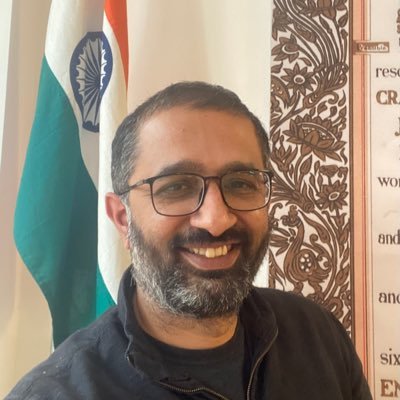
The last three years of low crude prices didn't help Indian consumers (we kept the petrol price the same) Who made money? The govt, and the oil cos. The largest oil retail co, has more than 82,000 cr. in collective profits since FY24 to now. They should take the hit now.
Deepak Shenoy tweet media
English
168
1.1K
3.9K
171.8K
Indraneal retweetledi
Arun - Eighty Twenty Investor
Arun - Eighty Twenty Investor@arun_kumar_r·
The smaller your portfolio, the less important your portfolio returns. And the more important your future savings potential. That changes how you should think about asset allocation! Contrary to popular advice, in the early stages of wealth creation, 100% diversified equity portfolio can make a lot of sense as future earnings and savings may be much larger than the current portfolio. Here is a simple framework to think this through: 100% equity works best when you have: 1) High savings relative to portfolio Rule: SAP Rate (Annual Savings as % of Portfolio) >15% 2) Long earning runway Rule: 15+ earning years remaining with stable income 3) Long investment horizon Rule: 10+ year time frame 4) High ability to handle declines Rule: Can tolerate a 40-50% decline without panicking out When does asset allocation become more important? As wealth grows: • Savings become smaller relative to portfolio size • Portfolio becomes harder to rebuild after losses • Financial goals move closer • The same percentage decline starts feeling very different on a larger base - making it psychologically and financially harder to absorb Simple Takeaway Early stage wealth building: Prioritize increasing earnings, aggressive savings and equity heavy portfolios. Later stage wealth building: Prioritize asset allocation and risk management. In the beginning, your future income is your biggest asset. Over time, if done right, your portfolio becomes your biggest asset!
English
4
9
52
6.2K
Indraneal
Indraneal@omnilogist·
@readswithravi I prefer ebooks on the Kindle simply because of convenience to get and carry around, but I'll occasionally pick up a physical book in places like Blossoms
English
0
0
1
82
Reads with Ravi
Reads with Ravi@readswithravi·
Who still sits down and reads an actual physical book?
English
476
64
2K
90.9K
Indraneal
Indraneal@omnilogist·
Socrates once said that "the unexamined life is not worth living", but the vast majority of people go through life following a script without really questioning whether it fits their values and goals.
English
0
0
0
64
Indraneal
Indraneal@omnilogist·
@SloganMurugan Yes..I remember it catching my attention as well - I did buy a book to read on the flight even though I had my kindle
English
0
0
1
114
Mumbai | | Paused
Mumbai | | Paused@SloganMurugan·
Is this the best airport bookstore in India. COK
Mumbai | | Paused tweet mediaMumbai | | Paused tweet media
English
10
3
116
8.9K
Indraneal
Indraneal@omnilogist·
@selurus Partly, but I’d say capitalism amplified and systematized it more than invented it. Religious ideas like the Protestant work ethic moralized labour as virtue/calling. Capitalism then attached rewards, status and survival to productivity.
English
0
0
1
11
Selurus
Selurus@selurus·
@omnilogist Do you think it was capitalism that motivated this line of thinking?
English
1
0
0
17
Selurus
Selurus@selurus·
Why does doing nothing feel so good on Sundays but so wrong on weekdays?
English
4
0
7
120