

oplaffite
6K posts

It’s getting hard to find a major commodity theme that hasn’t already moved.
Something still genuinely hated.
Graphite ticks the box.
English
oplaffite retweetledi
We update these positions as the play develops through scale out....#commodities (on average, some are 4th quartile, some are 2nd) are 35 minutes on the cycle clock....this is the holding phase, we don't buy, that ship has sailed. Many assume that > 100% returns remaining are a buy, they are not for us, we look for > 8x from near cycle lows.
English
oplaffite retweetledi

"I see so many ghosts. They're already dead. They don't even know it."
A 45-year Wall Street veteran just said that about the current generation of finance professionals to me.
George Robertson started at Salomon Brothers in 1981 when bond yields were 14%. He's survived every blow-up from Long-Term Capital to 2008 to COVID.
And he's convinced a massive reset is coming that will produce RUIN for people who don't see it.
I just interviewed him, and let me walk you through the one thing most people in this space fail to understand:
The stock market has effectively become a single instrument.
Every major quant fund is staffed by the same MIT graduates running the same models through the same filters arriving at the same conclusions. There are maybe 4 or 5 ideas being expressed across the entire systematic trading universe at any given time. The diversity that makes markets function as a price discovery mechanism is GONE.
Jane Street just reported $16.1 billion in trading revenue in a SINGLE QUARTER. One firm. 3,500 employees. More trading revenue than JPMorgan or Goldman Sachs. Full year 2025 was $39.6 billion.
Lever that capital 10 to 1 across all the major quant players and you're looking at trillions in gross exposure approaching the monthly GDP of the United States. Until something overwhelms that kind of firepower, these firms effectively dictate market behavior.
The rest of us are passengers.
And that's why markets look so deceptively calm right now. Tight ranges, suppressed volatility, weeks and months where nothing seems to move.
But the calm IS the danger.
All the mispricing that should be correcting incrementally through normal price discovery is instead building up like pressure in a sealed system. And when it finally releases, it won't be a normal correction where you have weeks to adjust your positioning...
It will be years of stored mispricing detonating in DAYS.
We've seen the same thing before:
In the 1990s, Long-Term Capital Management was so dominant in fixed income that it killed price discovery across the entire asset class. Danish mortgages, basis trades, risk arbitrage, nothing functioned properly while LTCM existed. Normal pricing only returned after they literally collapsed.
Now apply that dynamic to the ENTIRE equity market.
And the agencies that were supposed to protect investors from exactly this kind of concentration have been gutted. Sherman Act enforcement is effectively dead. The AI industry operates as an informal trust, 3 or 4 companies integrated vertically and horizontally in ways we haven't seen since Carnegie and Rockefeller.
Trevor Milton rolled a truck down a hill, called it technology, and got pardoned. Crime pays. So who stops the next guy?
Meanwhile capital markets have grown to roughly 4x GDP. When I started in this business they were roughly the SAME size. So when the repricing comes, the damage to the real economy will be multiples of anything we've experienced.
Nobody has a clean answer for what to do about this. Not me. Not Robertson. Not anyone being honest with you.
But after 45 years doing this myself I know this much:
The correction WILL come.
Price discovery WILL return.
The only question is whether you survive it or whether you're one of the ghosts who never saw it coming.
English
oplaffite retweetledi
@Wasim_Pervaiz ....the question should be, do we like the cycle $GEN.ax is exposed too....it's the cycle that dictates the view, not the 5 stock exposure in that theme.
English
oplaffite retweetledi

This might be the most incredible chart out there
The stuff of revolutions
Robert (infra 🏛️⌛️)@infraa_
If you work for a living, your share of GDP has never been lower If you hoard capital for a living, your share of GDP has never been higher
English
oplaffite retweetledi
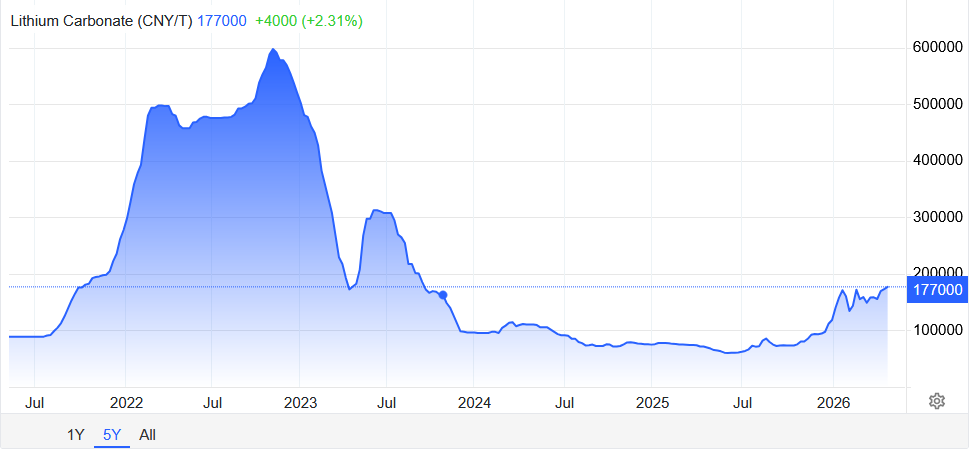
We sell out all < 3x PE stocks on > 3x Cost curves prior to the #commodity cycle peak as these generally -75% or greater through cycle lows.
Note the previous #lithium cycle if you wish to understand this process, many were down 97%, > 5x cost curve through to -25%.
English
oplaffite retweetledi

American house styles are easier to read when you know what to look for.
From the compact Cape Cod and symmetrical Colonial to the mansard roof of Second Empire, the half-timbering of Tudor Revival, and the low horizontal lines of Prairie and Ranch homes — each style has a visual language of its own.
Roof shape, windows, entryways, porches, and ornament often reveal the period and influence behind a house long before you know its history.

English
oplaffite retweetledi


oplaffite retweetledi
@degendasilva While we remain overweight #uranium, #gold and #lithium stocks....any that achieve target scale down prices go out the door.
English
oplaffite retweetledi

oplaffite retweetledi
$FSY 3-4yr return profile
Entry 30c = +5-6x
Entry 60c = +3x
Entry 90c = +2x
The higher you pay to gain entry, the lower your return!
English
oplaffite retweetledi
@BULLReturns @QuoiCoubehMc surprised iron ore hasn’t joined the party yet. some tickers still
making 52 week lows
English
@QuoiCoubehMc Some initial scale downs are within 25% of current bids .....it's 35 minutes on the cycle clock for #lithium
English
$35k #lithium within 6 months = +50% on our related portfolio creating 3-4 #10baggers
Rock Bottom Entries@RockBtmEntries
Lithium is about to do something special.
English
oplaffite retweetledi
@asammakieh #ironore will move up to the $150-$180 range in the next 18 months
#metals non #precious will average +50%, higher where short supply exists.
English
oplaffite retweetledi

GLN delivered a transformational March quarter, completing Phase 1 at HMW. Wet commissioning is next, with first lithium chloride concentrate targeted in H1 2026. A$40.7m cash, no debt.
go.relait.co/nprzms46 #GalanLithium #Lithium #ASX #Mining #HMW
English
oplaffite retweetledi

My guest today is Paul Tudor Jones (@ptj_official), one of the greatest macro traders of all time.
He correctly predicted the 1987 stock market crash and shorted the Japanese bubble in 1990. For over 40 years, his flagship fund has had a negative correlation to the S&P 500. 100% of his returns are alpha.
He says today's market has so many similarities to 2000, "the easiest bear market I've ever seen in my whole life."
He makes the case for going long dollar-yen, why Bitcoin beats gold as an inflation hedge, and why he was wrong about Warren Buffett.
But what I'll remember most from this conversation is Paul's zest for life. He's 71 and still wakes at 2:30 every morning to trade the London open. He works out for two hours a day. He walks with his wife every evening. He travels the country chasing peak spring and peak fall. He's so excited about the songs picked for his funeral that he wishes he could be there to hear them.
Paul has lived five lifetimes in one. He's one of the most entertaining and interesting people I've met, and the conversation will leave you searching to be as passionate about what you do as he is about what he does.
Enjoy!
Timestamps:
0:00 Intro
1:00 The Kindest Thing
13:19 Trading vs. Investing
17:33 Lessons from Warren Buffet
22:24 The Existential Risks of AI
29:54 The Nature of Trading
31:46 Bitcoin
35:55 Bubbles
42:08 A Day in the Life of PTJ
46:00 Information Overload
47:07 Passion for Markets
50:49 The Robin Hood Foundation
54:18 The Workless World
56:03 Journalism
1:00:00 Principal Components of a Great Life
1:05:06 Kill Them With Kindness
English
oplaffite retweetledi
Paul Tudor Jones says the US is more dependent on equity prices than ever, and explains what a 35% correction would trigger in the economy:
"We're 252% of stock market cap to GDP. In 1929 we were 65%. In 1987 we got to ~85-90%. In 2000, 170%.
If you think about the periodicity of significant bear markets. Since 1970, we get a mean reversion about every 10 years.
Let's say mean revert to the past 25 or 30-year PE. That would be a 30, 35% decline. Well, 35% on 250% of GDP is 80, 90% of GDP.
10% of our tax revenues are capital gains, they go to zero. So you can see the budget deficit blowing up. You can see the bond market getting smoked. You can see this kind of negative self-reinforcing effect.
In the stock market, we're over-equitized as a country. We have the highest individual equity weightings in the history of the country.
And then the real problem is if you look at private equity in 2007-2008, that was about 7% of institutional portfolios. Now it's about 16% of the institutional portfolios. We're so much more illiquid than we were in 2008.
The problem is that if you buy the S&P at this current valuation, the 10-year forward return is negative when you buy the S&P with a PE of 22. That's what history shows.
So yes, the S&P is spectacular long-term, if you have a hundred-year view. But that's because that's an average of a hundred years, including times when the S&P 500 PE was 6, 7 and 8, or one third of what it is right now.
Valuation matters a lot, and the stock market's really high and it's gonna be really hard to make money from here with any kind of long-term view."
Patrick OShaughnessy@patrick_oshag
My guest today is Paul Tudor Jones (@ptj_official), one of the greatest macro traders of all time. He correctly predicted the 1987 stock market crash and shorted the Japanese bubble in 1990. For over 40 years, his flagship fund has had a negative correlation to the S&P 500. 100% of his returns are alpha. He says today's market has so many similarities to 2000, "the easiest bear market I've ever seen in my whole life." He makes the case for going long dollar-yen, why Bitcoin beats gold as an inflation hedge, and why he was wrong about Warren Buffett. But what I'll remember most from this conversation is Paul's zest for life. He's 71 and still wakes at 2:30 every morning to trade the London open. He works out for two hours a day. He walks with his wife every evening. He travels the country chasing peak spring and peak fall. He's so excited about the songs picked for his funeral that he wishes he could be there to hear them. Paul has lived five lifetimes in one. He's one of the most entertaining and interesting people I've met, and the conversation will leave you searching to be as passionate about what you do as he is about what he does. Enjoy! Timestamps: 0:00 Intro 1:00 The Kindest Thing 13:19 Trading vs. Investing 17:33 Lessons from Warren Buffet 22:24 The Existential Risks of AI 29:54 The Nature of Trading 31:46 Bitcoin 35:55 Bubbles 42:08 A Day in the Life of PTJ 46:00 Information Overload 47:07 Passion for Markets 50:49 The Robin Hood Foundation 54:18 The Workless World 56:03 Journalism 1:00:00 Principal Components of a Great Life 1:05:06 Kill Them With Kindness
English
oplaffite retweetledi

oplaffite retweetledi

“America has become a soulless nation”
Even in the country, you see the same corporate slop
Every town in America now has the same fast food restaurants, the same chain restaurants, the same hotels. Different area, same everything
“If y'all needed any more reasoning as to why I'm leaving the country, take a look at this absolute abomination of city planning. Unfortunately, this is how most of America looks outside of big cities. This is not a country anymore, but a functional economic zone that you are meant to contribute to until your life ends.
And maybe if you're lucky, every year or two, you can take a vacation to actually live for once somewhere else in the world”
The irony, they’re really essentially all one big company under different names
As of recent data, chain restaurants make up roughly 40% of U.S. restaurants nationally. That number jumps to over 60% in some towns
I personally find it very annoying to travel to different parts of America and see the same restaurants, the same stores in the mall, the same everything. It makes travel feel pointless
English
oplaffite retweetledi

A friend of mine from college days just bought a house in Katy last year.
Makes $200K/year in Texas. Wife and kid.
Called me last week like "bro, the economy is actually cooked."
I laughed.
"you make $200K, man. what you crying about"
He then showed me the math...
$200K in Texas = $12,800/month take-home
> $2,510 mortgage
> $620 property taxes (Texas will bleed you quietly)
> $350 homeowners insurance
> $150 HOA (for a gate, a pond, and a newsletter nobody reads)
> $1,800 health insurance for the family
> $1,000 daycare for ONE kid
> $1,050 groceries
> $500 car note
> $220 car insurance
> $350 utilities
> $375 home maintenance
Total: $8,925
He's left with $3,875.
Then, he still has student loans, date nights and holidays sitting on the side.
A decade ago…
A quarter of that salary is what somebody needed to buy that same house and raise that same family.
Now $200,000 a year and you're still watching your account like something is wrong.
The economy is really cooked for 9-5ers
English