Matt Pahl

307 posts

Matt Pahl

Matt Pahl

@pahlmc

Katılım Mayıs 2017
863 Takip Edilen77 Takipçiler
Matt Pahl retweetledi
Alexandr Rakitko
Alexandr Rakitko@AlexRakitko·
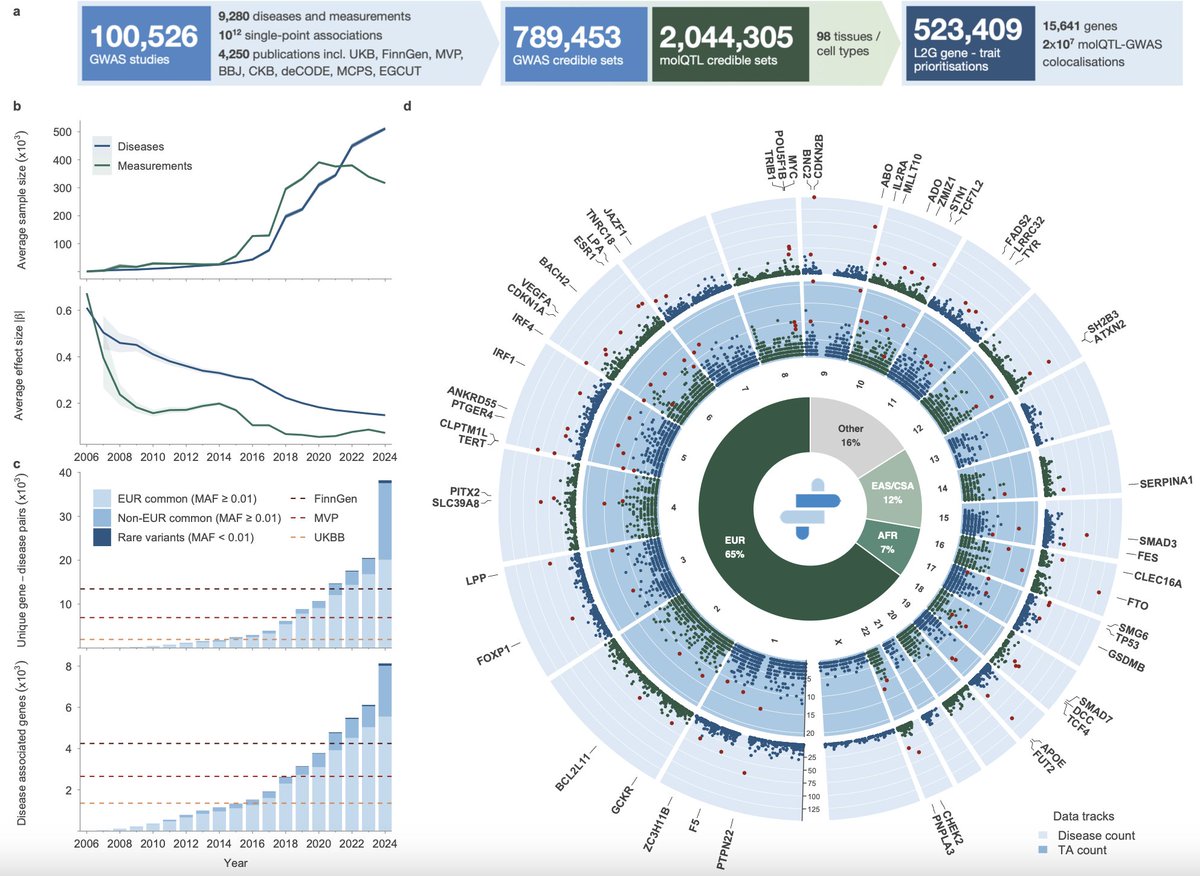
🧬New massive study of more than one trillion variant–trait associations suggests that drug-target success may lie in the middle ground between low and high pleiotropy. 💊 The authors show that most genes are pleiotropic — meaning that the same gene or genetic variant can be associated with multiple traits or diseases. Among 8,285 disease-associated genes, about 64% were linked to more than one disease. Moreover, 4,743 genes were associated with multiple therapeutic areas. This is highly important for drug discovery, because a therapeutic target is usually embedded in a network of molecular and biological mechanisms rather than linked to a single isolated outcome. As expected, in most cases the effects of pleiotropic lead variants were concordant: 92.5% showed the same direction of association across diseases. In other words, the genetic variant tended to increase the risk of the associated diseases. But there were also opposite examples. For instance, the APOE p.Cys130Arg variant was associated with lower risk of age-related macular degeneration and non-alcoholic fatty liver disease, but higher risk of Alzheimer’s disease. This illustrates why such studies are especially important: even before clinical trials, we can start to account for potential safety liabilities. Overall GWAS support was associated with a higher chance of clinical success — roughly a threefold increase. Perhaps the most important result is that the association between pleiotropy and drug-target success is non-linear. Too little pleiotropy may indicate weak or narrow biological involvement. Too much pleiotropy may imply systemic effects and safety liabilities. The optimum appears to be a target with a strong enough biological signal, but without an excessively broad phenotypic footprint. Proud of my former colleague and co-author of this paper, @tskir1 — congratulations! platform.opentargets.org biorxiv.org/content/10.648… #GWAS #OpenTargets #Pleiotropy #DrugDesign #ComplexDiseases
Alexandr Rakitko tweet media
English
3
41
141
15.9K
Matt Pahl retweetledi
Katie Galloway
Katie Galloway@GallowayLabMIT·
Could the folding of synthetic gene circuits in 3D shape how genes are expressed? Today @ScienceMagazine we report on the role of gene syntax in shaping feedback between transcriptional activity and genome folding for advanced circuit design🧵 (1/n)
Katie Galloway tweet media
English
16
136
528
41K
Matt Pahl retweetledi
Saori Sakaue
Saori Sakaue@saorisakaue·
New preprint! 📣We performed the largest multi-ancestry GWAS of rheumatoid arthritis (RA), the most common autoimmune disease, by analyzing the VA Million Veteran Program (MVP) with international RA cohorts. medrxiv.org/content/10.648…
English
2
20
80
5.6K
Matt Pahl retweetledi
Daniel J Drucker
Daniel J Drucker@DanielJDrucker·
New concepts frm islet epigenetics revealing DNAm remodelling in healthy beta cells reflects a long-term adaptation to metabolic demand, which, in T2D, is accelerated as part of a compensatory response that fails under sustained insulin resistance nature.com/articles/s4225…
English
1
5
17
2K
Matt Pahl retweetledi
The Human Pancreas Analysis Program - HPAP
The HPAP team is happy to announce the publication of our newest study and resource. Here, we perform single base resolution DNA methylation analysis of human alpha, beta and exocrine cells to map epigenomic transitions in aging and T2D. rdcu.be/ffbgE
English
0
5
6
818
Matt Pahl retweetledi
Longzhi Tan
Longzhi Tan@tanlongzhi·
3D genome architecture underlies health & disease, but its biochemical basis is hard to study at scale. We present Plate-C: a screening platform that profiles thousands of whole-genome 3D maps in a day ($4 each), discovering many pathways that rewire DNA: biorxiv.org/content/10.648…
Longzhi Tan tweet media
English
4
73
294
31.5K
Matt Pahl retweetledi
Shweta
Shweta@shramdas·
As a companion to the GI genetics paper, we wrote up some results from the phenotypes we recorded. We see enormous variation in phenotypes across the country, with ethnicity contributing significantly to variation. 1/medrxiv.org/content/10.648…
Jaison J Sequeira@jaisonjseq

GIP results are out. The beauty of human diversity in India hasn't faded a bit. Out of the 5000-odd communities, the largest genetic dataset for India includes only about 80 pops. This means these results are just 1.6% of the whole story 1/n #india medrxiv.org/content/10.648…

English
5
17
66
9.3K
Matt Pahl retweetledi
Anshul Kundaje
Anshul Kundaje@anshulkundaje·
Check out a vetted Pytorch port of AlphaGenome by GenomicsxAI collaborative team. See QT thread (with links to code & blogpost). Various fine tuning modules + tutorials coming next. Community building announcements coming soon as well. Follow blog for latest updates.
Alejandro Buendia@abuen_dia

Thrilled to announce alphagenome-pytorch, an accurate, readable, and careful port of AlphaGenome's architecture and weights to PyTorch. Work with @gtcaa @m_kjellberg @chriswzou @tuxinming as part of the GenomicsxAI initiative between @anshulkundaje and @pkoo562 labs.

English
3
24
117
15.9K
Matt Pahl retweetledi
nature
nature@Nature·
Nature research paper: Functional dissection of complex trait variants at single-nucleotide resolution go.nature.com/4ck0zkd
English
0
40
153
18.8K
Matt Pahl retweetledi
Cell Stem Cell
Cell Stem Cell@CellStemCell·
Online Now! Human cortical organoids recapitulate inter-individual variability in infant brain-growth trajectories dlvr.it/TPySrX #stemcells
English
1
13
120
5.9K
Matt Pahl retweetledi
Loïc Yengo
Loïc Yengo@LoicYengo·
We are pleased to announce that our new study explaining the missing heritability of many phenotypes using WGS data from ~347,000 UK Biobank participants has just been published in @Nature. Please check out our manuscript here: nature.com/articles/s4158….
English
8
118
412
136.4K
Matt Pahl retweetledi
Jonathan Pritchard
Jonathan Pritchard@jkpritch·
Excited to share our latest work on the factors that determine what genes we find (and don't find!) in GWAS and burden tests. We describe a critical concept that we call *specificity*. Led by Jeff Spence and Hakhamanesh Mostafavi:
Hakhamanesh Mostafavi@Hakha_Most

How do GWAS and rare variant burden tests rank gene signals? In new work @Nature with Jeff Spence, @jkpritch, and our wonderful coauthors we find the key factors are what we call Specificity, Length, and Luck! 🧬🧪🧵 nature.com/articles/s4158…

English
2
28
106
16.5K
Matt Pahl retweetledi
Mike Gallagher
Mike Gallagher@GeneticsMike7·
1/ Happy to share important work done with my co-author Andrew Khalil in the labs of Rudolf Jaenisch @WhiteheadInst @MITBiology @MIT and Dave Mooney @Harvard @wyssinstitute trying to assess and fix the major problem of transgene silencing in human ESC/iPSC based work
English
5
30
173
87K
Matt Pahl retweetledi
Marios Georgakis
Marios Georgakis@MariosGeorgakis·
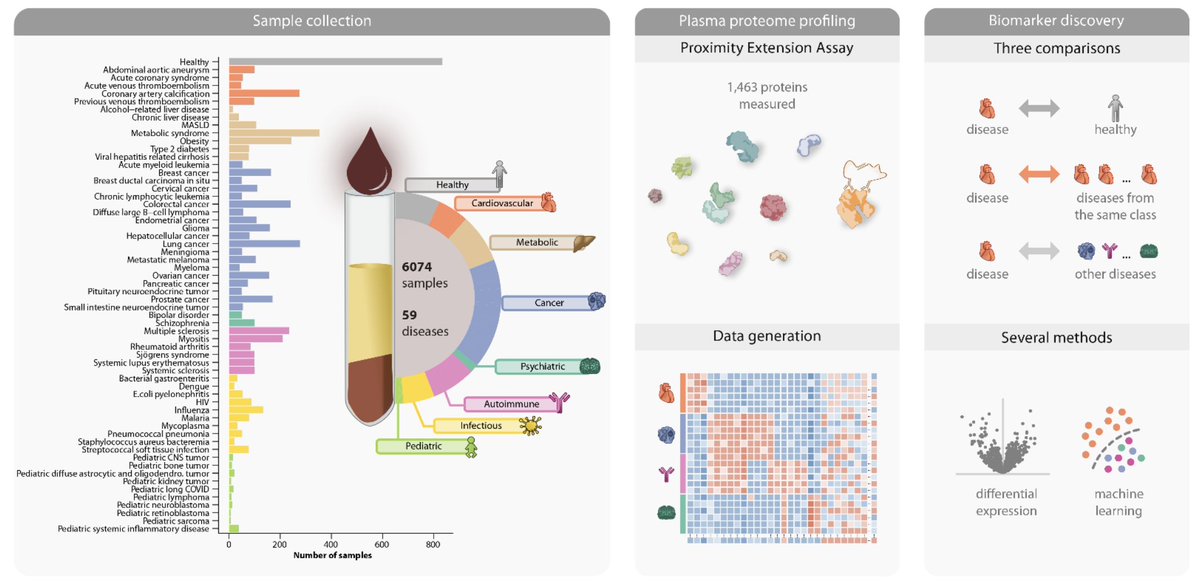
Most blood proteomics analyses of human disease focus on a single disease endpoint missing assessment of specificity. This analysis of 8,262 individuals across 59 diseases offers an atlas of Olink proteomic signatures across the disease spectrum.
Marios Georgakis tweet media
English
3
53
183
16.6K
Matt Pahl retweetledi
Keith Sakata, MD
Keith Sakata, MD@KeithSakata·
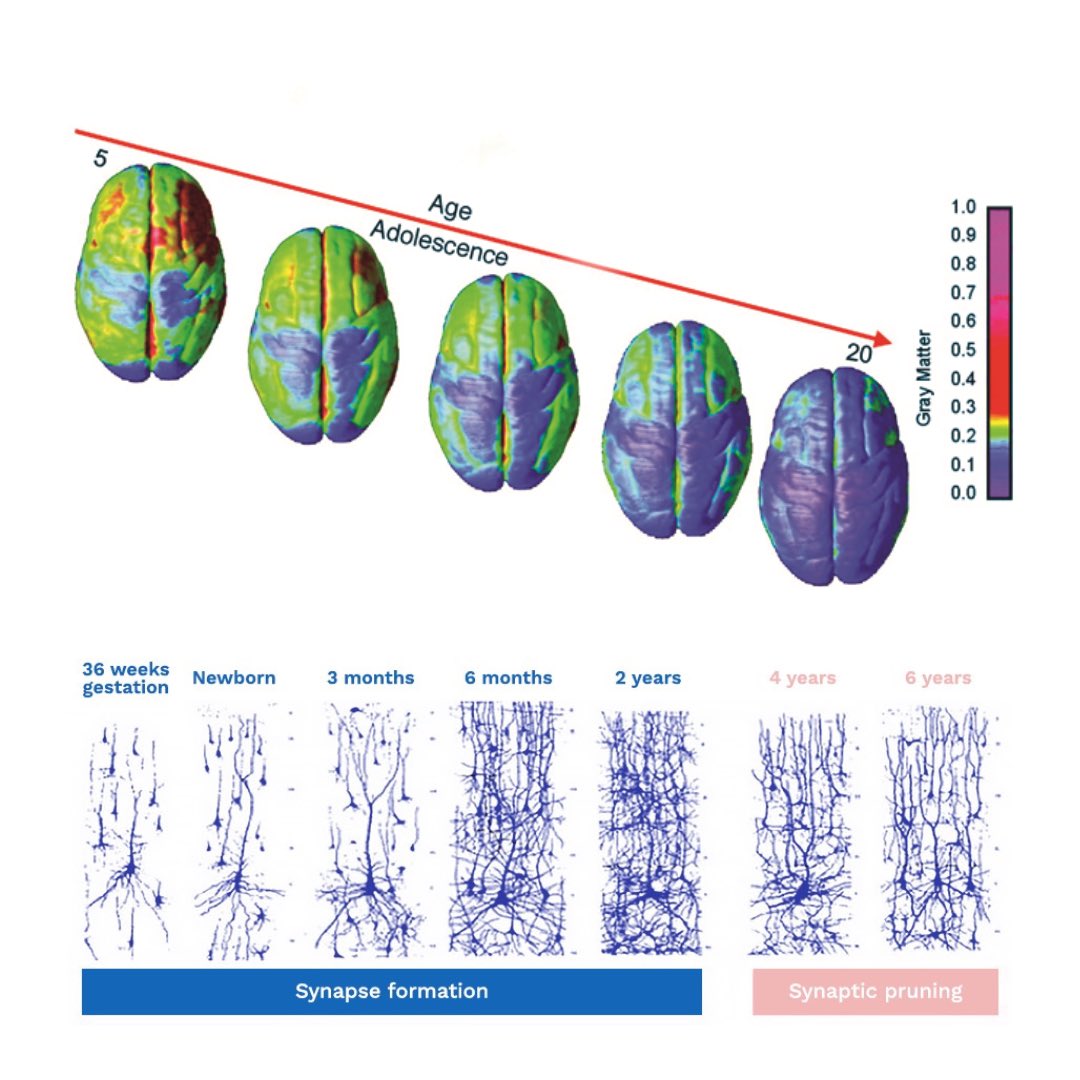
As many as 30,000 synapses are lost per second in the cortex of a growing adolescent.
Keith Sakata, MD tweet media
English
32
121
1.2K
36.4K
Matt Pahl retweetledi
Marios Georgakis
Marios Georgakis@MariosGeorgakis·
Like many other non-European populations, Middle Esterners are underrepresented in human genomic research. The UAE is now stepping up with the Emirati Genome Program having sequenced >700K (!) genomes
Marios Georgakis tweet media
English
2
14
69
5.8K