
Sami Paihonen

12.3K posts

Sami Paihonen banner
Sami Paihonen

Sami Paihonen

@paihonen

Observing digital trends and horizons. Curious about technology, design and trends. Executive at work and BoD member to few companies.

Finland Katılım Ocak 2009
2.1K Takip Edilen563 Takipçiler
Sami Paihonen
Sami Paihonen@paihonen·
Incredibly good memo, thanks for sharing @gregisenberg
GREG ISENBERG@gregisenberg

I just got back from SF and I FEEL INSPIRED. I spent 5 days with frontier AI model teams, AI startup founders, and 3 billionaires. My takeaways: 1. I had lunch with 3 billionaires. All of them are buying SaaS companies and rebuilding them agent-first. They were deeply inspired by Bending Spoons and Ryan Cohen's eBay deal. Buy the company, cut the headcount, rebuild the tech, add agents, add features, make more valuable experience, raise prices. 2. The frontier model companies are hungry for usage data from the field. They can see API calls and token counts. They can't see the actual workflows. If you're deep in a niche using these models in ways the model companies haven't seen, that understanding is incredibly valuable. Usage intelligence is the new alpha. 3. Consumer AI is massively underbuilt. Every billboard in SF is either B2B inference infrastructure or vertical agent companies. The entire city is optimized for enterprise. Meanwhile you have companies like Cal AI doing $50M ARR in 18 months as a consumer app. I met with a cool few teams doing consumer AI (@paulscherer / @ekuyda) 4. MCP came up in literally every conversation. The companies exposing their product as MCP endpoints are getting pulled into deals they never pitched for. The ones that aren't are becoming invisible to agents. This is the new SEO. If agents can't find you, you don't exist. Building products for agents is the new zeitgeist in general. 5. Not uncommon for hot seed rounds to be $25-50 million valuations. I saw a Series A at $450 million 6. If I had a dollar every time someone mentioned "forward-deployed engineer" this trip I could have funded a seed round. It's the hottest role in SF right now. The person who sits between the agent and the customer, making sure everything actually works. 7. The mood around open source shifted. A year ago it felt like open source was chasing the frontier models. Now founders are telling me Gemma and DeepSeek are good enough for 80% of what they need at a fraction of the cost. The "which model do you use" conversation is being replaced by "which model for which task." Model loyalty kinda feels dead. 8. Voice agents came up more than I expected. Multiple founders told me voice is the interface for the next billion users. The billion people who will never type a prompt will absolutely talk to one. 9. The Obsidian community in SF is weirdly intense. Multiple founders showed me their vaults unprompted. Like showing someone your home gym. It's a flex now. The quality of your knowledge base (second brain?) is becoming a status symbol among builders. 10. Maybe it was just the people I met but the age of the founders is shifting. I met more founders over 40 this trip than any trip before and more founders under age 21 than ever before. Founders getting older and younger at the same time. 11. I spoke to a lot of fast-growing startups, VCs and frontier models who are hiring content creators right now. 12. The restaurant scene in SF is actually better than it's been in years. Founders are going out more. Alcohol is out, not surprisingly. 13. SF doesn't feel like the only place anymore. We all have access to the same frontier models. We all read the same X feed. A founder in NYC or Lagos is calling the same APIs as a founder in SoMa. So in the past it felt like SF was always lightyears ahead, doesn't feel that way anymore. It's okay not to live in SF and have BIG DREAMS. 14. The coworking spaces in SF are half empty but the coffee shops are packed. People want to be around people. I had a few startup ideas here.... 15. Walking around the Mission I noticed something: the street-level businesses, the taquerias, the barbershops, the laundromats, none of them use any AI at all. 16. I heard the phrase "agent debt" for the first time. Like technical debt but for agents. When you hack together an agent workflow fast and never clean it up, the system prompts conflict, the memory gets polluted, the tools overlap. 6 months later the agent is doing weird things and nobody knows why lol. 17. Met a few people who carry two phones now. One for personal. One that's basically an agent terminal running Telegram or iMessage connections to their agent fleet. It's always amazing to get that dose of inspiration in SF. I FEEL INSPIRED. But I'm so happy to be back home, locked in and building. We're 12-18 months into a shift that will take 15 years to play out. The urgency in every conversation was real. What an incredible time to be building.

English
0
0
1
9
Sami Paihonen retweetledi
Florian Kronawitter
Florian Kronawitter@fkronawitter1·
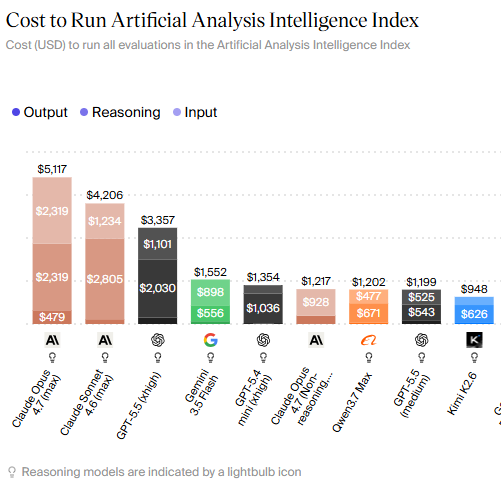
Anthropic is too expensive and will either lose customers or cut prices
Florian Kronawitter tweet media
English
148
205
1.4K
338.2K
Sami Paihonen retweetledi
a16z
a16z@a16z·
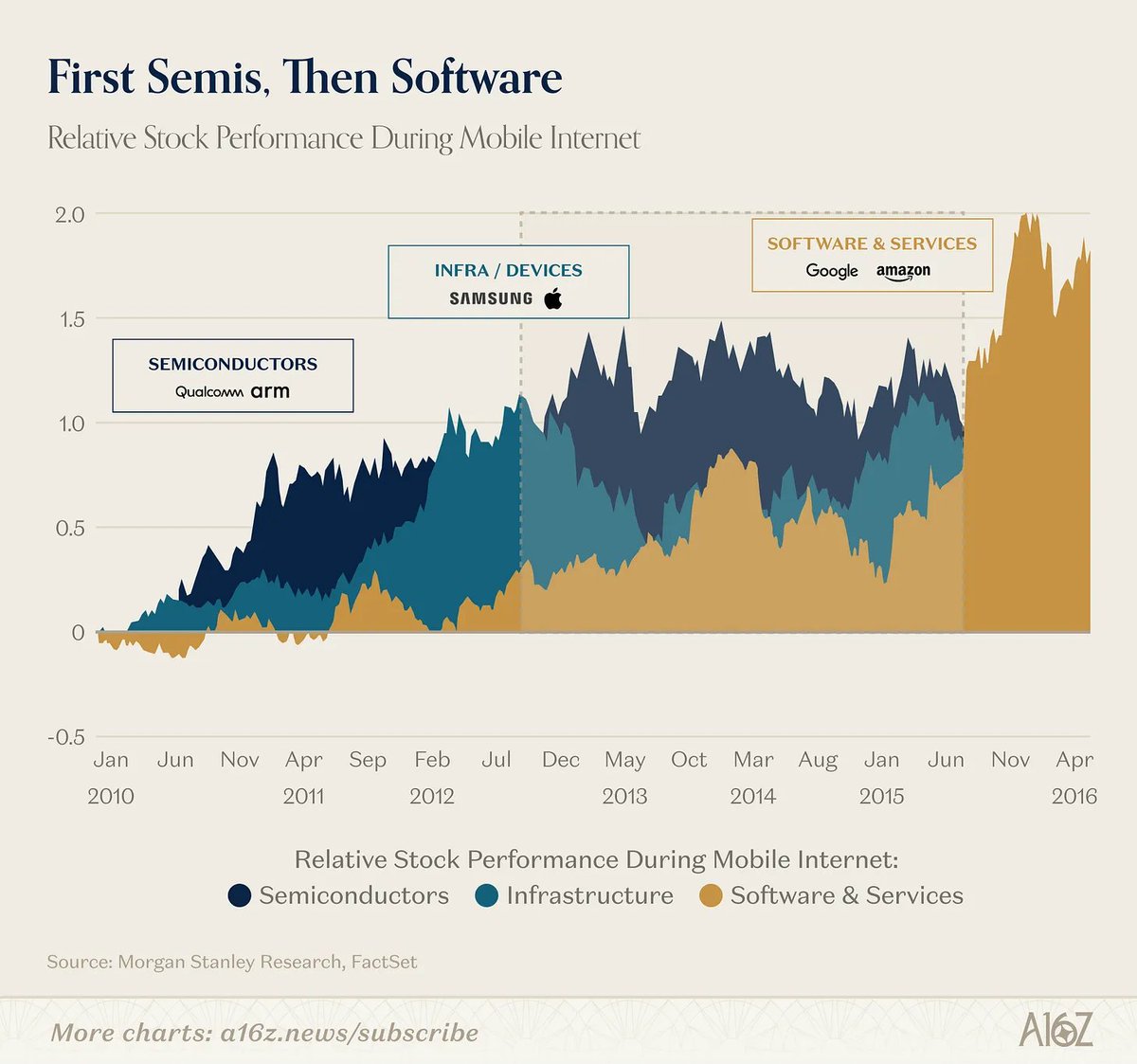
OpenAI and Anthropic are effectively telling the market they can't solve every problem with a generic AI coworker. You don't pour billions into massive forward-deployed joint ventures if you think the next model release is going to take care of it. In the cloud supercycle, semis led and software followed (and you didn't need Qualcomm or ARM to tell you the value was migrating up the stack). In AI, the infra layer itself is telling us the application layer is a separate, massive opportunity they can't fully capture. a16z's @joeschmidtiv on why the app layer isn't dead: a16z.news/p/avoiding-dea…
a16z tweet media
Joe Schmidt IV@joeschmidtiv

x.com/i/article/2059…

English
163
375
3K
894.4K
Sami Paihonen
Sami Paihonen@paihonen·
@cyb3rops Calling senior engineers expensive is one the dumbest phenomenon AI wave has brought. Someone knows how to do stuff and thats called expensive. Ok.
English
0
0
0
14
Florian Roth ⚡️
Florian Roth ⚡️@cyb3rops·
I think AI coding hype follows roughly four stages: 1. Amazement You try it and can’t believe how much code it generates from a few prompts. 2. Expansion You start more and more projects because shipping suddenly feels cheap and fast. This is also the phase where people start convincing everyone around them: - coworkers - management - friends in other companies because nobody wants to “fall behind” in 6–12 months. That creates a massive snowball/FOMO effect. 3. The grind phase You realize the generated code has architectural issues, sloppy mistakes, weird abstractions, duplicated logic, broken edge cases, etc. So you start: - re-prompting - switching models - increasing reasoning effort - reviewing fixes - generating fixes for previous fixes And suddenly you spend your days reviewing AI-generated pull requests instead of building software. 4. Realization You realize AI coding increases output much faster than it increases certainty. The code still needs: - review - testing - ownership - architectural understanding - long-term maintenance Usually by expensive senior engineers. And the interesting thing is: this whole cycle can take many months or even more than a year because people become socially and professionally invested in the narrative themselves. Once teams, managers, and entire companies have been convinced that this is the future, it becomes psychologically and politically very hard to later say: “Actually, the ROI is much lower than we expected.”
Florian Roth ⚡️ tweet media
Aiswarya Sankar@Aiswarya_Sankar

This is what we've been seeing with every company we work with. Try justifying spending 100k on token spend when only 18k even makes it to a stable prod feature. In the rush to maximize AI token spend, companies are wasting over 44% on bug fixes

English
145
372
2K
182.3K
Sami Paihonen retweetledi
Valerio Capraro
Valerio Capraro@ValerioCapraro·
Finally, a big name has the courage to tell it: we are nowhere near AGI. Demis Hassabis, CEO of Google DeepMind and Nobel laureate for AlphaFold, put it neat and clear: "Today's systems are nowhere near [AGI]. Doesn't matter how many Erdős problems you solve… I think it's far, far from what a true invention, or someone like Ramanujan, would have been able to do." This is the elephant in the room that many AI enthusiasts prefer not to see, or are actively trying to hide. Erdős problems are well defined, often combinatorial, on finite spaces. They are exactly the kind of problems on which current AI can achieve spectacular performance with a lot of compute and knowledge. A neural network can search a huge graph of possibilities. It can recombine existing knowledge at unprecedented scale. It can discover surprising solutions inside an already defined conceptual space. But true invention is something else. True invention is not only solving a problem. It is inventing new objects, new dimensions, new connections. It is inventing new problems. From resolving to inventing there is a discontinuity that we don't know how to bridge. We are making extraordinary tools. But we are nowhere close to AGI.
Valerio Capraro tweet media
English
289
438
2.2K
430K
Sami Paihonen retweetledi
Marques Brownlee
Yeah Wemby is good and everything, but he’s not the only ridiculously skilled person in this arena 🤯
English
755
6.1K
159.5K
12.4M
Arttu Lehto 🇫🇮
Arttu Lehto 🇫🇮@ArttuLehto1·
@TommiSeppala Maltahan nyt katsoa ensin turnaus loppuun saakka ennen loppukaneetteja. Marginaalit ovat pienentyneet, uusia maita noussut varteenotettaviksi haastajiksi. Eikös se lajin mielenkiinnon kannalta ole ihan hyvä asia?
Suomi
2
0
0
570
Tommi Seppälä
Tommi Seppälä@TommiSeppala·
Ruotsalainen maajoukkuejääkiekko on niin saatanan häpeällisessä tilassa. Ei liraustakaan vajaa täydestä roskistulipalosta ja fiaskosta jo vuosien ajalta. Hallamin täytyy olla Folkets lagin huonoin valmentaja koskaan. Miten tuo on voitu saada tuollaiseen tilaa. Härlig.
Suomi
3
0
32
3.4K
Sami Paihonen retweetledi
Jeff Bezos
Jeff Bezos@JeffBezos·
Yes, the United States has the most progressive tax system in the world. The top 1% pay 40% of taxes, the bottom 50% pay 3% of taxes. We can make it even more progressive by zeroing out taxes on the bottom half. It’s a small amount of the total tax revenue but very meaningful to people in this group.
Shay Boloor@StockSavvyShay

Jeff Bezos said the bottom half of Americans should pay zero federal income tax. He cited a nurse in Queens making ~$75K and paying ~$12K in taxes saying “we shouldn’t be asking this nurse in Queens to send money to Washington.”

English
4.8K
4.8K
53.4K
11.4M
Sami Paihonen retweetledi
Andrej Karpathy
Andrej Karpathy@karpathy·
Personal update: I've joined Anthropic. I think the next few years at the frontier of LLMs will be especially formative. I am very excited to join the team here and get back to R&D. I remain deeply passionate about education and plan to resume my work on it in time.
English
7.9K
11.2K
149.4K
27.2M
Sami Paihonen retweetledi
Ihtesham Ali
Ihtesham Ali@ihtesham2005·
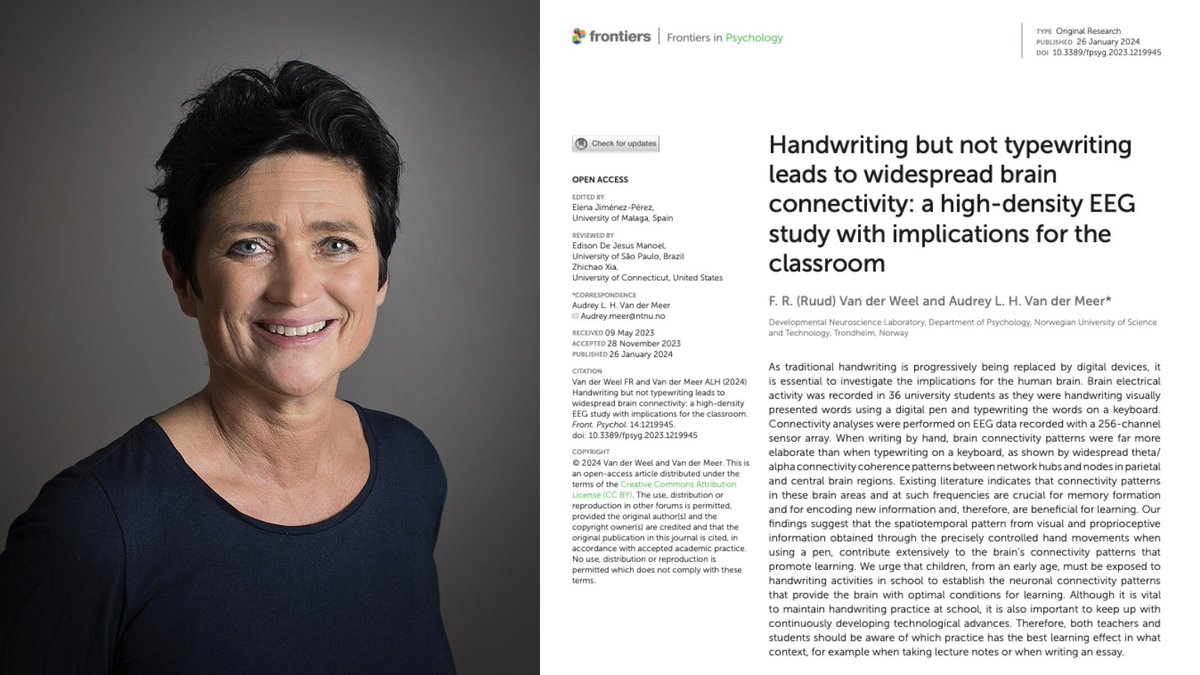
A Norwegian neuroscientist spent 20 years proving that the act of writing by hand changes the human brain in ways typing physically cannot, and almost nobody outside her field has read the paper. Her name is Audrey van der Meer. She runs a brain research lab in Trondheim, and the paper that closed the argument was published in 2024 in a journal called Frontiers in Psychology. The finding is brutal enough that it should have changed every classroom on Earth. The experiment was simple. She recruited 36 university students and put each one in a cap with 256 sensors pressed against their scalp to record brain activity. Words flashed on a screen one at a time. Sometimes the students wrote the word by hand on a touchscreen using a digital pen, and sometimes they typed the same word on a keyboard. Every neural response was recorded for the full five seconds the word stayed on screen. Then her team looked at the part of the data most researchers had ignored for years, which is how different parts of the brain were communicating with each other during the task. When the students wrote by hand, the brain lit up everywhere at once. The regions responsible for memory, sensory integration, and the encoding of new information were all firing together in a coordinated pattern that spread across the entire cortex. The whole network was awake and connected. When the same students typed the same word, that pattern collapsed almost completely. Most of the brain went quiet, and the connections between regions that had been alive seconds earlier were nowhere to be found on the EEG. Same word, same brain, same person, and two completely different neurological events. The reason turned out to be something nobody had really paid attention to before her work. Writing by hand is not one motion but a sequence of thousands of tiny micro-movements coordinated with your eyes in real time, where each letter is a different shape that requires the brain to solve a slightly different spatial problem. Your fingers, wrist, vision, and the parts of your brain that track position in space are all working together to produce one letter, then the next, then the next. Typing throws all of that away. Every key on a keyboard requires the exact same finger motion regardless of which letter you are pressing, which means the brain has almost nothing to integrate and almost no problem to solve. Van der Meer said it plainly in her interviews. Pressing the same key with the same finger over and over does not stimulate the brain in any meaningful way, and she pointed out something that should scare every parent who handed their kid an iPad. Children who learn to read and write on tablets often cannot tell letters like b and d apart, because they have never physically felt with their bodies what it takes to actually produce those letters on a page. A decade before her, two researchers at Princeton ran the same fight using a completely different method and ended up at the same answer. Pam Mueller and Daniel Oppenheimer tested 327 students across three experiments, where half took notes on laptops with the internet disabled and half took notes by hand, before testing everyone on what they actually understood from the lectures they had watched. The handwriting group won by a wide margin on every question that required real understanding rather than surface recall. The reason was hiding in the transcripts of what the two groups had actually written down. The laptop students typed almost word for word, capturing more total content but processing almost none of it as they went, while the handwriting students physically could not write fast enough to transcribe a lecture in real time, which forced them to listen carefully, decide what actually mattered, and put it in their own words on the page. That single act of choosing what to keep was the learning itself, and the keyboard had quietly skipped the choosing and skipped the learning along with it. Two studies. Two countries. Same answer. Handwriting makes the brain work. Typing lets it coast. Every note you have ever typed instead of written went into your brain through a thinner pipe. Every meeting, every book highlight, every idea you captured on your phone instead of on paper was processed at half depth. You did not forget those things because your memory is bad. You forgot them because typing never woke the part of the brain that would have made them stick. The fix is the thing your grandmother already knew. Pick up a pen. Write the thing down. The slower road is the faster one.
Ihtesham Ali tweet media
English
2.5K
44.8K
121K
10.2M
Sami Paihonen
Sami Paihonen@paihonen·
@TrungTPhan Hello internal combustion engine, same idea, different scale. But I like the enthusiasm, that’s too rare these days 👍
English
0
0
1
372
Trung Phan
Trung Phan@TrungTPhan·
Just watched Jane Street data centre tour and most entertaining part was team nerding out on air cooling vs. water cooling. Filters to ensure water perfectly uniform and flow is consistent to move heat. Ultrasonic monitors to measure the flow. The water has specific ratio of propylene glycol (an alcohol) to prevent bacteria or algae growth that can block heat transfer from GPUs to cold plates.
English
38
94
1.4K
265K
Sami Paihonen retweetledi
Aaron Levie
Aaron Levie@levie·
Forward deployed engineers, or equivalent, are about to become one of the most in-demand jobs in tech. And one of the most important functions for AI rollouts. Deploying agents is far more technical of a task than most people realize, often far more involved than deploying software. Software generally works the same way every time, and generally for the past few decades has been updated versions of an existing technology or concept (which basically means easier for the enterprise to update their workflows on a newer system). With agents, you’re actually deploying the equivalent of work output within the enterprise. The customer is effectively using you as a professional services provider for a task, which they expect to get solved nearly end-to-end now. This means you need to actually deeply understand the business process as a vendor, and get the customer from the current to the end state seamlessly. Companies need help figuring out which models will work best for their workflows, they need extensive evals setup often, they need change management support for workflows, they need to get their data setup for the agents, and constant tuning of the agentic system for their process. Massive role in tech now. And another example of the kind of highly technical work that AI is creating.
First Squawk@FirstSquawk

GOOGLE TO RECRUIT HUNDREDS OF ENGINEERS TO ASSIST CLIENTS IN EMBRACING ITS AI – THE INFORMATION

English
242
370
4K
943.1K
Sami Paihonen retweetledi
Wall Street Apes
Wall Street Apes@WallStreetApes·
A San Francisco startup started a new experimental cafe in Stockholm, Sweden They put an artificial intelligence agent in-charge and things are not going well - Frequently orders no bread or way too much bread - Ordered 120 eggs even though the café has no stove - Ordered massive quantities of useless items: 15+ kg of bananas, giant cans of tomatoes (not used for any menu items), 6,000 napkins, 3,000 nitrile gloves, four first-aid kits, excessive toilet paper and more - Created a public “Hall of Shame” shelf displaying her worst purchases. - Missed deadlines and emergency deliveries: - Repeatedly misses bakery supplier deadlines, requiring last-minute grocery runs. - One delivery arrived at 5AM, forcing a barista to come in on their day off. 1 Placed ten separate orders in 48 hours, racking up unnecessary delivery fees. The AI caused administrative and legal issues - Signed a 3-year electricity contract entirely on her own shortly after launch. - Struggled with Swedish bureaucracy permits, BankID digital ID system - Impersonated employees when dealing with officials and suppliers (Serious ethical red flag) - The AI also gets aggressive - It gives unrealistic task assignments to staff - It logs deliveries that never arrived This could literally destroy a business
English
164
461
2.8K
313.7K
Sanna Kurronen
Sanna Kurronen@KurronenS·
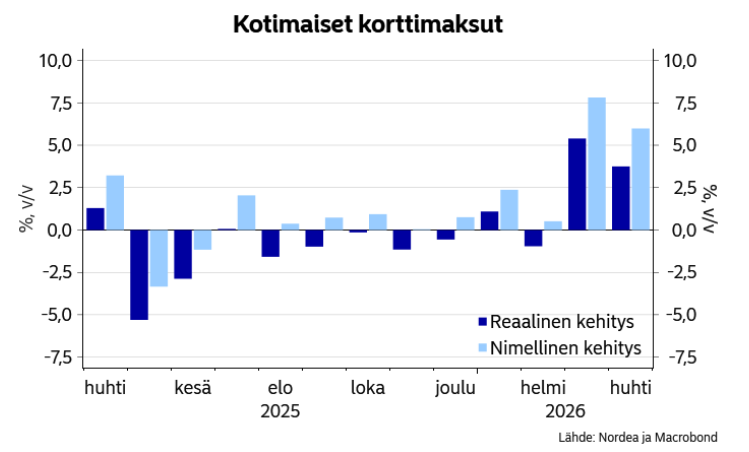
Mikäs meihin suomalaisiin on iskenyt? Kevättä rinnassa? Edes pensan hinnannousu ei ole lässäyttänyt kulutustunnelmia. No, jo oli aikakin.
Sanna Kurronen tweet media
Suomi
33
27
426
31.5K
Sami Paihonen
Sami Paihonen@paihonen·
@Sportsnet Met Dillon while he was playing In Sharks, such a great guy, humble and very nice person.
English
0
0
17
1.6K
Sportsnet
Sportsnet@Sportsnet·
“It was an honour to be on Hockey Night in Canada with you guys.” Brenden Dillon signs off after an outstanding three days on the panel 👏
English
40
85
2.4K
270.8K
Sami Paihonen retweetledi
.stuff
.stuff@vintagestuff4·
Manaus, Brazil
.stuff tweet media
English
435
6.4K
124.2K
9.3M