Rainman

272 posts

Rainman

Rainman

@patienceisking

i make money off chemicals but enjoy learning and investing in growth sectors.

Katılım Kasım 2025
13 Takip Edilen103 Takipçiler
Rightsized CapStack Capital
Rightsized CapStack Capital@CapstackCapital·
$TIC I am one, but I do like the Company a lot. It's incredibly cheap with an improving margin profile, great normalized CF/FCF generation that'll support deleveraging, shareholder returns, M&A, organic growth. I also think growth will accelerate in FY28. Overall, $TIC has the makings of being a great compounder LT.
English
2
0
4
387
Rainman
Rainman@patienceisking·
$TIC reached an all time low. I assume there are a good number of bagholders since Citrini’s Long post last September.
Rainman tweet media
English
4
0
8
1.9K
Rainman
Rainman@patienceisking·
$DOW $LYB kind of insane how petrochemical stocks that were hated last year can turnaround this quickly. I believe the market hasn't priced in Iran’s suicidal tactics, like a blockade of the Strait of Hormuz or strikes on neighboring countries.
Rainman tweet media
Rainman@patienceisking

$DOW and $LYB have been under pressure throughout 2025, largely due to the chronic oversupply of polyethylene (PE). However, for the first time, I’m seeing a sustained uptick in PE prices. I am wondering if we will see a structural turnaround in 2026 rather than a transient one. Falling natural gas prices are a massive tailwind for these companies because it serves as their primary feedstock.

English
1
2
6
976
Rainman
Rainman@patienceisking·
@traderjoe2869 @BenU427 No news as far as I know. It’s typical volatility for a company in a 'wait-and-see' phase.
English
1
0
0
88
Rainman
Rainman@patienceisking·
@Blinklebloop They’re our direct competitor. They’re really good.
English
0
0
0
207
Davy
Davy@Blinklebloop·
All roads lead to Shin Etsu
Davy tweet media
English
4
3
38
27.2K
Rainman
Rainman@patienceisking·
It’s ironic that $LYB and $DOW have been deploring China’s 'involution' for causing plastic overcapacity. While the central government’s anti-involution policy seems to be struggling, this war could shake things up especially if supply chain disruptions persist.
Ajay Joshi Chemicals@JoshiEien

Two of the largest polymers & solvents manufacturers- Sumitomo & Formosa Taiwan have announced force majeure on deliveries & have halted plant operations. Indian distributors sitting on stocks are selling chemicals at as high as +150% premium to needy customers.

English
0
0
3
925
Rainman
Rainman@patienceisking·
@zarathustra5150 Interesting theory. Need to study what he did thru 2018
Rainman tweet media
English
0
0
1
151
B
B@BenU427·
@patienceisking Yeah, all good. I am not saying the thesis is not valid. I am in there in size and quaterly report was not bad. Inam actually surprised the stock went downhill so much.
English
1
0
0
203
Rainman
Rainman@patienceisking·
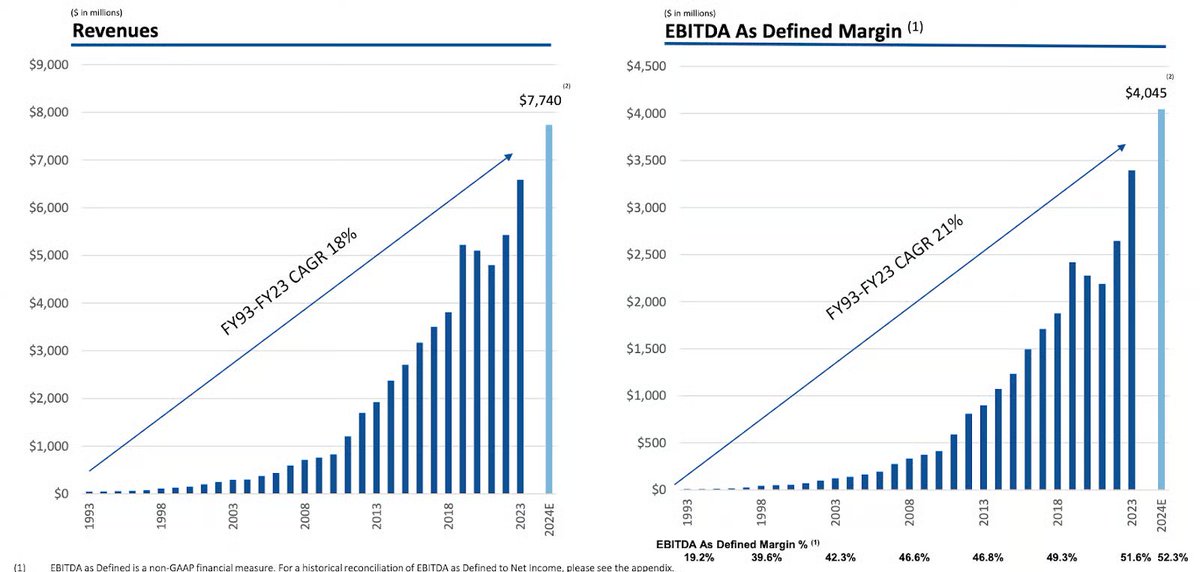
@BenU427 Let's give him a full year before any judgment on $TIC. $APG has generated sizable returns for investors (6x since Mar 2020), and it took 2–3 years before actually taking off. Martin E. Franklin, who acquired and took $APG to listing in 2020, is now sitting on the board of $TIC.
Rainman tweet media
English
1
0
1
256
B
B@BenU427·
@patienceisking Citrini did back when the thesis was laid out. I think entry then was around 11$
English
1
0
1
207
B
B@BenU427·
@patienceisking "But 10$ is the absolute downside maximum"
English
1
0
1
230
Rainman
Rainman@patienceisking·
@DaSteeringWheel @PrasanthInvests @mvcinvesting True. Unfortunately, share buyback isn’t really on the table from their capital allocation plan. I could be wrong.
Rainman@patienceisking

$PGY CFO interview at the Morgan Stanley Conference today effectively cleared up market confusion. The interviewer prepared high-quality questions covering SaaS disruption fears, private credit crunch concerns, the competitive landscape, and capital allocation strategies. 1/ Impact of Agentic AI (The "SaaS Fear") “We’re not just about AI models. We’ve got a massive moat with $1 trillion in proprietary application data flowing through our network every year. A generic AI can't just copy what we do because they don't have access to this unique production data. Our infrastructure is already set. We can scale up without extra marketing or acquisition costs, which just fuels our profitability.” 2/ Moat? “You asked about our moat? It’s the data, hands down. We see $1 trillion in applications across all our partners. While each partner only sees their own slice, we see the whole pie. Good luck replicating this. It took massive investment and a first-mover advantage to get integrated with these partners and reach positive GAAP net income. There’s really no one else doing what we do in the B2B consumer lending space. We help partners convert more loans without them having to use their own capital.” 3/ Capital Allocation Strategy (Priority Order) - my take by reading between lines “Since our growth infrastructure is already fully built (1st), we will utilize excess cash to buy back mispriced bonds to lower our cost of debt (2nd), while maintaining dry powder for future M&A opportunities (3rd) and considering opportunistic stock buybacks (4th).”

English
1
0
0
119
M. V. Cunha
M. V. Cunha@mvcinvesting·
$OMDA went public in June 2025. Initial consensus at the time of the IPO was ~$222M of Revenue and a $19M Adj. EBITDA loss for 2025. They delivered $260M of revenue and $6.5M of positive adj. EBITDA.
English
11
3
106
15.2K
Daniel Mahncke
Daniel Mahncke@MnkeDaniel·
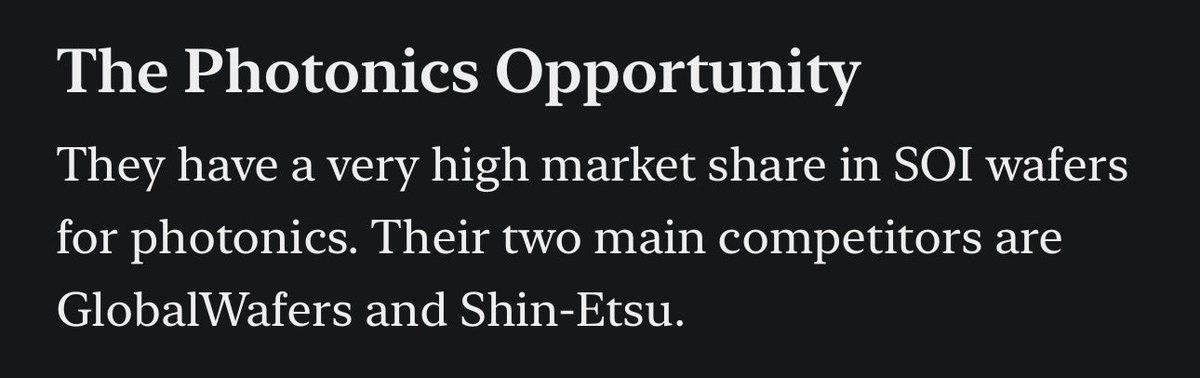
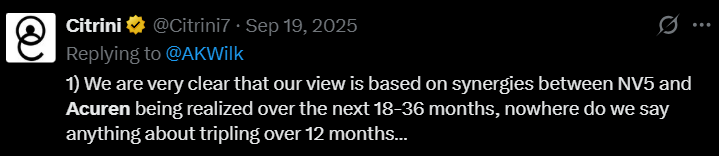
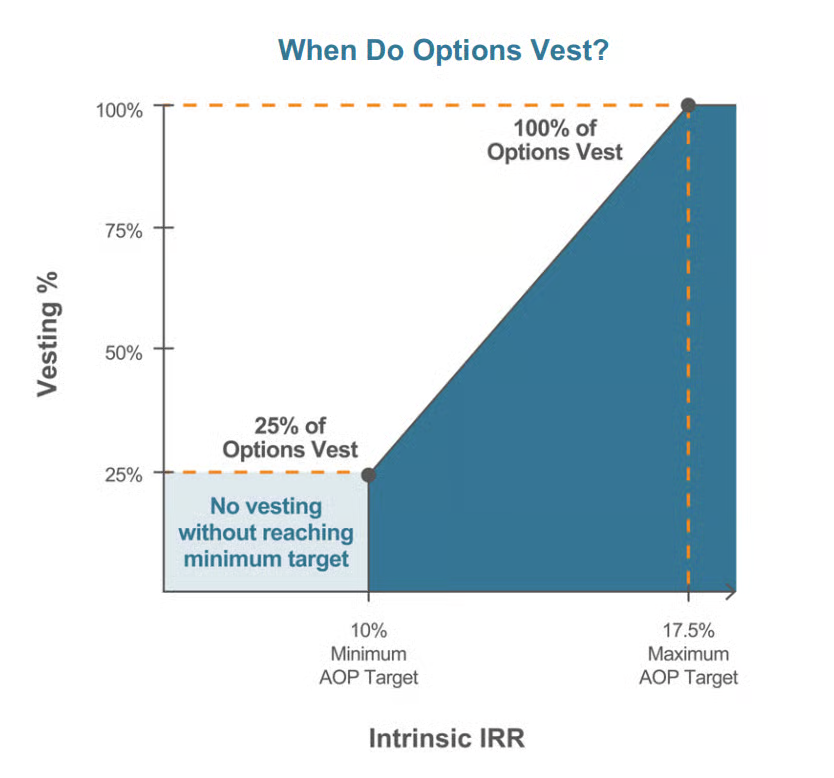
$TDG is one of the best compounders in recent decades. It's a company I keep a close eye on so I can buy when prices drop. Here's the company in a nutshell: 1. Sole-Source Monopolist at Scale: TransDigm is the only supplier for 75% of what it sells, across ~100 acquired niche businesses. No competitor can justify the R&D spend to challenge a product that generates maybe $1,000 in annual revenue per unit for the OEM. 2. The Aftermarket is ~⅓ of revenue but 75% of adjusted EBITDA. FAA regulations lock part designs in for the life of the aircraft, turning every new plane win into a multi-decade, sole-source replacement contract. 3. TransDigm has incredible pricing power. It raises prices up to 40% per year on certain products. It works because a $1,000 part is immaterial to a $100M aircraft. There was even a DoD investigation that found 112 of 113 contracts exceeded the government's "fair and reasonable" 15% margin cap. Some of them by thousands of percent. Yet, due to the lack of alternatives, nothing happened. This is a risk, but it also shows the enormous pricing power of TransDigm. 4. TransDigm has done about ~100 acquisitions, and zero of them were losers. Every deal requires a 20%+ IRR and a 5-year money-double. The concept is to buy a business and immediately pull the pricing lever and focus on the high-margin business units. That often improves margins from 15% to nearly 40% in a few years. 5. 80–90% of exec pay is performance-based. Stock options only fully vest at a 17.5% annual stock CAGR. The base salary for top executives is just over $1M. The rest is earned alongside shareholders. 6. 6x Net Debt/EBITDA is the target, currently at 5.7x after a $5B debt issuance. It's manageable because ~75% of revenue comes from the aftermarket, which is effectively non-discretionary. Airlines can delay new plane orders, but they cannot skip maintenance on planes already flying. Even during COVID, this hasn't been a problem. Air travel fell more than 50%, and commercial aftermarket revenue dropped 40%+. Total revenue and EBITDA still declined by only ~10%, underscoring just how resilient the model is under extreme duress. 7. Aging fleet = more aftermarket dollars. The average age of active aircraft has risen sharply due to delivery delays by Boeing and Airbus. Older planes require more frequent component replacement across exactly the subsystems that TransDigm dominates. 8. Only 3% penetrated in a $60B market — Global airline maintenance spend is ~$850–900B per year; ~15% is maintenance. TransDigm is active in 47% of that pool (~$60B addressable), but currently captures only ~$1.7B in commercial aftermarket revenue. The market remains highly fragmented with thousands of acquisition targets. 9. Interest expense is the one number to watch. Interest expense as a % of revenue has been creeping up and now sits at 17.5%, with the long-term trend clearly moving higher as cheap pre-2022 debt matures and gets refinanced. TransDigm still covers interest 2–3x, but this is the key variable that could compress the leverage arbitrage over time.
Daniel Mahncke tweet mediaDaniel Mahncke tweet mediaDaniel Mahncke tweet mediaDaniel Mahncke tweet media
English
5
8
78
9.6K
Rainman
Rainman@patienceisking·
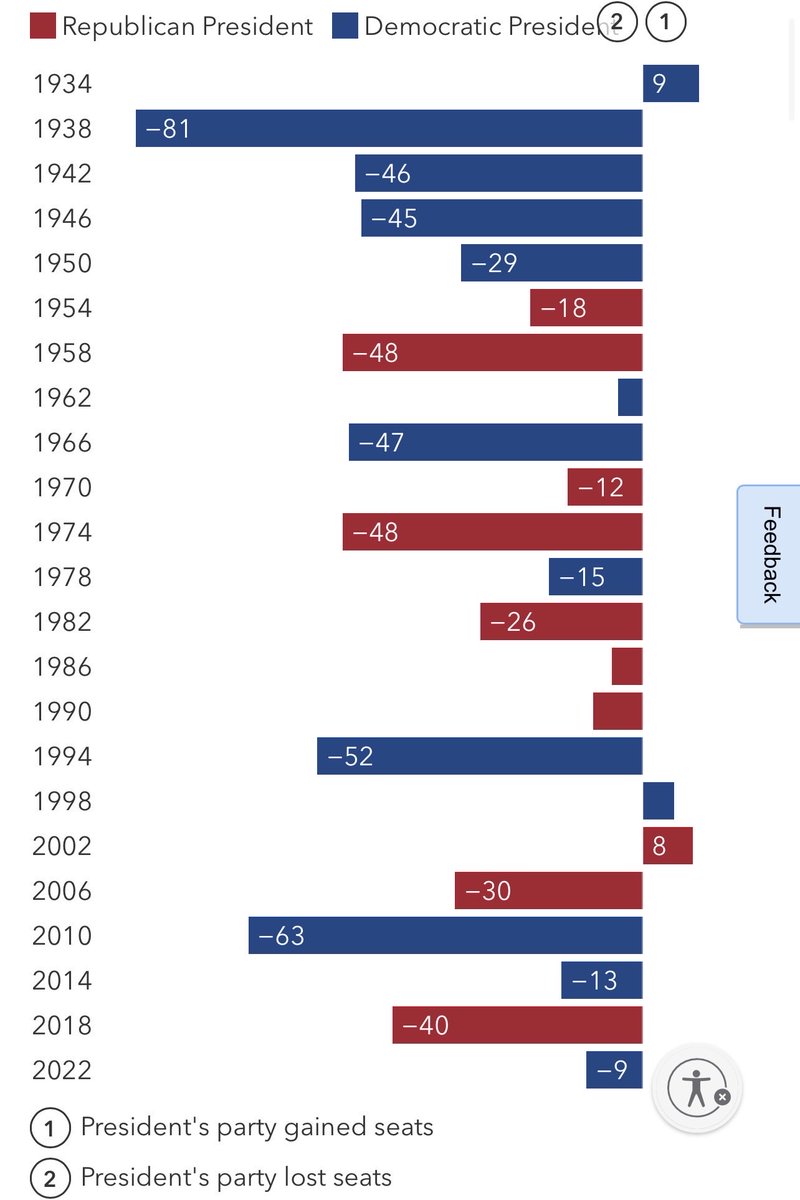
@himself65 Lost 40 House seats in 2018. Looking forward to 2026
Rainman tweet media
English
0
0
0
238
面包🍞
面包🍞@himself65·
川普是不是觉得中期选举没希望了, 已经开始自暴自弃了
中文
94
6
542
254.4K
Rainman
Rainman@patienceisking·
@Titans5555 @PrasanthInvests @mvcinvesting Selling pressure has been exhausted. $PGY is a long-term play.
Rainman@patienceisking

$PGY CFO interview at the Morgan Stanley Conference today effectively cleared up market confusion. The interviewer prepared high-quality questions covering SaaS disruption fears, private credit crunch concerns, the competitive landscape, and capital allocation strategies. 1/ Impact of Agentic AI (The "SaaS Fear") “We’re not just about AI models. We’ve got a massive moat with $1 trillion in proprietary application data flowing through our network every year. A generic AI can't just copy what we do because they don't have access to this unique production data. Our infrastructure is already set. We can scale up without extra marketing or acquisition costs, which just fuels our profitability.” 2/ Moat? “You asked about our moat? It’s the data, hands down. We see $1 trillion in applications across all our partners. While each partner only sees their own slice, we see the whole pie. Good luck replicating this. It took massive investment and a first-mover advantage to get integrated with these partners and reach positive GAAP net income. There’s really no one else doing what we do in the B2B consumer lending space. We help partners convert more loans without them having to use their own capital.” 3/ Capital Allocation Strategy (Priority Order) - my take by reading between lines “Since our growth infrastructure is already fully built (1st), we will utilize excess cash to buy back mispriced bonds to lower our cost of debt (2nd), while maintaining dry powder for future M&A opportunities (3rd) and considering opportunistic stock buybacks (4th).”

English
1
0
1
388
Prasanth
Prasanth@PrasanthInvests·
@mvcinvesting Hey MVC, any thoughts on $PGY. Its been going down like there’s no tomorrow
English
3
0
1
346
Quipus Capital
Quipus Capital@QuipusCapital·
Removed the wall on the first series of my olefin series. It explains the cost curves and trading dynamics, across products and regions.
Quipus Capital tweet media
English
1
1
37
7.6K
Rainman
Rainman@patienceisking·
Great intro. It reminds me of a short course on plastics we give to new hires at my company. I personally believe the industry is a major beneficiary of AI, and it seems executives believe in it too from new catalysts to process optimization and quality control. We’re not quite there yet but we’re making progress. $HUN $LYB $DOW
English
1
0
1
50
Rainman
Rainman@patienceisking·
@InvestorDenis $PGY Setting a limit order at 9-11 and just walking away is the way to go. I've been doing that with $DOW and $LYB since late last year after sharp drop. They’re highly sensitive to macro trends or events, but their moats are top-tier in the industry. x.com/patienceisking…
Rainman@patienceisking

$PGY CFO interview at the Morgan Stanley Conference today effectively cleared up market confusion. The interviewer prepared high-quality questions covering SaaS disruption fears, private credit crunch concerns, the competitive landscape, and capital allocation strategies. 1/ Impact of Agentic AI (The "SaaS Fear") “We’re not just about AI models. We’ve got a massive moat with $1 trillion in proprietary application data flowing through our network every year. A generic AI can't just copy what we do because they don't have access to this unique production data. Our infrastructure is already set. We can scale up without extra marketing or acquisition costs, which just fuels our profitability.” 2/ Moat? “You asked about our moat? It’s the data, hands down. We see $1 trillion in applications across all our partners. While each partner only sees their own slice, we see the whole pie. Good luck replicating this. It took massive investment and a first-mover advantage to get integrated with these partners and reach positive GAAP net income. There’s really no one else doing what we do in the B2B consumer lending space. We help partners convert more loans without them having to use their own capital.” 3/ Capital Allocation Strategy (Priority Order) - my take by reading between lines “Since our growth infrastructure is already fully built (1st), we will utilize excess cash to buy back mispriced bonds to lower our cost of debt (2nd), while maintaining dry powder for future M&A opportunities (3rd) and considering opportunistic stock buybacks (4th).”

English
0
0
2
512
Investor Denis
Investor Denis@InvestorDenis·
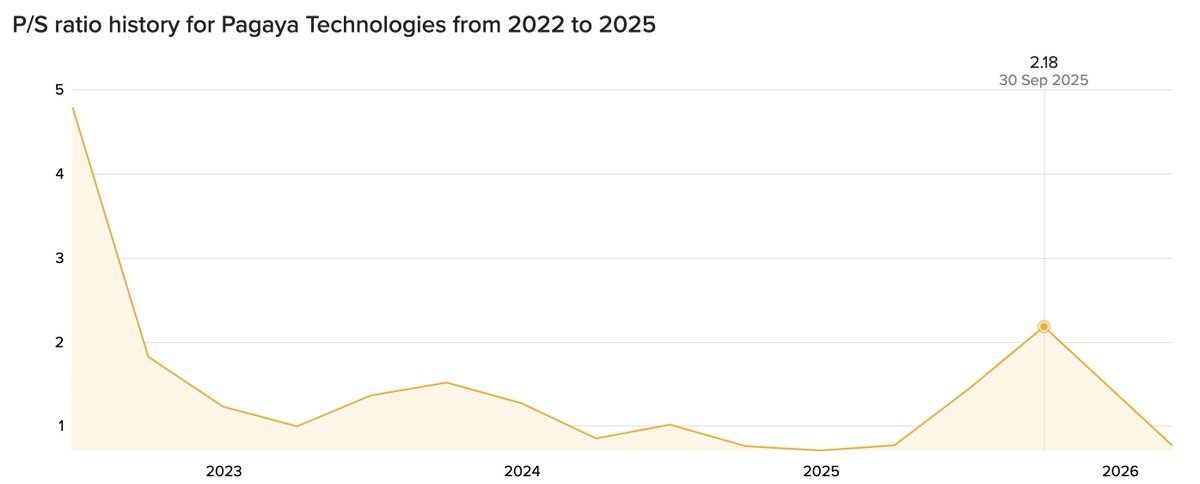
What was wrong with $PGY's Price to Sales ratio of 2? We're back to 0,8. An opportunity.
Investor Denis tweet media
English
3
0
9
1.5K