Pavi De Alwis

317 posts

Pavi De Alwis

Pavi De Alwis

@paviOO

I work on internet scale things and bringing the virtual to life with purpose

Melbourne Katılım Nisan 2011
137 Takip Edilen88 Takipçiler
Pavi De Alwis retweetledi
Dan Hockenmaier
Dan Hockenmaier@danhockenmaier·
Four types of people at every company now yes, people get 10x better when the go from bottom right to top right but also, people get 10x worse when they go from bottom left to top left
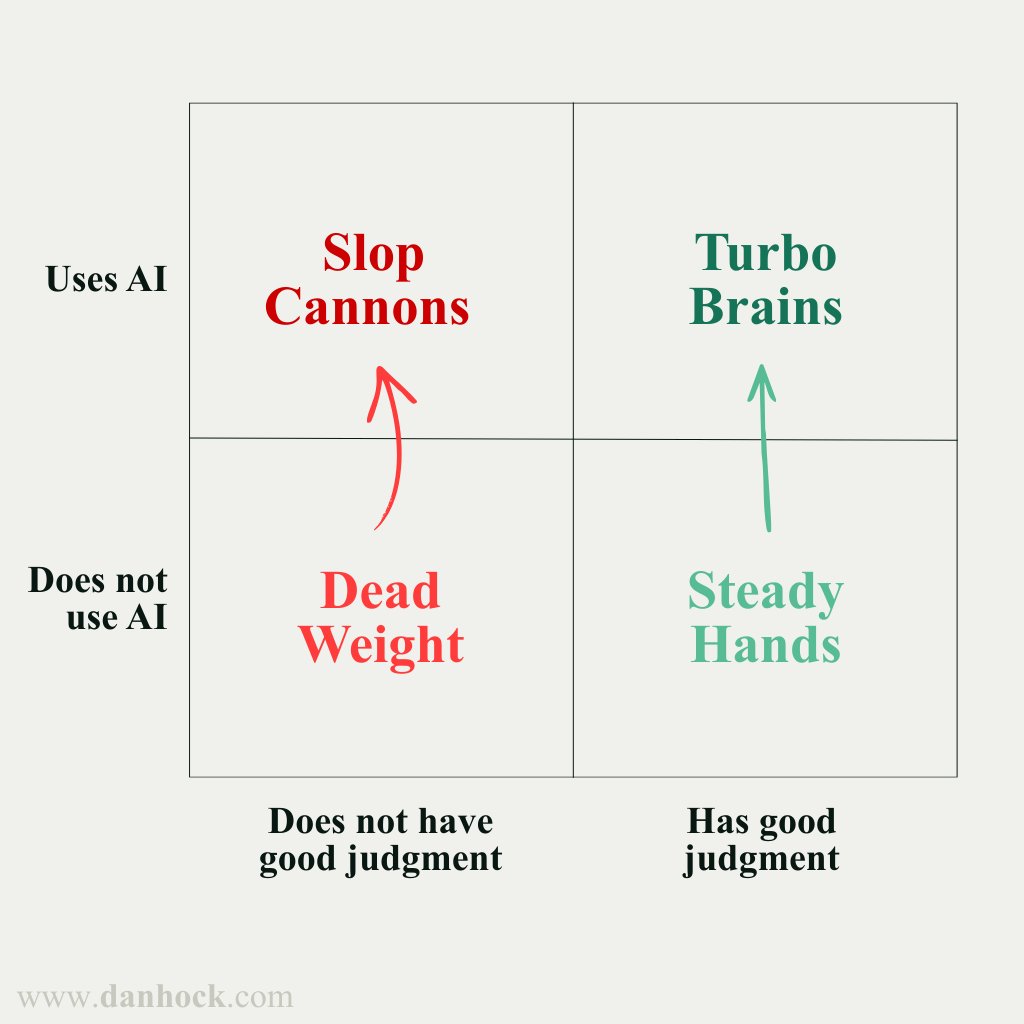
Dan Hockenmaier tweet media
English
157
433
4.4K
665.8K
Pavi De Alwis retweetledi
Paul Graham
Paul Graham@paulg·
If you want to start a software startup, you should still learn to program. Even if AI writes most of your code, you'll still be in the position of an engineering manager, and to be a good engineering manager you have to be a programmer yourself.
English
283
835
8.7K
417.8K
Pavi De Alwis retweetledi
Warren Redlich - Chasing Dreams 🇺🇸
Watching my “frail” mother in law walk effortlessly on a rocky, hilly trail in thin sandals Not in this video but she picks up her 25 and 35 pound great grandkids like they’re nothing I was keeping on eye on her during this walk, and she was asking my wife: Is Warren okay? He looks tired. I’m not sure he can drive. 🤣
English
26
3
163
18.9K
Pavi De Alwis retweetledi
Markus J. Buehler
Markus J. Buehler@ProfBuehlerMIT·
We trained a graph-native AI, then let it reason for days, forming a dynamic relational world model on its own - no pre-programming. Emergent hubs, small-world properties, modularity, & scale-free structures arose naturally. The model then exploited compositional reasoning & uncovered uncoded properties from deep synthesis: Materials with memory, microbial repair, self-evolving systems. Video shows it unfolding, made with @grok @xai.
English
115
335
2.4K
359K
Pavi De Alwis retweetledi
Aaron Erickson
Aaron Erickson@AaronErickson·
Software engineering leadership now means you need to know engineering. It means you might be in an executive meeting one moment, and on the phone with a customer the next in the deep weeds on an issue. For awhile, during the last boom, many became engineering leaders without being engineers, and worse, proudly stating "you don't need an engineering background to be an engineering leader". Those days are over. Modern engineering leadership now is about sweating the details, knowing your product inside and out, knowing where it breaks, knowing which customers had a bad experience and why, as well as how you are going to fix it. It requires knowing your team, every member, and orchestrating their work for the good of the product. It means when you listen to standup, you know not just what is on each work item, but why it is there and why it matters. The conversation about "founder mode" versus "manager mode" is really about active versus passive leadership. Nobody wants passive leaders who act as little more than a transformation function between JIRA and the CEO. Nobody wants someone making decisions who doesn't deeply understand the impact of those decisions, and that requires knowing the internal details and the external market. Knowing the details is a signal of commitment. Knowing the details is a proxy for gives a shit. Knowing the details used to be a nice to have. Now it is a core requirement of the job. The good news is nobody hires the middle manager anymore who mostly just summarizes jira and sends status reports. If you are an engineer, more often than not, you will likely report to someone who also understands and has done actual engineering. The other good news is, if you get promoted, you won't get as rusty, because nobody goes into management anymore without having to still know the details about how products are built.
English
7
8
64
6.6K
Lenny Rachitsky
Lenny Rachitsky@lennysan·
Who would be the best person to come on my podcast to talk about the rise of SAFe and the product owner role?
English
47
8
66
43.1K
Pavi De Alwis retweetledi
Shreyas Doshi
Shreyas Doshi@shreyas·
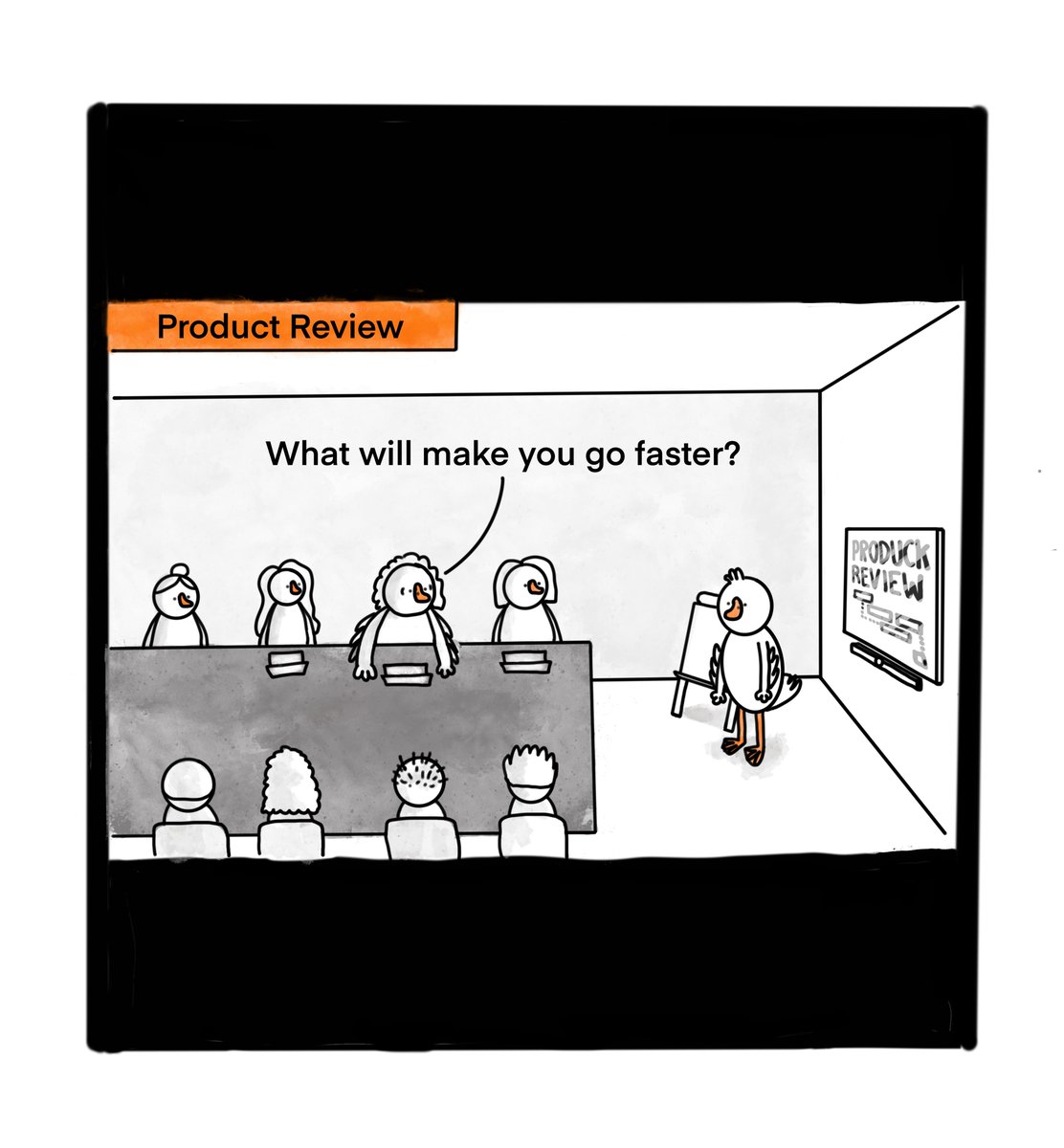
Since time immemorial, when a CEO asks a PM at Product Review, “what do you need to 10X users/revenue?”, “what will make you go faster?”, etc The PM steadfastly responds “We need [N] more engineers”. The Eng Mgr nods approvingly A story thread, with some hard truths to swallow:
Shreyas Doshi tweet mediaShreyas Doshi tweet mediaShreyas Doshi tweet mediaShreyas Doshi tweet media
English
45
278
2.1K
717.7K
Pavi De Alwis retweetledi
Startup Archive
Startup Archive@StartupArchive_·
Vinod Khosla and Sam Altman on how much equity to give your first 10 employees In the early days of Sun Microsystems, Vinod Khosla recruited elite talent, hiring people like Andy Bechtolsheim, Bill Joy, and Eric Schmidt. Many people from Sun went on to start or run billion-dollar companies. Sam Altman asks Vinod how he convinced these people to join him when Sun was just a small startup. Vinod replies: “I see this as a major problem nowadays. People aren’t allocating equity widely enough. I think among the first three or four founders at Sun, we kept less than half of the common. The total was something like 25-27% for the founders, an equal or slightly larger chunk for everybody else we would hire, and then investors had like 40% after the A round. In retrospect, that was a very good idea.” When his son Neil founded the AI startup Curai Health, Vinod advised him to keep only 15% of the company rather than 45% and try to hire one or two people at 15%. Then he advised him to leave 30% of the pool for non-founders. Vinod explains his reasoning: “Even though they’re coming in later and they didn’t come up with the idea, they will be incredible resources, especially as magnets to attract other people. If you believe a company becomes the people it hires, then your task becomes attracting the best people, and selling depends on magnets.” This what Vinod did with Bill Joy. Vinod gave Bill half his equity even though Bill joined later: “Bill Joy was an incredible magnet. People wanted to work with Bill and Andy. And even if Bill didn’t do a day of work, he was more than worth it because he helped attract Eric Schmidt. I don’t think Eric would have come work for me as a 25 year old.” Sam Altman agrees on Vinod’s philosophy of maximizing the size of the pie rather than your ownership percentage: “I think this is the most important piece of advice we’ve talked about among many important things today. Being super generous with early employee equity and getting founder-quality people in the first 10 employees—I think all the evidence is on the side of doing this, and yet almost no one does. So there’s a huge edge if you’re willing to do it.” Vinod argues it’s the “single-most important thing to do in the first six months of a company.” The best people can start their own companies. If you want them to join your company, you have to be generous with equity. Video Source: @ycombinator
English
17
206
1.3K
272K
Pavi De Alwis retweetledi
Karthik Hariharan
Karthik Hariharan@hkarthik·
The perfect senior engineering hires tend to be folks who have done longer stints at both startups and bigger tech companies. They know when to focus on shipping products to build the right growth momentum and keep users engaged. But they also know when obsessing over shipping has created a feature factory, and the product is too bloated to maintain effectively. They also know when to start thinking about reliability because you can do more damage to a product if you build features on top of a shaky technical foundation. And most importantly, they're not dogmatic about their approach. They're regularly evaluating where we're at, and what the next 6-12 months should look like.
English
4
24
205
25.7K
Pavi De Alwis retweetledi
Emery Wells
Emery Wells@emerywells·
Startup vs Big Company Dynamics Startup • Observation: Users want a new feature. • Designer (60 min later): Here are some figma prototypes. • Engineer: We can ship this by the end of the week. Big Company: • Observation: Let’s discuss our observations when Suzy’s back; targeting end of month. End of Month: Bob should really be in this meeting, let’s reschedule. • Meeting: Users want this feature. We’ll need Jessica's buy-in. • Jessica Meeting: Presented six weeks of research for the new feature. • Jessica: This can fit into our H2 planning. • H2 Kickoff: Remember users want this feature? • Product Manager: Will draft a product brief that will be ready for H2's second cycle. • Designer: Drafted designs in Figma, ready for the next review. • Design Review: Why this feature? Should we prioritize X instead? • Outcome: Feature sidelined. Cycle repeats. **Note** This isn’t subtweeting but the reality of software development at scale. Whether you're a startup or a big company, it’s crucial to streamline to avoid this. Success breeds complexity, but no startup is immune.
English
60
157
1.3K
362.4K
Pavi De Alwis
Pavi De Alwis@paviOO·
@dieworkwear @VVFriedman Derek WDYT Prince would have said about this outfit compared to his ? (unashamed plug for your take on Prince's style)
English
0
0
0
505
derek guy
derek guy@dieworkwear·
it's so crazy to me that of all the people who could have become "the menswear guy" on twitter, it was a guy who talks about a piece of menswear no one wears anymore
English
93
116
9.4K
766.7K
Pavi De Alwis retweetledi
Daniel Jeffries
Daniel Jeffries@Dan_Jeffries1·
I wanted to see if AI could code me a complex app. Not a crappy little one-off script. A real program. Just one little problem: I mostly suck at coding. So can AI make magic for someone like me? Yeah. But...it's complicated. Here's what I learned along the way. 1/
Daniel Jeffries tweet media
English
52
201
1.6K
716K
Pavi De Alwis
Pavi De Alwis@paviOO·
@joshgans @varma_ashwin97 SuperApps and MiniApps are well defined in W3C these days. Trying to implement it on iPhone hits many platform barriers. Specially the ability to incorporate payments via alternative wallets + gateways #what-is-miniapp" target="_blank" rel="nofollow noopener">w3c.github.io/miniapp-white-…
English
0
0
0
29
Joshua Gans
Joshua Gans@joshgans·
@varma_ashwin97 They are only profitable because of the iPhone monopoly I guess?
Toronto, Ontario 🇨🇦 English
1
0
0
26
Joshua Gans
Joshua Gans@joshgans·
Terms that I am looking forward to having defined: “Super apps” “Performance smartphones” When was the first performance smartphone released. Was it the iPhone 4 (back in 2010?) or the iPhone X or ….?
English
1
1
2
1.1K
Pavi De Alwis retweetledi
DHH
DHH@dhh·
This is the nightmare scenario we took the drastic steps to avoid at 37signals in April of 2021. When you hand over your company to a woke agenda, you eventually end up with both a dysfunctional company AND a dysfunctional product. Hope Google can find their way back.
Pirate Wires@PirateWires

On the heels of the company's Gemini fiasco, and following interviews with multiple concerned employees, a portrait of a leaderless Google in total disarray is starting to emerge. We now know that Gemini's art generation was compromised by a complicated diversity architecture — something that the company was well aware of prior to Gemini's launch. We know, too, about the pervasive DEI culture inside Google, where micro-management of benign language like "ninja" and bizarre pronoun expectations is the norm. But the main takeaway from @micsolana is perhaps the most damning one: Google as a company appears to have poor incentive alignment, poor internal collaboration, poor sense of direction, misguided priorities, and a complete lack of accountability from leadership. Read the full piece on our site 👇

English
56
110
1.5K
378K
Pavi De Alwis retweetledi
Karthik Hariharan
Karthik Hariharan@hkarthik·
I worked with two types of Directors while in big tech companies. Those who ran important things as the eng leader, and their peers were mostly cross functional leads in design, ops, and product. They were integral in making products successful. The second type were part of the corporate heirarchy. Their main value add was getting senior people hired or promoted. They were the key advocates for staff eng and senior manager promos. Many of the first type have moved onto VP/CTO positions at smaller companies, and a rare few made it to VP in big tech. The second type really don’t have much optionality these days. Their skills are simply not valued in shrinking orgs where promotions are rare.
BuccoCapital Bloke@buccocapital

The Director role in tech is one of the most vulnerable roles right now Meta, Uber, and others are showing that leaner, flatter orgs are better And anecdotally hearing from peers that Director/Sr Director roles are the ones being targeted in layoffs in their orgs

English
6
6
108
37K
Pavi De Alwis
Pavi De Alwis@paviOO·
@sama There are a whole lot of very capable folks in Australia following layoffs from a US tech giant recently . Interested? DM
English
0
0
0
35
Sam Altman
Sam Altman@sama·
openai is the most talented and nicest group of people i have ever seen in one place working on the hardest, most interesting, and most important problems with all the key resources in place extremely focused on making AGI you should perhaps considering joining us
English
1.7K
971
21.5K
3.7M