Publius

328 posts

Publius

Publius

@pbw15204825

No bio

Katılım Kasım 2021
202 Takip Edilen10 Takipçiler
Publius
Publius@pbw15204825·
@admcollingwood @ConceptualJames Whether China would invade Taiwan, and what the US would do about it, have always been open questions. Iran's defeat (and it is one) is not a positive development either for China or Russia.
English
0
0
0
63
Collingwood 🇬🇧
Collingwood 🇬🇧@admcollingwood·
I don't think it is, either, but I am sure that the US position is indeed clean cut. If you cannot defend your forward bases, it and suppress the land based fires of IRAN, then you have exactly ZERO chance against China. And those forward bases are crucial. Without them the tyranny of distance becomes insurmountable. Sad, maybe. But it is what it is. Plan accordingly, or think about how to remedy the situation right quick.
English
1
0
2
112
Publius
Publius@pbw15204825·
@admcollingwood @ConceptualJames Still, one can take a view, even if one can't send an aircraft carrier. I do not think your 2nd point about being unable to defend the SE Asia position is as clear-cut as you make out. Nor is China, in my view, gagging to invade Taiwan.
English
1
0
1
99
Collingwood 🇬🇧
Collingwood 🇬🇧@admcollingwood·
I oppose terrorist states, but do not apply my opposition selectively. My own country has so many problems that I find it difficult to be concerned about what happens in SE Asia, where Britain has no ability to influence events. It's a big boy's game in that neck of the woods, and we are approaching a century since Britain played in that league. Nevertheless, the Iran War has proven beyond reasonable doubt that the US is unable to defend its present position in South East Asia, and indeed the expenditure of munitions has significantly weakened your ability to do so. I say that with no pleasure: it is simply an observation.
English
2
0
7
274
Publius
Publius@pbw15204825·
@admcollingwood @ConceptualJames It is not at all clear that this war is "massively increasing Chinese power". And leaving aside your bifurcation of the question, surely one can oppose aspects of Chinese expansion and also oppose a terrorist state like Iran.
English
1
0
7
327
Collingwood 🇬🇧
Collingwood 🇬🇧@admcollingwood·
@ConceptualJames Multipolarity is a description of reality, not something to support like a football team. And, as I asked, why are those most vocally against increased Chinese global influence also those who support most vociferously the war in Iran, which is massively increasing Chinese power?
English
10
4
90
9.1K
Publius
Publius@pbw15204825·
@AVMikhailova @LoftusSteve Still, this micro-control of communications has gone too far. It has a stultifying effect on good government if everyone has to assume their private messages will end up published and used against them.
English
0
0
0
17
Anna Mikhailova
Anna Mikhailova@AVMikhailova·
Oh look - here are the rules on using WhatsApp that senior officials are required to follow: - They should forward on messages onto government systems, simple screenshots will do - they can ask civil servants to help them do this
Anna Mikhailova tweet media
English
12
101
243
36.7K
Anna Mikhailova
Anna Mikhailova@AVMikhailova·
Is the line really that a government phone used for official business does not have iCloud backup enabled? Which, if a phone is stolen, means all WhatsApp messages can be fully restored on a new phone, keeping the same number - which McSweeney reportedly did 🤔
English
19
44
181
17.7K
Publius
Publius@pbw15204825·
@michaelxpettis The bottom line, surely, is that China needs to open up - in finance, trade, markets. But it resists this for political reasons. Free markets are the solution, not some kind of world government and planning. The key difficulty is that free markets have political implications.
English
0
0
0
65
Michael Pettis
Michael Pettis@michaelxpettis·
9/9 It is interesting that many of the things that economists learned in the 1920s and 1930s about the costs of trade imbalances and the unfettered flow of international capital, and began to forget after the 1970s and 1980s, are being learned again.
English
4
8
56
5.8K
Michael Pettis
Michael Pettis@michaelxpettis·
1/9 Reuters: "China said that Mexico's trade measures against it, including tariff increases, ​constitute trade and investment barriers and that it had ‌the right to take countermeasures." rld/china/china-says-it-has-right-retaliate-against-mexicos-tariff-hikes-2026-03-25/
English
4
9
90
17.9K
Publius
Publius@pbw15204825·
@ManiBasharzad @SteveBakerFRSA I think it's important to distinguish between ideas, principles and thought on the one hand and "ideology" on the other.
English
0
0
0
14
Mani Basharzad
Mani Basharzad@ManiBasharzad·
Roger Scruton once wrote “It is part of conservatism to resist the loss of ideology. The ‘value-free’ world is not a human world” I argue we should bring back Ideology, in my latest for @SteveBakerFRSA’s Fighting for a Free Future: open.substack.com/pub/fightingfo…
Mani Basharzad tweet media
English
2
4
9
1.1K
Publius
Publius@pbw15204825·
@MattZeitlin “British Gaullism” Sounds more sophisticated than mere "statism" and without the leftist overtone. And when you mix in a bit of nationalism and strongman politics, you're getting into fascism territory.
English
1
0
5
1.3K
Publius
Publius@pbw15204825·
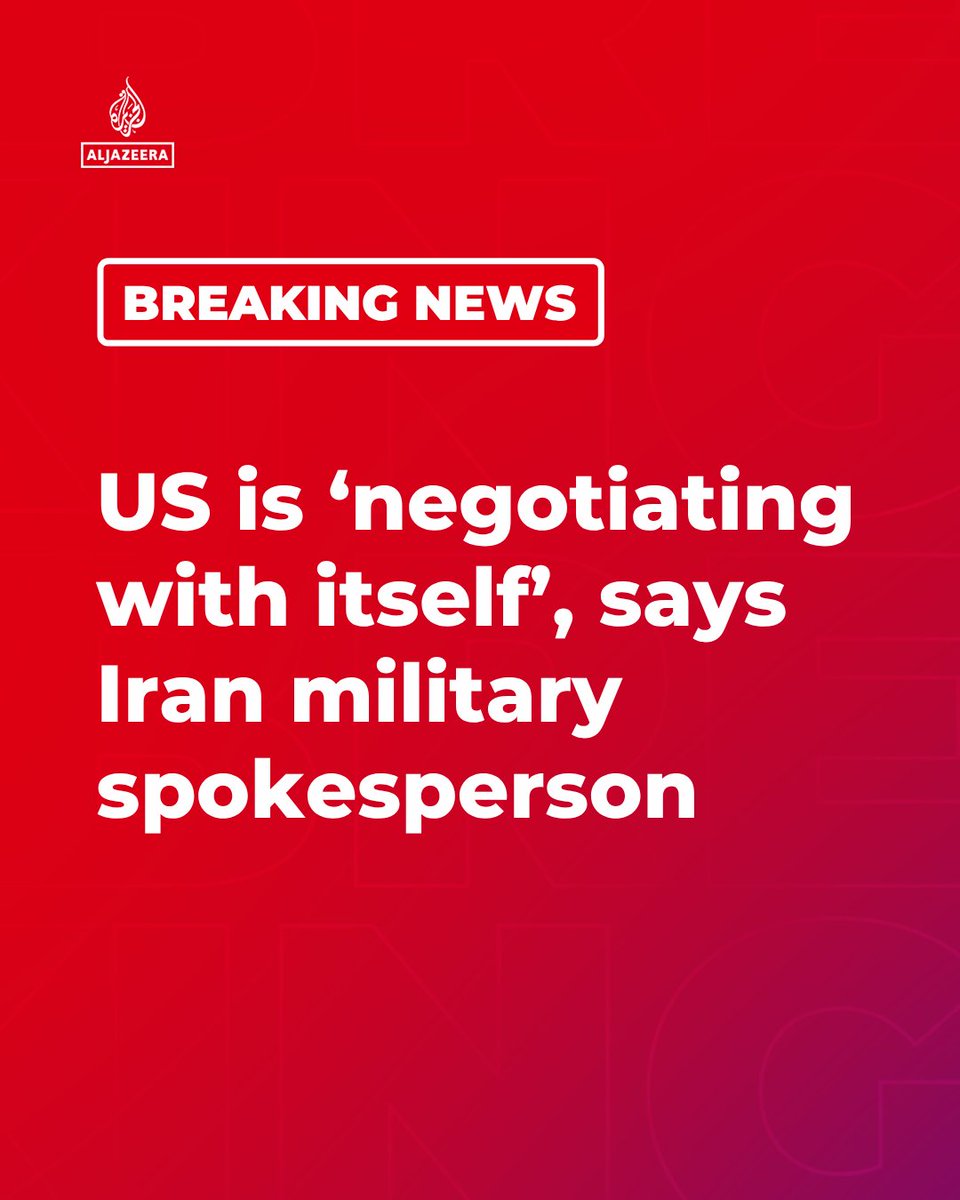
@AJENews @RnaudBertrand This will no doubt be memory-holed when it transpires they have in fact been talking.
English
0
0
0
69
Al Jazeera Breaking News
BREAKING: The US is “negotiating with itself,” an Iranian military spokesperson said, according to state media on Wednesday, a day after President Trump said Tehran wants to make a deal to end the war on Iran.
Al Jazeera Breaking News tweet media
English
203
1.6K
4.7K
356K
Publius
Publius@pbw15204825·
@michaelxpettis So much confusion arises from mistaking price rises for inflation.
English
0
0
1
113
Michael Pettis
Michael Pettis@michaelxpettis·
Ann Pettifor: "Tackling inflation with rate hikes while refusing to take regulatory action to deal with spiralling food prices, rocketing profits and falling real wages - means central bankers are acting politically." open.substack.com/pub/annpettifo…
English
11
25
97
16.5K
Publius
Publius@pbw15204825·
@RnaudBertrand The irony about "multipolar" is that it's just another Western invention. Its proponents do not even agree among themselves what they mean by it, which is not surprising because it is mostly a rhetorical tool to justify despotism, tyranny and Western relativism.
English
0
0
2
326
Arnaud Bertrand
Arnaud Bertrand@RnaudBertrand·
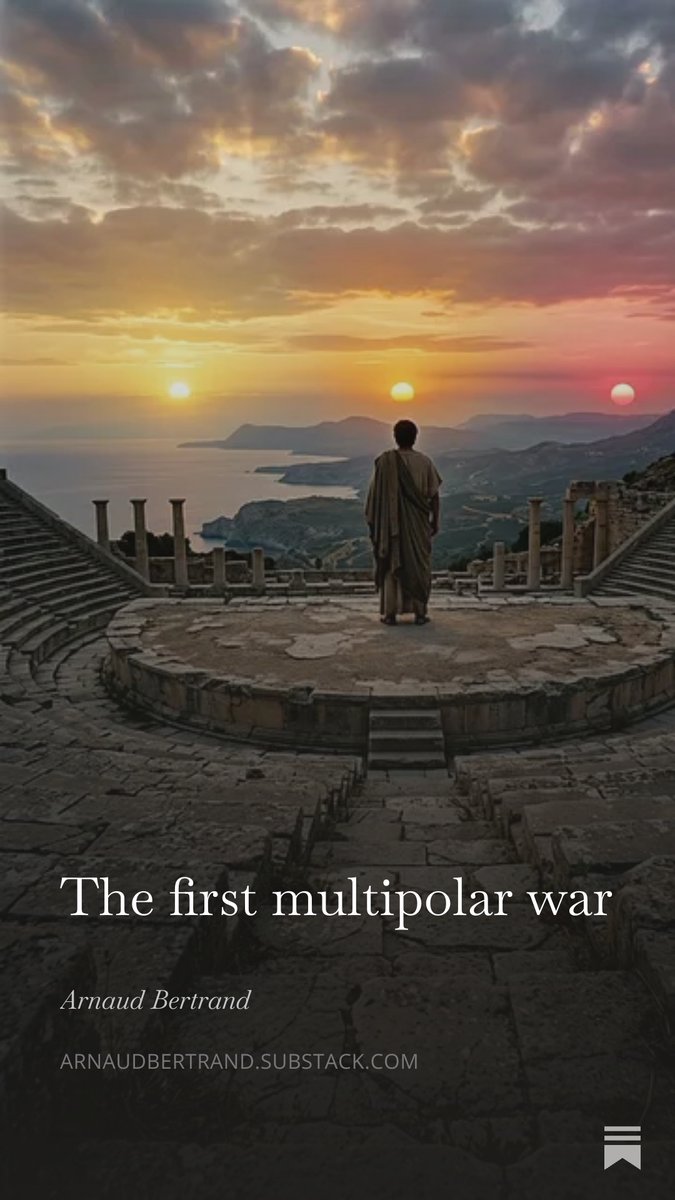
I don't think people realize just how extraordinary what we're witnessing with Iran is. I was arguing with a dear journalist friend of mine yesterday who was telling me that Iran was winning, yes, but only on the strategic level, not tactically. The type of thing a skinny kid getting stuffed in lockers in highschool tells himself to make himself feel better: "These people will BEG to work for me in ten years. Everyone knows jocks peak in highschool. They'll literally beg." 😏 I think that's precisely wrong, and that's what makes the Iran war different. As of now, Iran is in fact holding its own tactically too. Think about other U.S. wars of aggression these past few decades. Take Vietnam, Afghanistan, Libya, Iraq, Serbia, etc. (the list is unfortunately very long). The pattern was roughly always the same with an immense power differential between aggressor and victim. These wars were, by and large, imperial: the empire attempting to crush a much weaker people whose only realistic recourse was guerrilla resistance. And that is when they actually had the will to resist: some - like Libya - barely even bothered, just resigning themselves to their fate (despite being, at the time, the richest country in Africa). As spectators of these wars, if you had any moral sense, the dominant emotion was a kind of helpless disgust: you were watching a giant stomp through someone else's house. Sure, the U.S. actually lost many - if not most - of these wars, famously replacing the Taliban with the Taliban or being expelled with their tail between their legs from Vietnam, but the power differential was no less real for it. It's just that power doesn't always guarantee victory: sometimes the giant can't kill everyone, and eventually tires of trying. But the “victories” won this way were always pyrrhic at best: the people endured, yes, but what they were left with was a country in ashes that takes decades to rebuild. Meanwhile, in the grand scheme of things, the giant walked away with little more than a bruised ego. Iran is - remarkably - proving to be an entirely different beast: when others were merely surviving a giant, Iran appears to be able to compete with one. What just happened over the past 48 hours is the best illustration of this. You had the President of the United States issue a formal ultimatum: reopen the Strait of Hormuz within 48 hours or we "obliterate" your power grid. Iran's response was essentially: we dare you, if you do this we'll make all your Gulf allies uninhabitable within a week. And, as we saw, Trump backed down: pretexting non-existent "VERY GOOD AND PRODUCTIVE CONVERSATIONS" with Iran, he said his ultimatum no-longer applied (or, rather, became 5 days). Adding he now envisaged the Strait of Hormuz being “jointly controlled by me and the Ayatollah.” To the amusement of Iran’s diplomacy (x.com/IraninSA/statu…). That, folks, is a textbook tactical victory. It is, remarkably, Iran demonstrating in this instance that it had escalation dominance over the United States of America. That is, the ability to credibly threaten consequences so severe that the US - for perhaps the first time since the Cold War - found it preferable to stand down. That's no skinny kid being locked in a locker dreaming of revenge fantasies. That's the kid grabbing the bully's wrist mid-shove and watching his face change. And it's not the only tactical victory in this war so far. Take the episode over the Israeli attack on Iran's South Pars gas facility. Iran had warned that if that happened U.S. allies in the region - including Israel - would face a symmetrical response. And they delivered: famously devastating Qatar's Ras Laffan facility - which produced roughly 20% of global LNG supply - and leading, according to Qatar themselves, to a $20 billion loss of annual revenue for the next 5 years (oilprice.com/Latest-Energy-…). Not only that but they also managed to hit Israel's Haifa refinery (aljazeera.com/news/2026/3/19…), one of the country's most strategic and protected sites. The result was Trump distancing himself from the South Pars attack, saying that Israel had "violently lashed out" unilaterally and that "NO MORE ATTACKS WILL BE MADE BY ISRAEL pertaining to this extremely important and valuable South Pars Field." Israel then said it wouldn't strike Iran energy sites anymore (bloomberg.com/news/articles/…). From where I stand, that's another tactical victory. It is, at least, Iran demonstrating that is can fight back **symmetrically** against the U.S. and its allies. Not through asymmetric resistance with IEDs hidden in the roadside or traps hidden in the jungle, but eye for eye, and against some of the most heavily protected sites on the U.S.'s side. That's qualitatively different from any other adversaries the U.S. has directly fought in recent wars. There's plenty more, such as the pretty relevant fact that Iran has gained control of the single most strategic energy chokepoint on earth and the U.S. is finding it impossible to break that control. To the point where Trump has been reduced to publicly begging China - of all countries - for help, which given Trump's ego mustn't have been easy to do. Only to be told no. By China. And by everyone else he asked. This is the topic of my latest article: how this is, in fact, the first genuine "multipolar war." First, in the narrow sense: because Iran is revealing itself to be a genuine pole of power - not a superpower, but an actor that cannot be submitted, which is all multipolarity is. And second, because the war itself is accelerating multipolarity everywhere else: the U.S. has never been more isolated, never looked weaker and its security guarantees have never been more hollow. In my article I lay out the full scoreboard - military, economic, political - and explain why this war has already changed the world, regardless of how it ends. Enjoy the read here: open.substack.com/pub/arnaudbert…
Arnaud Bertrand tweet media
English
427
3.4K
10.8K
1.2M
Publius
Publius@pbw15204825·
@RnaudBertrand They were being blackmailed by Putin. And they didn't want to fund his invasion of Ukraine. Presumably your avoiding this key point is a sign that you support Putin's revanchism.
English
0
0
0
47
B
B@123MathMan·
@BaldingsWorld The US was a defacto reserve currency before Bretton Woods given UK was on again, off again gold and was in late stages of empower. During defacto and Bretton Woods, US ran a trade surplus for a century.
English
1
0
0
474
Nii Okai
Nii Okai@AtaaOkai·
@pbw15204825 @IxScotland @RnaudBertrand Are you playing stupid or plain stupid? The US invaded Iraq, deposed the government, installed their own and established military presence. Do you have Russian or Chinese bases in your country or are we now pretending US and Iraq have a special relationship?
English
2
0
2
41
Publius
Publius@pbw15204825·
@Jgerryi @michaelxpettis "The Nixon Shock" But by then, of course, the classical gold standard had long ago ceased to exist. The post-WWII arrangements invited the kind of abuse that later undid those arrangements.
English
0
0
0
62
Mind The Gap ☘️⛈️
The obvious flaw in Bretton Woods was that there was no institution powerful enough to correct currency manipulation, trade imbalances, or offshore dollar credit creation. It began breaking down almost immediately after implementation. Robert Triffin’s (flawed?) reasoning was framed in exogenous money terms, which was understandable given the gold-dollar setup, but money has always had an endogenous component, even under the classical gold standard (through credit expansion). The Nixon Shock was inevitable since no effective adjustment mechanisms existed. Still, blaming everything on a “flawed monetary system” is lazy thinking. We’ve never designed, and probably can’t design, an international monetary regime that reliably corrects persistent trade imbalances, deliberate currency undervaluation, or beggar-thy-neighbor industrial policies. Surplus economies will keep stifling demand and generating excess savings that reserve-currency countries must absorb, and the pathologies (deindustrialization and debt buildup) follow regardless of whether the system is fixed or floating, gold or fiat. Until someone comes up with, or better yet, builds real teeth into surplus-side enforcement rules, these symptoms will persist, no matter what currency, or type of system, sits at the center.
English
2
1
11
4.4K
Michael Pettis
Michael Pettis@michaelxpettis·
1/4 I am a little surprised by these comments from the governor of the PBoC. According to Yicai, yesterday he said that "the world’s major deficit countries are the same as 40 years ago because of the inherent flaws in the international monetary system." yicaiglobal.com/news/major-def…
English
14
33
238
179.9K
Nir Rosenzweig
Nir Rosenzweig@NirRosenzweig·
@michaelxpettis It wasn't a problem under the gold standard, but it led to constant deflation, so it had to go.
English
1
0
0
1.7K
Publius
Publius@pbw15204825·
@IxScotland @RnaudBertrand "Occupiers"? Absurd. What motivates this view of yours? Misplaced nationalism, anti-Americanism or just Jew-hatred?
English
3
0
0
58
Ix.
Ix.@IxScotland·
@pbw15204825 @RnaudBertrand Yes. I don't know if Arnaud sees it that way, but I do. Europe needs to get rid of these occupiers as well.
English
1
1
2
79
Publius
Publius@pbw15204825·
@michaelxpettis Other things being equal, you would surely expect US interest rates to be higher if it lost its reserve currency dominance. As for global savings, my own "global savings" head to the US because I see better investment opportunities.
English
0
0
1
375
Michael Pettis
Michael Pettis@michaelxpettis·
4/4 I hope it is just a matter of time before more policymakers also understand that the US role as absorber of last resort of excess global saving also leads to lower domestic saving and more American debt rather than to higher domestic investment and lower US interest rates.
English
5
8
147
14.3K