Peter Grafe

36 posts

Peter Grafe banner
Peter Grafe

Peter Grafe

@pegrafe

building the future for marketing.

San Francisco, CA Katılım Kasım 2024
237 Takip Edilen109 Takipçiler
Sabitlenmiş Tweet
Peter Grafe
Peter Grafe@pegrafe·
I spent 4 years at Tesla building predictive models and some of the company’s first LLM apps for Sales, Delivery, and Service. My last tour was leading the Tesla’s Marketing Data Science team, where the framework I built steered every dollar of ad spend and delivered a steady 1.5× ROI. Now I’m taking that playbook to performance marketing with an ex-Tesla crew - dropping an army of AI marketing scientists into every growth stack so each dollar works harder. Early users are already seeing 14× returns on spend our system directs. I usually keep things low-heat, but credibility matters, so I’m turning up the heat while keeping the signal high. Here’s what I’ll share: - how our systems reasons and works - wins, misses, and lessons learned - my take on the economics of marketing DMs are open - if my future content resonates or you want to join us.
English

3
0
5
2.2K
Frontier Tower
Frontier Tower@frontiertower·
The real reason founders move to SF isn’t the capital. It’s the hallway conversations. So we built a hallway. Launching @superherohotel: 6 floors in a historic 1920 Nob Hill building. 10-min walk from @frontiertower. Members have raised $150M. Events have pulled 70K. Sleep at the hotel. Build at the Tower. Come for 4 weeks. Ship, raise, break through 👇
English
183
262
3.8K
55.9M
Peter Grafe
Peter Grafe@pegrafe·
@shannholmberg Correct diagnosis. The missing piece: even when the data is connected, most marketing AI layers are reading correlational outputs and calling them insights. The knowledge layer needs causal grounding or it just gives you a faster version of the same wrong answer.
English
0
0
0
101
Shann³
Shann³@shannholmberg·
how marketing AI knowledge layer works every marketing team has data scattered across 15-30 tools and none of it talks to each other your CRM doesnt know what your SEO agent found yesterday. your ad platform doesnt know what your sales team heard on calls this week. your content calendar has no idea which topics your competitors shifted to last month the fix is a single knowledge layer that ingests everything in one place > CRM records and pipeline data > call transcripts from Gong or Fireflies > Google Analytics and Search Console > ad platform performance data > competitor monitoring > past campaign results and learnings > slack threads where your team discusses strategy refreshes every 30 minutes and every agent on your team queries the same brain hook up your marketing agents to it: > your SEO agent finds a keyword gap on tuesday, your content agent sees it wednesday morning and drafts an article. your outbound agent picks up that article's performance data and uses it as a proof point in emails. > your sales agent evaluates a lead and sees marketing performance in that vertical, past client results, and current team capacity. > your QA agent catches a broken UTM on a campaign landing page and flags it before the next ad dollar gets wasted on a dead link > your competitor agent notices a pricing change on a rival's site and your positioning agent adjusts the messaging on your comparison page the same day the data compounds every cycle, month 1 the agents are guessing, month 3 they're making recommendations based on what worked in month 1. by month 6 the knowledge layer knows more about your marketing operation than any new hire could learn in a year the technology to build this isn't proprietary, the data inside it is. that´s the moat are you building a knowledge layer for your marketing team or still running agents in isolation?
Shann³ tweet media
English
14
5
83
6.2K
AT&T Help
AT&T Help@ATTHelp·
@pegrafe Hi Peter, thanks for contacting AT&T this is Hazel, hope you are doing well. I understand you have concern's regarding your wifi services. I'm here to help you please join us in a DM and we will work on this together. ^HazelP twitter.com/messages/compo…
English
1
0
0
44
Peter Grafe
Peter Grafe@pegrafe·
@saroshws Clean infrastructure still gives you correlational outputs. The measurement infrastructure can be perfect and the attribution model still cannot answer the counterfactual. What would have happened without that touchpoint? That is the question clean data alone cannot answer.
English
0
0
0
7
Sarosh Waiz
Sarosh Waiz@saroshws·
Performance-based pricing works when measurement is clean. It falls apart when attribution is murky. The model isn't the problem. The measurement infrastructure is.
English
1
0
0
10
Olivia Kory
Olivia Kory@oliviaakory·
OpenAI lowers minimum spend threshold fro $50K Launches self serve ads manager Still only offers impressions and clicks Baby steps digiday.com/marketing/open…
English
1
2
15
1.7K
Peter Grafe
Peter Grafe@pegrafe·
@helloitsaustin Correct. The 45-skill claim is the same promise as the 47-tool martech stack - maximum surface area, minimum depth. What matters is whether one skill does the right thing reliably. Most agent demos have not survived their first production workload.
English
0
0
1
41
austin lau
austin lau@helloitsaustin·
this post was a bit buried in my thread but worth reiterating: be skeptical of those claiming they've got "45 agent skills that'll replace your team." the reality is no one is coming to build your workflow for you. the agent economy sells the opposite assumption that someone, somewhere, is shipping the tool for your exact problem. the higher the leverage of a workflow, the less likely someone else will productize it for you. most of these collections are impressive as demos but fall apart the moment you run real work through them. the gap is personalization. a skill built for "the average user" is built for nobody. public skill repos are excellent scaffolding, not finished products. clone one and run it as-is and you're getting maybe 30% of the value. the other 70% is the time you spend reshaping it to fit your needs. if you build an agent skill that sounds hyper-specific and a little boring when you describe it out loud, you probably built the right one. index on what works for you first.
austin lau@helloitsaustin

4) Dimension 4: build tools only you would ever build the agent economy creates the assumption that someone, somewhere, will build the tool for your problem. it's the main reason skills and plugins floating around github don't work as well in practice (even including ours) since they're not personalized to your use case. a lot of the highest-leverage marketing workflows are too specific, or too tied to your exact stack, for anyone to productize. you can't just clone someone's skills repo and call it a day. it's good scaffolding but you still need to spend the time to rightsize that template to your stack, your edge cases, your workflows. it's okay to build for an audience of one. if it works for you, great. if it works for many, even better. but index on what works for you first.

English
12
5
107
23.5K
Peter Grafe
Peter Grafe@pegrafe·
@weird_ceo Correct direction, wrong framing. MCP is table stakes. The question is what you expose through it. A well-structured MCP server for a measurement platform with clean priors and calibrated models is a moat. An MCP wrapper around a ROAS dashboard is a slightly fancier dashboard
English
0
0
0
38
Constantine Yurevich
Constantine Yurevich@weird_ceo·
If your SaaS product doesn't have MCP by 2027, you're out. Not "falling behind." Out. The same way software without a mobile experience became irrelevant by 2015. Forrester predicts 30% of enterprise vendors will ship MCP servers this year. The rest will follow. This isn't a prediction. It's already happening. But here's what almost everyone is getting wrong. There's a massive difference between "SaaS with MCP" and "MCP-first." The same difference that existed between "desktop site made responsive" and "mobile-first." SaaS with MCP: you built a dashboard, an admin panel, a 47-step onboarding wizard. Then you exposed some of it through MCP so an AI agent can pull data. The agent can read. It can query. It can fetch a report someone already configured in the UI. That's the responsive website of 2025. Functional. Unimpressive. MCP-first means the AI agent is your primary user. Not a secondary access channel. The primary interface. No dashboard needed. No admin panel. No documentation site. Setup happens through conversation. Configuration is contextual, resolved in dialogue. The product doesn't have a "settings page" because settings emerge when they're relevant. Think about what mobile-first actually produced. Not smaller desktop apps. Entirely new categories. You couldn't have built Uber as a responsive desktop site. The constraint of mobile forced a rethink that created something new. GPS-aware. Real-time. Contextual. MCP-first works the same way. When your primary user is an AI agent, you don't simplify the onboarding. You make onboarding a conversation. You don't write better docs. You make the product self-describing through the protocol itself. The gap between these two approaches will grow every year. Just like responsive sites and mobile-native apps became barely comparable products within five years. The question isn't whether to add MCP. That's already decided for you. The question is whether you're building from the constraint or bolting it on after. We chose MCP-first for SegmentStream. Marketing measurement where the entire lifecycle, including setup, runs through the protocol. It's early, but the difference is already enormous.
English
1
0
0
72
Peter Grafe
Peter Grafe@pegrafe·
@weird_ceo The dashboard was never the product. The decision was the product. The dashboard was just the most expensive way to avoid making one. If mobile removes that excuse, good."
English
0
0
0
17
Constantine Yurevich
Constantine Yurevich@weird_ceo·
If you can do serious marketing analytics from your phone, the dashboard is no longer the product. That’s the shift. Most analytics companies are trying to add AI to their own interface. We took the opposite path. Instead of building yet another dashboard with yet another AI chat inside it, we made marketing analytics work inside the AI tools people already use. Today you can open Claude on your phone and ask: Why did CPA spike? Which campaigns are underperforming? Where should we reallocate budget this week? What actually drove revenue? Generate the report and send it. No dashboard. No admin panel. No “I’ll check when I’m back at my laptop.” That changes the feeling of analytics. It stops being a place you visit. It becomes a brain you can query. And that creates a different kind of freedom for marketers: Freedom from waiting for reports. Freedom from digging through dashboards. Freedom from analytics as a separate workflow. Freedom to ask the question the moment it appears. I think this market is starting to become clear.
English
2
0
1
54
Constantine Yurevich
Constantine Yurevich@weird_ceo·
I had a bad assumption about the state of modern martech. I thought GA4 → BigQuery had already become standard, especially among agencies. Google gave the market something pretty extraordinary: raw event export from GA4, cheap cloud storage to start with, full historical data, direct access for BI tools, and now a clean path for AI agents to work on top of the raw data. So when we opened Research Preview for segmentstream(.)ai and got 100+ requests on day one, I expected most of the teams we were talking to to already have this infrastructure in place. They didn’t. What surprised me was not the demand. It was how many teams still want better measurement without having BigQuery actually ready. I don’t think this means agencies are behind. I think it means our industry still asks marketers to become part-time "cloud admins" before they can get better answers about performance. That is the wrong abstraction. Marketers do not wake up wanting to configure Google Cloud projects. They want to understand what is working, what is not, and what to do next. That signal changed our roadmap immediately. If you already have your own BigQuery, great. Keep it. Connect it to segmentstream(.)ai using Claude or ChatGTP in seconds. If you don’t, we’re rolling out a SegmentStream-managed BigQuery path inside segmentstream(.)ai, so you can get the warehouse provisioned and connected without turning setup into a project of its own. The goal is not to teach every marketer BigQuery. The goal is to give every marketer an AI measurement brain. If your team still hasn’t enabled GA4 → BigQuery, what is the real blocker?
Constantine Yurevich tweet media
English
1
0
2
104
Peter Grafe
Peter Grafe@pegrafe·
Kahneman documented the mechanism in 1974. Measurement outputs are System 2 products: statistical, probabilistic, abstract. Marketing decisions are System 1 products: intuitive, narrative, immediate. Data does not update narratives. Narratives filter data. A CMO who has spent two years defending a channel allocation has a story about why it works. Your measurement report is not going to defeat that story. It is going to be absorbed by it.
English
0
0
2
321
E4MA 🤎 (❖,❖)
E4MA 🤎 (❖,❖)@e4ma_officiall·
@sagaranand1212 I’m skeptical until I see the attribution model. How does Rally prove this creator caused this outcome without getting gamed
English
1
0
0
28
Mr. Block_0x
Mr. Block_0x@sagaranand1212·
Everyone’s been talking about “Web3 marketing.” Very few are actually building it. Rally is what it looks like when the industry stops theorizing and starts executing. At its core, Rally is a coordination layer between creators, communities, and crypto-native brands. Rally flips the model: Instead of shouting into the void, projects tap into networks of creators who already have trust. Instead of farming impressions, creators earn based on impact. Instead of users being “exit liquidity,” they become participants in growth. And that shift is bigger than it looks. Because the next phase of Web3 isn’t just about better tech, It’s about better coordination. The projects that win won’t be the loudest. They’ll be the ones that know how to: → Activate communities → Incentivize behavior → Turn attention into outcomes That’s where Rally sits. USDC lands on-chain automatically, no agencies, no delays, no minimum followers required. @RallyOnChain nailed it. If you have something real to say about a project, go test it yourself. If you wanna join me waitlist.rally.fun/joinme/sagaran…
Mr. Block_0x tweet media
English
42
2
39
65.8K
Fatal
Fatal@manhviet69·
@klausbrennert GikZofoUzVu7GHn2MxwNGGhmPmfhFZ9YAiuqoM8Spump Is this yours?
1
0
1
842
Dani
Dani@DaniWorldwide·
@klausbrennert @manhviet69 @Pumpfun @pegrafe you clearly need to make your mind up, just have a look and take it into consideration. If you have any questions at all please let me know here and/or feel free to shoot me a direct message. Wish you the best!
Dani tweet media
English
2
0
1
247
Dani
Dani@DaniWorldwide·
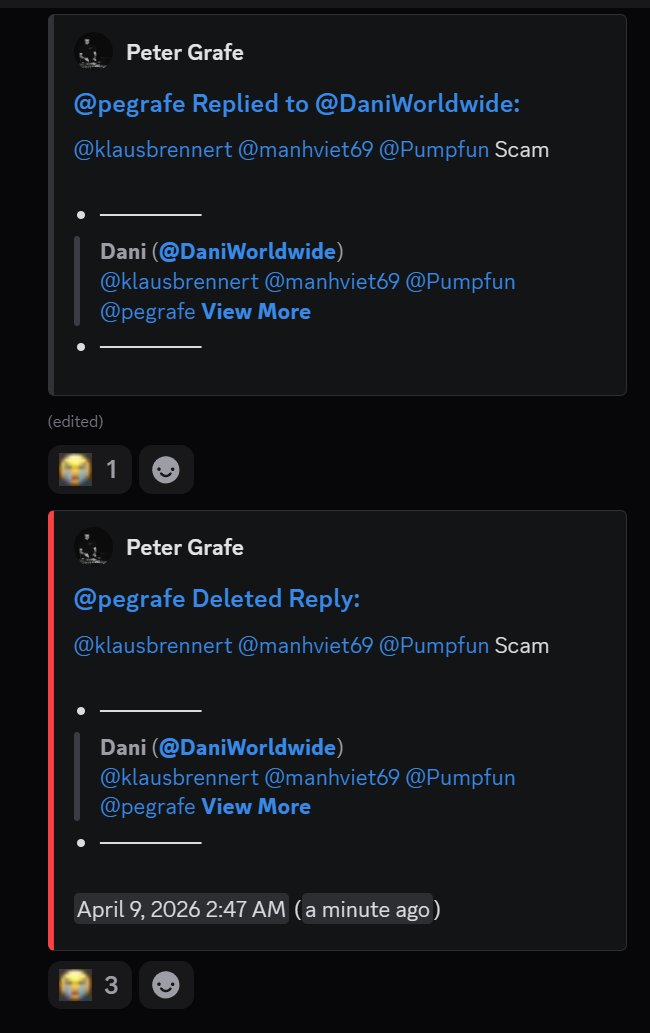
@klausbrennert @manhviet69 @Pumpfun @pegrafe I saw you said "scam" and then instantly deleted it, could you please just have a look into it and then decide whether you want the fees / anything to do with it at all or not?
English
2
0
1
236
Peter Grafe retweetledi
BlueAlpha
BlueAlpha@BlueAlphaAI·
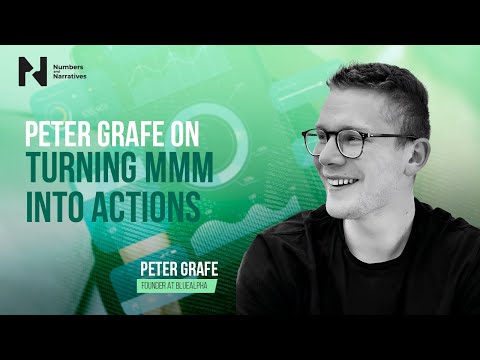
Our CEO Peter joined the Numbers & Narratives podcast to break down why most brands are overindexed on search, how one of our clients cut Meta spend 50% with no drop in KPIs, and what's actually working in marketing measurement right now. 🎧 youtube.com/watch?v=f-WV2P…
YouTube video
YouTube
English
1
1
5
4K
Zohaib Rattu
Zohaib Rattu@ZohaibRattu·
I have 100 tickets to give away for free to a huge ecom conference in SoCal (worth $825 a ticket) Refunnel decided to go big as a headline sponsor at the Amplify Summit (a 3-day retailer/ecom focused conference) on January 18th-20th in Newport, California. They gave me 100 tickets to give away to my Retailer/Ecom friends on X. If you’re interested in attending and are a brand/retailer/influencer marketer, comment "TICKET" and I will DM you my code to attend for free (save $825). First-come, first-served! P.S. I only have 30 left.
Zohaib Rattu tweet media
English
4
0
6
718