

eric pelnik
6.5K posts

eric pelnik
@pelnike
product @Snap, founding team @JoinCommonstock (acq by Yahoo), and ex-vc
venice, ca Katılım Ağustos 2011
1K Takip Edilen1.2K Takipçiler

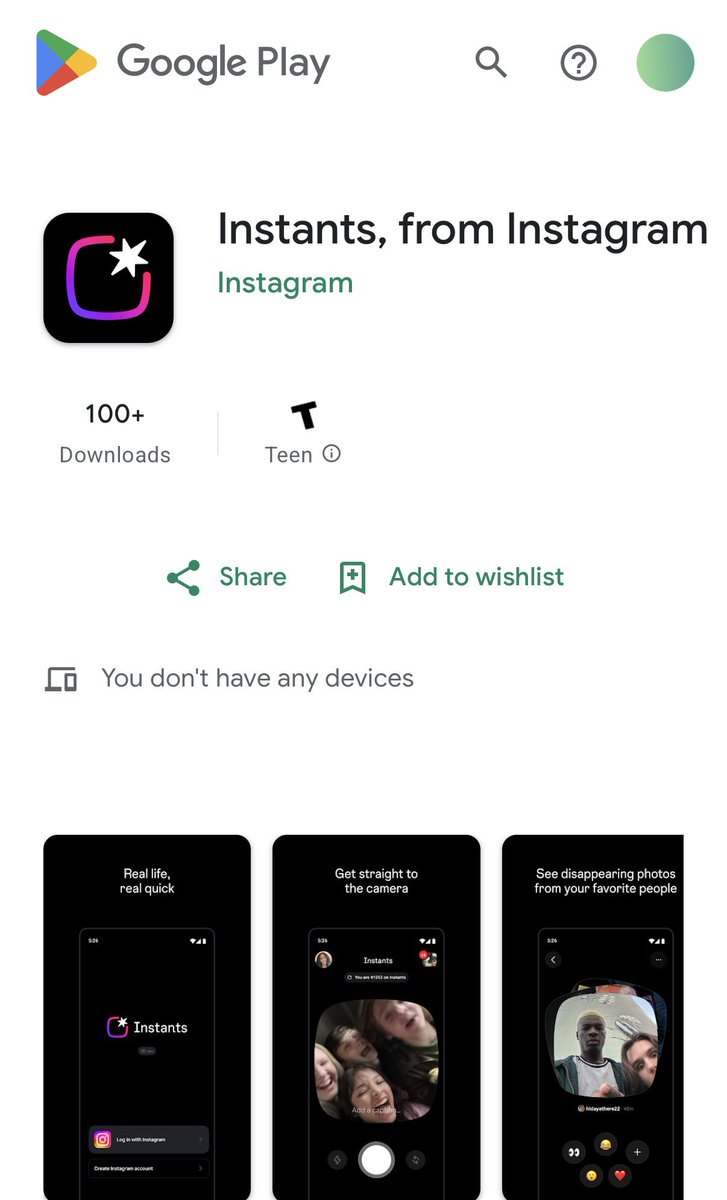
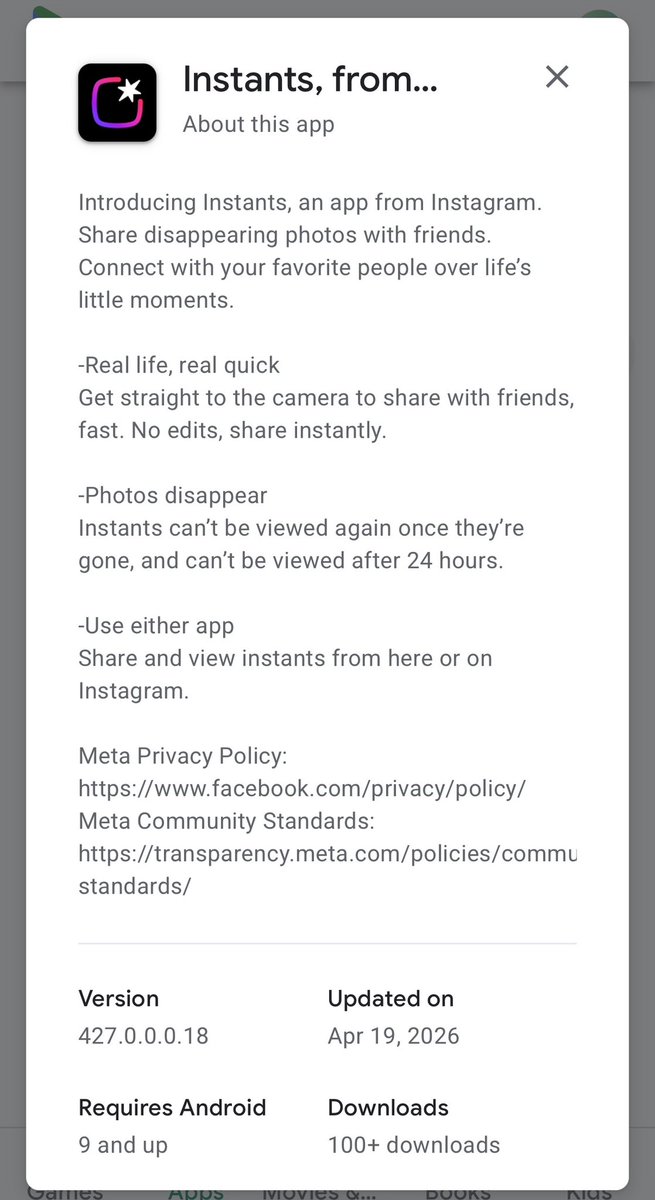
new app from Meta called:
Instants
it appears to be a Locket(?) inspired clone?
// @alex193a


English
eric pelnik retweetledi

anyone else remember using KOL growing up?
basically an "aol for kids" that allowed messaging friends/siblings/cousins, theming the home page, and browsing a weirdly huge network of "kid-safe" websites

David Bui@ghosttyped
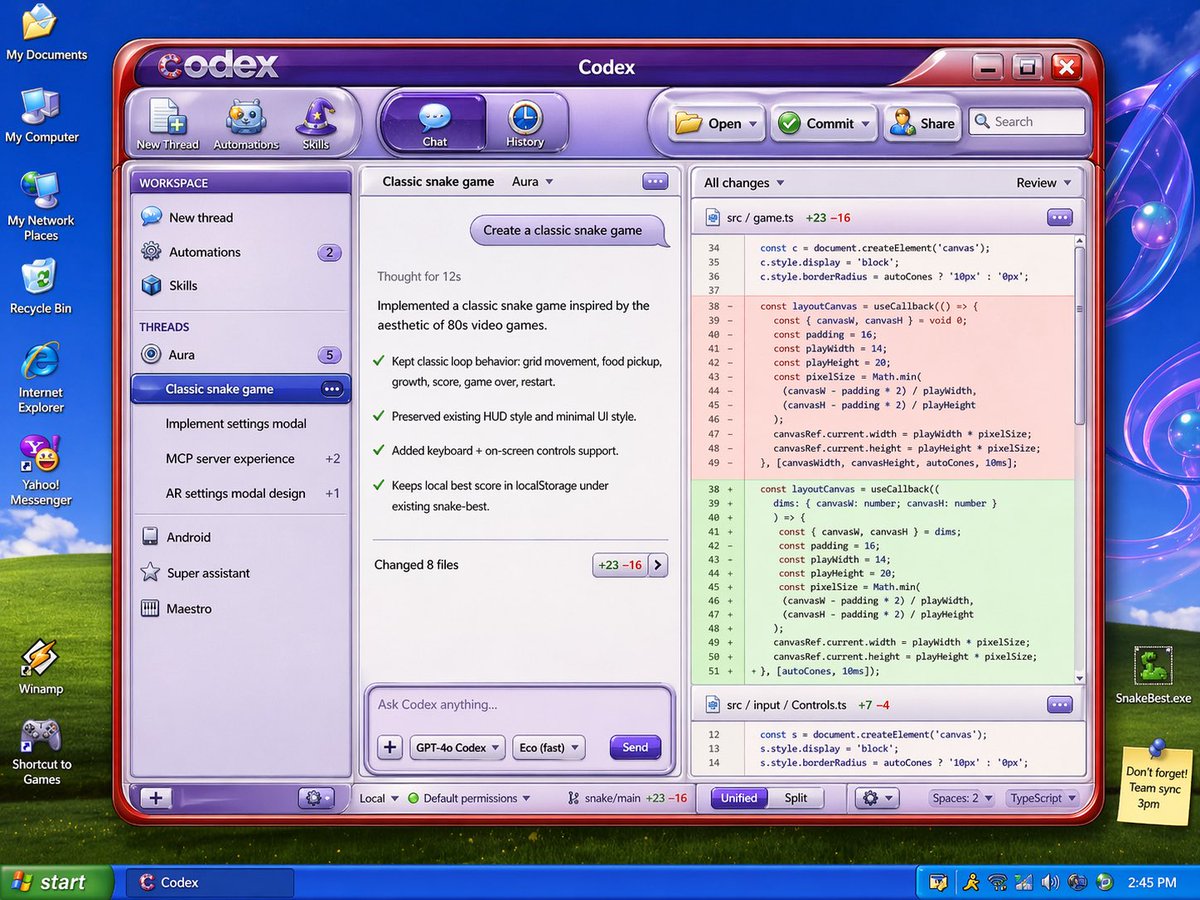
Imagine if codex existed in 2005
English
@nikitabier @Wealthsimple @k3shen @mnmityushkin @singhai @nicoduc @benjitaylor next comes validated holdings. stoked!
English

@Wealthsimple Credit to the builders:
@k3shen (his 1st launch at X)
@mnmityushkin
@singhai
@nicoduc & @benjitaylor
Web and Android + global launch coming very soon
English
𝕏 has always been the best source of financial news for traders and investors. Billions of dollars are allocated every day based on what people read on Timeline.
Today we're launching our new Cashtags feature in the US and Canada on iPhone, bringing real-time financial data to X.
Here's how it works:
1. When you search for or post a cashtag (or contract address), X will automatically suggest matching stocks or crypto tokens, so you can select the exact asset you had in mind.
2. Anyone who taps a Cashtag will see posts mentioning it along with its price chart—without ever leaving X.
This ensures that you're always matched to the chatter for the right stock or token.
Cashtags are just the first step in our commitment to be the best destination for the finance and crypto community.
English


@0FJAKE impressive. iMessage on your laptop? how do you communicate with ppl not physically around you?
English

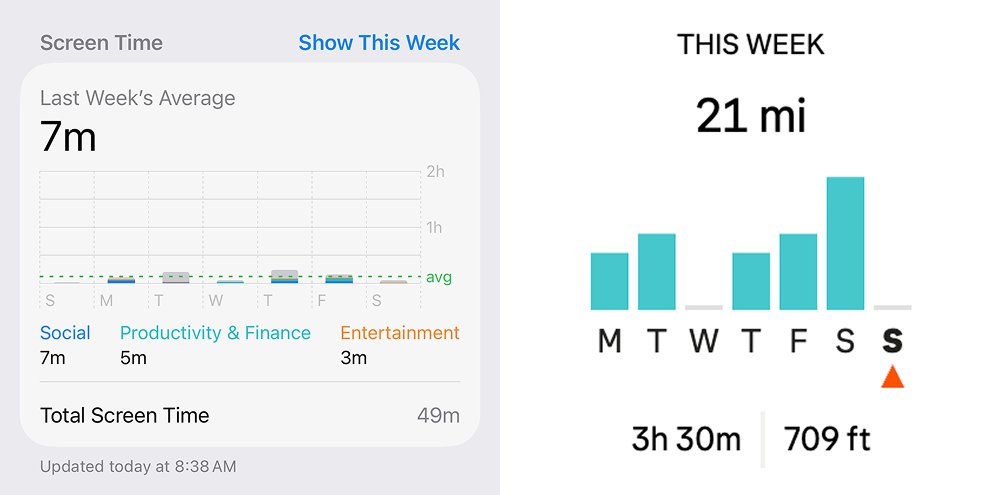
Following up on the quoted tweet, I completed this week with 49 minutes of phone screen time and 210 minutes of running time, succeeding in my goal of spending more time running than on my phone.
I actually spent 4x more time running than on my phone, so it wasn't particularly close. To frame it from a daily perspective, I averaged 30 minutes of running per day vs. 7 minutes of phone screen time. I'm not sure there are many other people in the world spending more time running than on their phone in a given week, let alone with that 4x difference. It feels like a real advantage.
So many people waste so much time on their phones, like a third of their waking hours, or even a full half. That's 30 or 45 years of a 90 year life. Make any argument you want. That just doesn't feel right. "Living" so much of your life through a 6 by 3 inch rectangle. I'm not looking down on these people. I've been there many weeks myself. That is part of what motivated this change.
There's this idea which I agree with that it's easy to be contrarian but hard and rare to be contrarian and right. My choice to spend a radically low amount of time on my phone is obviously contrarian, and I believe it is right.
I plan to continue spending a radically low amount of time on my phone, and to continue running a mile more every week, for a while at least.
If you are interested in quitting your phone, feel free to shoot me a DM. I am also working on a couple of things I think could help people quit their phones, and would like to write more about the "why" in addition to the "how".
JAKE@0FJAKE
RUN TIME > PHONE SCREEN TIME I thought of an interesting goal today. I would like to spend more time running than on my phone next week. I know I can do it because I am almost there already, without having explicitly targeted that goal. I've been spending less than 1 hour on my phone the last few days (and most days the last few weeks) while running 19 miles last week to start a new running habit. I'm planning to run 21 miles next week (avg. 3 per day), which is 30 minutes of running per day at a 10 minute per mile pace. That means I'd need to average less than 30 minutes per day on my phone, which I have done for full weeks at a time before, and a couple days this week. While I had never thought to compare my running time to my phone screen time before, it's not an entirely irrelevant comparison now that I think about it. I've found that running while listening to podcasts is a great way to increase my attention span, patience, and discipline, while spending too much time on my phone kills all three of those things, shortening my attention span while making me more impulsive and reactionary. You could probably tell a lot about a person just by looking at their phone screen time to running ratio. My goal next week is for mine to be sub-1.
English
eric pelnik retweetledi

.@thomas_coatue describes how a meeting with Steven Spielberg eventually taught him how to pitch companies.
"Steven said, 'Every great story can be pitched in three sentences, no matter what the story was.'"
"In three sentences you got the whole movie. And what I realized is it takes a true understanding of story to be able to crystallize it in three sentences."
"All the great investors that I've met, like Stan Druckenmiller, my brother Philippe, or Dan Loeb, they have an ability to take any kind of story and just drill it down into its essence to what the key pivot points are that are going to make or break that stock at that particular moment."
English

Years ago I told myself I wouldn’t buy a supercar until I had a house
Then one day I woke up in my home and didn’t want the car at all
I wanted the perception of success from strangers
Don’t buy things to impress people who don’t matter
English
eric pelnik retweetledi

South Park creators gave the greatest lesson on storytelling ever
English
eric pelnik retweetledi

We just turned agents into Pokémon:
Chat with them and check their work all from an adorable scene right in the browser.
Github: github.com/outworked/outw…
English

The future of gaming is gonna be insane
English
@RachelFintwit @r0ck3t23 i think ppl will diverge into being okay with this (most ppl) and then those who want to focus on real people/real friends.
English

eric pelnik retweetledi

Mark Zuckerberg just described the death of human connection on the internet and no one flinched.
One sentence. Fifteen years of erosion in twelve words.
Mark Zuckerberg: “Social media started out as people primarily interacting with their friends. And now… at least half of the content is basically people interacting with creators.”
You used to open your phone to see what your friends were doing.
Now you open it to watch strangers.
You did not choose this. The algorithm chose it for you.
It tested your friends against optimized strangers.
Your friends lost. Every time.
A stranger with better lighting, better timing, and a better hook held your attention three seconds longer than someone who loves you.
So the algorithm buried your best friend’s wedding photos under a cooking video from someone in Dubai you have never met.
And you watched the cooking video.
That was the first replacement. Friends for strangers. You barely noticed.
The second one is already underway.
If the algorithm already proved strangers outperform your real relationships, and AI can now build a stranger more engaging than any human alive, the math finishes itself.
The AI does not have a bad week. It does not post something careless and lose the algorithm’s favor. It does not burn out.
Every word calibrated.
Every frame tuned.
Every pause placed at the exact interval that keeps your thumb from moving.
A human creator competing against that is carving stone tablets in a world that just built the printing press.
The economics are not even close.
A person needs rent, sleep, and motivation.
The machine needs electricity.
When the cost of generating perfect content hits zero, the feed fills with faces that do not exist.
Voices that feel familiar.
Opinions that mirror yours just enough to feel like trust.
Personalities built from scratch to feel like someone you have known for years.
You will not know when the switch happens.
That is the point.
The feed does not care whether the thing holding your attention has a pulse. It cares whether you stay.
And a machine that knows your patterns better than you know yourself will always keep you longer than a person ever could.
This is not a warning. Half of it already happened.
You lost your friends to strangers and did not notice.
You will lose the strangers to machines and call them friends.
Somewhere in a different app, in a different tab, in a room you are sitting in right now, someone who actually knows you is living a moment you will never see.
Not because they stopped sharing it.
Because you stopped being where it was.
English


eric pelnik retweetledi

Here’s your daily reminder that Larry Bird played basketball on a whole other plane of existence.
English

the reason why emotional intelligence is extremely rare is simply cuz it is expensive.
actually modeling another person’s internal state in real time is computationally brutal.. it requires suppressing your own frame, running a parallel simulation, & updating continuously.
the “inference costs” of eq in humans are likely much higher than the most expensive ai model in existence today.
English
eric pelnik retweetledi

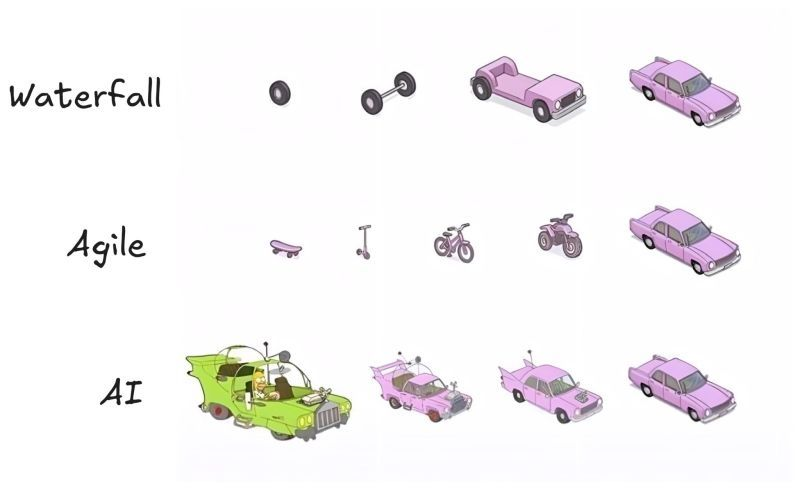
Honestly, this is the most accurate diagram I've seen.
Waterfall: You plan for 18 months and deliver exactly what nobody needs anymore.
Agile: You deliver something usable at every step, but the CEO keeps asking, "Where's the car?"
AI: You get the car on day one. It has six wheels, the doors are on backwards, and it has a rocket launcher. You spend more time making it yours than actually "building"; it's shaping. owning. verifying. That's what the best AI developers do now. They don't build. They shape and own.
English
eric pelnik retweetledi

Very soon we’re going to need ways to prove the identity of things we communicate with
Zero knowledge proofs are coming for the field off AI
English