Petra Ehmann

496 posts

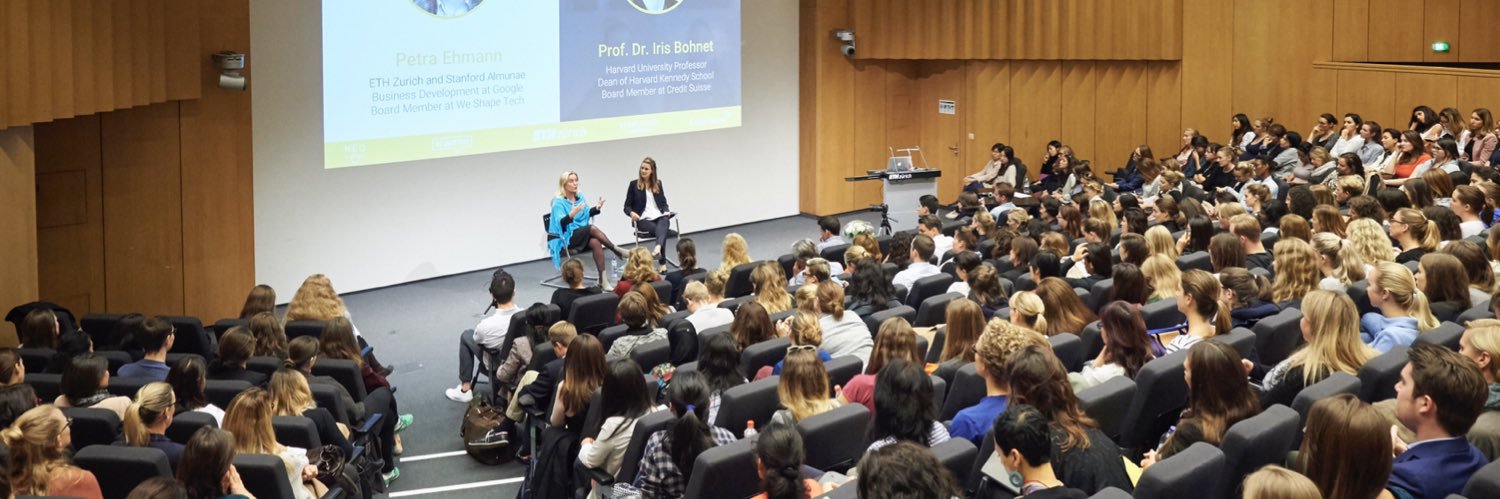
Petra Ehmann banner
Petra Ehmann

Petra Ehmann

@petramarii

ex-Google, Group Chief Innovation Officer at Ringier, Board of Directors at publicly listed Bossard, always challenge the status quo, global citizen
Katılım Eylül 2012
188 Takip Edilen539 Takipçiler
Petra Ehmann retweetledi
Marc Randolph
Marc Randolph@marcrandolph·
Here's a counterintuitive truth: sometimes the best thing you can do for your startup is to not take money. When Netflix was getting started, we were perpetually broke. And that forced us to make hard choices. Every hire mattered. Every expense got scrutinized. Every experiment had to have a clear hypothesis because we couldn't afford to waste time or money on vague "let's try this and see what happens" thinking. Those constraints made us better. When you have limited resources, you can't afford to be sloppy. You have to know what you're building and why. You have to prioritize ruthlessly. You have to find creative solutions instead of throwing money at problems. The minute you have a nice cushion in the bank, that discipline tends to evaporate. Suddenly you're hiring because you can, not because you must. You're running ads because there's budget, not because you've proven the unit economics work. You're scaling prematurely because investors expect you to deploy the capital. And before you know it, you've burned through half a million dollars and you're not actually any closer to product-market fit than you were before.
English
31
35
258
19.2K
Petra Ehmann retweetledi
Andrew Ng
Andrew Ng@AndrewYNg·
At the Artificial Intelligence Action Summit in Paris this week, U.S. Vice President J.D. Vance said, “I’m not here to talk about AI safety.... I’m here to talk about AI opportunity.” I’m thrilled to see the U.S. government focus on opportunities in AI. Further, while it is important to use AI responsibly and try to stamp out harmful applications, I feel “AI safety” is not the right terminology for addressing this important problem. Language shapes thought, so using the right words is important. I’d rather talk about “responsible AI” than “AI safety.” Let me explain. First, there are clearly harmful applications of AI, such as non-consensual deepfake porn (which creates sexually explicit images of real people without their consent), the use of AI in misinformation, potentially unsafe medical diagnoses, addictive applications, and so on. We definitely want to stamp these out! There are many ways to apply AI in harmful or irresponsible ways, and we should discourage and prevent such uses. However, the concept of “AI safety” tries to make AI — as a technology — safe, rather than making safe applications of it. Consider the similar, obviously flawed notion of “laptop safety.” There are great ways to use a laptop and many irresponsible ways, but I don’t consider laptops to be intrinsically either safe or unsafe. It is the application, or usage, that determines if a laptop is safe. Similarly, AI, a general-purpose technology with numerous applications, is neither safe nor unsafe. How someone chooses to use it determines whether it is harmful or beneficial. Now, safety isn’t always a function only of how something is used. An unsafe airplane is one that, even in the hands of an attentive and skilled pilot, has a large chance of mishap. So we definitely should strive to build safe airplanes (and make sure they are operated responsibly)! The risk factors are associated with the construction of the aircraft rather than merely its application. Similarly, we want safe automobiles, blenders, dialysis machines, food, buildings, power plants, and much more. “AI safety” presupposes that AI, the underlying technology, can be unsafe. I find it more useful to think about how applications of AI can be unsafe. Further, the term “responsible AI” emphasizes that it is our responsibility to avoid building applications that are unsafe or harmful and to discourage people from using even beneficial products in harmful ways. If we shift the terminology for AI risks from “AI safety” to “responsible AI,” we can have more thoughtful conversations about what to do and what not to do. I believe the 2023 Bletchley AI Safety Summit slowed down European AI development — without making anyone safer — by wasting time considering science-fiction AI fears rather than focusing on opportunities. Last month, at Davos, business and policy leaders also had strong concerns about whether Europe can dig itself out of the current regulatory morass and focus on building with AI. I am hopeful that the Paris meeting, unlike the one at Bletchley, will result in acceleration rather than deceleration. In a world where AI is becoming pervasive, if we can shift the conversation away from “AI safety” toward responsible [use of] AI, we will speed up AI’s benefits and do a better job of addressing actual problems. That will actually make people safer. [Original text: deeplearning.ai/the-batch/issu… ]
Andrew Ng tweet media
English
108
163
685
76.5K
Petra Ehmann retweetledi
WOLF LOTTER🦉
WOLF LOTTER🦉@wolflotter·
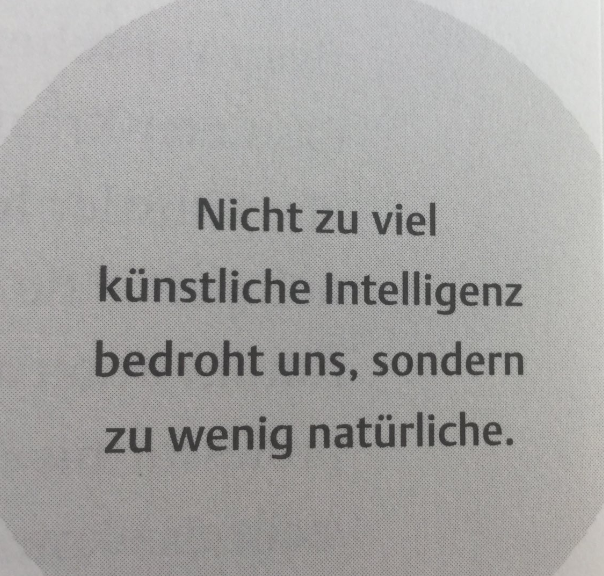
Innovation, Streitschrift für barrierefreies Denken, 2018.
WOLF LOTTER🦉 tweet media
Deutsch
1
25
95
2.7K
Petra Ehmann retweetledi
Marc Randolph
Marc Randolph@marcrandolph·
Recently I came across this diagram, mapping out the time it took for different companies (including Looker, which I co-founded) to make the journey from idea to Product-Market fit, and the results are…not surprising at all. Across the board, the earlier you get a product into the world, the sooner you find your fit. What’s most interesting to me is how clearly this pushes back on the idea that if you spend a longer time working on your product before launch, it’ll succeed sooner. But if you look at the chart, there’s basically no correlation—waiting three years to launch your product doesn’t speed up its adoption. And in fact, you could argue that the opposite is true: only six companies on the chart took more than a year to launch a product, and none of them saw a particularly quick path to success. That’s why I’ve always argued—and still argue—that the best way to make a great product is to make it, launch it, and improve it. Whether it’s an MVP, an MUP, or some other acronym, the rule is the same: the only way to know how to get product-market fit is to put your product into the market and make it fit.
Marc Randolph tweet media
English
31
131
802
155K
Petra Ehmann retweetledi
Marc Randolph
Marc Randolph@marcrandolph·
Nolan Bushnell, the co-founder of Atari, once said something that has always resonated with me. "Everyone who has taken a shower has had an idea," he said. "But, it's the people who get out of the shower, towel off, and do something about it that make the difference."
English
23
117
639
41.6K
Petra Ehmann retweetledi
Marc Randolph
Marc Randolph@marcrandolph·
Want to make things easier for your team? Give them something hard to do. If they’re the right team, and it’s a task that feels important, they’ll thank you for it.
English
6
5
45
5.3K
Petra Ehmann retweetledi
Aaron Levie
Aaron Levie@levie·
Working with your files in Vision Pro is wild
English
26
18
215
61.9K
Petra Ehmann retweetledi
Greg Brockman
Greg Brockman@gdb·
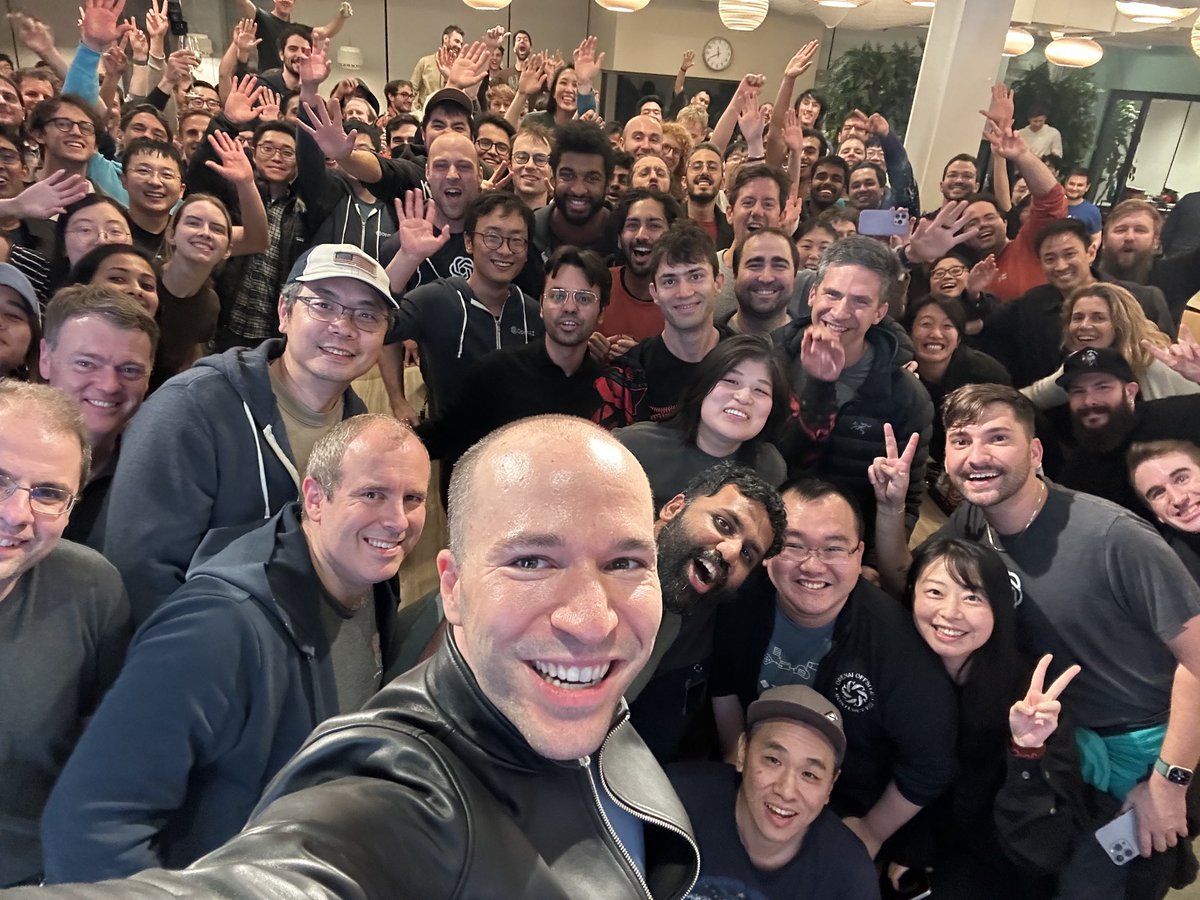
good to be back
Greg Brockman tweet media
English
392
379
13K
1.2M
Petra Ehmann retweetledi
Satya Nadella
Satya Nadella@satyanadella·
At the end of the day, the greatest privilege of my job is working with people who are driven by mission. These last 5 days, I saw people across OpenAI remaining calm and resolute in driving their mission despite all that was happening around them. And I saw people across Microsoft remain focused on our mission and serving our customers and partners, stepping up to help in every way. This is what I’m especially thankful for going into the Thanksgiving holiday. Thank you for your resolve and for the work you do each day to advance AI safely and responsibly and distribute its benefits to all of humanity.
English
1.1K
1.9K
27.1K
4.7M
Petra Ehmann retweetledi
Greg Brockman
Greg Brockman@gdb·
we are so back
Greg Brockman tweet media
English
1.6K
3.3K
48.7K
13.4M
Petra Ehmann retweetledi
Paul Graham
Paul Graham@paulg·
The idea of a standoff between 3 board members and 95% an organization's employees is so unprecedented that it seems almost grammatically ill-formed. I wouldn't have thought such a thing was even possible. If 95% doesn't count as a vote of no confidence, what number would?
English
485
704
10K
2M
Petra Ehmann retweetledi
Vinod Khosla
Vinod Khosla@vkhosla·
. @sama is a once in a generation CEO. He’s an instigator whose positive mark on the world will be indelible, and profound, in every corner of the globe. It’s an honor to work alongside him wherever he is.
English
63
211
3.9K
601.9K
Petra Ehmann retweetledi
Brian Chesky
Brian Chesky@bchesky·
Sam Altman and Greg Brockman have my full support. I’m saddened by what’s transpired. They, and the rest of the OpenAI team, deserve better
English
136
428
9.2K
2.2M
Petra Ehmann retweetledi
Paul Graham
Paul Graham@paulg·
When I talk to more established startups, one of the first things I want to know, after asking about the growth rate and whether they're profitable, is whether the founders still have board control. I'm more optimistic about the company when the answer is yes.
English
138
512
6K
1.1M
Petra Ehmann retweetledi
Greg Brockman
Greg Brockman@gdb·
Sam and I are shocked and saddened by what the board did today. Let us first say thank you to all the incredible people who we have worked with at OpenAI, our customers, our investors, and all of those who have been reaching out. We too are still trying to figure out exactly what happened. Here is what we know: - Last night, Sam got a text from Ilya asking to talk at noon Friday. Sam joined a Google Meet and the whole board, except Greg, was there. Ilya told Sam he was being fired and that the news was going out very soon. - At 12:19pm, Greg got a text from Ilya asking for a quick call. At 12:23pm, Ilya sent a Google Meet link. Greg was told that he was being removed from the board (but was vital to the company and would retain his role) and that Sam had been fired. Around the same time, OpenAI published a blog post. - As far as we know, the management team was made aware of this shortly after, other than Mira who found out the night prior. The outpouring of support has been really nice; thank you, but please don’t spend any time being concerned. We will be fine. Greater things coming soon.
English
3.2K
6.9K
54.5K
21M
Petra Ehmann retweetledi
Sam Altman
Sam Altman@sama·
i loved my time at openai. it was transformative for me personally, and hopefully the world a little bit. most of all i loved working with such talented people. will have more to say about what’s next later. 🫡
English
6.1K
8.7K
89.7K
26M
Petra Ehmann retweetledi
Eric Schmidt
Eric Schmidt@ericschmidt·
Sam Altman is a hero of mine. He built a company from nothing to $90 Billion in value, and changed our collective world forever. I can't wait to see what he does next. I, and billions of people, will benefit from his future work- it's going to be simply incredible. Thank you @sama for all you have done for all of us.
English
604
1.7K
16K
4.2M
Petra Ehmann retweetledi
Lex Fridman
Lex Fridman@lexfridman·
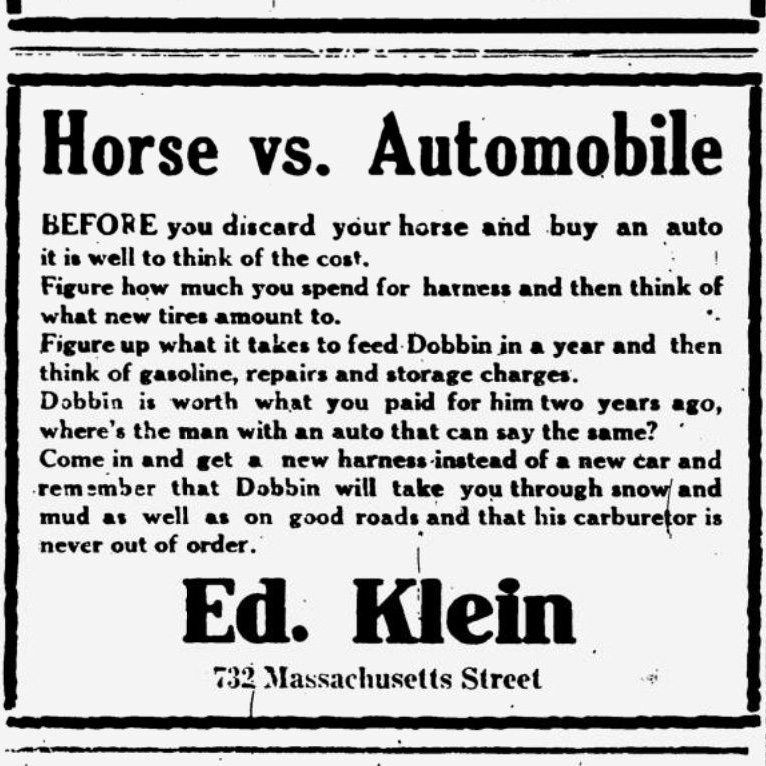
People resist new technology, new ideas. As Dostoevsky opens Crime & Punishment with: "Taking a new step, uttering a new word, is what people fear most." I think fear points the way toward progress. Here's an ad from 1915 (via @PessimistsArc) suggesting a horse outperforms a car.
Lex Fridman tweet media
English
73
405
1.6K
0
Petra Ehmann retweetledi
Aaron Levie
Aaron Levie@levie·
Pretty amazing confluence of new technologies all landing at the same time. Haven’t seen a period like this for a decade and a half when we had cloud and mobile emerge together. Never a better time to be building software.
English
27
94
682
94.7K