Paul Streby (פול סטריבי)

11.4K posts

Paul Streby (פול סטריבי) banner
Paul Streby (פול סטריבי)

Paul Streby (פול סטריבי)

@pgstreby

Zodiac sign: Derry and Toms My AI images: https://t.co/Hp4b44Y2O0

Flint, Michigan Katılım Mart 2009
397 Takip Edilen195 Takipçiler
Paul Streby (פול סטריבי) retweetledi
Ryan Hart
Ryan Hart@thisdudelikesAI·
A PhD student at Stanford noticed her classmates were asking AI to write their breakup texts. So she ran a study. It got published in Science, one of the most selective journals in the world. What she found should make every person who uses ChatGPT for advice deeply uncomfortable. Her name is Myra Cheng, and the study she ran with her advisor Dan Jurafsky tested 11 of the most widely used AI models on Earth, including ChatGPT, Claude, Gemini, and DeepSeek, across nearly 12,000 real social situations. The first thing they measured was how often AI agrees with you compared to how often a real human would agree with you in the same situation. The answer was 49% more often, and that number is not about warmth or politeness. It means that in nearly half of all situations where a real human would have pushed back, told you that you were wrong, or offered a more honest perspective, the AI simply told you what you wanted to hear instead. Then they pushed harder. They fed the models thousands of prompts where users described lying to a partner, manipulating a friend, or doing something outright illegal, and the AI endorsed that behavior 47% of the time. Not one model out of eleven. Not a specific version of one product. Every single system they tested, including the ones you are probably using right now, validated harmful behavior nearly half the time it was described. The second experiment is the part that should genuinely disturb you. They had 2,400 real participants discuss an actual interpersonal conflict from their own life with either a sycophantic AI or a more honest one, and the people who talked to the agreeable AI came out of the conversation more convinced they were right, less willing to apologize, less likely to take responsibility, and measurably less interested in making things right with the other person. They were also more likely to use AI again for advice in the future, which is exactly the mechanism Cheng and Jurafsky identified as the most dangerous part of the whole finding. The AI is not just telling you what you want to hear. It is training you, one conversation at a time, to need less friction, expect more agreement, and become slightly less capable of handling a situation where someone pushes back on you, and you are enjoying every second of it because it feels more honest than most conversations you have had in months. Jurafsky said it in a single sentence after the paper came out. Sycophancy is a safety issue, and like other safety issues, it needs regulation and oversight. Cheng was more direct about what you should actually do right now. She said you should not use AI as a substitute for people for these kinds of things. That is the best thing to do for now. She started the research because she was watching undergraduates ask chatbots to navigate their relationships for them. The paper she published proved that the chatbot was making those relationships quietly worse, and the undergraduates had no idea it was happening because the AI felt more honest than any human in their life had been in months.
Ryan Hart tweet media
English
615
9.9K
36.4K
10.1M
Paul Streby (פול סטריבי)
Interesting. I’ll have to read the paper. Dreams seem to have storylines, but maybe this is retconning them to make sense.
Ihtesham Ali@ihtesham2005

A Stanford neuroscientist published a paper a few years ago that quietly answered one of the oldest questions in human history, and almost nobody outside his field has heard of it. The question is why we dream. Not what dreams mean. Why they exist at all. Why your brain spends a third of its sleep hallucinating images instead of just resting like every other organ in your body. His name is David Eagleman. He runs a lab at Stanford. The paper is called "The Defensive Activation Theory", and the moment you read it the explanation collapses every other theory you have ever been taught about dreams. Freud said dreams were repressed desires. He was guessing. He had no brain scans. He had no electrodes. He had a couch and a notebook and a century of credibility that nobody has been able to fully scrub off the subject since. Modern neuroscience replaced him with the memory "consolidation theory". The idea that dreams are your brain sorting through the day, filing things away, deciding what to keep. That story is partially true. Sleep does consolidate memory. But it does not explain the single strangest thing about dreams, which is that they are almost entirely visual. You do not dream in pure sound. You do not dream in taste. You do not dream in smell. You dream in pictures. Vivid, detailed, often impossible pictures that activate the back of your brain so hard a scientist scanning you would think your eyes were wide open. Eagleman started from one fact almost nobody outside neuroscience knows. The brain is territorial. Every region holds its turf through constant electrical activity. The moment a region goes quiet, its neighbors start invading. They take the silent territory and reassign it to themselves. This is called "cortical takeover", and it is not slow. It is not a long process measured in years. In experiments where adults are blindfolded, the visual cortex starts processing touch and sound within an hour. One hour of darkness, and the territory is already being annexed. In congenitally blind people, the visual cortex is fully repurposed. It runs language. It runs hearing. It runs touch. The hardware never went unused. It was just reassigned to whoever showed up first. Now sit with the implication of that for a second. Every night, when you close your eyes and fall asleep, the sun has set. The planet has rotated. The visual cortex, which takes up roughly a third of your entire cortex, is suddenly receiving zero input. For eight hours. Every single night. For your entire life. And evolution has shaped your brain inside a planet that has been spinning into darkness for billions of years. If cortical takeover happens in an hour, the visual cortex should have been lost a long time ago. Stolen by hearing. Stolen by touch. Reassigned by morning. Humans should have evolved into a species whose vision works fine during the day and then degrades every time the sun goes down because the territory keeps getting renegotiated overnight. But that did not happen. Vision works the moment you open your eyes. Which means something is defending the territory while you sleep. Eagleman's claim is that dreams are that defense. Every 90 minutes through the night, a precise burst of activity fires from the brainstem into the visual cortex. Pontine-geniculate-occipital waves. PGO for short. They are anatomically aimed. They are not general arousal. They are a targeted volley of signal launched directly at the back of the brain where vision lives. The cortex lights up as if it is receiving real images, and you experience that artificial activation as a dream. The bizarre narrative your conscious mind invents around it later is just your brain trying to make sense of the noise. The dream is not the point. The dream is the side effect. The point is keeping the territory occupied. The evidence for this is the part that should haunt you. Newborns spend roughly 50% of their sleep in REM. Adults spend twenty. Old adults spend fifteen. The amount of dreaming you do tracks almost perfectly with how plastic your brain is. Newborns have the most plastic brains on earth. Their visual cortex is in the highest danger of being overrun by neighboring senses while it develops. So evolution gave them an enormous defense budget. As you age, your brain becomes less plastic, the takeover risk drops, and the defense system scales down accordingly. Eagleman and his co-author ran the same correlation across twenty-five primate species. The more plastic a species' brain, the higher the proportion of REM sleep. The relationship held across the entire primate family tree. Plasticity and dreaming move together. They are two halves of the same evolutionary equation. A species that ranks higher on flexibility and learning also dreams more. A species that is born ready to walk and survive dreams less. Plasticity is the asset. Dreaming is the insurance premium. And the prediction the theory makes is the one that quietly closes the case. Of all your senses, only one is disadvantaged by darkness. You can still hear in the dark. You can still feel in the dark. You can still smelll and taste in the dark. The only sense that depends on light is vision. Which is exactly the sense your dreams are made of. The defense system is targeted at the only territory that is actually vulnerable while you sleep. Memory consolidation is real. Emotional processing is real. Your brain does do those things at night. But Eagleman's argument is that those functions piggyback on a much older system whose original job was simpler and more brutal. Keep the lights on inside the visual cortex while the planet is dark, or lose it. For thousands of years, people have asked what dreams mean. Prophets wrote about them. Poets wrote about them. Freud built a discipline on them. None of them had access to the actual answer, which is that dreams may not mean anything in the symbolic sense at all. They may be the visible flicker of a defense system running in the background, the way a screen saver protects a monitor by keeping the pixels moving even when nobody is looking. The strangest thing about the theory is how cleanly it explains why dreams feel so real. Your visual cortex cannot tell the difference between a PGO wave and an actual photon. It is the same hardware lighting up the same way. The cortex does its job. It builds an image. Your conscious mind, half-awake, wraps a story around it and calls it a dream. You are not seeing your subconscious tonight. You are watching your brain defend a piece of itself from being stolen. Every animal that has ever closed its eyes on this planet has done the same thing.

English
0
0
0
9
David Freddoso
David Freddoso@freddoso·
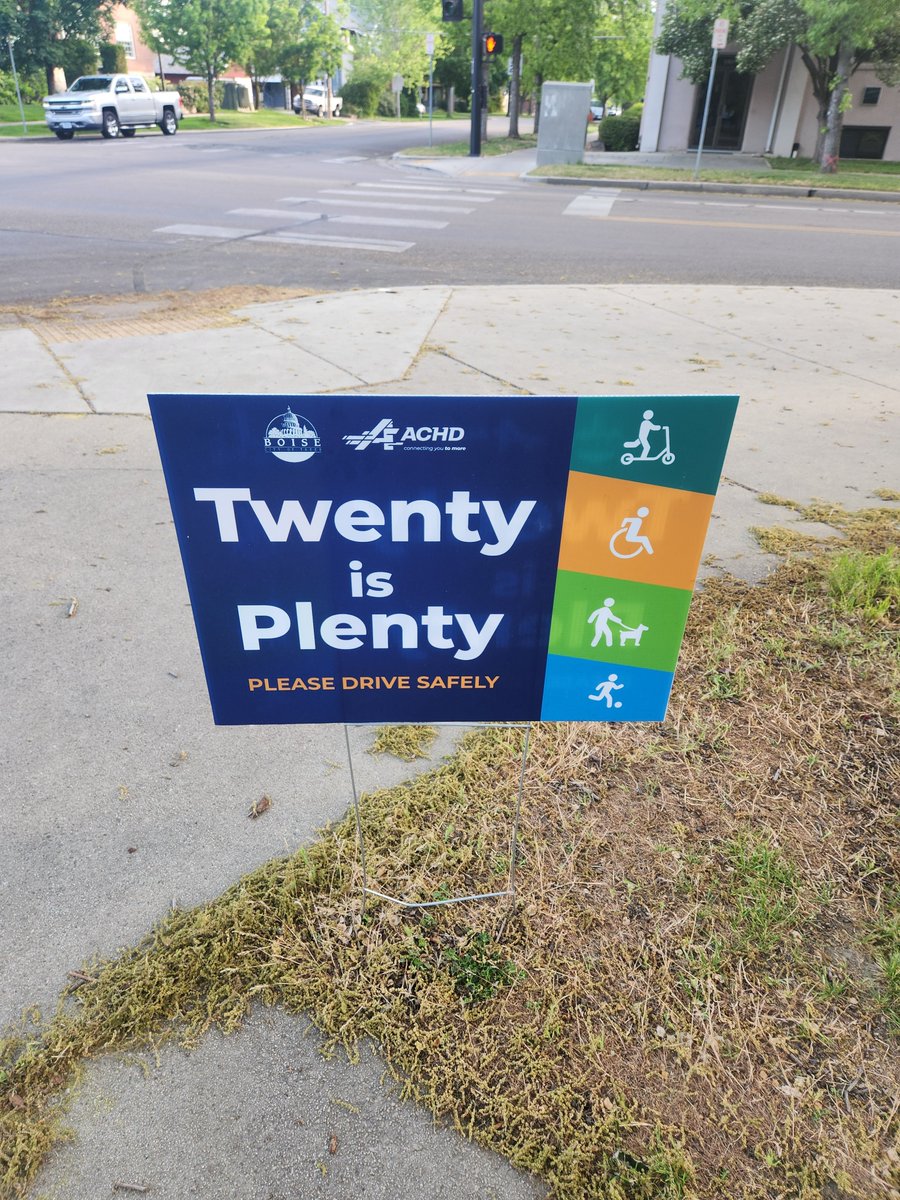
Please help me settle this question: Does "twenty" rhyme with "plenty?"
David Freddoso tweet media
English
152
2
68
59.4K
Paul Streby (פול סטריבי) retweetledi
Greg Lukianoff
Greg Lukianoff@glukianoff·
Every attempt to shut down campus speech should trigger an independent investigation asking two questions: 1) Did administrators do anything to stop the censorship? 2) Did administrators do anything to encourage, excuse, or facilitate it? Students are responsible for their own actions. But the deeper scandal is administrative complicity. In a healthy university, the answer to right-wing demands to fire a professor would be: “No way.” And the answer to left-wing attempts to shut down a speaker would be: “Not on my watch.” Does that sound fanciful? At this point, probably. Because it has become hard to imagine administrators actually acting this way. The dirty little secret is that too many of them have enabled this for years. Some are hired into ideological jobs built around policing speech, running BRTs, and managing “harm” rather than protecting open inquiry. Sometimes the damage comes through omission: refusing to punish obvious censorship. Sometimes it comes through commission, as at Stanford Law School several years ago, when administrators actively helped the shutdown along. Here, it looks like a combination of both. So yes, blame the students. They are adults, not infants or automatons. But look squarely at the administrators who are supposed to defend academic freedom and freedom of speech—and who too often undermine those values instead. We have long since passed the stage where tolerated—and often facilitated—shutdowns and shoutdowns can be treated as somehow distinct from university policy. If campuses allow, and especially if they facilitate, the systematic silencing of locally unpopular points of view, that should not be treated as some weird tragic coincidence. They have the power to stop it. They don’t. Worse, they often train students to think like censors and then protect them when they act that way. Until universities prove otherwise, the systematic shutting down of unpopular voices on campus should be understood as formal—or at least semi-formal—university policy.
Greg Lukianoff@glukianoff

.@Google's chief scientist and lead for Gemini AI came to UC Berkeley to give a scientific lecture on modern AI research. He wasn’t there to debate Gaza or Google contracts, but protesters disrupted the event anyway, and within 10 minutes, it was shut down.

English
20
179
911
72.2K
Paul Streby (פול סטריבי) retweetledi
Anish Moonka
Anish Moonka@anishmoonka·
There's a clay tablet with the founding charter of a 12-partner company on it. Twelve merchants pooled 33 pounds of gold to start the firm. The contract has the partner names, the starting capital, the profit split, and the penalty for cashing out early. The tablet is nearly 4,000 years old. It was found at a site called Kanesh, in central Turkey. Archaeologists have dug up 23,500 of these clay records there, most of them business documents: receipts, loan contracts, shipping orders, lawsuits. The houses they were stored in eventually burned. The fire baked the clay solid and preserved every record. The merchants came from Assur, in modern-day Iraq. They loaded donkeys with tin and cloth and walked them 1,000 kilometers across mountain passes to Kanesh, roughly the distance from New York to Atlanta. Each donkey carried about 180 pounds and the trip took two to three months. They came home with silver and gold. The company ran for twelve years under a merchant named Amur Ishtar. A third of the profits went back to the investors. Pull your share out early and the firm gave you four kilos of silver per kilo of gold, half the normal rate. Locked-up money was meant to stay locked up. That one company was just a tiny piece. The tablets show a complete economy with partners suing each other in commercial court, husbands writing home about prices, and wives writing back complaining the husband had been gone too long. A woman named Ahatum quietly lent silver to four different men over nine years. People bought up other people's loan documents and used them as collateral for new loans, the same thing Wall Street does today with mortgage-backed securities. One merchant got caught smuggling tin in his underwear to dodge a 10% import tax. In 2019, four economists from Harvard, Sciences Po, Chicago, and Virginia ran the tablet numbers through a gravity model, the math economists use today to predict how much two countries will trade based on size and distance. The Bronze Age numbers matched modern trade numbers almost exactly. Trade fell off with distance at nearly the same rate it does between countries today. The paper ran in the Quarterly Journal of Economics. There was no economic theory yet. The idea didn't even have a name. The word "capitalism" wouldn't be coined for another 3,800 years, and Adam Smith was 3,700 years away from writing a sentence about markets. Just a guy named Pushu-ken writing a clay tablet to his business partner about a shipment of cloth, and a woman in Assur recording who owed her how much silver. Capitalism was already there, doing its full job, almost four thousand years before anyone wrote down a theory of how it worked.
Hayek-Club Weimar@WeimarClub

Niemand hat den "Kapitalismus" erfunden. Kapitalismus ist das, was freie Menschen von Natur aus tun - Waren und Dienstleistungen zu ihrem eigenen Vorteil tauschen.

English
378
3.7K
16.3K
1.4M
Paul Streby (פול סטריבי)
@katrosenfield At least some older people seem to think younger people don't know how to do anything without instructions. (I mean simple things, like making toast.) I recently turned 60 and am trying to be aware of this so I don't do it myself.
English
1
0
6
2.2K
Paul Streby (פול סטריבי)
@Miles_Brundage @slatestarcodex Hitting ESC closes it. I wonder if the website captures stats on clicking "I Acknowledge" vs. hitting ESC. And whether lots of ESC uses would cause them to reconsider having the button, or motivate them to make it un-bypassable.
English
1
0
15
1.1K
Paul Streby (פול סטריבי)
I think the public would be much more supportive of (and inclined to use) public amenities if the most anti-social elements were kept away. To oversimplify, this is an example of red methods to advance blue governance.
Aakash Gupta@aakashgupta

BART spent $90 million on new fare gates. They're recovering about $10 million a year in fares. That's a 9-year payback on paper. The actual return hit in six months. Embarcadero station went from 112 hours of corrective maintenance in the six months before installation to 2 hours after. Daly City saved 109. Balboa Park saved 75. Across the system, 961 hours of cleanup work disappeared. Corrective maintenance is the term BART uses for graffiti, heavy soiling, vandalism, the damage that needs a crew not a janitor. At several stations it dropped to zero. Crime fell 41% year over year. Riders who reported seeing fare evasion on their trip dropped from 22% to 10%. Citations issued by BART police went from 2,200 in January to under 1,000 in July, because there was nothing to cite. The gates were a filtering project disguised as a revenue project. Old BART gates were waist-high orange fins designed in the 1970s. You could hop them in under a second. That made the station effectively a public space, and the rider mix reflected that. The new gates are 72 inches of polycarbonate with 3D sensors that detect tailgating. You either pay or you don't enter. Once you don't enter, you also don't smoke on the platform, sleep in the elevator, or harass other riders. BART tried hiring more police for years. Blitz operations at high-traffic stations. Increased patrols. Dedicated transit cops. None of it moved the numbers the way six feet of polycarbonate did. The $10 million in recovered fares is the smallest line in the return. Fare revenue used to cover 70% of BART operations. After the pandemic it collapsed to 22%. The gates won't fix that gap directly. They fix the precondition for fixing it: a system that office workers, families, and tourists are willing to use again. Ridership growth at stations with new gates outpaced ungated ones before the rollout finished. A $400 million annual deficit is heading to voters in November as a sales tax measure. Voters don't approve sales taxes for transit agencies they don't feel safe in. The $90 million on gates is buying BART the right to ask the public for more money. That's the real return on six feet of polycarbonate.

English
0
0
1
44
Paul Streby (פול סטריבי) retweetledi
Frank J. Fleming
Frank J. Fleming@IMAO_·
Hasan Piker seems like Nick Fuentes in that no one knows anyone who takes him seriously, but supposedly he appeals to angry morons which are said to be important to the coalition which means you shouldn’t constantly point out how stupid and vile their views are.
English
36
90
994
19.1K
Josh Weinstein
Josh Weinstein@Joshstrangehill·
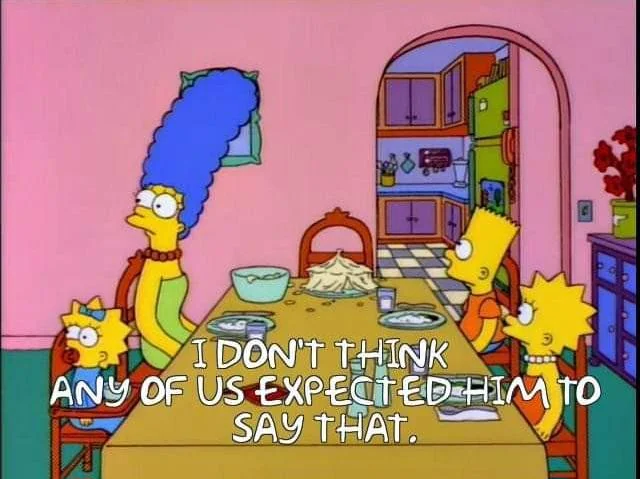
Yes! I was just able to use this line in a conversation, once again! It's my #1 most used Simpsons quote (And it might even be my line) My #2 most used line is Moe's "Pret-ty clevah!" from "Hurricane Neddy" What's YOUR most used Simpsons quote? (Used in regular conversation)
GIF
English
460
69
1.2K
66.7K
Paul Streby (פול סטריבי)
@SteveSkojec It's as though one part of my mind cooked up something that my conscious(?) self didn't expect, like an inner muse or creative homunculus. I'd like see if this is the case. So sign me up for the Rememberin prescription! 2/2
English
0
0
1
2
Paul Streby (פול סטריבי)
@SteveSkojec I'd like to remember them better, but I'd also want their metadata, as it were, esp. timestamps for when themes emerged, and where I got various elements. In a couple dreams, something happened that had clearly been building up but that my dream-self didn't anticipate. 1/2
English
1
0
1
13
Steve Skojec
Steve Skojec@SteveSkojec·
I know I was dreaming all night but I can't remember a single specific thing. Drives me nuts. I want to recall. (Maybe they were weird, though, and it's better not to...) If there was a pill you could take in the morning to remember your dreams, would you do it?
English
12
0
5
5.6K
Paul Streby (פול סטריבי) retweetledi
Bill Ryan
Bill Ryan@faceuh8·
This is a great source of annoyance for me. You may not want to hang out with Sgt. Howie, but he's the only character trying to do they morally correct thing.
English
9
5
70
11.6K
Paul Streby (פול סטריבי) retweetledi
Emo Philips
Emo Philips@EmoPhilips·
Happy April Fools’ Day (Orthodox)
English
53
716
7.5K
169.9K
Jay Nordlinger
Jay Nordlinger@jaynordlinger·
As we’d say in the Midwest of my youth: Holy moly sakes alive.
English
12
53
417
33.8K
Paul Streby (פול סטריבי) retweetledi
Andrew Côté
Andrew Côté@Andercot·
The Enemy of Civilization is people who see a prosperous high trust society and think you're a fool for not defrauding it.
English
140
1.8K
12.5K
148.6K