Phillip Harris

1.5K posts

Phillip Harris

Phillip Harris

@phillipharr1s

Katılım Mayıs 2011
278 Takip Edilen100 Takipçiler
Phillip Harris
Phillip Harris@phillipharr1s·
@Jacob_Tsimerman @littmath Not Daniel but, maybe something like an English / art history department. We’re handed down artifacts, which we largely could not make ourselves, which we interpret, explain to each other, and just sort of passively appreciate. Pleasant enough, but not what I signed up for.
English
0
0
2
58
jacob tsimerman
jacob tsimerman@Jacob_Tsimerman·
Re: problem-solving, I agree that we have a different experience [I enjoy it and you don't]. I'm curious whether you actually disagree with my 20-80% estimate? I would be curious what your picture of continuing to do mathematics in an AI-is-better-than-us world looks like, and whether its meaningfully different than being an undergraduate mathematician and digesting tons of math [I don't say this derogatorily, I loved undergrad!]. Asking someone to spell out a vision of the future is a big ask, so even-less-pressure-than-usual to actually do this.
English
2
0
5
268
Daniel Litt
Daniel Litt@littmath·
This is a characteristically thoughtful and coherent account of mathematics from my colleague Jacob, and I agree with much of what he writes. But I want to push back on some aspects, which don't accord with my experience of or motivation for doing mathematics. Problem-solving I fully agree with Jacob that, as currently practiced, problem-solving is a fundamental aspect of doing mathematics; like Jacob, I identify as a "problem-solver" more than a "theory-builder." (A related axis: I identify more as a "frog" than a "bird.") Why do we solve problems? For some of us, it's more or less about enjoyment. That is NOT why I solve problems. I enjoy parts of that process: getting the solution, some little moments of understanding along the way. But my primary emotional experience of problem-solving is not fun: it's frustration. I try to understand something and get confused and I HATE that feeling, and need to resolve it. For a while my bio on here read "forever confused" -- that's not an exaggeration. I think the main reason I (and many other mathematicians) solve problems is that it's the only way we know how to ground ourselves in mathematical truth. Without solving problems and working out examples, our work inevitably devolves into bullshit. The activity of mathematics So is 80%+ of mathematics about problem-solving? I think this is a coherent account of mathematics but it's not my experience. Like Jacob and many other mathematicians my work is indeed guided by some big problems: for me, the Grothendieck-Katz p-curvature conjecture, some questions about mapping class groups, some questions about fundamental groups of algebraic varieties. Many of these problems have occupied me for a decade+ now. My experience of thinking about these problems is, perhaps paradoxically, not about "problem-solving." Rather, these problems benchmark our failure to understand certain fundamental phenomena: differential equations, surfaces, polynomials. It's useful to have rigorously stated problems like this to guide the field, but I think they have relatively little influence on my day-to-day work. That looks more like: trying to identify the most basic situation in which our understanding fails, and develop it in that basic situation. In this model, problem-solving is secondary: my typical experience is that I think I understand something new, often non-rigorously, and then try to operationalize it to solve some problems both to test the correctness of this understanding, and to measure its effectiveness. It's not uncommon in this model for a problem and its solution to appear at the exact same time. In fact, for me, it's somewhat unusual to write down a rigorous statement of a lemma that I do not already know how to prove, though this does of course happen. Oracles Jacob proposes the a thought experiment, where one has access to an AI oracle that can solve rigorously-stated problems better than humans but has less capability in other areas of the mathematical process. Like him, I do not expect this to be the long-term situation--eventually I expect AI mathematics to exceed humans in every mathematical capability--but let's run with it for a second. What would mathematical activity look like with such an oracle? Jacob writes: "Well, you make a definition, and want to know if it’s the right one. You immediately ask your oracle a thousand questions. From “are these basic properties true” to “ooh, so is this deep conjecture true?” and start getting back answers, and amending your definitions. You could invent and resolve entire research directions in days. But the confusion you would have had to push through to flesh out your theory would largely (probably not entirely) be instantly resolved and the whole process sped up tremendously by your oracle. A big part of the process would be gone." I think this is where I most strongly disagree with what he writes. I think you start getting back answers, and then to continue, you have to UNDERSTAND them. And the dirty little secret of mathematics is that it's impossible to understand what anyone else is saying. Conveying one's mathematical intuition is incredibly hard: at least for me, the experience of acquiring understanding from someone else's work is nearly identical to that of discovering it on my own. Of course, what the mathematics of the future will look like depends (like all AI prognostication) on the precise shape of future AI capabilities; I do not think the picture of an uncreative oracle is realistic. I expect future AI mathematicians to be creative, and also, not to be oracles. I think a lot of the questions we view as fundamental will remain open for some time. Basic mathematical questions can be arbitrarily hard! And we will still want to understand them. Doing math Most of what I love about the practice of mathematics is: talking to colleagues about math, learning and understanding new things, developing intuition and resolving confusion, etc. My sense is that these parts of math survive with arbitrarily capable AI tools. I also like a lot of other aspects of the job: I get paid and can afford to eat, I have a lot of intellectual freedom, I have great colleagues (like Jacob), I don't have a boss and can work sprawled out on a couch. Absent a real attempt for the profession to adapt to the coming changes, it's possible that the shape of the profession changes in a way that makes it much less enjoyable, even as most of what I like about doing math survives. There are questions as to why society should support human mathematicians if and when machines have absolute advantage over us in all aspects of mathematics. I think we'll have advantage in some aspects of mathematics for some time, but it's worth thinking about this endpoing for the profession, as it is for all other professions. That said, I think there's a future here where we continue to ask basic questions about fundamental mathematical phenomema. Sometimes we get an answer from a machine, and sometimes the machine gets stuck, and so do we. And when we get stuck, we get frustrated--we get an itch--and we don't give up.
jacob tsimerman@Jacob_Tsimerman

I want to clarify my thoughts on problem-solving in mathematics, and the potential consequences of AI for the field. For context, I’m quoting here my post in reply to Daniel Litt (who, echoing others, I find very clear, grounded, and insightful in his thinking). The claim The short version is that I think problem-solving is an immense, and pervasive part of modern mathematical research. Consequently, if human problem-solving disappears by virtue of the AIs becoming strictly and substantially better at it, then most of the time currently spent by modern mathematical researchers will have to be spent on an activity that is altogether pretty different. Whether such an activity is viable as a professional endeavour is something I am unsure of, but strongly encourage others to think about and try to envision, so that if/when the time comes, we can steer such a future into being. Allow me to make this somewhat concrete: by problem-solving I mean questions of the form “is T true? If so find a proof. If not, find a disproof.” where T is a precise mathematical statement. I’ll also include “find an example of S, if there is one” where S is some structure (variety/category/property/isomorphism/….). The argument Ok. Now as I said (and some have echoed) I spend ~all of my time problem-solving as my primary goal. This has sub-goals, but my entire main research field disappears if someone solves the Zilber-Pink Conjecture in its more general form. This is a single conjecture (precisely stated!) and lots of mathematicians, postdocs, and graduate students are engaged in picking apart special cases of it, trying strategies, finding analogies to develop intuition, etc.. Of course, lots of motivation and intuition and analogizing and understanding have gone into deciding to make the ZP conjecture a focus! But the fact remains that this is now what is being worked on ~all of the time by this community. This is true of many mathematicians. They have a problem (or ten) and spend most of their time doing it. If someone solves it, they have to find a different problem. This can be a big, disorienting process involving a lot of energy, and is neither trivial nor always fun (though often rewarding in the end). People have written a lot about Theory building vs. Problem-solving, and I want to first of all clarify I have nothing against theory building or theory builders! It is a valuable part of mathematics, and while there are differences in perspective between the “camps” there is way more mutual respect and agreement. However, I gather there is a perception that theory-builders spend most of their time not-problem-solving, and I think this is largely untrue. Now I’m not a theory-builder primarily (though I’ve partaken a LITTLE BIT by necessity) so I am outside of my comfort zone. As such, I apologize for mistakes and welcome corrections! But theory-building constantly runs through problem-solving. Let’s say you want to define the right notion of a cohomology theory. Of course you must make candidate definitions. But then what does it mean for it to be the right one? Well, you start asking if it has natural properties. These are T statements. Does it satisfy a Kunneth formula? Is it functorial in the right way? When you have the wrong one you have to find the properties it’s missing, and when you have the right one you have to prove that it indeed has those properties. Again, I am not saying nor do I believe that this makes problem-solving “real math” and theory-building lesser. I am just trying to draw attention to the way I think research mathematicians operate, and mathematics is practiced. To put all this a different way, imagine you had access to an AI oracle that could resolve statements T, but somehow lacked any creativity to build technology or make definitions (I think this is unlikely, but for the purpose of this thought experiment lets imagine it). How would your mathematics change, if you were a theory builder? Well, you make a definition, and want to know if it’s the right one. You immediately ask your oracle a thousand questions. From “are these basic properties true” to “ooh, so is this deep conjecture true?” and start getting back answers, and amending your definitions. You could invent and resolve entire research directions in days. But the confusion you would have had to push through to flesh out your theory would largely (probably not entirely) be instantly resolved and the whole process sped up tremendously by your oracle. A big part of the process would be gone. This is very very different to modern mathematics. One more thought This post is too long already, but I’ve seen some people say that they only do mathematics to find truth and others valourize that as the only virtuous way to be. I do not do mathematics only to find truth. I do it largely because I enjoy it and I am good at it. I also find it beautiful and am grateful I get to spend my days understanding beautiful things. But I enjoy the challenge, the process, resolving confusions, finding strategies, grappling with problems. I would like to push for this being de-stigmatized. Mathematicians are people who need money, housing, food, love, exercise, and a great deal of other stuff including various forms of meaning. There are many people whose primary enjoyment of math comes through problem solving in one of its incarnations. If that disappears, that is not a trivial issue and many of them might not want to do it anymore (even if there were some way to proceed).

English
16
26
213
32.6K
Phillip Harris
Phillip Harris@phillipharr1s·
@Jacob_Tsimerman Glad someone wrote this. I can't help but sense a degree of "whistling past the graveyard" with all the emphasis on theory-building and soft skills.
English
0
0
4
426
jacob tsimerman
jacob tsimerman@Jacob_Tsimerman·
I want to clarify my thoughts on problem-solving in mathematics, and the potential consequences of AI for the field. For context, I’m quoting here my post in reply to Daniel Litt (who, echoing others, I find very clear, grounded, and insightful in his thinking). The claim The short version is that I think problem-solving is an immense, and pervasive part of modern mathematical research. Consequently, if human problem-solving disappears by virtue of the AIs becoming strictly and substantially better at it, then most of the time currently spent by modern mathematical researchers will have to be spent on an activity that is altogether pretty different. Whether such an activity is viable as a professional endeavour is something I am unsure of, but strongly encourage others to think about and try to envision, so that if/when the time comes, we can steer such a future into being. Allow me to make this somewhat concrete: by problem-solving I mean questions of the form “is T true? If so find a proof. If not, find a disproof.” where T is a precise mathematical statement. I’ll also include “find an example of S, if there is one” where S is some structure (variety/category/property/isomorphism/….). The argument Ok. Now as I said (and some have echoed) I spend ~all of my time problem-solving as my primary goal. This has sub-goals, but my entire main research field disappears if someone solves the Zilber-Pink Conjecture in its more general form. This is a single conjecture (precisely stated!) and lots of mathematicians, postdocs, and graduate students are engaged in picking apart special cases of it, trying strategies, finding analogies to develop intuition, etc.. Of course, lots of motivation and intuition and analogizing and understanding have gone into deciding to make the ZP conjecture a focus! But the fact remains that this is now what is being worked on ~all of the time by this community. This is true of many mathematicians. They have a problem (or ten) and spend most of their time doing it. If someone solves it, they have to find a different problem. This can be a big, disorienting process involving a lot of energy, and is neither trivial nor always fun (though often rewarding in the end). People have written a lot about Theory building vs. Problem-solving, and I want to first of all clarify I have nothing against theory building or theory builders! It is a valuable part of mathematics, and while there are differences in perspective between the “camps” there is way more mutual respect and agreement. However, I gather there is a perception that theory-builders spend most of their time not-problem-solving, and I think this is largely untrue. Now I’m not a theory-builder primarily (though I’ve partaken a LITTLE BIT by necessity) so I am outside of my comfort zone. As such, I apologize for mistakes and welcome corrections! But theory-building constantly runs through problem-solving. Let’s say you want to define the right notion of a cohomology theory. Of course you must make candidate definitions. But then what does it mean for it to be the right one? Well, you start asking if it has natural properties. These are T statements. Does it satisfy a Kunneth formula? Is it functorial in the right way? When you have the wrong one you have to find the properties it’s missing, and when you have the right one you have to prove that it indeed has those properties. Again, I am not saying nor do I believe that this makes problem-solving “real math” and theory-building lesser. I am just trying to draw attention to the way I think research mathematicians operate, and mathematics is practiced. To put all this a different way, imagine you had access to an AI oracle that could resolve statements T, but somehow lacked any creativity to build technology or make definitions (I think this is unlikely, but for the purpose of this thought experiment lets imagine it). How would your mathematics change, if you were a theory builder? Well, you make a definition, and want to know if it’s the right one. You immediately ask your oracle a thousand questions. From “are these basic properties true” to “ooh, so is this deep conjecture true?” and start getting back answers, and amending your definitions. You could invent and resolve entire research directions in days. But the confusion you would have had to push through to flesh out your theory would largely (probably not entirely) be instantly resolved and the whole process sped up tremendously by your oracle. A big part of the process would be gone. This is very very different to modern mathematics. One more thought This post is too long already, but I’ve seen some people say that they only do mathematics to find truth and others valourize that as the only virtuous way to be. I do not do mathematics only to find truth. I do it largely because I enjoy it and I am good at it. I also find it beautiful and am grateful I get to spend my days understanding beautiful things. But I enjoy the challenge, the process, resolving confusions, finding strategies, grappling with problems. I would like to push for this being de-stigmatized. Mathematicians are people who need money, housing, food, love, exercise, and a great deal of other stuff including various forms of meaning. There are many people whose primary enjoyment of math comes through problem solving in one of its incarnations. If that disappears, that is not a trivial issue and many of them might not want to do it anymore (even if there were some way to proceed).

jacob tsimerman@Jacob_Tsimerman

Hey @littmath , I've seen you post this sentiment a lot, and want to push back a bit (in my formal twitter-posting debut!). So my math career has almost entirely been "solve this problem". Now, of course there is an enormous amount of other activities such as formulating toy problems, identifying which ones are worthwhile, theory building, and selection and formulation of the original problems. But typically for 80%+ of my time, I know what problem I'm trying to solve and am just trying to solve it. I've seen the view expressed a lot that this is sort of not-the-main-point, and is just a part of figuring out the appropriate mathematical structure and phenomena. It's not that this is untenable, but I feel this is a somewhat overstated perspective. For one thing, talks (almost) always start/end with "here is the theorem I have proven". Its not that the view you have of math isn't coherent, but I could equally formulate the point of math as 1. Find a fun phenomenon 2. Make a problem capturing it as nicely as possible 3. Solve it, possibly by building theories and formulating sub-problems. so that problem-solving become the central point of math, and theory building as a side-effect. Indeed, mathematicians offer measure the value of a theory by the problems it can solve. This is at least an important part of a theory. I actually feel you and I are not far apart in our mathematical taste, so I'm curious how much we actually disagree here (I suspect the answer is "some"). Sorry for the overly long post! I am very much a twitter-newbie and will have to adjust.

English
21
45
336
74.7K
Phillip Harris retweetledi
Martin Pilgrim
Martin Pilgrim@MartinPilgrim1·
"You'd all be speaking German if it wasn't for me."- German teacher with low self esteem.
English
44
2.2K
45.2K
656K
Heather
Heather@parismilansyd·
@CoreyWriting For Spirit Airlines, the most recent full-year number available (2025) shows: * CEO Dave Davis total compensation: about $22.2 million
English
1
1
9
988
Corey Walker 🇺🇸
Corey Walker 🇺🇸@CoreyWriting·
Spirit Airlines is now closed forever. THIS is why slopulism harms the country. The poor are now left with fewer options. Not everyone can afford Delta, American, or United. America's rail system is insufficient. The working class suffers from this.
Elizabeth Warren@SenWarren

I've warned for months that a @JetBlue-@SpiritAirlines merger would have led to fewer flights and higher fares. @JusticeATR and @USDOT were right to stand up for consumers and fight against runaway airline consolidation. This is a Biden win for flyers! apnews.com/article/jetblu…

English
136
176
1.7K
94.7K
Robert Anderson
Robert Anderson@ProfRobAnderson·
Inspiration: Always remember that as a human being you are much more than just the sum of your failures. You are the product of them.
English
1
0
5
374
Phillip Harris retweetledi
Cairo Smith
Cairo Smith@cairoasmith·
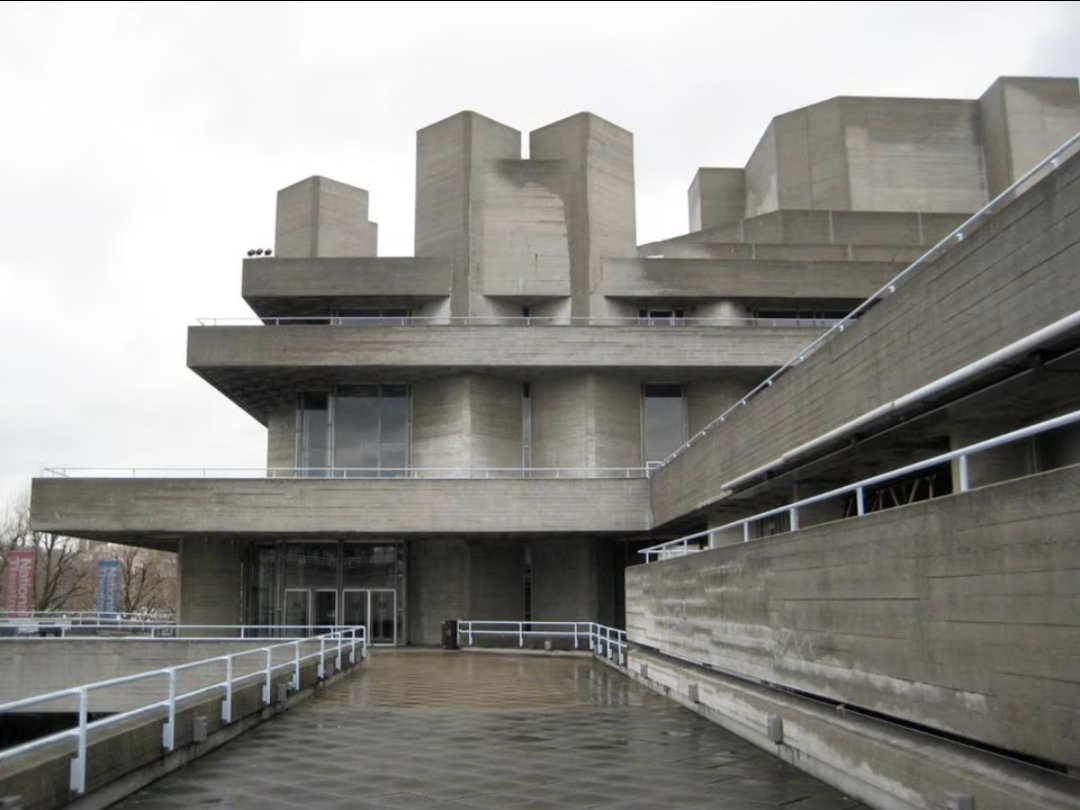
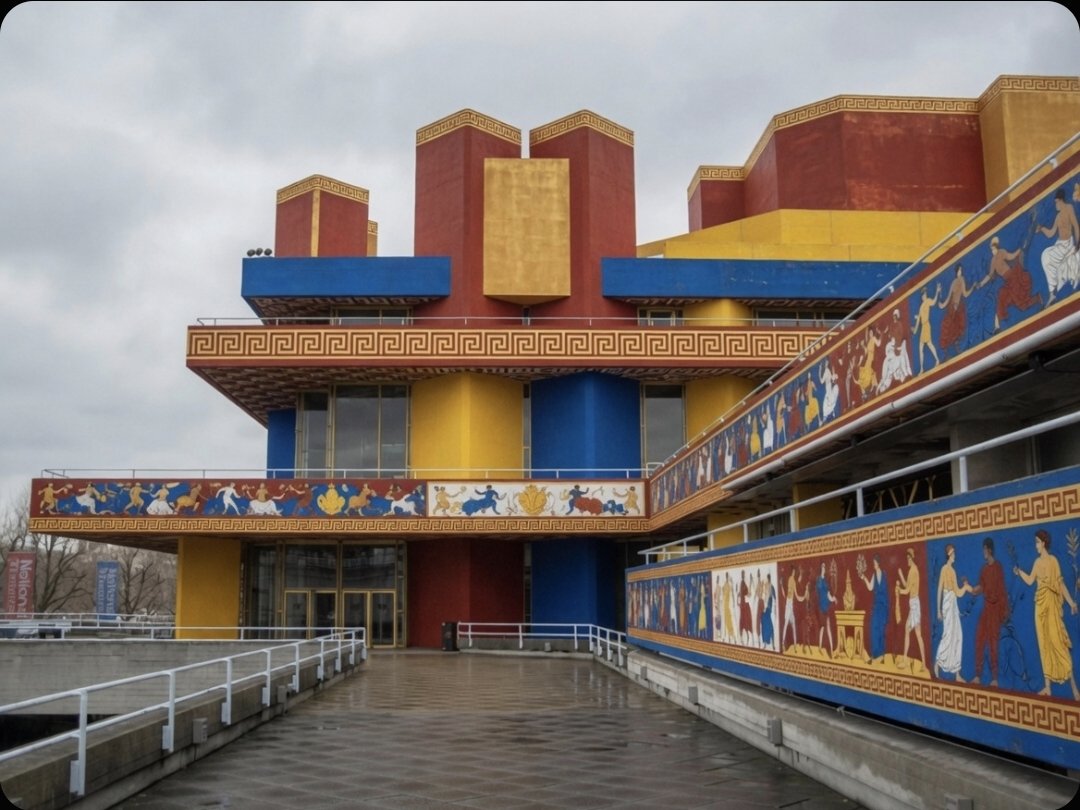
There's a common misconception that Brutalist buildings were unpainted, but thanks to microscopic analysis of the exteriors we can now recreate what they looked like in their prime.
Cairo Smith tweet media
English
440
3.4K
39.7K
7.3M
Phillip Harris
Phillip Harris@phillipharr1s·
@littmath @davidbessis Probably just more training data + more RL effort in those areas. Don’t need special expertise to read the proofs.
English
0
0
2
184
Daniel Litt
Daniel Litt@littmath·
TBC the models are very rapidly improving and I often find them very useful; capabilities are way ahead of where they were even a few months ago. Just still interested in understanding why there seems to be some delta here.
Daniel Litt@littmath

Still underrated how uneven frontier models are within math, IMO. I’ve recently been reading through some of the more interesting solutions to Erdős problems and quite enjoying them—here the models are reliably executing nontrivial ideas, combining known techniques, etc. But…

English
10
5
117
9.4K
Phillip Harris
Phillip Harris@phillipharr1s·
@frontier_foid Sure, other people in the comments are talking about MIT etc so I think there’s some confusion here.
English
0
0
0
389
qt cache🪷
qt cache🪷@frontier_foid·
@phillipharr1s high schools in many countries (like China) are highly selective and have already done a tremendous amount of filtering.
English
1
0
20
6K
qt cache🪷
qt cache🪷@frontier_foid·
an alternate read on this data is that fairly high-scoring girls get auto-admitted to super elite schools and boys just don't. literally zero girls i knew who made usamo got rejected from mit but half the usamo boys i knew caught rejections left and right lol.
Paul Novosad@paulnovosad

Wow. Only a tiny set of elite schools send girls to elite math competitions, where as boys come from everywhere. It's almost surely the case there are as many super-talented girls at these other schools who never get noticed.

English
7
39
1K
57.7K
Phillip Harris
Phillip Harris@phillipharr1s·
@Noahpinion @kylascan Or it suggests that the pool of talent available to other domains is not very good (because quant out-bids them) and AI can pick up the slack.
English
0
0
0
110
Weijia Jiang
Weijia Jiang@weijia·
The Hilton donated the ~2600 dinners that went unserved at WHCD. They freeze dried the steak and lobster for longer shelf life before giving them to 2 shelters for abused women and children. HUGE thank you to the staff that worked through the night under terrible circumstances.
English
1.6K
13.6K
106.2K
2.7M
David Turturean
David Turturean@DavidTurturean·
There is a total deluge on erdosproblems.com of claimed solutions - I claimed 3 full solutions so far since GPT-5.5 got released (#330, #870, #696), and I believe I am sitting on a few partial ones and other full solutions but I physically don't have the time to supervise the write-up process. GPT-5.5 has been finding solutions quicker than I, the human, can process them
English
7
12
125
36.5K
Przemek Chojecki | PC
Przemek Chojecki | PC@prz_chojecki·
GPT-5.5 Pro is really on the next level. In the past 3 days there are like 8-10 claimed solutions to new open Erdos problems with GPT-5.5. That doesn't mean all are valid and will be accepted, but the last time we had a similar activity was in December/January with GPT-5.2 (and even then there was less claims and not as fast). Also these claims right now are for harder problems, because all Erdos problems were scanned with GPT-5.2 at least briefly. This means that GPT-5.5 is a level above 5.2, and probably half a level above 5.4. Solutions that surface are more involved/interesting. I've browsed a couple and they all seem plausible. 5.5 got considerably better at synthesis of various arguments from various sources and doing it in a more effective way. I'm pretty sure we're going to see even more spectacular applications soon. However we're still pretty far away from AI being at a proper research-level. My move 37 in mathematics would actually be a new definition, not a proof. I need to see an LLM define a new concept that would simplify or connect various existing structures and give raise to a new theory. But perhaps this would be synonymous with AGI.
Przemek Chojecki | PC@prz_chojecki

I've been testing GPT-5.5 Pro since its release 2 days ago and here are some thoughts: - it's definitely different, probably better but in non-obvious ways - it's harder to make it think longer than 10-15 minutes, though I've managed to get it think for 50-60 mins a couple of times. Maybe it's my human bias that longer thinking > higher quality of thought. - already got a nice partial result on Erdos problem 852 - erdosproblems.com/forum/thread/8… - a result of brilliant concise argument. - it nicely streamlines arguments and gets to the core Need more time testing though to understand the essence. Anyway, I'm super excited!

English
22
50
392
36.7K
Alex Gurevich
Alex Gurevich@agurevich23·
@Noahpinion Why do I, or any human soldier, have to be there at all? Autonomous Tanks will carry lasers which will take out anything in the sky without 10-inch armor. The era of drone warfare is almost over.
English
3
0
7
360
Phillip Harris
Phillip Harris@phillipharr1s·
@allTheYud Kava is basically this, and there are even kava bars in the US. Still hasn’t caught on.
English
4
0
0
4.4K
Eliezer Yudkowsky
Eliezer Yudkowsky@allTheYud·
In Star Trek, "synthehol" is a magic chemical just like alcohol except no hangovers, no neurotoxicity, not fattening, etc etc. In real life it's called 1,3-butanediol. Known to science for years. Technology diffusion sure lags.
English
38
20
1.3K
120.4K
Phillip Harris retweetledi
Agus 🔸
Agus 🔸@austinc3301·
Midas found a news site, The Wire, that seems to be covertly run end-to-end by AI agents, with AIs posing as fake reporters. Its messaging is closely aligned with the pro-AI lobby. Unsurprisingly, they also found some suggestive links with the OpenAI PAC.
The Midas Project@TheMidasProj

x.com/i/article/2047…

English
1
7
49
1.4K
Misha
Misha@drethelin·
My prediction for the direction apple will take with a new ceo:
Misha tweet mediaMisha tweet media
English
1
0
6
209