
Phillip W Stokes

1.1K posts

Phillip W Stokes banner
Phillip W Stokes

Phillip W Stokes

@phillipwstokes

Associate Prof of Arabic @ UTK; Harrington Faculty Fellow @ UT Austin (AY 23-24); Student of Arabic Lx History; Father of 2.

Knoxville, TN Katılım Ekim 2019
479 Takip Edilen925 Takipçiler
Phillip W Stokes retweetledi

Marijn van Putten
Marijn van Putten@PhDniX·
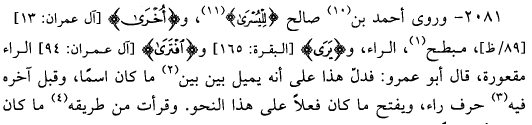
@t3lhwn Incidentally I ran into this discussion the other day where ʾAḥmad b. Ṣāliḥ's transmission of Warš appears to apply ʾimālah bayna bayn on nouns, but not on verbs (at least... when rāʾ precedes). The wording of ʾAḥmad b. Ṣāliḥ himself is pretty terse...
Marijn van Putten tweet media
Română
2
1
3
166
Sam Noble
Sam Noble@TricycleRepair·
@phillipwstokes Again, congratulations. I've spent the afternoon reading through it and it's a huge acheivement!
English
1
0
1
12
Phillip W Stokes retweetledi
The Aramaic Wire ܣܘܪܝܐ
The Aramaic Wire ܣܘܪܝܐ@AramaicWire·
The earliest known Syriac inscription: 6 AD. Similar to Hebrew, Babylonian Jews called this script “Assyrian writing”. Two scripts emerged from this language: one from the School of Edessa & one from Nisibis. This language is endangered & could be extinct in 50 years.
English
3
85
412
12.5K
Phillip W Stokes retweetledi
kaelestia
kaelestia@kaelestia·
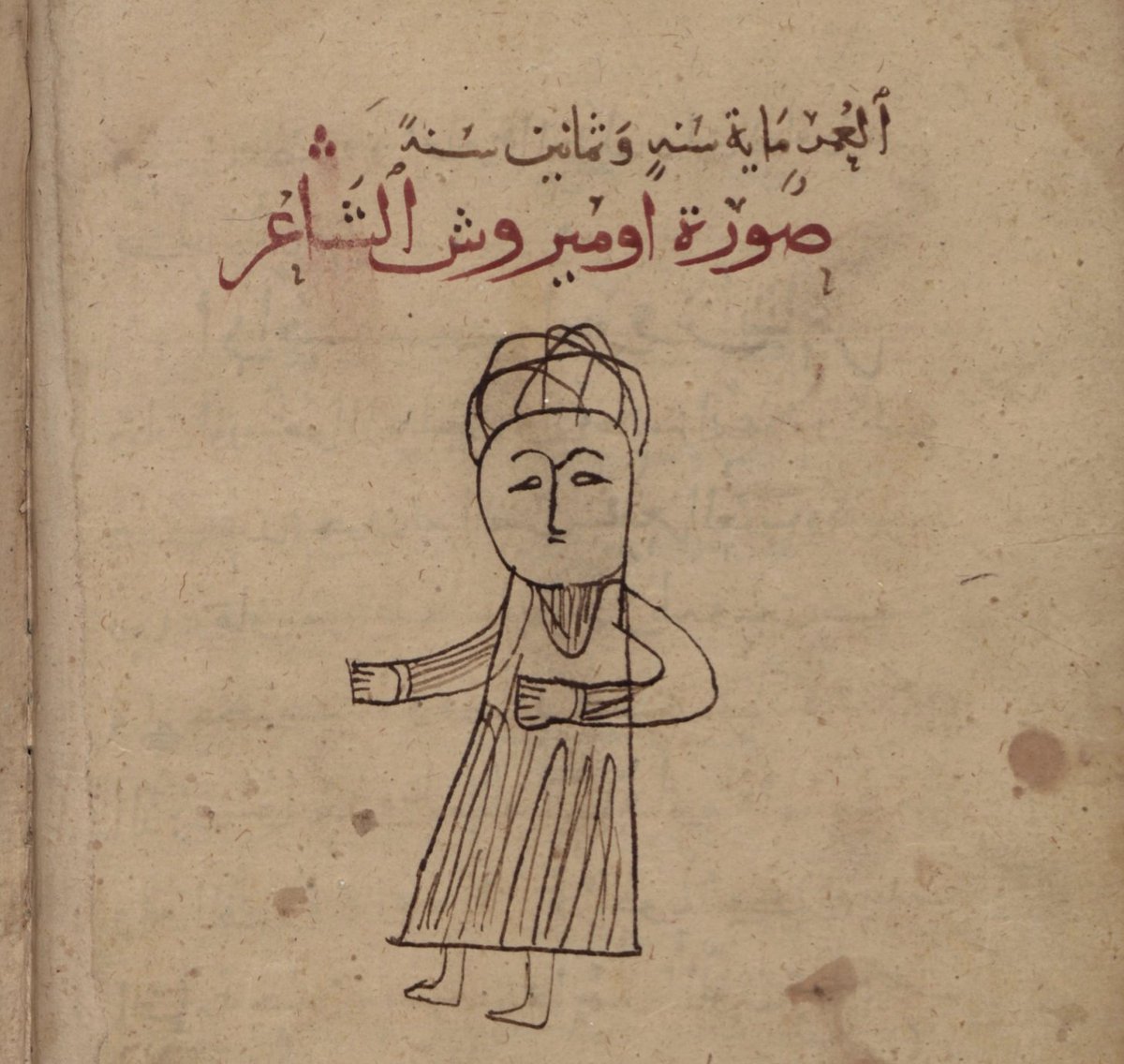
An illustration of ‹ The poet Homer › (ʾŪmīrūš al-šāʿir) from a 13th cent. Arabic MS, likely drawn in Mosul.
kaelestia tweet media
Română
42
1.5K
7.9K
357.9K
Phillip W Stokes retweetledi
Yonatan Adler
Yonatan Adler@AdlerYonatan·
A good case can be made that this is the earliest surviving example of written law as such. A development which, to my mind, may very well have led to the emergence of Judaism. In our modern world, it is common to assume that all collections of law are inherently prescriptive in nature. Today, a law code legislates how a society is to behave by prescribing specific rules and regulations. In a way, a society’s law code embodies for that society “the law” itself. Law writings in ancient Mesopotamia appear to have functioned in a very different way from this commonplace, modern-day conception. On the one hand, we know of over half a dozen extensive law collections such as the so-called “codes” of the Mesopotamian kings Hammurabi, Ur-Namma, and Lipit-Ishtar, and the ostensible “code” of the city of Eshnunna. On the other hand, we have thousands of law-practice documents that record how law was actually applied in various real-life situations. In many cases, these two sources of legal material do not coincide, with prices, fines, and penalties in the records of actual court cases often contradicting those set down in the law collections. Furthermore, the court records as a rule do not cite the law collections as their rationale for adjudication. Beginning in archaic Greece, written law began to function much more like our modern conception of “law”. Michael Gagarin has argued that the movement to enact written legislation which swept over Greek-speaking lands beginning around the middle of the seventh century BCE was so revolutionary that “it is legitimate to speak of the ‘invention’ of legislation in Greece” at this time. In a study published in 2006, Michael LeFebvre argued that in biblical sources that predate the Hellenistic era, the Mosaic Torah was conceptualized as a descriptive collection of laws and as “a preeminent description of Yahwistic ideals as practiced by Moses,” but it did not function as a prescriptive law code. He argued that this conception of the biblical “tôrāh of Moses” accords well with scholarly understandings of law collections elsewhere in the ancient Near East, especially in Mesopotamia. LeFebvre suggested that the Pentateuch was reconceptualized as prescriptive law only in the Hellenistic period. If, as seems likely to me, the Torah was adopted as the law of the land under the Hasmoneans in the 2nd century BCE, then this process should be credited to a large degree to Gagarin’s “‘invention’ of legislation in Greece”. As I’ve written about here recently, it would not be wrong to view Judaism as having emerged out of the crucible of Hellenism...
Agamemnon@Agamemnonuwa

Dating to the 7th century BCE and written in the Archaic Cretan alphabet, the Dreros Law is the oldest Greek legal text known to us. Imposing term limits on magistrates (kosmos), it features the first mention of the Polis as an independent legal entity.

English
12
18
88
6.1K
Phillip W Stokes retweetledi
Kim Phillips
Kim Phillips@K_L_Phillips·
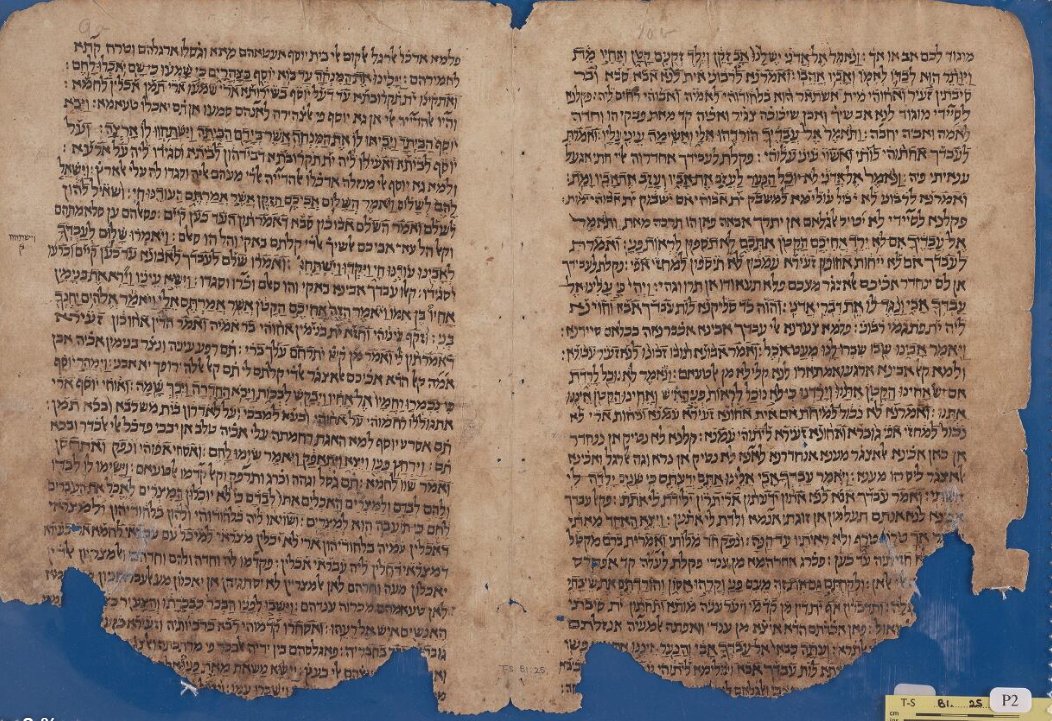
Part of a trilingual #Torah codex from the #CairoGenizah The yellow highlight is #Hebrew (Scripture) Green is #Aramaic (tradition) Blue is #JudaeoArabic (mother tongue) Red rectangle: word for 'your servants' in each language Yellow rectangle: word for 'my eye' in each language.
Kim Phillips tweet mediaKim Phillips tweet media
English
6
15
85
5K
Phillip W Stokes retweetledi
Marijn van Putten
Marijn van Putten@PhDniX·
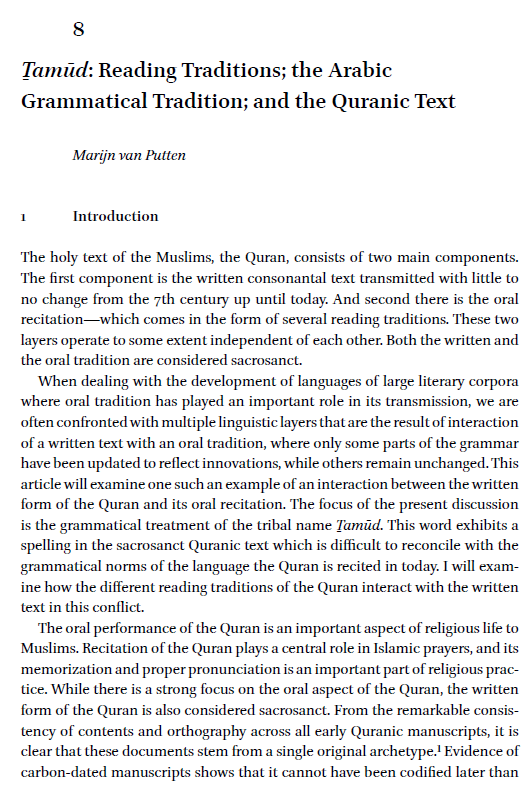
New Article: When did Faṣīḥ become Qabīḥ? Rehabilitating Classical phonological and morphological features And it's Open Access!: doi.org/10.1093/jss/fg… A short summary of the contents of this article 🧵
Marijn van Putten tweet media
English
3
34
85
8.8K
Phillip W Stokes retweetledi
Marijn van Putten
Marijn van Putten@PhDniX·
So my translations of al-Dani's Taysir is out! So what is this text about? It is a description of seven canonical reading traditions of the Quran authored by the Andalusi polymath ʾAbū ʿAmr ʿUṯmān b. Saʿīd al-Dānī (371/981–444/1053).
Marijn van Putten tweet media
Română
5
23
77
5.2K
Phillip W Stokes
Phillip W Stokes@phillipwstokes·
Cover for my forthcoming book is finalized and approved. Looking forward to sharing the published, open-access book in the near future!
Phillip W Stokes tweet media
English
2
1
2
256
Phillip W Stokes retweetledi
Sean W. Anthony
Sean W. Anthony@shahanSean·
PSA🧵 on misconceptions about the Arabo-Islamic preservation of Greek works: [1] The scale of the Arabic translation movement (ca. 8th-10th cent.) was massive; perhaps the largest in human history up that point. [2] Greek originals from the Islamic world do not survive ...
Sean W. Anthony tweet media
English
14
108
580
61.2K
Phillip W Stokes retweetledi
Marijn van Putten
Marijn van Putten@PhDniX·
After the power outage during the interview last time, me and @GabrielSaidR decided to do another Live Q&A. So, of course, the first thing that happened was that my WiFi died, and then we got audio issues. After some editing it is now put back online! youtube.com/live/vkiji1eMG…
YouTube video
YouTube
English
2
8
30
9K
Phillip W Stokes retweetledi
Marijn van Putten
Marijn van Putten@PhDniX·
"New" Publication! This paper I presented in 2016, pretty sure I handed it in by 2017... but now it's finally out. I would have probably written it a bit different today, but it's still I think an interesting article with fun observations! 🧵
Marijn van Putten tweet media
English
3
17
103
10.3K
Phillip W Stokes retweetledi
Maria Bazhatarnik
Maria Bazhatarnik@yarami_sh·
Navigating Neo-Assyrian corporate communication is not easy. Here is a helpful guide I put together.
Maria Bazhatarnik tweet media
English
9
550
2.6K
105.6K
Phillip W Stokes retweetledi
Hamzza Ahmed
Hamzza Ahmed@HamzzaAhmed2·
While many threads have been written on how the letter ض was pronounced historically, I haven't seen many that explain exactly 'how' the sound change occurred in Arabic. Seeing as how it's the beginning of Ramaḍān, I figured this would be the perfect time to write such a🧵
Hamzza Ahmed tweet media
English
6
63
331
50K
Phillip W Stokes retweetledi
Kim Phillips
Kim Phillips@K_L_Phillips·
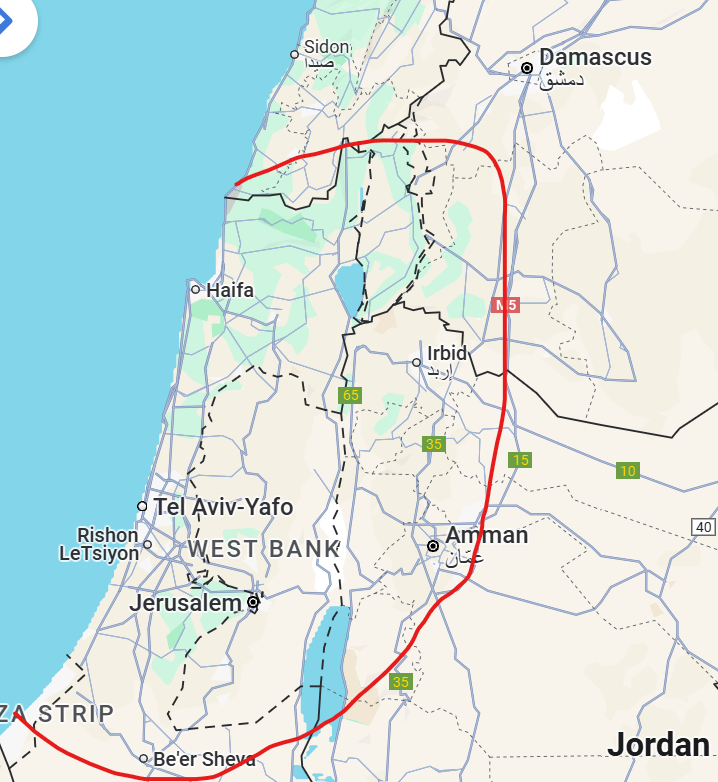
1/10 🧵 Upto about AD800 (very roughly) many ordinary Christians in the Southern Levant ⬇️ spoke Aramaic as their first language, even though most would have had at least some Greek as well. This little Aramaic dialect is known today as #ChristianPalestinianAramaic.
Kim Phillips tweet media
English
2
7
22
2.5K